

Last Updated: November 16, 2026
Quick Summary
Yacht ownership costs go far beyond the purchase price and include one-time acquisition fees, recurring running costs and depreciation. Annual running costs depend mainly on how many days the yacht is used, its age and systems, the crew level, and where it is kept. Building light, typical and heavy usage scenarios gives a more realistic budget than any single benchmark percentage.
- Budget for survey fees, broker and legal costs, registration and financing, not just the purchase price.
- Set a maintenance reserve, increasing it for older yachts and complex systems like stabilisers or generators.
- Model light, typical and heavy use years, since usage days drive fuel, crew and maintenance together.
- Separate fixed costs such as berthing and insurance from variable costs such as fuel and provisioning.
- Confirm all berthing fees in writing, including utilities, shore power, waste disposal and seasonal surcharges.
Table of Contents
- Why the Purchase Price Is Only the Starting Point
- Annual Yacht Running Costs: What to Expect
- Yacht Maintenance Costs and Planning for Repairs
- Yacht Mooring Fees, Berthing and Storage
- Insurance, Crew, Fuel and Other Recurring Expenses
- Building a Realistic Yacht Ownership Budget
- Setting Up Your Yacht Budget Before You Buy
- Frequently Asked Questions
Why the Purchase Price Is Only the Starting Point
Most buyers focus on the asking price, but the purchase is usually the smallest part of what yacht ownership costs over its life. The owners who enjoy yacht ownership most are generally the ones who planned for the running costs before they signed anything.
The real question is not “what does the yacht cost?” but “what does it cost to keep the yacht afloat, maintained and insured for a full year?” A useful way to frame this is the total cost of ownership, which combines the acquisition price, the one-time costs of buying, the recurring annual expenses and the loss in value as the vessel ages.
Acquisition is not a single payment. Buyers typically face survey fees, broker and legal costs, registration, and in many cases the cost of financing. None of these figures are fixed, because they depend on vessel size, flag, and how the transaction is structured. Buyers who want help structuring a transaction from the outset can look at Yacht Purchase, which covers the buying process end to end.
Depreciation deserves attention too. A vessel loses value as it ages, and the rate varies widely by make, condition and market demand. Treat resale value as uncertain, and plan on the assumption that the yacht will cost you more to hold than the headline figure suggests.
Annual Yacht Running Costs: What to Expect
Annual running costs are the expenses that continue whether or not the yacht leaves the dock: maintenance, insurance, berthing, crew, fuel, routine servicing and the small recurring items that are easy to overlook, all of which make up a large share of yacht ownership costs.
The industry shorthand is to express annual running costs as a percentage of the vessel’s value and use that as a first estimate. That shorthand is useful only if you understand what sits behind it. A single percentage hides four variables that move the number by a wide margin:
- Usage days per year. A yacht cruising 30 days a year and one cruising 120 days a year can share a hull and a berth but not a budget. Engine hours, fuel burn, tender use and interior wear all scale with days on the water.
- Vessel age and system complexity. Older yachts carry more corrective maintenance; yachts with stabilisers, watermakers, large generators, chilled-water air conditioning or complex electronics carry more preventive maintenance and more expensive parts.
- Crew level. An owner-operated vessel and a fully crewed vessel are different cost structures, not different points on the same line. Crew wages, accommodation, training, travel, provisioning and payroll-related costs sit on top of every other line.
- Location and season. Berthing, insurance loading for cruising area, yard labour rates and winterisation requirements all vary by where the yacht is kept and where it cruises, whether in the Gulf, the Western Mediterranean or the Adriatic.
Because those four variables interact, the honest way to budget is to build a scenario rather than adopt a benchmark. A practical structure is three columns, light use, typical use and heavy use, with the same cost lines in each. Light use might mean 30 to 40 days a year, mostly local cruising and a winter lay-up. Typical use might mean 60 to 80 days, a summer cruise and a handful of longer passages. Heavy use might mean 100 days or more, liveaboard stretches and frequent guest changes.
A second discipline is to separate fixed from variable costs. Berthing, insurance, registration and minimum crew are largely fixed once you own the yacht, they arrive whether or not you use it. Fuel, provisioning, transient berthing, tender fuel and usage-linked servicing are variable.
Watch out: a budget built from a single online percentage and no stated usage assumption will almost always be too low, because published benchmarks tend to assume moderate use, a mid-age vessel and a location with competitive yard rates, none of which may describe your yacht.
The most useful exercise is to write down every recurring cost you can identify, attach an assumption to each, then ask a broker, yard manager or insurer to challenge each line. That conversation routinely surfaces items missing from the original budget, from tender servicing and life-raft inspection to shore-power charges and communications subscriptions.
The article breaks yacht running costs into a few variables that can move the annual figure considerably. The table below summarises them.
| Factor | What it affects | Why it matters |
|---|---|---|
| Usage days per year | Engine hours, fuel burn, tender use, interior wear | A 30-day year and a 120-day year need different budgets |
| Vessel age and systems | Corrective and preventive maintenance, part costs | Stabilisers, watermakers and generators add cost |
| Crew level | Wages, accommodation, training, provisioning | Owner-operated and fully crewed yachts have different cost structures |
| Location and season | Berthing, insurance loading, yard rates, winterisation | Costs vary by cruising area such as the Gulf, Western Mediterranean or Adriatic |
Yacht Maintenance Costs and Planning for Repairs
Maintenance is where most owners are surprised. Routine servicing, including engine oil and filter changes, antifouling, hull cleaning, and inspections of rigging and electrical systems, recurs every year. Less predictable is the cost of repairs, which can arrive in clusters and are often larger than planned. Owners planning refit or build work can explore Yacht Builders.
A practical safeguard is a maintenance reserve: a dedicated annual sum set aside for unexpected work. A reserve can be adjusted upward for older vessels and for yachts with complex systems such as stabilisers, generators or large engines.
Refits deserve separate planning. Interior updates, system upgrades and cosmetic work are typically not annual costs, but they arrive at intervals and can be substantial. Owners who plan for periodic refits, rather than treating them as surprises, tend to manage their cash flow more smoothly.
Keep records of every service and repair. Documented maintenance history supports resale value and helps a new surveyor or buyer assess the yacht’s condition accurately.
Yacht Mooring Fees, Berthing and Storage
Berthing is one of the largest and most variable recurring costs. Fees depend on the vessel’s length and beam, the marina’s standard, the location and the season. Premium berths in high-demand waters cost considerably more than secondary marinas, and the difference can shape the whole budget. Regional market dynamics often dictate the baseline for docking and slip fees, creating significant disparities for owners navigating the specific requirements of historic harbors like Annapolis.
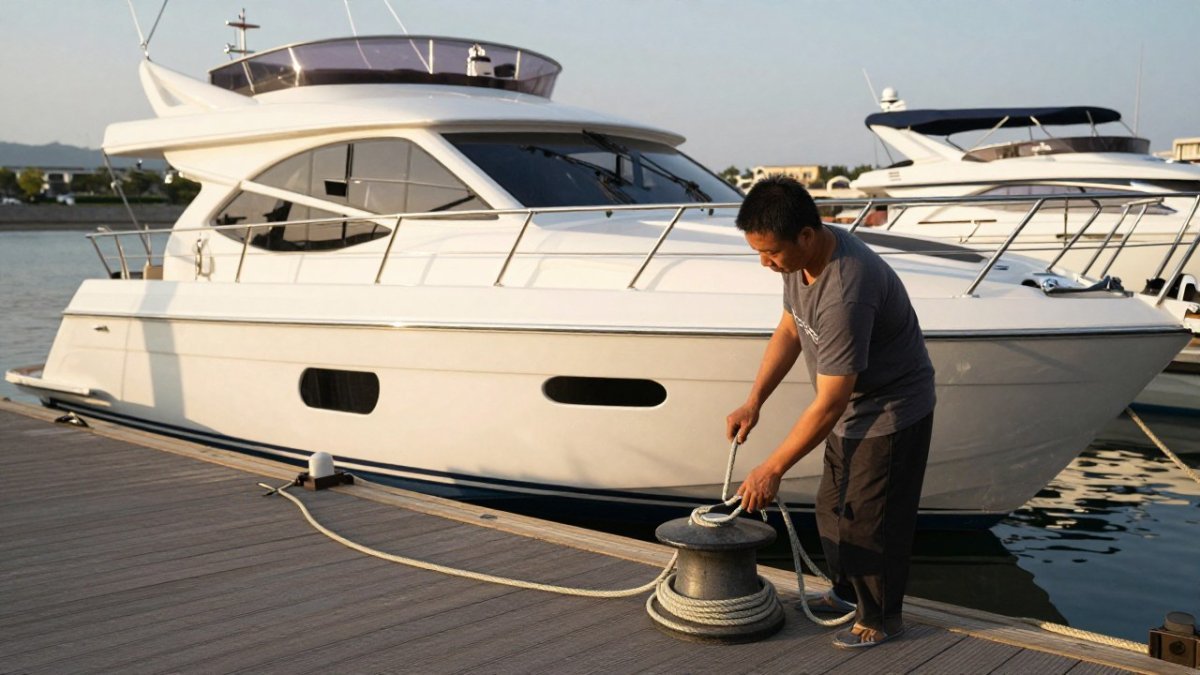
Storage matters as well. A yacht laid up out of the water for winter needs haul-out, storage and relaunch charges, and some marinas charge separately for each. If the yacht is kept in a climate that demands winterisation, add those services to the calculation.
When comparing berths, ask for the full fee schedule in writing. Look for charges for utilities, shore power, waste disposal, security and seasonal surcharges. A lower headline rate can conceal a higher total once these extras are included.
Pricing for any specific marina or service should be confirmed directly with the facility, as rates change and depend on your vessel’s dimensions. Owners weighing whether to hold a yacht for personal use or let it out can explore the options through Yacht Charter.
Insurance, Crew, Fuel and Other Recurring Expenses
Insurance is a significant annual cost, and premiums depend on the vessel and how it is used.
Crew costs apply to larger yachts or to owners who do not operate the vessel themselves, and they are the line most often underestimated.
Fuel is the most variable line and the one most affected by how the yacht is used. Consumption depends on engine size and type, displacement, cruising speed and distance run.
Other recurring items are individually small but compound meaningfully across a year: communications and software subscriptions, provisioning, cleaning and laundry, registration and flag renewals, life-raft and fire-equipment servicing, tender and toy servicing, and shore-power and waste-disposal charges at the berth. List them explicitly.
A useful discipline is to group these lines into fixed and variable, then into controllable and non-controllable. Insurance and registration are largely non-controllable once the yacht and cruising area are set; fuel, provisioning and usage-linked servicing are controllable through how you use the yacht.
Watch out: treating insurance, crew and fuel as three separate estimates without linking them to the same usage assumption produces a budget that is internally inconsistent, a heavy-use year raises fuel, crew overtime and usage-linked servicing together, not one at a time.
Building a Realistic Yacht Ownership Budget
A workable budget starts with your intended usage. Estimate how many days a year the yacht will be on the water, how far it will travel and how many people will be aboard. These assumptions drive fuel, crew and maintenance, so state them clearly in your plan.
Build three scenarios: a light-use year, a typical year and a heavy-use year. Each should include the same categories: berthing, insurance, maintenance, reserve, crew, fuel and depreciation. Comparing the three shows you how sensitive your costs are to usage and where the real risk sits.
Charter income can offset some running costs for owners who are willing to let their yacht work when they are not using it. Revenue depends on the vessel, the market and the rules that apply to commercial operation, and it is never guaranteed. Treat any charter income as upside to a budget that works without it.
Financing, tax and regulatory obligations also belong in the budget. Confirm which costs apply in the jurisdiction where the yacht will be registered and operated, and get professional advice before assuming any particular treatment.
Setting Up Your Yacht Budget Before You Buy
Before you commit to a purchase, produce a written budget covering acquisition costs, a first-year running budget, a maintenance reserve and a depreciation estimate. Share it with a surveyor, an insurer and a broker, and ask each to challenge the assumptions. Buyers who are also weighing a Yacht for Sale listing should run this exercise against each candidate vessel rather than against the asking price alone.
Get a full survey before buying, and budget for the work it is likely to identify. A survey that flags significant issues is not a reason to walk away automatically, but it is a reason to revise your numbers before you sign.
Palm Lifestyle supports buyers through the purchase process, including financing and legal procedures. If you are weighing a purchase, get in touch to discuss your needs. Get in touch with us to discuss your yachting needs.
Frequently Asked Questions
What are the ongoing costs of owning a yacht?
The main ongoing costs of owning a yacht are maintenance and servicing, insurance, mooring or marina fees, fuel, and crew wages if the vessel is crewed. Annual running costs are commonly estimated as a percentage of the vessel’s market value, but the actual figure depends on size, age, usage and location. Owners should also budget for repairs and unplanned work, which can arrive at any time. Palm Lifestyle can help you understand what to expect for a specific vessel; contact the team for a tailored review of likely annual costs.
How much should I budget each year to maintain a yacht?
A practical approach is to set aside a yearly maintenance reserve in addition to routine servicing costs, since engines, systems and hull work all age over time. The right amount varies with the yacht’s size, age, equipment and how often it is used. Keeping a contingency for unexpected repairs is sensible, because a single breakdown can exceed a planned service budget. For a figure based on the specific vessel you are considering, speak with Palm Lifestyle directly.
What fees should I expect when buying a yacht?
Beyond the purchase price, buyers should plan for survey and inspection fees, transaction and brokerage-related costs, legal and documentation expenses, and registration. Financing and insurance set-up can add further costs. The exact fees depend on the transaction and the vessel. Palm Lifestyle provides end-to-end support including financing and legal procedures, so you can ask for a clear breakdown of acquisition costs before committing.
