
Table of Contents
- How Long Does a Custom Yacht Build Take: The Realistic Timeline
- Understanding the Yacht Design Process Steps
- The Custom Yacht Build Process in the UAE and Beyond
- Yacht Interior Fit-Out Timeline: The Longest Phase
- Factors Affecting Yacht Build Time: What Causes Delays
- Semi-Custom vs. Production vs. Speculation Builds
- Sea Trials, Commissioning, and Final Delivery
- Common Mistakes That Extend Build Timelines
Custom Yacht Build Timeline: How Long Does It Really Take?
Last Updated: July 31, 2026
Understanding how long a custom yacht build takes requires looking beyond simple timelines. A bespoke superyacht typically spans three to seven years, but this range masks enormous variation driven by vessel complexity, shipyard capacity, regulatory jurisdiction, and customization appetite. Build time is dominated by design phases, material procurement, regulatory approvals, and owner-driven change orders, not construction speed alone.
Why Build Time Varies Dramatically
Vessel size and complexity is the primary driver. A 30-meter semi-custom yacht launches in 18-24 months; a 150-meter fully custom superyacht takes 5-7 years. Scaling isn’t linear, larger yachts require exponentially more integrated systems, longer lead times for bespoke components, and more intricate coordination.
Build type shapes timeline dramatically. Speculation builds move fastest (18-30 months) because design is frozen. Production builds follow established templates (18-30 months). Semi-custom builds allow selective customization within fixed hulls (24-36 months). Fully custom builds, where naval architecture is bespoke from the keel up, add 12-24 months to design alone before construction begins.
Shipyard location and capacity matter profoundly. European yards (Netherlands, Germany, Italy) have longer lead times but exceptional engineering and are booked 3-4 years in advance. Middle Eastern yards offer variable timelines depending on capacity and experience.
Owner customization requests are the hidden timeline killer. A mid-construction change to relocate a cabin or add a spa cascades through engineering, procurement, and trades, easily adding 6-12 months.
The most expensive delays are change orders implemented after construction begins. Lock your specification early.
Understanding the Yacht Design Process Steps
Designing a custom yacht is iterative, technical, and heavily regulated. Most first-time buyers underestimate this phase by 50%.
The design process unfolds in three overlapping stages: concept development, detailed design, and approval/classification.
Concept development begins with the owner’s brief, vessel use, preferred size, budget, and lifestyle requirements. The naval architect translates this into preliminary sketches, displacement estimates, and performance predictions. This phase takes 4-8 weeks and produces preliminary GA (General Arrangement) drawings and basic stability analysis. Spending 2-3 extra weeks refining the brief prevents costly revisions later.
Detailed design produces full hull lines, structural scantlings, systems schematics, and 3D models. Interior designers create cabin layouts and finish specifications. This phase typically requires 12-18 months for large custom superyachts; 6-10 weeks for 40-meter semi-custom yachts. The owner reviews progress through milestones: 25%, 50%, 75%, and 100% design freeze. Delays here compound downstream, a 4-week delay in engine room layout cascades through engineering, procurement, and construction.
Concept Development and Naval Architecture
Naval architecture balances competing demands: maximum interior space adds displacement, requiring larger engines and higher fuel consumption. Shallow draft aids Caribbean cruising but compromises seakeeping. The naval architect finds the optimal compromise through detailed calculations.
For custom superyachts, naval architecture spans 6-12 months of the design phase, producing hull lines, stability calculations, resistance and powering predictions, structural scantling calculations, and hydrodynamic analysis. For fully custom builds, allow 12-18 months for naval architecture alone.
Approval and Classification Society Requirements
No yacht can be built without approval from a classification society, an independent third-party certifying the vessel meets international safety and construction standards. Major societies include Lloyd’s Register, DNV GL, ABS, and Rina.
The classification society reviews design at multiple stages: early concept review, mid-design detailed plan review, and pre-construction final approval. During construction, their surveyors visit regularly to inspect work and verify compliance. This approval process adds 8-16 weeks to the design timeline. Regulatory requirements vary by flag state; a UAE-flagged vessel must comply with UAE maritime authority standards, potentially adding 4-8 weeks of approval time.
Choose your flag state early in design. Different jurisdictions have different approval timelines. UAE flagging may add upfront approval time but simplifies long-term operations if you’re based in the region.
The Custom Yacht Build Process in the UAE and Beyond
Once design is approved and the classification society signs off, construction begins. This is where the real timeline emerges and where most delays occur.
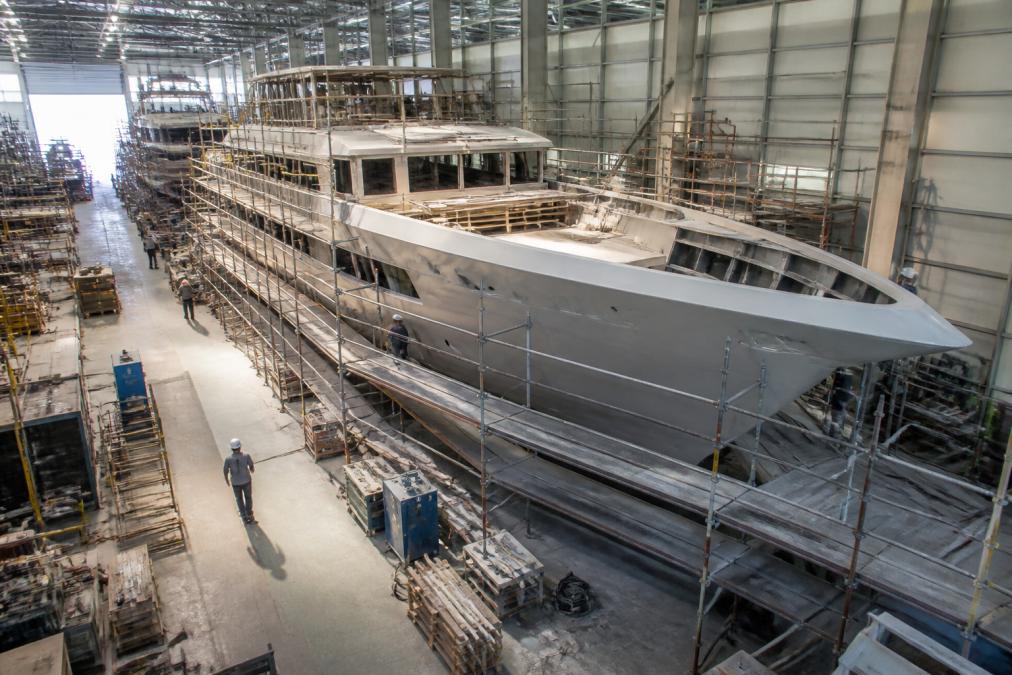
The hull construction phase is the most visible part of the build. For steel or aluminum superyachts, the shipyard builds the hull in sections, fabricated in the shop then welded together at the building berth. For large superyachts, this takes 12-24 months. The hull is then launched and moved to the outfitting dock for interior and systems work.
Shipyard efficiency depends on experience with the vessel type and size. Yards that have built 20 similar 60-meter yachts construct faster and more reliably than those building their first. Material choice also matters: steel construction is faster and cheaper than aluminum, though aluminum is lighter and more fuel-efficient. If you’re considering alternatives to a full build, [Yacht for Sale](https://palmlifestyle.ae/yacht-purchase/) options can provide faster access to a vessel, while our Yacht Builders network specializes in managing timelines across multiple shipyards.
Hull Construction and Structural Work
Hull construction is the longest single phase. For a 120-meter superyacht, expect 18-28 months from keel-laying to launch.
The process begins with lofting, translating designer’s lines into full-scale templates used to cut steel or aluminum to precise dimensions. Plates are assembled and welded into sections; a large yacht might have 30-50 sections, each weighing hundreds of tons. Quality control is critical. Welds are X-rayed and tested; dimensions are verified against design. Any deviation triggers rework.
Launch is a major milestone, the vessel floats for the first time. But launch doesn’t mean the yacht is nearly finished. At launch, the interior is typically 5-15% complete, systems are largely uninstalled, and significant work remains.
Systems Integration and Engineering Phase
After launch, the yacht moves to the outfitting dock for mechanical, electrical, plumbing, HVAC, and propulsion systems installation. A large superyacht might have multiple main engines, generator sets, desalination plants, sewage treatment systems, saltwater cooling systems, fresh water systems, electrical distribution, fiber optic cabling, HVAC systems for 20-30 cabins, stabilizer systems, navigation and communications systems, and safety systems. Systems integration typically takes 12-18 months for large superyachts.
Yacht Interior Fit-Out Timeline: The Longest Phase
Interior fit-out is often the longest and most complex phase. It includes joinery, soft furnishings, lighting, plumbing fixtures, kitchen appliances, paint and varnish, flooring, doors, windows, and decorative elements. For a 100-meter superyacht with 20 cabins, fit-out alone can take 18-28 months.
Bespoke Interior Design and Material Selection
Interior design begins early but detailed specification happens during detailed design. The interior designer works with the owner to define style, color palettes, material selections, and spatial layouts. This process is iterative. Each change triggers rework by the designer and potentially the shipyard.
Material selection is critical. Bespoke materials, custom fabrics, rare woods, and marble slabs have long lead times. Italian marble for the main saloon might require 12-16 weeks from order to delivery. Late orders delay fit-out by months.
Lock interior design and material selections by 75% design completion. Changes after this point add significant time and cost.
Outfitting Complexity and Lead Times
Outfitting complexity depends on customization level. Semi-custom yachts with standard layouts move faster than fully custom vessels where every cabin is unique.
Lead times for custom components are the hidden timeline driver: custom leather upholstery (8-12 weeks), bespoke joinery (12-16 weeks), custom lighting fixtures (10-14 weeks), marble or stone work (8-12 weeks), custom artwork (12-20 weeks), and specialty marine paint (6-10 weeks).
If the interior designer specifies 15 bespoke items with 12-week lead times, the critical path is determined by the longest lead item. Simultaneous ordering compresses timelines; sequential ordering stretches them. A good project manager forecasts lead times, places orders early, and tracks delivery schedules obsessively.
Factors Affecting Yacht Build Time: What Causes Delays
Most yacht builds slip their original timelines. Understanding why helps you plan realistically and mitigate delays.
Supply Chain and Material Lead Times
Supply chain disruptions are the most common cause of delays. Critical components, engines, generators, thrusters, stabilizers, have lead times of 6-12 months. Late orders or supplier production issues stall the entire build. Geopolitical factors matter too. Sanctions, tariffs, or trade restrictions can make components unavailable or prohibitively expensive, requiring alternative sourcing and re-engineering.
Early procurement is the best mitigation. A well-organized shipyard identifies critical long-lead items during design and places orders as soon as design is approved, even before construction begins.
Regulatory and Classification Society Delays
Classification society surveys occur at defined milestones: keel-laying, launch, and sea trials. Non-compliance identified during surveys stops work until resolved, adding weeks. Flag state approvals can also delay delivery. A UAE-flagged yacht requires final inspection from the UAE Maritime Authority. Backlogged inspectors can delay final delivery by 2-4 weeks.
Change Orders and Owner Customization Requests
Change orders are the silent timeline killer. Common requests include relocating cabins, adding spas or fitness areas, upgrading finishes, adding guest cabins, modifying beach clubs, or changing propulsion systems. Each change triggers engineering review, cost estimation, and approval. Changes affecting hull structure or systems require re-approval by the classification society.
Finalize specifications before construction and commit to them. If changes are essential, implement them early, before they cascade through multiple trades.
A change order implemented 50% through construction costs roughly 3-4x more than the same change made during design and adds 2-3x more timeline impact. Avoid mid-build changes.
Semi-Custom vs. Production vs. Speculation Builds
The build type you choose dramatically affects timeline.
Production builds follow a fixed design and manufacturing process. Production builds typically take 18-30 months from order to delivery and offer the fastest timeline and lowest cost but limited customization.
Semi-custom builds start with a proven hull design but allow selective interior, systems, and layout customization. These builds typically take 24-36 months and offer the sweet spot: faster delivery than fully custom, lower cost than bespoke, but more customization than production.
Fully custom builds are designed from scratch for a specific owner. These builds typically take 36-84 months (3-7 years) and offer unlimited customization but carry higher risk and longer timelines.
Speculation builds are built without a committed buyer, then offered for sale. Speculation builds typically launch in 18-24 months but offer limited customization options.
The timeline choice is really a choice about risk and customization. Faster builds mean less customization and higher execution risk. Slower builds mean more customization and longer wait times.
Sea Trials, Commissioning, and Final Delivery
Sea trials typically last 3-7 days and involve testing propulsion, steering, stabilizers, electrical systems, and safety equipment. The owner or their representative verifies systems work as specified and that the vessel performs as promised.
Sea trials typically reveal minor issues: sticking doors, non-functional lights, leaking valves. These are usually resolved in 2-4 weeks. After sea trials, the yacht returns for final commissioning, including correcting punch list items, final cleaning, provisioning, crew training, and final inspections by classification society and flag state authority. Commissioning typically takes 4-8 weeks.
Post-Delivery Commissioning Period
Delivery doesn’t mean the yacht is fully operational. A new superyacht typically requires 4-12 weeks of post-delivery commissioning before it’s ready for extended cruising. During this period, crew becomes proficient with systems, mechanical systems are run-in and optimized, software and automation are fine-tuned, and minor issues discovered underway are resolved.
This period is often overlooked in timeline planning. Owners assume delivery means the yacht is ready to cruise. In reality, there’s a transition period where the new owner and crew learn the vessel and optimize its operation.
Common Mistakes That Extend Build Timelines
Most timeline overruns are avoidable and result from predictable mistakes.
Rushing the design phase. Owners eager to begin construction push for approval before design is mature, leading to rework during construction, exponentially more expensive and time-consuming than design rework. A 4-week design delay saves 12-16 weeks in construction rework.
Underestimating interior fit-out. Owners focus on hull and systems, treating fit-out as secondary. In reality, fit-out is the longest and most labor-intensive phase.
Changing specifications mid-build. A change order 60% through construction adds 3-6 months.
Choosing a shipyard based on price alone. Cheaper shipyards often have longer lead times, less experienced workforces, and more quality issues.
Poor project management. A build without a dedicated project manager drifts. A good project manager compresses timeline by weeks or months.
Underestimating regulatory approvals. Classification societies and flag state authorities conduct rigorous inspections. Budgeting 8-16 weeks for approvals is realistic.
Inadequate owner involvement. Hands-off owners often discover late that the vessel doesn’t match their vision, triggering changes and delays. Active owners keep builds on track.
| Common Mistake | Timeline Impact | Prevention |
|---|---|---|
| Rushing design phase | +8-16 weeks | Allow 16-24 weeks for detailed design |
| Late material selection | +4-12 weeks | Finalize finishes by 75% design |
| Mid-build change orders | +6-16 weeks per change | Freeze spec before construction |
| Inadequate project management | +4-8 weeks | Hire dedicated project manager |
| Regulatory delays | +2-4 weeks | Budget 8-16 weeks for approvals |
| Poor shipyard choice | +8-20 weeks | Prioritize experience over price |
Understanding how long a custom yacht build takes requires accepting that timelines are inherently uncertain. A well-managed build with a capable shipyard, clear specifications, and active owner involvement delivers on schedule. A build with scope creep, poor project management, or an inexperienced shipyard will slip.
At Palm Lifestyle, we help clients navigate this complexity. Our team has extensive experience with shipyards across Europe and the Middle East, understands regulatory requirements across multiple flag states, and manages the entire procurement and commissioning process to keep builds on track. Whether you’re commissioning a new custom superyacht, exploring Yacht Charter options while your build is underway, or considering semi-custom alternatives, our team can help you set realistic timelines, choose the right shipyard, and manage the build to completion.
Get in touch with us to discuss your yacht acquisition strategy and understand how to structure a build timeline that works for your needs and budget.
Frequently Asked Questions
What are the main phases of custom yacht build process, and how long does each take?
A custom yacht build typically spans four major phases: design and naval architecture (6-12 months), hull construction and structural work (12-24 months), interior outfitting and systems integration (12-18 months), and sea trials plus commissioning (2-4 months). Total timelines range from 3 to 5+ years depending on vessel size, complexity, and customization level. Smaller semi-custom builds may complete faster, while large bespoke superyachts frequently exceed 5 years.
How do supply chain and material lead times affect custom yacht build schedules?
Material procurement is one of the largest hidden delays in yacht construction. Specialized marine components, engines, navigation systems, and custom interior finishes, often have lead times of 12-24 months. If a shipyard orders materials late or suppliers experience production delays, the entire build timeline can shift backward. Many experienced yacht owners factor in 3-6 months of buffer time specifically for supply chain uncertainties when planning their custom build.
What impact do change orders have on how long a custom yacht build takes?
Change orders are one of the most common causes of timeline extension. When owners request design modifications, material upgrades, or specification changes mid-build, the shipyard must re-engineer systems, reorder materials, and reschedule labor. A single major change order can delay delivery by 3-12 months depending on the complexity. Experienced project managers recommend finalizing all specifications before hull construction begins to minimize delays.
Does unlimited budget actually speed up a custom yacht build timeline?
Not necessarily. While budget flexibility can accelerate certain phases, such as hiring additional crews or expediting material orders, it cannot compress the fundamental construction sequence. Naval architecture, classification society approvals, and material manufacturing still require minimum timeframes. Budget primarily helps mitigate delays caused by supply chain issues or change orders, but cannot bypass the core build phases themselves.