
Table of Contents
- Why Croatia Yacht Charter Suits Motor Yacht Travel
- 24-40m Yacht Charter: The Versatile Mid-Size Choice
- 40-60m Yacht Charter: Space and Presence at Sea
- Large Group Yacht Charter Croatia: Hosting Up to 36 Guests
- Corporate Yacht Charter Croatia: Business at Sea
- Adriatic Routes and Island Itineraries for Motor Yachts
- Best Time to Sail Croatia: Seasonality and Weather
- Charter Costs, Extras and Contract Details
- Planning Your Croatia Yacht Charter: Next Steps
- Frequently Asked Questions
Last Updated: October 15, 2026
Why Croatia Yacht Charter Suits Motor Yacht Travel
A Croatia yacht charter puts you at the helm of one of the most rewarding cruising grounds in Europe: a coastline of more than a thousand islands, sheltered channels, and historic harbour towns where a motor yacht’s draft and speed open up itineraries sailing yachts simply cannot match. At Palm Lifestyle, we arrange these charters for clients who want to cover real distance without sacrificing comfort.
The Adriatic rewards engine hours. Distances between the Dalmatian Islands are short, the sea state is generally calm through summer, and a motor yacht lets you swim off Hvar in the morning and dine in Dubrovnik the same evening. A Croatia yacht charter is the practical choice when your group has limited time and a long list of places to see.
What most guides get wrong is treating the Adriatic as a single destination. It is not. The northern Adriatic, the Dalmatian Coast, and the southern islands each demand different vessels, different cruising speeds, and different budgets.
Below, we break down the four motor yacht categories we book most often, from the versatile 24-40m range to full corporate charters for up to 36 guests.
24-40m Yacht Charter: The Versatile Mid-Size Choice
A 24-40m yacht charter is the sweet spot for most Adriatic itineraries. These motor yachts carry four to six cabins, cruise comfortably between islands, and fit into the smaller marinas and coves that larger vessels must skip. For a family week or a small executive group, this is where we start nearly every conversation.
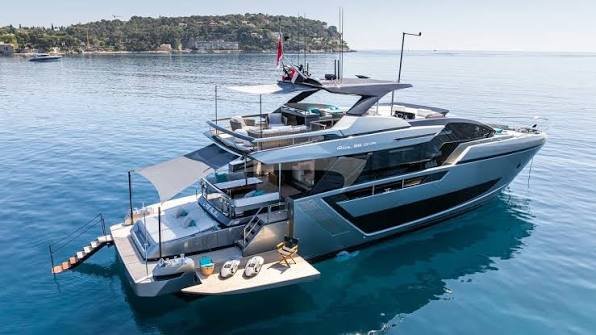
A sleek 30-metre motor yacht anchored in a secluded Adriatic cove with pine-covered islands in the background, crystal clear turquoise water, and sunlight reflecting off the white hull
What 24-40m Yachts Offer on the Adriatic
Range and access define this class. A 24-40m yacht charter typically delivers:
- Cruising speeds that turn a Split-to-Hvar leg into a short morning run
- Tender and water toy storage for swimming stops
- Crewed service with a captain and stewardess on most vessels
- Berthing in Hvar town, Korčula, and smaller Dalmatian Islands marinas
The trade-off is cabin count. Groups above eight guests usually need to move up a category. For everyone else, this size remains the most efficient way to see the Dalmatian Coast without compromise.
40-60m Yacht Charter: Space and Presence at Sea
A 40-60m yacht charter moves you into superyacht territory: multiple decks, a beach club, larger tenders, and interiors designed for entertaining rather than simply sleeping. These vessels carry eight to twelve guests in genuine privacy, with separate crew quarters and service flow that keeps staff out of sight.
When a 40-60m Motor Yacht Makes Sense
Choose this class when the guest list includes people you need to impress, not just accommodate. A 40-60m yacht charter suits:
- Multi-family groups who want separate deck areas
- Clients hosting dinners or receptions at anchor
- Itineraries that mix Dubrovnik’s old town with quiet island evenings
The Adriatic’s larger marinas, including those around Split and Dubrovnik, handle these vessels without difficulty. Smaller coves do not, so itinerary planning matters more here than at any other size.

Large Group Yacht Charter Croatia: Hosting Up to 36 Guests
A large group yacht charter in Croatia works best when you think in terms of a fleet rather than a single hull. Very few motor yachts carry 36 guests overnight, but a coordinated pair or trio of vessels cruising in formation gives you that capacity with shared tenders and a single itinerary.
This is the format we recommend for extended families, milestone celebrations, and reunion groups. Guests split across yachts for sleeping and meals, then gather on the largest vessel or ashore for the main events. The Croatian coastline supports this well: island restaurants and beach clubs regularly host groups of this size, and the short sailing distances keep the fleet together without long transfers.
Cabins, onboard services, and crew ratios all scale with the fleet, so the planning conversation starts with your guest count and how much shared space you actually need.
Corporate Yacht Charter Croatia: Business at Sea
A corporate yacht charter in Croatia turns the Adriatic into a meeting venue with no equal. Boardroom sessions at anchor, client dinners in Hvar, and team days built around swimming and watersports all fit within a single week, and the setting does the work that no conference room can.
For corporate groups up to 36 guests, we typically structure the charter around three elements:
- A primary yacht for meetings, dining, and presentations
- Support vessels for breakout groups and overflow accommodation
- A shore programme of restaurant bookings and private transfers
The practical advantage is time. Guests arrive, unpack once, and the itinerary moves around them rather than the reverse. For companies bringing international executives into the Mediterranean, a corporate yacht charter in Croatia compresses travel days and delivers a setting that clients remember.
Adriatic Routes and Island Itineraries for Motor Yachts
Adriatic routes for motor yachts fall into two natural arcs: the Dalmatian Coast from Split south to Dubrovnik, and the island chain running through Hvar, Korčula, and the quieter Dalmatian Islands. Both suit motor yachts because the legs are short and the harbours are close. What turns a route from inspiration into a plan is knowing the passage times, the anchorages that actually work for a motor yacht, and where the shelter is when the wind shifts.
A Realistic Seven-Day Dalmatian Route
This is the shape most of our one-week motor yacht charters follow. Distances are approximate straight-line passages at a comfortable cruising speed; a 24-40m yacht covers them easily in a morning, leaving the afternoon free.
Get in touch with us to discuss your yachting needs. →
Day | Passage | Approx. Distance | Notes |
|---|---|---|---|
1 | Split area to Šolta or Brač | 10-15 nm | Easy shakedown leg; swim stop at anchor before berthing |
2 | Brač to Hvar | 15-20 nm | Arrive Hvar town early; the quay fills by mid-afternoon in peak weeks |
3 | Hvar to the Pakleni Islands | 5-10 nm | Short hop; anchor in a sheltered cove for lunch and watersports |
4 | Pakleni Islands to Korčula | 25-30 nm | The longest leg of the week; start before breakfast if you want an afternoon ashore |
5 | Korčula to Mljet | 15-20 nm | Anchor in the sheltered western bays; tender ashore for the national park |
6 | Mljet to the Elaphiti Islands | 20-25 nm | Quiet anchorages close to Dubrovnik without the city berth |
7 | Elaphiti Islands to Dubrovnik | 5-10 nm | Short final run; berth or anchor and tender into the old town |
Total distance sits comfortably under 120 nm for the week, which is why a motor yacht makes this route relaxed rather than rushed. A sailing yacht would need to plan the same itinerary around wind angles and would typically drop one or two stops.
Where Motor Yachts Have the Advantage
The draft of a motor yacht is the practical difference. A shallow-draft 24-40m vessel can tuck into coves off Šolta, Brač and the Pakleni Islands that deeper-keeled yachts avoid, and it can reposition in an hour when the weather changes. On a 40-60m yacht, the same route works but the anchorage list narrows: you plan around the larger bays and the marinas at Split, Hvar and Dubrovnik, and you accept that some of the smallest coves are off the table.
Alternatives When the Weather Turns
The maestral is a friend, but a sustained jugo or a sudden bora changes the plan. A common pattern is to reverse the route, start in Dubrovnik and run north, so you are running with the weather rather than into it. Another is to stay inside the island chain, using the lee of Brač, Hvar and Korčula for sheltered passages while the open Adriatic is uncomfortable. We build a primary route and a weather alternative into every itinerary before the charter starts.
Longer Charters and the Northern Adriatic
With ten days or more, the route extends south to the Elaphiti Islands and the Konavle coast, or north into the Kornati archipelago, where the island density is even higher and the anchorages are quieter. The northern Adriatic adds Venetian-influenced towns and calmer water, but the passages are longer and the season is shorter. We build itineraries around how much distance you actually want to cover, not a fixed template.
Best Time to Sail Croatia: Seasonality and Weather
The best time to sail Croatia runs from late May through early October, with July and August offering the warmest sea and the busiest marinas. June and September are the connoisseur’s choice: reliable weather, warm water, and noticeably quieter harbours. What most guides skip is how differently each month behaves, and how that changes what you can actually do on a motor yacht.
Month-by-Month at a Glance
Month | Sea and Air | Wind Pattern | Crowds and Berthing | Best For |
|---|---|---|---|---|
May | Cooler sea, mild air | Variable, light | Quiet; most marinas have space | Early-season value, sightseeing ashore |
June | Warming quickly | Maestral building in the afternoon | Moderate; book popular berths a few weeks ahead | The sweet spot for most groups |
July | Warmest sea | Strong, reliable maestral | Peak; Hvar and Dubrovnik berths go first | Swimming, beach clubs, long evenings |
August | Warmest sea | Strong maestral, occasional heat | Peak; the busiest month | Families tied to school holidays |
September | Warm sea, softer air | Maestral easing | Quieter; excellent availability | The connoisseur’s month |
October | Cooling sea | Variable, shorter days | Quiet; some island venues close | Late-season charters, quieter anchorages |
What the Winds Mean for a Motor Yacht
The maestral is the steady afternoon breeze that most crews welcome: it keeps the air moving, flattens the heat, and rarely disrupts a motor yacht’s plan. The jugo is a warm southerly that builds over a day or two and brings unsettled weather; the bora is a cold, gusty northerly that can arrive quickly and make exposed anchorages uncomfortable. A motor yacht handles all three better than a sailing yacht because you are not dependent on wind direction, but the bora still argues for choosing sheltered anchorages and keeping a marina option in reserve.
How Seasonality Changes the Charter
Peak-season weeks tighten availability across the fleet, and the largest yachts are usually committed first. Shoulder-season weeks give you the same coastline with more flexibility on dates, more choice of berth, and a calmer experience ashore. For corporate charters and large group charters up to 36 guests, the shoulder months are often the better fit: island restaurants and beach clubs can host a group of that size more easily outside the peak weeks, and the fleet can move between anchorages without competing for space.
Winter and the Closed Season
Winter closes much of the island hospitality sector, which is why we steer clients toward the warmer months for anything involving shore dinners and beach clubs. A winter charter is possible, but the experience is a different one: fewer venues open, shorter days, and a greater reliance on the yacht itself for dining and entertainment.
Charter Costs, Extras and Contract Details
Charter costs depend on vessel size, season, crew, and itinerary, so we quote each Croatia yacht charter individually rather than publishing a rate card. What we can tell you is which cost lines to expect, because the surprises almost always come from extras rather than the base charter fee.
Cost Element | What It Covers | How It Is Usually Charged |
|---|---|---|
Base charter fee | Vessel and crew for the period | Per week or per day |
APA (advance provisioning) | Fuel, food, berthing, shore power | Percentage of charter fee, settled after |
Local taxes and permits | Cruising and anchorage fees | Per itinerary |
Shore programme | Restaurant bookings, transfers | Per booking |
Watersports and extras | Tenders, toys, specialist crew | Per item |
Contract details matter as much as the numbers. Confirm the cancellation terms, the APA settlement process, and what happens if weather forces an itinerary change before you sign.
Planning Your Croatia Yacht Charter: Next Steps
The hardest part of a Croatia yacht charter is not choosing the coastline. It is matching the right vessel class to your group, your dates, and how you actually intend to spend the week. Get that wrong and even a well-run charter feels like a compromise.
That is the work we do at Palm Lifestyle. We hold direct access to a worldwide fleet, manage the contract, provisioning, and itinerary end to end, and match crew and vessel to your group rather than the other way around. Our team’s experience across the Mediterranean and with GCC clients means we plan around your schedule, your privacy, and your standards.
Get in touch with us to discuss your yachting needs.
Frequently Asked Questions
How much does a yacht week in Croatia cost?
Charter pricing depends on vessel size, season, crew requirements, and itinerary. A 24-40m motor yacht, a 40-60m yacht, and large group charters each carry different rates. Peak summer weeks in July and August cost more than shoulder-season dates in May, June, September, and October. Extras like fuel, food, marina fees, and local taxes sit outside the base rate. Contact Palm Lifestyle for a tailored quote based on your dates and group size.
What is the best yacht charter option in Croatia?
The right option depends on your group and purpose. A 24-40m motor yacht suits smaller parties wanting agility and access to intimate coves. A 40-60m yacht delivers more deck space and onboard amenities. For groups approaching 36 guests, a large group charter keeps everyone together. Corporate groups often prefer a dedicated corporate yacht charter with meeting space and hospitality built around the schedule.
What is the difference between a 24-40m and a 40-60m motor yacht?
Size changes space, range, and onboard experience. A 24-40m yacht typically offers fewer cabins and tighter deck areas, ideal for smaller groups or couples. A 40-60m yacht adds larger suites, expansive sun decks, tender garages, and more crew. The larger vessel handles longer Adriatic passages more comfortably and supports more elaborate dining and entertainment setups for guests.
How many guests can join a large group yacht charter?
Large group yacht charters can host up to 36 guests, depending on the vessel and configuration. This makes them suitable for family reunions, milestone celebrations, and multi-family holidays along the Dalmatian Coast. Sleeping arrangements, dining capacity, and deck space vary by yacht, so confirm the layout matches your group before booking. Palm Lifestyle can match your guest list to the right vessel.