

Last Updated: November 9, 2026
Quick Summary
A Red Sea yacht charter suits families with teenagers because the calm, clear waters and close-set islands give teens room to explore while parents rest. A private crewed charter works best, with two or three anchor activities and plenty of unscheduled time, so the plan can bend with each teenager’s mood.
- Build the itinerary around one or two full-day anchorages with water access.
- Ask teenagers what they want before finalising the route.
- Leave at least one afternoon with nothing scheduled.
- Choose a private charter for control over schedule and stops.
- Agree swim boundaries and a check-in routine before the anchor drops.
Table of Contents
- Why the Red Sea Suits Families With Teenagers
- Building a Red Sea Yacht Charter Itinerary That Works for Teens
- Family Yacht Charter Activities Teenagers Actually Enjoy
- Private Yacht Charter vs Shared Charter for Families
- Safety, Supervision and Onboard Comfort at Sea
- Budgeting for a 2026 Red Sea Family Charter
- Family Yacht Charter Packing List for Teenagers
- Requesting Your Red Sea Charter Quote
- Frequently Asked Questions
Why the Red Sea Suits Families With Teenagers
Teenagers are the hardest guests to plan a yacht trip around. They want space, privacy and something to do, and they will notice quickly if the trip was designed for their parents alone. The Red Sea solves much of that problem. Its waters are calm and clear for most of the year, its islands are close together, and the coastal scenery is varied enough to hold a teenager’s attention from one day to the next. You can also explore charters around Sindalah and NEOM, including winter cruises, diving and island days.
For families choosing a Red Sea yacht charter for teenagers in 2026, the appeal goes beyond the scenery. Crewed yachts give parents a crew to handle navigation and meals while the family decides how each day unfolds. That split is what makes a charter work for a mixed-age group, because the adults get rest and the teenagers get independence within agreed limits.
Family charters tend to work best when built around two or three fixed anchor activities and plenty of unstructured time. Teenagers rarely enjoy a packed schedule set by their parents, but they will often join a snorkelling stop or a sunset swim if they chose it themselves.
Building a Red Sea Yacht Charter Itinerary That Works for Teens
A good itinerary alternates between active days and quiet ones. Plan one or two full-day anchorages with water access, then a slower day at a secluded bay. Keep daily sailing distances short, because long passages in the heat drain younger family members quickly.
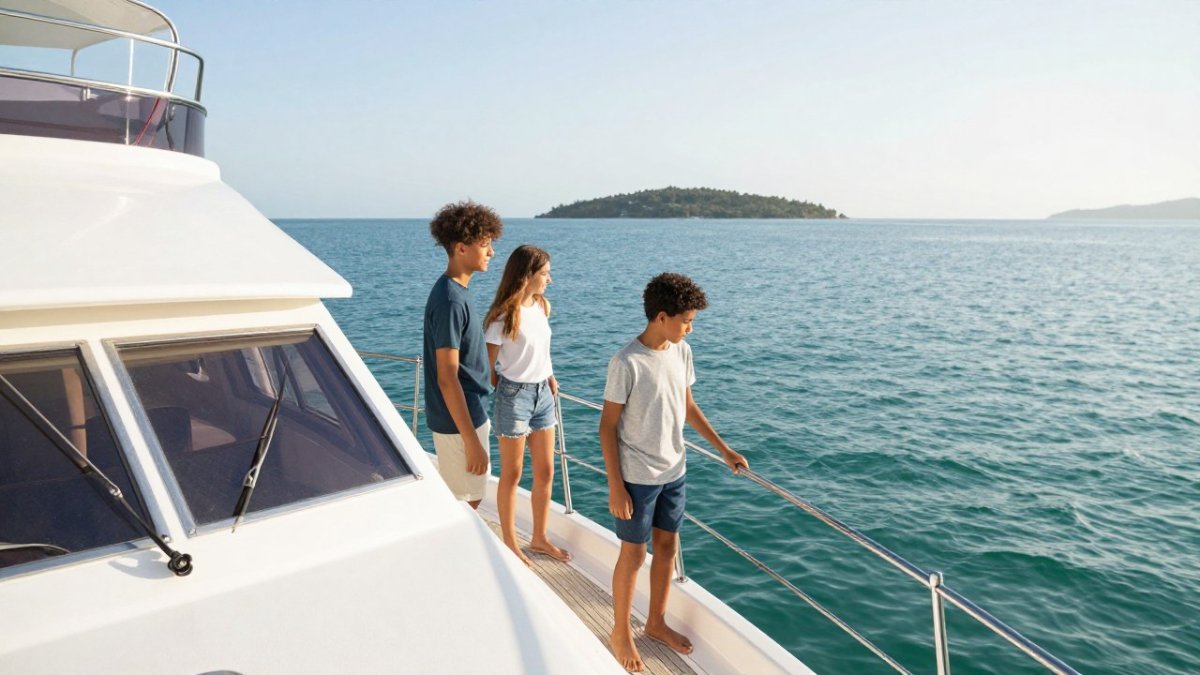
Ask your teenagers what they want before you finalise the route. To compare structure, distances and yacht sizes, browse ten week-long Mediterranean itineraries day by day. A surprisingly common mistake is building the itinerary around what the parents want to see and treating the teenagers as passengers. The result is a trip that looks good on paper and feels flat by day three.
Our practical advice for planning:
- Pick a home port with easy flights, so the first day is not spent in transit.
- Map one stop per day, with a backup anchorage if wind or sea state changes.
- Leave at least one afternoon with nothing scheduled.
Family Yacht Charter Activities Teenagers Actually Enjoy
The activities that land best with teenagers are the ones that give them some control, such as snorkelling, paddleboarding, and kayaking to a nearby cove.
Vague trips to “explore the town” tend to lose teenagers quickly.
Plan a shared activity every evening, such as a film on the sundeck, a barbecue on the swim platform or a card game at the dining table. These moments give the family a reason to gather without making it feel forced.
Private Yacht Charter vs Shared Charter for Families
A private yacht charter gives your family the whole vessel. You set the schedule, choose the stops and decide who joins each activity. For families with teenagers, that control matters, because a teen’s mood can change within a day and the itinerary needs to bend with it.
A shared charter, where unrelated guests join the same boat, can lower the cost per person but reduces flexibility. For a broader look at private yachting versus cruising, see how the two compare before you commit. Teenagers may find shared cabins and fixed group activities restrictive, and parents lose the ability to adjust the plan around their own family’s needs.
For most families with teenagers, a private charter is the better fit. It costs more upfront, but it avoids the tension of competing schedules and gives every family member a say. Shared charters can still suit a larger extended family that wants to split costs and is comfortable with group rules.
Safety, Supervision and Onboard Comfort at Sea
Safety on a family charter is less about rules read aloud on day one and more about a structure everyone understands before the anchor drops. Teenagers tend to comply with boundaries they helped set, so it helps to hold a short family briefing with the captain present and agree the following in plain terms.
Water safety. Agree a swim boundary measured from the swim platform, and a rule that nobody swims off the boat without an adult or crew member on deck watching. Lifejackets should be worn on the tender and in open water regardless of confidence, and the crew should show every family member where the jackets are stowed and how the kill cord and tender ladder work. A common pattern is to pair teenagers into swim buddies so no one is in the water alone.
Supervision and independence. The workable middle ground is a curfew and a check-in routine rather than constant supervision. Agree times by which teenagers are back on board, where they may go ashore and with whom, and how they reach the crew if plans change. Give them a defined zone of freedom, the tender ride to a beach, a paddleboard circuit of the anchorage, and they tend to respect the wider limits.
Medical access. Ask the captain, before booking, which first-aid training the crew holds, whether there is an automated external defibrillator and oxygen on board, and how the vessel would reach a clinic from each stop on your route. Carry prescriptions in original packaging with a copy of the prescription, and tell the captain about any allergy or condition that could matter at sea.
Comfort and connectivity. A teenager’s experience of the week often turns on three things: a cabin they can close, air conditioning that works through the night, and a charging point within reach of the bunk. Confirm the vessel’s Wi-Fi coverage and whether it holds a signal at anchor or only near port, then agree screen-time expectations as a family before departure rather than negotiating them mid-trip. A few offline hours a day usually improves the mood on board.
Watch out: a swim platform that looks ideal in a marina can become a hazard in a swell, so confirm with the crew when swimming off the back of the boat is and is not permitted.
Budgeting for a 2026 Red Sea Family Charter
Many charter guides describe the Red Sea as luxurious but say little about costs. That is the least useful part of the guide for a parent planning a 2026 trip, because a family charter is not one price, it is a stack of line items, and the way you structure them decides whether the week feels generous or tight.
A crewed charter quote is typically built from components such as the following; pricing depends on dates, vessel, and itinerary, so request current figures from Palm Lifestyle:
- Base charter fee, the vessel and crew for the agreed number of nights, quoted per week rather than per person. It rises with yacht length, cabin count and the season.
- Advanced provisioning allowance (APA), a fund held against fuel, food, drinks, mooring and marina charges, and any port or marine-park fees on the route. It is usually collected upfront and reconciled against receipts at the end of the trip, with any unspent balance returned.
- Crew gratuity, a discretionary amount paid at the end, conventionally a percentage of the base charter fee rather than the APA. Ask what the crew expects before you sail so there is no awkwardness on the last morning.
- Optional activities, dive courses, instructor-led dives, equipment hire, jet-ski use where permitted, and guided shore excursions. These are the items teenagers add most often, and they are usually charged separately from the APA.
- Transfers and pre/post nights, airport pickups and any hotel nights before embarkation or after disembarkation.
Two structural choices can move the total considerably. The first is season: peak periods can carry a different base fee than quieter weeks, so shifting a trip can change the quote. The second is cabin count versus group size, a yacht with more cabins than your family strictly needs costs more in base fee but gives teenagers the privacy that keeps the week calm.
Build a contingency buffer on top of the quoted total for weather-driven itinerary changes, extra fuel, and unplanned activities. Ask for the quote in writing with each line separated, and ask specifically which items sit inside the APA and which are invoiced separately. A quote that shows only a single total is the one to question.
Watch out: an APA that looks generous on paper can be consumed quickly by marina charges and fuel if the itinerary involves long passages, so confirm the expected burn rate for your proposed route before you commit.
Family Yacht Charter Packing List for Teenagers
- Reef-safe sunscreen and a rash guard
- Lifejacket if your teenager is not a confident swimmer
- Snorkel set and fins that fit properly
- Light layers for cooler evenings at sea
- Hat and polarised sunglasses
- Waterproof bag for phones and cameras
- Any prescription medication, plus a basic first-aid kit
- Chargers and a power adaptor for the vessel’s sockets
- Books, cards or games for downtime without signal
Requesting Your Red Sea Charter Quote
Get in touch with us to discuss your family’s dates, group size and the kind of itinerary your teenagers would enjoy. If you are looking at departures from the coast, crewed yacht charters from Jeddah show current availability and pricing options. Palm Lifestyle can help arrange a charter and discuss a route around your family’s preferences, and you can request a written quote before you commit.
Frequently Asked Questions
Is the Red Sea a good destination for a family yacht charter?
Yes, the Red Sea suits families well because it offers warm weather for most of the year, calm coastal cruising, clear water for snorkeling, and secluded bays that keep younger and older travellers occupied. Families should confirm current departure options, sea conditions and crew arrangements with Palm Lifestyle before booking, as these vary by season and vessel.
What can teenagers do on a Red Sea yacht charter?
Teenagers often enjoy snorkeling over coral reefs, paddleboarding and other water sports, exploring uninhabited islands, and swimming from the yacht’s deck. Many also appreciate time away from fixed schedules and the chance to take part in shore excursions they choose themselves. Activities should be matched to each teen’s confidence in the water, and any diving should only be arranged with a qualified instructor.
What should families pack for a yacht charter with teenagers?
Pack reef-safe sunscreen, rash guards, a light windproof layer for evenings, soft-soled shoes for the deck, a basic first-aid kit, and any prescription medication in original packaging. Bring a waterproof phone case and a small bag for day trips. Confirm with Palm Lifestyle what is included onboard so you do not duplicate items.
Is a private yacht charter or a shared charter better for a family with teenagers?
A private charter gives your family full control over the itinerary, timing and onboard privacy, which many families with teenagers value. A shared charter can lower the cost per person but limits flexibility and cabin privacy. The right choice depends on your group size, budget and how much independence your teenagers need. Palm Lifestyle can outline both options for your specific dates and party size.
