
Table of Contents
- Private Yacht Charter vs Cruise: The Core Differences
- At-a-Glance Comparison: Charter vs Cruise
- Cost Comparison: What You Actually Pay For
- Crafting a Bespoke Yacht Charter Itinerary
- Luxury Yacht Charter Benefits for Discerning Travellers
- Accessibility, Connectivity and Pet Policies
- Which Option Fits Your Travel Style?
- Frequently Asked Questions
Last Updated: September 15, 2026
Private Yacht Charter vs Cruise: The Core Differences
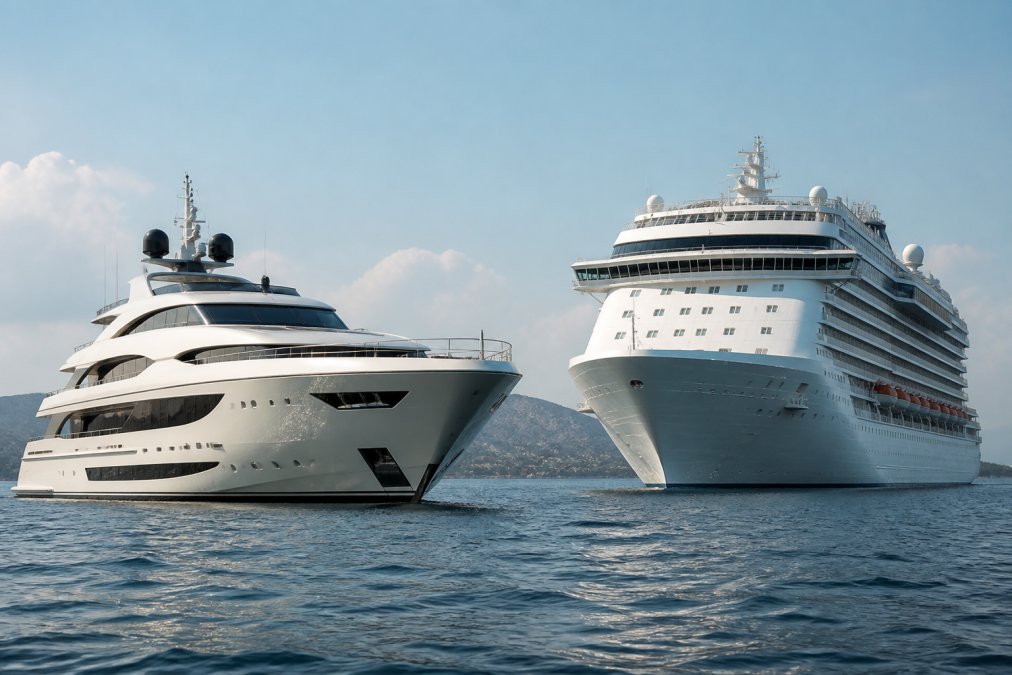
A private yacht charter is a fully crewed vessel hired exclusively by one party; a cruise is a scheduled voyage shared with hundreds or thousands of passengers (Passenger ships). That single distinction, who else is on board, shapes where you go, when you stop, what you eat, and what you pay. This guide from Palm Lifestyle breaks down the real trade-offs, including the costs most brochures leave out.
How Each Experience Works
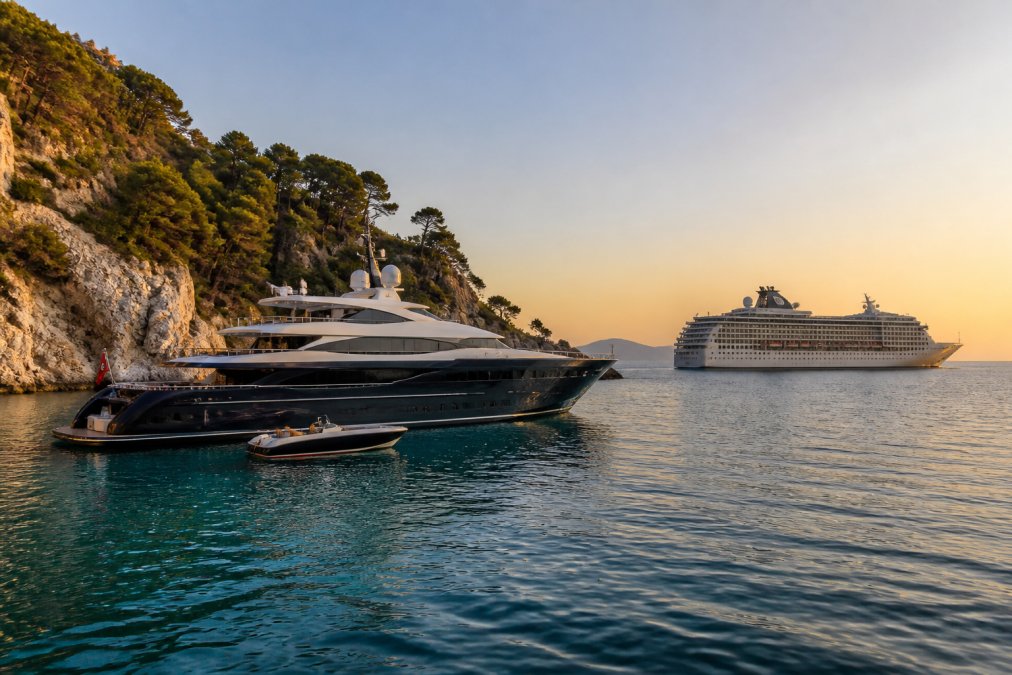
On a private yacht charter, you book the entire vessel and its crew, and the itinerary answers to you rather than a schedule, want an extra night in a quiet anchorage off the Aeolian Islands, and the captain adjusts. A cruise ship follows a fixed route with set port times, and shore excursions run to the clock. A charter guest decides when dinner is served; a cruise passenger checks the daily programme.
At-a-Glance Comparison: Charter vs Cruise
Factor | Cruise Ship | |
|---|---|---|
Itinerary | Fully bespoke, changes daily | Fixed schedule |
Guests on board | Your party only | Hundreds to thousands |
Crew-to-guest ratio | High, often 1:1 or better | Low, shared across decks |
Dining | Onboard chef, menus to your taste | Set sittings or speciality venues |
Ports | Secluded coves, small harbours | Large commercial ports |
Privacy | Complete | Limited |
Cost structure | Weekly rate plus expenses | Per-person fare plus extras |
What the Table Reveals
The trade-off is control versus convenience: a cruise bundles everything into one fare and removes planning effort, while a charter hands you the planning and charges accordingly. Neither is better in the abstract; the question is which suits how you travel.
Cost Comparison: What You Actually Pay For
The two experiences are priced on completely different logic, and that logic matters more than any single number.
A cruise fare is per person, per night, bundling the cabin, basic board, entertainment and transport between ports. The headline fare is a floor, not a ceiling: drinks packages, speciality restaurants, shore excursions, spa treatments, gratuities and often a daily service charge sit on top. Two passengers in the same cabin can spend very different totals.
A charter is priced per vessel, per week, regardless of how many guests are aboard (within certified capacity). The more guests you split it between, the lower the per-person figure falls: a group of eight or ten sharing a mid-size crewed yacht often lands in a comparable per-person bracket to a premium cruise suite, while a couple pays far more each. Charter value is a group question, not an individual one.
Charter rates move with three variables: vessel size and age, season, and cruising region. High season in the western Mediterranean and the Caribbean commands the strongest rates; shoulder seasons and repositioning windows reward flexibility. A newer, larger yacht with a deeper crew roster sits in a different bracket to an older, smaller one with the same cabin count.
The Hidden Costs Nobody Mentions
The weekly rate is only the base. What sits on top of it is where budgets are won or lost.
Advanced Provisioning Allowance (APA). Standard on most crewed charters: you pay a deposit up front and the captain draws against it for fuel, food and beverages, dockage and harbour dues, shore power, water and special requests. At trip’s end the accounts are reconciled, unused APA returned, overspend settled. The APA is usually a percentage of the base charter rate that varies by yacht and itinerary, so confirm it in writing before you commit.
VAT and local taxes. Treatment depends on where the vessel is cruising and where the contract is deemed performed. Rates and rules differ between jurisdictions and change, so the applicable treatment should be stated explicitly in your agreement rather than assumed.
Delivery and repositioning fees. If the yacht is not already in your chosen cruising area, it has to get there, a leg normally charged to the charterer and one of the most commonly overlooked line items.
Crew gratuity. Customary on crewed charters, typically a percentage of the base rate and paid at the end of the trip. Discretionary but expected, so budget it from the start.
Insurance and security deposits. Some contracts require a security deposit against damage or loss, refundable on return of the vessel in good order.
None of this is hidden: every item belongs in the charter agreement, and a reputable broker walks you through each line before signature. The failure mode is not deception but omission at the budgeting stage.
How to Compare the Two Honestly
Line up the two options on the same basis before deciding:
Cost element | Private yacht charter | Cruise ship |
|---|---|---|
Pricing basis | Per vessel, per week | Per person, per night |
Base rate covers | Vessel, crew, standard running costs | Cabin, basic board, onboard entertainment |
Fuel | Via the provisioning allowance | Included in the fare |
Food and beverages | Via the provisioning allowance, tailored to your preferences | Basic board included; premium dining and drinks extra |
Taxes | VAT treatment depends on cruising area and contract | Typically included in the advertised fare |
Gratuities | Customary, percentage of base rate | Daily service charge or discretionary |
Shore activities | Arranged around your itinerary | Sold as excursions, priced per person |
Per-person cost | Falls as group size rises | Fixed per berth |
Run both columns against your actual party size and spending habits. A modest per-person cruise fare climbs quickly once drinks, dining and excursions are added, while a steep weekly charter rate looks very different divided by ten guests who would otherwise each buy a suite and a drinks package.
Crafting a Bespoke Yacht Charter Itinerary
A bespoke yacht charter itinerary is a route built around your party’s pace, interests and dates rather than a published schedule. That flexibility is the core reason charterers choose this over a cruise, but it is not unlimited, understanding the constraints separates a good itinerary from a frustrating one.
The Three Variables That Shape Every Route
Daily distance. Itineraries are planned in nautical miles per day, and comfortable range depends on the vessel: a sailing yacht under sail covers less ground than a motor yacht of similar length, and both less than a fast planing motor yacht.
What the Captain Actually Plans Around
Three practical factors override everything else.
How This Differs From a Cruise Itinerary
Building One That Works
Luxury Yacht Charter Benefits for Discerning Travellers
Privacy, Exclusivity and Service Standards
Accessibility, Connectivity and Pet Policies
Three practical questions decide the choice for many travellers.
Which Option Fits Your Travel Style?
Frequently Asked Questions
What is the difference between a cruise and a private yacht charter?
A cruise follows a fixed schedule on a mega-ship carrying thousands of passengers, with set ports and shared amenities. A private yacht charter gives you exclusive use of the vessel, a bespoke itinerary, and a dedicated crew. You decide where to sail, when to stop, and what happens on board. The trade-off is cost and planning effort versus complete freedom and privacy.
How does the level of privacy compare between a yacht charter and a luxury cruise?
Privacy is the sharpest dividing line. On a cruise, you share pools, restaurants, and shore excursions with hundreds or thousands of strangers. A private yacht charter offers a private deck, secluded anchorages, and personalised service with a crew-to-guest ratio that cruise lines cannot match. For families or executives needing discretion, the charter model wins decisively on privacy levels.
What level of itinerary flexibility can you expect on a private charter versus a cruise?
Cruise itineraries are locked months in advance, with limited port time and strict departure schedules. A private charter lets you change course mid-voyage, linger at a secluded cove, or add a destination based on weather or mood. Itinerary customization is standard on charter, not an exception. This freedom is one of the strongest luxury yacht charter benefits for travellers who value spontaneity.
What hidden costs should I know about before booking a private yacht charter?
Beyond the base charter fee, expect an advanced provisioning allowance (APA) covering fuel, food, and dockage, plus crew gratuities, local taxes, and any special requests. These are disclosed upfront by reputable brokers. Always ask for a full breakdown before signing the charter agreement. The APA is reconciled after the trip, and any unused portion is typically returned.
Can I work remotely or bring pets on a private yacht charter?
Many charter yachts now offer satellite internet sufficient for email, calls, and video conferencing, making remote work viable at sea. Pet-friendliness varies by vessel and destination, so confirm with your broker early. Some yachts welcome well-behaved pets, while others cannot for insurance or hygiene reasons. Accessibility for mobility-impaired guests also varies, so discuss specific needs during voyage planning.