

Last Updated: November 21, 2026
Quick Summary
A private yacht charter for first-time guests comes down to choosing between crewed, skippered and bareboat styles. Crewed charters include a captain and full crew who handle navigation, meals and service, which suits families and hosting groups best. Skippered charters give you a captain only, while bareboat requires proven sailing experience and paperwork.
- A crewed charter includes a captain plus full crew, so you handle almost nothing.
- Bareboat charters are only open to guests with real handling experience and the right paperwork.
- A half-day charter is the right starting point for most first-time guests.
- Ask for an itemised quote covering fuel, catering, gratuity and port charges before you commit.
- A booking is not confirmed until you have written confirmation of date, yacht, guest count and total cost.
Table of Contents
- Charter Styles Explained: Crewed, Skippered and Bareboat
- Choosing a Yacht for a Group: Size, Capacity and Comfort
- How to Book a Private Yacht Charter Without Surprises
- Yacht Charter Duration: Matching Trip Length to Your Plans
- What to Bring on a Yacht Charter: A First-Timer’s Packing List
- Safety, Insurance and Guest Responsibilities on Board
- Start Your Charter Plan with Palm Lifestyle
- Frequently Asked Questions
Charter Styles Explained: Crewed, Skippered and Bareboat
Booking a private yacht charter options for first time guests comes down to one early decision: how much of the running of the boat do you want to hand over? First-time guests often fixate on the yacht itself and skip this question entirely. It shapes the cost, the itinerary, and how relaxed your day actually feels.
A crewed charter is a private yacht rental with a full team on board. The captain handles navigation and the schedule, and the crew manage meals, drinks and the daily running of the vessel. You arrive, you are looked after, and you decide where the afternoon goes.
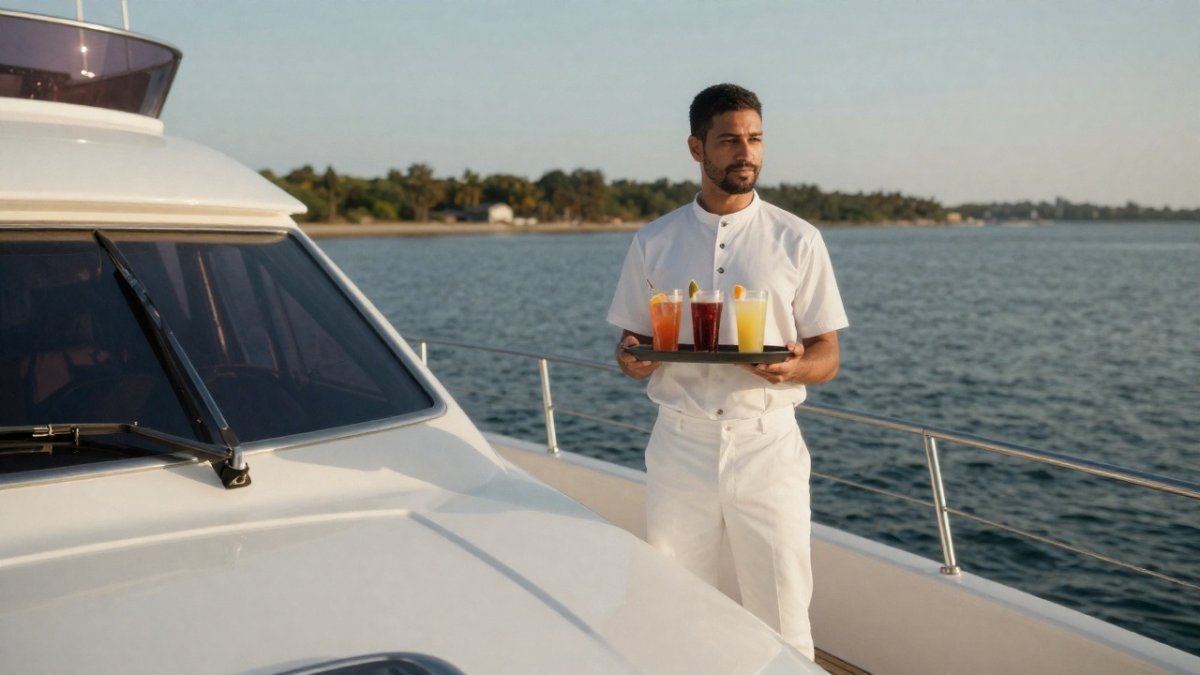
Crewed Charter: Full Service on Board
A crewed charter suits groups who want the water without the logistics. The crew know the cruising grounds, so they can suggest a route that fits your timing rather than a fixed loop. For a family day with children or a business group you are hosting, this is usually the difference between a smooth few hours and a scramble.
Skippered and Bareboat: More Control, More Responsibility
A skippered charter gives you the yacht and a captain, without the wider crew. You plan more of the day yourselves. Bareboat means you take the yacht out with no captain at all, and that option is only open to guests who can show real handling experience and the right paperwork.
If you are still weighing whether a motor yacht or a sailing yacht suits a first trip, our guide to motor yacht vs sailing yacht for first timers covers the trade-offs.
Choosing a Yacht for a Group: Size, Capacity and Comfort
Guest capacity is the number that decides most bookings, and it is the number first-time renters misjudge. A yacht licensed for a certain headcount is not automatically comfortable at that headcount once you add catering, seating and shade. The licensed maximum is a safety ceiling, not a comfort target.
Work backwards from the group in three passes.
Pass one: headcount and mix. Count adults, children and non-swimmers separately. Children usually need supervised deck space and shade, which consumes room that a same-sized adult group would not. A group of twelve adults and a group of eight adults plus four young children can suit very different yachts even though the headcount is identical.
Pass two: how the group will use the day. A swim-and-anchor group needs easy access to the water, a swim platform and a shaded aft deck. A hosting group needs a saloon or dining area that seats most guests at once. A sightseeing group needs forward seating and clear sightlines.
Pass three: service style. A crewed charter with full catering needs galley and service space that a skippered charter does not. If you plan to bring your own food and drinks, confirm where they will be stored and whether the crew will serve them.
Yacht class matters here too. Comfort class buys you space and a calmer ride, while premium class buys finish, crew ratios and better onboard facilities. Neither is wasted money, but only one of them suits a party of twenty.
Watch out: a yacht that looks generous in photographs can feel tight by mid-afternoon once cool boxes, towels and guests’ bags are on deck. Ask the operator how many guests the yacht comfortably hosts for a full day, as distinct from its licensed maximum.
For a deeper look at matching hull length and layout to your group, read how to choose the right yacht size for your needs.
| Charter Style | Who Runs the Boat | Best For | What You Handle |
|---|---|---|---|
| Crewed | Captain plus full crew | Families, hosting, special occasions | Almost nothing |
| Skippered | Captain only | Groups who want input on the plan | Food, drinks, timings |
| Bareboat | You | Experienced sailors | Everything, including the route |
A quick decision path for a first booking: if the group includes children or non-swimmers, start with a crewed charter and a shaded aft deck. If the group is adults who want to set the pace, a skippered charter with a flexible route is usually the better fit.
How to Book a Private Yacht Charter Without Surprises
The most common mistake is comparing headline charter prices and treating the lowest one as the best value. A headline rate is rarely the total you will pay. Ask for an itemised breakdown before you commit, and make sure every line below appears in writing.
- Base charter fee for the date and duration you want
- Fuel and whether it is capped or metered
- Catering and beverages, including whether soft drinks, drinking water and ice are included or billed separately
- Crew gratuity, and whether it is discretionary or expected
- Delivery or relocation charge if you depart from a different point than the yacht’s usual berth
- Any local taxes, permits or port charges that apply to your route
- Optional extras such as water toys, a photographer or a celebration set-up
A reputable operator will put all of this in a single quote so you can compare like for like. For current pricing, contact Palm Lifestyle for a quote, as pricing depends on the yacht, dates, duration and itinerary. If a quote arrives as one number with no breakdown, ask for the breakdown before you pay anything.
Then confirm the terms that only bite later:
- Cancellation windows and what happens to your deposit if weather turns
- The maximum guest count the yacht is licensed to carry
- Whether the itinerary is fixed or can be adjusted on the day
- Documents each guest needs to bring on the day
- Who is responsible for damage or loss on board
- What happens if the captain calls off the trip for safety reasons
Documents and guest details. Most operators will ask for the full names of all guests before departure, and some routes require guest lists in advance. Carry photo ID for each adult. If any guest has a medical condition the crew should know about, flag it at booking rather than on the day.
Weather and rescheduling. Ask what the operator’s policy is when conditions are marginal. A good operator will explain the decision process, who makes the call, and how far in advance you will be told. Confirm whether a weather cancellation means a refund, a credit or a rescheduled date.
Deposits and payment. Confirm how much is due to hold the date, when the balance falls due, and what payment methods are accepted. Keep the written confirmation.
Watch out: a booking is not confirmed until you have written confirmation of the date, the yacht, the guest count and the total cost. A verbal hold is not a booking.
If you are unsure whether you want to own or charter at all, our breakdown of private vs charter yacht use explains where each option fits.
Yacht Charter Duration: Matching Trip Length to Your Plans
A half-day charter is the right starting point for most first-time guests. It is long enough for a proper cruise, a swim stop and a meal, and short enough that nobody is tired of the sun by the end. Full-day charters suit larger groups who want a slower pace and more than one stop.
Cruising time is the hidden variable. A route that looks short on the map can eat an hour of your day in each direction, so ask how much of your booking is spent moving and how much is spent anchored. Once you know how long you want, browse charter destinations to see which itineraries fit that window.
What to Bring on a Yacht Charter: A First-Timer’s Packing List
Pack for the water, not for a hotel. Space on board is tighter than guests expect, and the crew will thank you for soft bags over hard cases.
- Swimwear and a change of clothes in a soft bag
- Reef-safe sunscreen and a hat
- Light layers for the evening breeze
- Non-slip footwear for the deck
- Any medication you take regularly, in your hand luggage
- Motion sickness tablets if you are prone to it (the NHS)
- Your booking confirmation and ID for each guest
Leave the hard-shell suitcase at home. A common mistake is arriving with more luggage than the tender or the cabin storage can take.
Safety, Insurance and Guest Responsibilities on Board
Safety briefings are not a formality. Listen to where the life jackets are stored, how to move around a moving deck, and what the captain expects from guests during mooring. Most minor injuries on charter come from guests moving around while the yacht is underway.
Ask what insurance the operator carries before you book. A reputable charter should be able to confirm the vessel’s cover and explain what it does and does not include. For guests weighing up their own protection, our guide to choosing the right yacht insurance policy walks through what a policy should cover.
Guest responsibilities are simple: follow the captain’s instructions, keep children supervised on deck, and flag any medical condition to the crew at the start of the day.
Start Your Charter Plan with Palm Lifestyle
The gap between a good first charter and a great one is rarely the yacht. It is the briefing before you book: the right style, the right size, and a cost sheet with no blank lines.
At Palm Lifestyle, we match groups to the right vessel from our worldwide charter fleet and manage the process from first enquiry to departure. Our team stays involved after the trip if you later decide to buy. Tell us your group size, your dates and the experience you want, and we will build the plan around it.
Ready to plan your first charter? Get in touch with Palm Lifestyle and we will match your group to the right yacht and itinerary, with every cost set out upfront.
Frequently Asked Questions
What should first-time guests know before booking a private yacht charter?
Know your group size, preferred dates and the experience you want before you enquire. Decide between a crewed, skippered or bareboat charter, and confirm what the rate includes, such as soft beverages, ice and water. Ask about cancellation terms and weather policy in writing. A good broker will match the yacht to your group and explain every cost upfront, so nothing is added after you commit.
How do I choose the right yacht for my group?
Start with guest capacity and group size, then match the yacht size and class to the occasion. A small yacht suits a family day, while a larger superyacht or megayacht gives room for hosting business clients. Check onboard facilities, deck space and crew numbers. For a mixed group, confirm whether the layout supports both relaxed family time and formal entertaining before you compare charter options.
How long should a first yacht charter last?
Most first-time guests start with a half-day or full-day trip to test the experience. A day charter gives enough cruising time for sightseeing and a swim stop without committing to a full week. If you plan to host an event or explore further, consider two to three days. Yacht charter duration should match your route and group energy, so discuss the itinerary with your broker before booking.
What is the difference between a skippered and a crewed yacht charter?
A skippered charter includes a captain who handles navigation and safety, while you manage the rest. A crewed charter adds hospitality staff who prepare meals, serve drinks and keep the yacht running smoothly. Crewed charters suit hosting and special occasions; skippered charters appeal to guests who want more independence. Both give you a private experience with a professional in charge.
