
Last Updated: November 21, 2026
Quick Summary
To choose the right yacht size, start with how you will actually use the boat: your typical guest count, cruising pattern and berthing reality, not your maximum headcount. Size for the overnight guests on a normal trip, then add one cabin of headroom for flexibility.
- Yacht size shapes cabins, berthing, running costs and handling more than any other decision.
- The 30 to 45 metre band is the sweet spot for most owner balancing family use with entertaining.
- Day capacity scales far faster than overnight capacity, so quote your typical guest list, not your event maximum.
- Under 30 metres suits day trips to a week and couples, with more marina choice and lean crew.
- Above 60 metres, fewer marinas can take the vessel and professional handling is standard.
Table of Contents
- Start With How You Will Actually Use the Yacht
- Yacht Size Comparison: The Four Bands That Decide Everything
- Choosing Yacht Size for Number of Guests
- Yacht Size for Family: Cabins, Safety and Slow Days
- Yacht Size for Day Trips: When Smaller Wins
- Advertised Length vs Usable Space: Beam, Draft and Layout
- Berth, Marina and Handling Constraints by Size
- Budget and Running Costs Across the Size Bands
- Match Your Shortlist to a Yacht Size and Brief
- Frequently Asked Questions
Start With How You Will Actually Use the Yacht
Learning how to choose the right yacht size starts with one question most buyers skip: what will the boat actually do on a normal Tuesday? Clients often arrive with a length in mind, borrowed from a photo or a friend’s vessel, before guest numbers, cruising plans and berthing reality have been mapped out. That order is backwards.
Yacht size is the single decision that shapes everything downstream: how many cabins you get, where the vessel can berth, what it costs to run, and how easy it is to handle. Get the length band right and the rest of the brief falls into place. Get it wrong and no amount of interior styling fixes the problem.
Start with three practical filters:
- Primary use: family cruising, corporate entertaining, day trips, or a mix
- Typical guest count: the number you host most weekends, not the maximum
- Cruising pattern: coastal day hops, weekly charters, or longer passages
If your plans lean toward family and business use in equal measure, our guide on yacht charter for family and business explains how to match a vessel to both purposes without compromising either.
Yacht Size Comparison: The Four Bands That Decide Everything
Yacht size comparison becomes far simpler once you stop thinking in exact metres and start thinking in bands. Each band carries its own guest capacity, crew requirements, berthing profile and running cost pattern. The table below summarises what changes as you move up.
Band | Typical Guest Capacity | Crew Profile | Berthing Reality | Best For |
|---|---|---|---|---|
Under 30m | Small groups, day-heavy use, or 1 week | Lean crew or owner-operated | Flexible, wide marina choice | Day trips, couples, first purchases |
30 to 45m | Comfortable long stay groups | Professional crew standard | Standard berths, some limits | Family cruising, mixed-use |
45 to 60m | Larger parties, full guest cabins | Full crew department | Fewer suitable berths | Entertaining, long charters |
60m+ | Large-scale hosting | Full crew with specialists | Restricted berth options | Flagship ownership, unique features as spa |
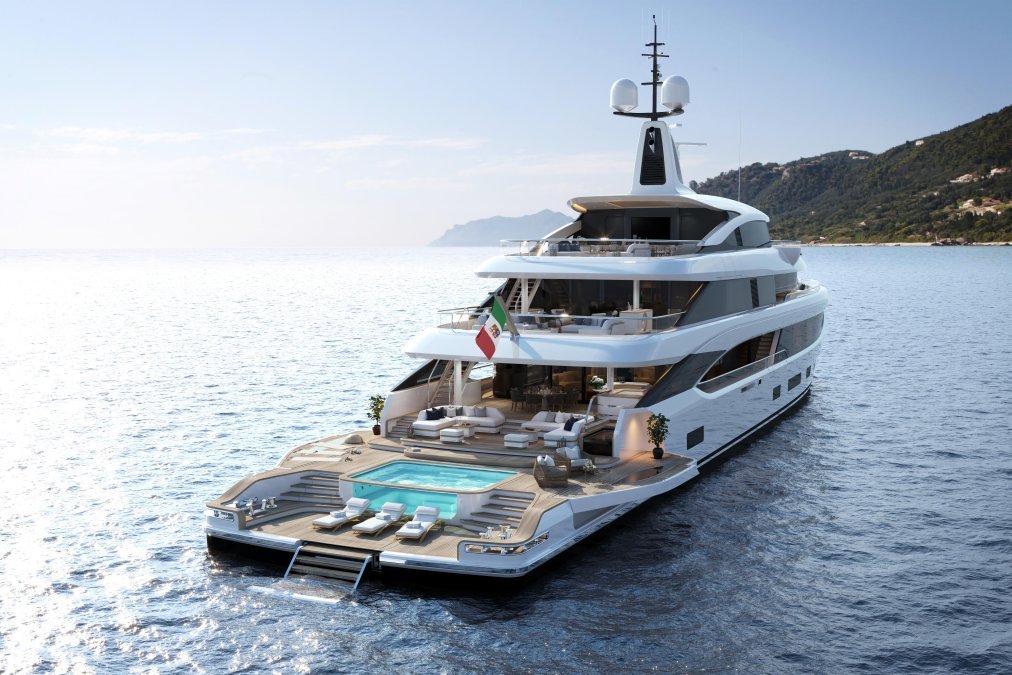
Benetti Motor Yacht
Under 30 Metres
This band rewards agility. A vessel under 30 metres fits into smaller marinas, handles tight channels without drama, and keeps crew numbers modest. For day cruising and short coastal trips, it is often the smartest choice. The trade-off is cabin count: overnight space is limited, and long charters with several guests quickly feel cramped.
30 to 45 Metres
The 30 to 45 metre band is where serious overnight cruising begins. Guest cabins become genuinely comfortable, crew have separate quarters, and the onboard layout supports multi-day trips. Berthing options narrow slightly, but most established marinas still accommodate this range. For most owner-operators balancing family use with occasional entertaining, this is the sweet spot.
45 to 60 Metres
Step into 45 to 60 metres and the vessel becomes an entertainment platform. Salons open up, deck space multiplies, and guest capacity rises without squeezing anyone. Crew requirements grow accordingly, and berth availability tightens in popular cruising grounds. This band suits owners who host regularly and want the yacht to function as a venue, not just a retreat.
60 Metres and Above
At 60 metres and beyond, you are managing a small ship. Every decision, from provisioning to berth booking, requires planning. The payoff is unmatched presence, hosting capacity and extraordinary features onboard such as spa, gym, cinema. The constraint is flexibility: fewer marinas can take the vessel, and manoeuvring demands professional handling at all times.
Choosing Yacht Size for Number of Guests
Choosing yacht size for number of guests is where most briefs go wrong, because buyers quote their maximum headcount instead of their typical one. A vessel sized for the largest party you might host will feel hollow on ordinary weekends and cost more to run every single day.
Work from two numbers:
- Overnight guests: how many people sleep aboard on a normal trip
- Day guests: how many you host for events, which can exceed sleeping capacity
The gap between those two figures tells you how much deck and salon space you need versus cabin count. A yacht with generous entertaining space and modest sleeping capacity often suits corporate use better than a cabin-heavy layout. Conversely, family buyers should prioritise cabins and storage over vast open decks.
A Simple Capacity Rule by Band
Rather than guess, apply the ratios most brokers and designers work to. These are planning figures, not legal limits, and they assume a standard layout rather than a bespoke one.
Band | Typical overnight guests | Cabins to plan for |
|---|---|---|
Under 30m | 4 to 6 | 3 to 4 |
30 to 45m | 8 to 10 | 4 to 5 |
45 to 60m | 10 to 12 | 5 to 6 |
60m+ | 12 and above in certain condition | 6 and above |
The pattern to notice is that day capacity scales far faster than overnight capacity. A 45 to 60 metre yacht can host a reception for dozens on deck while sleeping only around a dozen, because deck and salon area grow with length and beam while cabin count grows more slowly.
Why the Overnight Number Matters More
Overnight guests drive the specification in ways day guests never do. Each sleeping berth needs a cabin, a bathroom, storage, air conditioning load, fresh water capacity and a seat at the dining table. Those systems, not the deck, are what push you into a larger band and a larger crew.
A useful test is to count the people who will actually sleep aboard on your most common trip, then add one cabin of headroom for flexibility. If that figure is six, a well-planned vessel under 30 metres can work; if it is ten, you are realistically in the 30 to 45 metre band regardless of how many day guests you entertain.
Day Guests and Safe Circulation
Day capacity is not just about floor area. It is about how many people can move between the swim platform, the shade, the galley and the heads without queuing. A yacht that advertises space for forty can feel crowded at twenty if the flow is poor.
When viewing, walk the deck as if it were full. Ask where guests gather in shade, how many seats are genuinely shaded, and whether the tender and water toys eat into the space you would use for people. Generous beam and a clean deck plan usually matter more here than an extra metre of length.
Watch out: quoting your event maximum as your sizing number can lead to buying one band too large, and the running cost penalty follows you every day of ownership.
Guest capacity also drives crew numbers, and crew numbers drive running costs. Size the guest list honestly and the rest of the specification follows.
Yacht Size for Family: Cabins, Safety and Slow Days
Yacht size for family use hinges on three things: cabin count, safe circulation, and how the boat behaves on quiet afternoons. Families rarely need the largest vessel in the marina. They need a layout where children move safely, guests sleep comfortably, and rainy days do not turn the salon into a corridor.
Practical priorities for family buyers:
- Cabin configuration: flexible twins that convert, plus a genuine master
- Deck safety: high bulwarks, secure railings, easy access to the water
- Storage: tender, water toys and provisioning all need a home
- Crew compatibility: space for crew who work well with children
A common mistake is buying for the two weeks a year when extended family visits and living with an oversized boat for the other fifty. In practice, a well-planned 30 to 45 metre vessel serves family life better than a larger hull with an awkward layout.
Yacht Size for Day Trips: When Smaller Wins
Yacht size for day trips rewards restraint. If the vessel leaves the dock in the morning and returns at night, you need deck space, shade, a good galley and reliable engines, not six guest cabins sitting empty below.
Smaller yachts win on day use for concrete reasons:
- Berthing: more marinas accept shorter vessels, often at better positions
- Handling: quicker departures and easier manoeuvring in busy harbours
- Running costs: lower fuel consumption and lighter maintenance loads
- Crew: a lean team keeps the atmosphere relaxed
The one thing not to compromise is shade and seating. Day guests spend their time on deck, so prioritise awnings, comfortable seating and a swim platform over interior volume. Buyers who start with day trips often move up a band later, which is why we advise keeping the first purchase simple and proven.
Advertised Length vs Usable Space: Beam, Draft and Layout
Advertised length tells you less than you think. Two yachts of identical length can feel completely different inside once beam, draft and layout are factored in. Beam determines living space and stability. Draft decides where you can cruise and berth. Layout decides whether the space actually works.
A narrow hull with a clever layout often beats a wider one with wasted corridors. Walk the vessel and ask three questions: how wide is the salon at its narrowest point, how much draft does the hull carry, and does the guest flow avoid crossing crew working areas?
Hull design matters here too. If you are weighing displacement against semi-displacement hulls and how each affects space and handling, our comparison of displacement and semi-displacement yacht hulls breaks down the practical differences before you commit to a band.
Berth, Marina and Handling Constraints by Size
Berth availability is a constraint buyers often discover late. Marinas price and allocate by length, and the jump between bands can mean the difference between a prime position and a waiting list.
Handling changes just as sharply. Under 30 metres, an experienced owner can move the vessel with confidence. Above 45 metres, professional handling becomes standard, and above 60 metres you are coordinating a crew operation every time the yacht moves.
Check these before you commit to a length:
- Which marinas in your regular cruising grounds accept the vessel’s length and draft
- Whether tender and crew access work at the berths available
- How the vessel handles in the wind conditions you actually cruise in
If your plans include cruising the Adriatic, our yacht charter Croatia page shows the destinations and local berthing considerations worth reviewing alongside your size shortlist.
Budget and Running Costs Across the Size Bands
Running costs scale faster than length. A vessel that is 50% longer does not cost 50% more to run; crew, insurance, maintenance and berthing all step up at each band, and the cumulative effect surprises first-time buyers.
Annual running costs generally rise as you move through the size bands. The table below shows how each cost line typically behaves, so you can see where the money goes rather than treating ownership as one lump sum.
Cost line | Under 30m | 30 to 45m | 45 to 60m | 60m+ |
|---|---|---|---|---|
Crew | 3-5 | Professional crew standard up to 10 Crew | Full crew department | Ship-scale crew with specialists |
Fuel | Modest, day-heavy use | Moderate, longer passages | Low with displacement, generator and tender load | Moderate with displacement, multiple systems |
Maintenance | Simpler systems, lower annual spend | More complex systems, scheduled yard periods | Specialist trades, longer yard time | Continuous technical management |
Insurance | Lower hull value, simpler risk | Mid-range premium | Higher premium, stricter survey | Premium scaled to hull and crew |
Berthing | Wide choice, lower fees | Standard berths, moderate fees | Fewer berths, premium fees | Restricted berths, highest fees |
Depreciation | Slower on well-kept hulls | Moderate | Steeper on new builds | Holding value due to low inventory |
What the Pattern Tells You
Three things stand out. First, crew is usually the largest single line once you pass 30 metres, because professional crew are a fixed annual cost that does not shrink when the yacht sits idle. Second, maintenance and yard time grow with system complexity, not just hull size, so a technically dense 45 metre vessel can cost more to maintain than a simpler 50 metre one. Third, berthing fees rise with length in almost every marina, and the jump between bands is often sharper than buyers expect.
A practical way to budget is to estimate the annual running cost as a share of purchase price and then check it against the band pattern above. If your estimate sits well below the pattern for your band, you have probably underweighted crew or yard time.
The Costs Buyers Forget
Beyond the headline lines, several costs scale quietly with size:
- Tender and toy storage: larger yachts carry more equipment, and that equipment needs servicing
- Provisioning and hospitality: more guests and crew mean more of everything, every trip
- Regulatory and compliance work: larger vessels attract more paperwork and periodic inspection
- Refit cycles: systems on bigger yachts reach replacement age on a schedule that owners must plan for
Watch out: comparing purchase prices across bands without comparing annual running costs is the fastest route to owning a yacht you cannot comfortably operate.
We do not publish fixed figures here because they vary with flag, crew nationality, cruising region and vessel age. For a detailed breakdown of what ownership actually costs year to year, read our guide on what yacht ownership really costs each year before finalising your band.
Match Your Shortlist to a Yacht Size and Brief
Matching a shortlist to a yacht size and brief is the final filter, and it should be ruthless. By this stage you know your band, your guest numbers and your cruising pattern. The shortlist should contain only vessels that satisfy all three.
Use this checklist before viewing anything:
- Vessel sits within your confirmed length band
- Overnight cabin count matches your typical guest list
- Draft and beam suit your regular cruising grounds
- Berth availability confirmed at your home marina
- Crew profile fits your intended use
- Running cost estimate reviewed against your budget
If you are ready to compare charter companies that can deliver the right size and crew for your brief, our roundup of luxury yacht charter companies for crewed trips is a practical starting point.
The hardest part of sizing a yacht is not the specification sheet; it is resisting the urge to buy for the biggest day you can imagine rather than the life you will actually live aboard. Palm Lifestyle works with clients across the region and worldwide to match vessel size to real use, drawing on direct access to a worldwide charter fleet, end-to-end purchase support, and professional valuation for sellers. Get started with Palm Lifestyle and shortlist the right yacht size with confidence.
Frequently Asked Questions
How do I choose the right yacht size?
Work backwards from use, not upwards from price. Count the people who will actually be on board overnight, then the people who will be on board for the busiest day. Add the trips you take most often (day cruising, weekend stays, weekly charter) and the berths you can realistically access. That brief points to one size band: under 30 metres for day use and small groups, 30 to 45 metres for families and mixed hosting, 45 to 60 metres for larger guest lists and crew, 60 metres and above for full-scale entertaining. Compare two or three yachts within that band rather than across all four.
How many people can different yacht sizes accommodate?
Guest capacity is set by cabins and by the certified passenger limit, and the two are rarely the same. A yacht under 30 metres typically sleeps six to eight in three or four cabins, while 30 to 45 metres usually offers five to six cabins for ten to twelve guests. From 45 metres upward, cabin count climbs and separate crew areas free up guest space. Day cruising can carry far more people than overnight stays, so always ask for both figures: the sleeping capacity and the maximum passenger limit for the day.
What size yacht is best for a family?
For most families, the 30 to 45 metre band gives the best balance. It provides enough cabins for children and guests, a separate crew so parents are not running the boat, and stable hulls that suit short hops and anchorages. A catamaran in the smaller bands is worth comparing because the wide beam adds living space and a shallow draft opens up shallower anchorages. If the family includes young children or grandparents, prioritise easy deck access, shaded areas and a layout where cabins are not stacked far apart.
Is a larger yacht always more comfortable?
No. Length buys space, range and crew, but it also adds draft, berth restrictions and running costs. A well-laid-out 35 metre yacht with a wide beam can feel more generous than a narrower 45 metre vessel, and a smaller yacht can reach anchorages and marinas that a larger one cannot. Comfort comes from layout, stabilisation, shade and service ratios, not length alone. Compare usable deck area, cabin dimensions and crew numbers before assuming the bigger hull is the better purchase.
