
Table of Contents
- Why Yacht Maintenance Tips for Owners Matter in the UAE
- Routine Cleaning and Exterior Upkeep
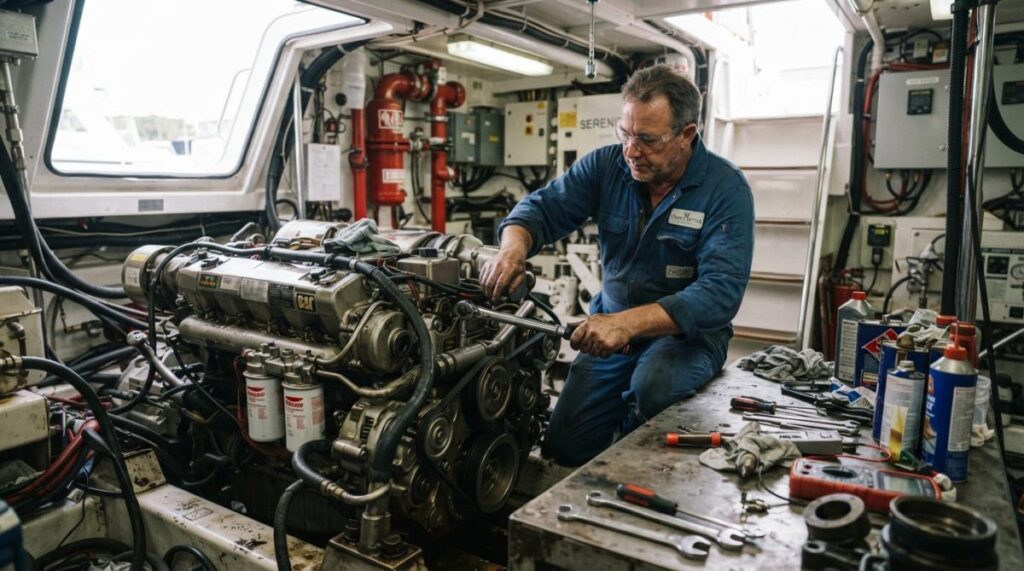
- Engine and Marine Engine Maintenance UAE
- Hull Integrity and Yacht Antifouling Services Dubai
- Battery Bank and Electrical System Checks
- Planned Maintenance Systems and Digital Logbooks
- Understanding the Cost of Yacht Maintenance UAE
- Safety Equipment and Seasonal Preparation
Yacht Maintenance Tips for Owners: Essential Guide
Last Updated: July 26, 2026
Effective yacht maintenance tips for owners start with understanding that vessel upkeep isn’t optional, it’s the foundation of safety, performance, and resale value. At Palm Lifestyle, we work with yacht owners across the Middle East and beyond who recognize that a well-maintained vessel delivers years of reliable cruising while protecting their significant investment. Below, we’ll show you exactly how to build a maintenance routine that keeps your yacht running smoothly, prevents costly breakdowns, and ensures every charter or personal voyage meets the highest standards.
Why Yacht Maintenance Tips for Owners Matter in the UAE
Yachts operating in the UAE face unique environmental pressures that demand more aggressive maintenance than vessels in temperate climates. Intense UV exposure, saltwater corrosion, extreme heat cycles, and high humidity accelerate deterioration across every system, from gelcoat and teak to engine components and electrical connections.
A vessel sitting idle in a Dubai marina experiences more stress than one actively cruising. Stagnant water in tanks breeds bacteria and algae. Batteries discharge in extreme heat. Anodes corrode faster. Engine seals dry out. Owners who treat maintenance as an afterthought typically face emergency repairs that cost 3-5 times more than preventative work.
Owners who invest in planned maintenance systems, whether digital logbooks, scheduled service intervals, or professional surveyor reviews, avoid the cascade of failures that derail cruising plans and erode vessel value. The cost of prevention is always lower than the cost of crisis management on the water.
Routine Cleaning and Exterior Upkeep
The exterior of your yacht is under constant assault in the UAE’s marine environment. Salt spray deposits minerals on every surface. UV rays break down protective coatings. Dust storms coat the deck. Biological growth, algae, and barnacles accelerate in warm Gulf waters.
Start with a weekly freshwater rinse of all exterior surfaces. This removes salt deposits before they can etch into gelcoat or corrode stainless steel fittings. Use low-pressure freshwater only; high-pressure washers damage protective coatings and force water into seams where it causes hidden corrosion.
Monthly deep cleaning should target areas where salt accumulates: around through-hulls, deck hardware, and along the waterline. Use marine-grade cleaners specifically formulated to dissolve salt without damaging the underlying material. Stainless steel requires particular attention, salt pitting develops quickly in the UAE’s climate.
:::pro-tip Many owners skip the freshwater rinse because they assume the marina’s salt water will rinse off naturally. It won’t. Saltwater evaporates and leaves mineral deposits behind. A 15-minute freshwater rinse after each outing prevents months of corrosion damage. :::
Teak Maintenance and Gelcoat Protection
Teak decking and trim define the aesthetic of a classic yacht, but teak requires consistent maintenance in the UAE’s harsh climate. Untreated teak weathers to a gray, brittle state within months as UV rays break down the wood’s natural oils and intense heat causes checking and splitting.
Establish a quarterly teak maintenance schedule. Clean teak with a soft-bristle brush and specialized teak cleaner that removes salt deposits without stripping the wood. After cleaning, apply a marine-grade teak oil or sealer that provides UV protection. Sealed teak lasts 5-7 years before requiring refinishing. Neglected teak deteriorates in 18-24 months.
Gelcoat, the outer resin layer on fiberglass hulls, faces similar UV assault. Unprotected gelcoat fades, chalks, and eventually cracks, allowing water to penetrate the laminate beneath. Inspect gelcoat quarterly for hairline cracks or dull, chalky areas. Small cracks should be sealed immediately with marine epoxy.
Apply a UV-protective wax or sealant to gelcoat every 6 months. This creates a barrier against UV rays and salt spray. The maintenance cost is a fraction of what gelcoat repair costs.
Engine and Marine Engine Maintenance UAE
Your engine is the heartbeat of the vessel. Marine engines operate under extreme conditions, constant salt spray exposure, high heat loads, and the challenge of cooling systems drawing from saltwater. Proper marine engine maintenance UAE protocols are non-negotiable for reliability.
Establish a maintenance schedule based on engine hours, not calendar time. Most marine engines require servicing every 100-150 operating hours or annually, whichever comes first. Check your engine manufacturer’s specifications; these intervals are minimum standards.
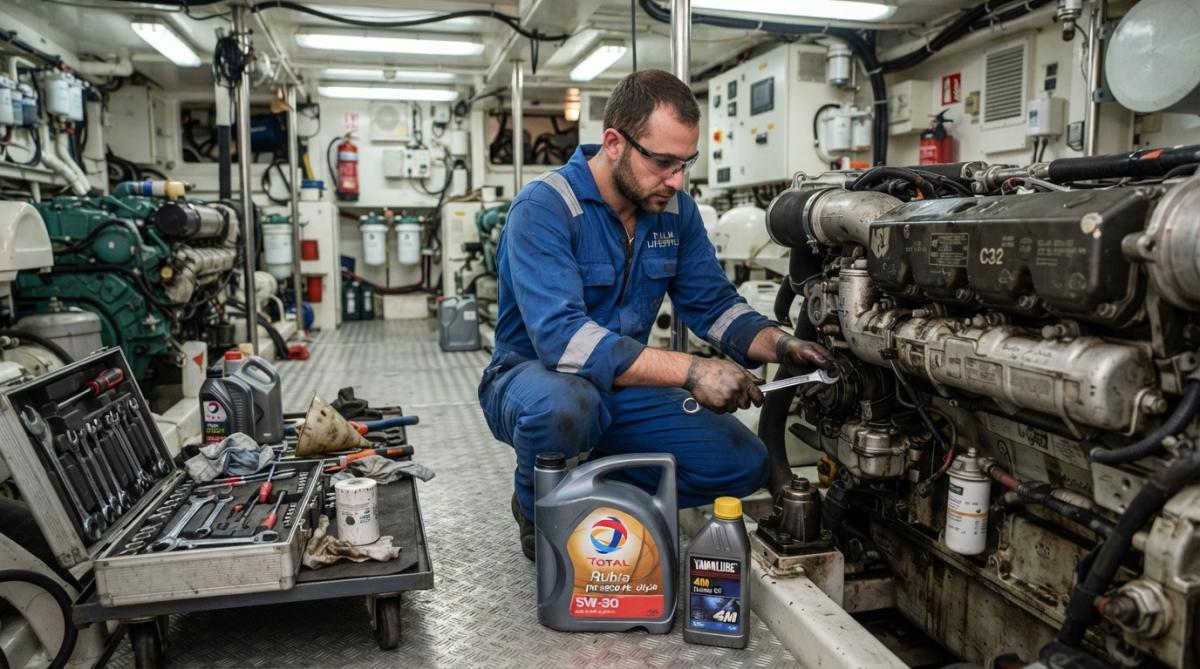
Oil Changes and Coolant Level Checks
Oil changes are the single most important preventative maintenance task. Marine diesel engines operate hotter than automotive engines, and saltwater cooling systems accelerate oil degradation. Old oil loses its protective properties and allows corrosion inside the engine block.
Change oil and filters every 100 operating hours using only marine-grade oil specified by your engine manufacturer. Dispose of used oil properly; never discharge it overboard.
Coolant systems in saltwater-cooled engines require special attention. The raw saltwater intake draws in sediment, algae, and mineral deposits that clog the heat exchanger. Inspect the intake strainer every month and clean it if sediment has accumulated. A blocked strainer causes engine overheating, which can cause catastrophic failure.
Check coolant levels weekly when the engine is cold. Low coolant indicates a leak, find and repair it immediately. Refill with marine-specific coolant that contains corrosion inhibitors formulated for saltwater environments.
Propeller and Shaft Alignment
The propeller and shaft are among the most neglected components. A bent propeller reduces fuel efficiency, increases vibration, and stresses the shaft and transmission. Shaft misalignment creates similar problems and can damage the stuffing box.
Inspect the propeller every 6 months for bent blades, cracks, or erosion. Even a 1/4-inch bend reduces efficiency measurably. While the propeller is accessible, check the shaft for corrosion or pitting.
Shaft alignment should be checked professionally every 2-3 years or after any impact to the hull. A professional surveyor uses laser alignment tools to measure shaft runout and recommend corrections.
Hull Integrity and Yacht Antifouling Services Dubai
The hull is your yacht’s barrier against the sea. Saltwater and marine organisms attack fiberglass, wood, and metal hulls relentlessly. Hull integrity depends on the structural soundness of the laminate and the effectiveness of the antifouling coating.
Marine growth, barnacles, and algae accumulate on the hull bottom within weeks in warm Gulf waters. This growth increases drag, reduces speed, and damages the hull surface. Antifouling coatings prevent this growth but degrade over time and require periodic renewal.
Yacht antifouling services Dubai providers recommend hauling out every 12-18 months for inspection and recoating. During haul-out, the hull is cleaned, inspected for damage, and the antifouling coating is reapplied. Between haul-outs, inspect the underwater hull every 3-4 months using a snorkel or underwater camera for areas where the coating is thin or missing.
Corrosion Prevention with Anodes
Galvanic corrosion, where dissimilar metals in saltwater create an electrical current that eats away at the less noble metal, is invisible but relentless. Zinc anodes are sacrificial metals installed on the hull, through-hulls, and engine cooling systems. They corrode instead of your stainless steel, bronze, and aluminum fittings.
Inspect anodes every 3 months. If an anode is more than 50% consumed, replace it immediately. A corroded anode provides no protection. Check electrical connections annually; corroded or loose connections prevent the anode from protecting the metal around it.
The cathodic protection system should be checked by a marine surveyor every 2-3 years using specialized equipment to measure electrical potential and confirm that all metal components are properly protected.
Battery Bank and Electrical System Checks
Modern yachts depend on reliable electrical systems. Battery banks power everything from navigation electronics to refrigeration to engine starting. Establish a monthly battery maintenance routine.
Check battery terminals for corrosion, white, blue, or green deposits indicate oxidation that reduces electrical conductivity. Clean corroded terminals with a wire brush and apply a thin coat of petroleum jelly to prevent future corrosion. Loose terminals create voltage drops that can damage electronics.
Check battery voltage weekly using a multimeter. A healthy 12V battery at rest should measure 12.6-12.8V. Voltage below 12.4V indicates the battery is discharged or failing. Monitor battery water levels in flooded-cell batteries monthly, topping up with distilled water only.
Shore power connections should be inspected annually for damage, corrosion, or loose connectors. A faulty shore power connection can damage onboard electronics or create a fire hazard.
Planned Maintenance Systems and Digital Logbooks
The most successful yacht owners use structured planned maintenance systems (PMS) to track service intervals, record maintenance history, and plan ahead. A PMS ensures nothing falls through the cracks and provides documentation that increases resale value.
A planned maintenance system should track engine hours and service intervals, oil and filter change dates, haul-out and antifouling renewal schedules, battery testing and replacement dates, safety equipment inspection dates, and hose and belt replacement schedules.
Digital logbook apps make this management straightforward. Cloud-based systems store maintenance records permanently and send reminders when services are due. Some apps integrate with service providers, allowing technicians to update records directly.
Vessel Log Best Practices
A comprehensive vessel log captures operational data that helps identify emerging problems. Record fuel consumption, water usage, battery voltage, and engine operating hours on every trip. Trends in these numbers reveal problems before they become critical.
For example, increasing fuel consumption suggests engine fouling, propeller growth, or hull deterioration. Rising water usage may indicate a leak. Declining battery voltage despite recent charging points to a failing alternator or battery.
Review the log weekly to spot trends. Anomalies that appear in a single entry may be noise. Patterns that persist across multiple entries indicate real problems. This early warning system prevents emergency repairs.
Understanding the Cost of Yacht Maintenance UAE
Maintenance costs are predictable if you plan ahead. The alternative, emergency repairs, is unpredictable and expensive. A structured approach to budgeting for yacht maintenance UAE allows you to maintain your vessel without financial surprises.
Typical annual maintenance costs range from 5-10% of the vessel’s value, depending on age, condition, and usage. Create a maintenance budget by listing every major system and its service intervals.
System | Service Interval | Frequency |
|---|---|---|
Engine Oil & Filter | 100 hours | 2-4x annually |
Hull Haul-out | 18 months | Once per year |
Battery Replacement | 5-7 years | Once per cycle |
Propeller Inspection | 6 months | Twice annually |
Anode Replacement | 3 months | Quarterly |
Coolant System Flush | 2 years | Every 2 years |
Safety Equipment Cert | 1-3 years | Annually |
Allocate monthly funds for routine maintenance and quarterly funds for inspections. Set aside a larger reserve for haul-outs and major component replacement.
The most cost-effective approach is preventative maintenance. Spending on routine oil changes, filter replacements, and inspections costs far less than engine overhauls, transmission repairs, or hull restoration.
:::pro-tip Work with a trusted marine surveyor to create a customized maintenance schedule for your specific vessel. A surveyor can identify which systems are aging and likely to need attention, allowing you to budget accurately and avoid surprises. :::
Safety Equipment and Seasonal Preparation
Safety equipment must be inspected and certified regularly. Life rafts require annual servicing and recertification. Fire extinguishers must be inspected annually and recharged after any use. First aid kits should be checked quarterly and restocked as needed.
Emergency Position Indicating Radio Beacons (EPIRBs) are critical safety devices that transmit your position to rescue authorities if you’re in distress. Check the battery expiration date annually.
Flares have expiration dates. Check your flare inventory quarterly and replace expired flares before they’re needed. Life jackets and safety harnesses deteriorate from UV exposure and saltwater. Inspect them quarterly and replace any that show damage or wear.
Seasonal preparation depends on your cruising profile. For summer cruising in the Gulf, ensure air conditioning systems are serviced and refrigeration capacity is adequate. For winter cruising in cooler climates, winterization includes flushing freshwater systems, adding antifreeze to water tanks, and protecting exposed pipes from freezing.
Maintaining a yacht requires commitment, but the investment in structured maintenance pays dividends in reliability, safety, and resale value. At Palm Lifestyle, we work with yacht owners to develop customized maintenance strategies that match their cruising profile and budget. Whether you’re planning a Yacht Charter experience, considering a Yacht for Sale, or managing a permanently stationed vessel in the UAE, our team can connect you with trusted service providers and help you establish the maintenance systems that keep your yacht performing at its best. Get in touch with us to discuss your yachting needs and develop a maintenance plan tailored to your vessel.
Frequently Asked Questions
How often should I service my yacht's engine as part of regular yacht maintenance tips?
Engine servicing intervals depend on engine hours and type. Most marine engines require servicing every 200–500 engine hours or annually, whichever comes first. In the UAE's warm climate, more frequent checks of coolant levels and oil condition are recommended due to higher operational demands. Consult your engine manufacturer's specifications and maintain a vessel log to track service history accurately.
What is the best yacht cleaning schedule UAE owners should follow?
A comprehensive yacht cleaning schedule UAE should include weekly interior tidying, bi-weekly exterior washdowns, and monthly deep cleaning of teak and gelcoat surfaces. The UAE's salty marine environment and intense sun exposure require more frequent antifouling inspections and hull maintenance. Establish a planned maintenance system using digital logbooks to track all cleaning activities and identify areas needing professional attention.
How do yacht antifouling services Dubai protect my hull from marine growth?
Yacht antifouling services Dubai apply specialized coatings that prevent barnacles, algae, and other marine organisms from attaching to your hull. These services are essential in the UAE's warm waters where biofouling occurs rapidly. Regular antifouling applications—typically every 12–24 months depending on usage—maintain hull integrity, improve fuel efficiency, and reduce corrosion. Combine antifouling with sacrificial anodes for comprehensive corrosion prevention.
What should I include in a maintenance budget for the cost of yacht maintenance UAE?
The cost of yacht maintenance UAE varies by vessel size and age, but typically includes engine servicing, hull cleaning, antifouling reapplication, battery and electrical system checks, and safety equipment inspections. Create a budgeting template that allocates funds for routine preventative maintenance, planned maintenance systems (PMS), and emergency repairs. Digital logbook apps help track spending patterns and identify cost-saving opportunities over time.
