

Last Updated: November 19, 2026
Quick Summary
Identifying hidden liens on used yachts means checking public registers for recorded mortgages and also verifying unrecorded debts directly with shipyards, marinas and suppliers, because a maritime lien can attach without any public record. Demand a written debt declaration from the seller and repeat the search close to closing.
- A maritime lien attaches to the vessel itself for unpaid repairs, supplies or crew wages, not just to the owner.
- Pull a current register extract and a prior register extract if the yacht was imported or re-flagged.
- Ask the last shipyard, current marina and main suppliers to confirm outstanding balances in writing.
- Route any payoff through escrow and make the creditor’s signed lien release a condition of closing.
- Run a final records check in the days before funds move, since records can change.
Table of Contents
- Why Hidden Liens Sink Used Yacht Deals
- How a Maritime Lien Attaches to a Vessel
- Running a Boat Title Search Step by Step
- How to Verify Yacht Ownership and Authority to Sell
- Yacht Registration Documents and the Yacht Bill of Sale
- Uncovering Unrecorded Debts: Repairs, Moorage and Supplies
- Escrow, Closing and Lien Release Mechanics
- Start Your Purchase With a Broker Who Checks Every Record
- Frequently Asked Questions
Why Hidden Liens Sink Used Yacht Deals
Identifying hidden liens on used yachts is the step most buyers skip, and it is the one that costs them the vessel.
Deals like this often look clean on the surface. The seller is friendly, the survey passes, the money moves. Then a shipyard or a lender surfaces with a claim, and the buyer is stuck.
A maritime lien differs from a mortgage. It can attach without any public record. That is why a simple handshake and a bill of sale are never enough.
Below, we walk through exactly how to search for hidden liens, what documents to demand, and how to close a deal so the title transfers clean.
How a Maritime Lien Attaches to a Vessel
A maritime lien is a claim against a vessel for debts tied to its operation, such as unpaid repairs, supplies, or crew wages. It attaches to the boat itself, not just the owner.
This is the part that catches buyers off guard. A lien can arise from a debt the current owner never told you about. A shipyard that repaired the hull, a supplier who delivered fuel, or a marina owed moorage fees can all hold a claim.
Some liens are recorded. Many are not. An unrecorded maritime lien can still be valid, which is why paperwork alone will not protect you.
The practical takeaway: you cannot rely only on what the registry shows. You need to check records and ask direct questions.
Running a Boat Title Search Step by Step
A boat title search is a documented check of public records to confirm who owns a vessel and whether any claims are registered against it. Do it before you sign anything or release any funds.
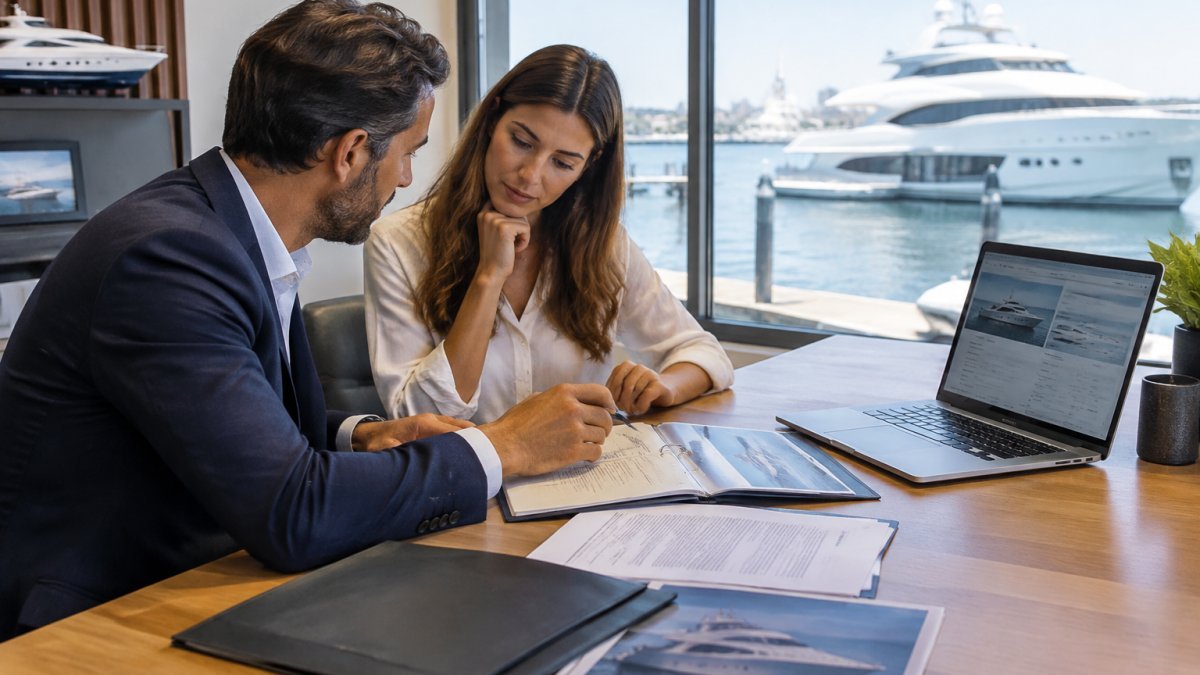
The search is not one lookup. It is a sequence, and each step answers a different question.
- Identify the vessel precisely. Get the official number, the hull identification number, the registered name, and the port of registry from the seller. The hull identification number is stamped into the hull.
- Pull the current register extract. Request a current extract from the register where the yacht is documented today. Confirm the registered owner name matches the seller and that no mortgages or security interests are noted.
- Search the prior register. If the yacht was imported, re-flagged, or changed ownership across borders in recent years, request an extract from the previous registry as well.
- Check recorded mortgages and security interests. A registered mortgage is the most common recorded encumbrance. Ask for a payoff letter from any lender shown, not just a verbal assurance that the loan is settled.
- Request a written debt declaration. Ask the seller to confirm in writing that repair, moorage, supply, and crew accounts are paid, and list any that are not.
- Verify with the parties who touched the boat. Contact the last shipyard, the current marina, and the main suppliers directly. Their accounts are the debts most likely to be unrecorded.
- Confirm seller identity and authority. Match the signer to the registered owner, and if a company owns the yacht, get proof the signer can act for it.
- Repeat the search close to closing. Records can change between your first search and the transfer date. Run a final check in the days before funds move.
Official Registers and Records to Consult
Consult a qualified maritime lawyer to confirm which registers apply to the vessel.
Public records are a starting point, not a guarantee. They show what has been filed, not what has been hidden. A clean extract confirms no recorded mortgage or registered claim; it does not confirm the absence of an unrecorded maritime lien, which is why the debt declaration and direct creditor checks in the next steps matter as much as the register itself.
How to Verify Yacht Ownership and Authority to Sell
To verify yacht ownership, match the name on the register to the person signing the sale, and confirm that person has the legal right to sell. A mismatch is a red flag.
Ask for photo identification and compare it to the registered owner details. If a company owns the yacht, request proof that the signer can act for that company.
Watch for these warning signs:
- The seller’s name differs from the registered owner
- The yacht is held by a company in another country
- The seller cannot produce the original registration documents
- The seller pushes you to skip the title search
A common mistake is trusting a broker’s word alone. Even with a broker involved, insist on seeing the underlying records yourself.
Yacht Registration Documents and the Yacht Bill of Sale
Yacht registration documents prove the vessel is legally recorded and who owns it. The yacht bill of sale is the contract that transfers ownership from seller to buyer.
Both matter. The registration shows the current state of the title. The bill of sale is the document that makes the transfer official.
Ask for the full set of registration documents, not a photo of one page. Check that the details match the vessel you inspected.
What a Yacht Bill of Sale Must Contain
A proper bill of sale should include:
- Full names of buyer and seller
- The vessel’s official number and hull identification number
- The sale price in AED
- A statement that the vessel is sold free of liens, or a list of any that remain
- The date and place of sale
- Signatures of both parties
Never accept a bill of sale that is vague about liens. If the seller will not confirm the vessel is free of claims in writing, treat that as a warning.
For the wider legal picture on what official documents should exist, see our guide to the legal requirements for private yacht registration.
Uncovering Unrecorded Debts: Repairs, Moorage and Supplies
Unrecorded debts are where most surprises hide. A repair bill, unpaid moorage, or a supply invoice may never appear on any register, yet it can still create a claim.
Not every unpaid bill is equal.
Start with the people who touched the boat. Contact the shipyard that did the last refit and ask for a statement of account. Ask the marina where it is berthed whether the berthing account is clear.
What most guides miss is how long these debts can linger and how they resurface. Because unpaid obligations can complicate a transfer even when the seller’s accounts appear settled, verify property title status as part of the same pre-closing check.
What to Do When a Claim Surfaces
Finding a claim is not the end of the deal. Work through these steps before deciding.
- Verify the claim. Ask the creditor for the invoice, the contract, and proof the work or supply was provided to this vessel. Confirm the amount and the dates.
- Establish whether it attaches. Confirm with a maritime lawyer whether the debt creates a lien on the vessel or is an ordinary debt of the seller. This determines who pays.
- Negotiate the payoff. If the claim attaches, agree a payoff figure and route it through escrow rather than paying the creditor directly.
- Require a written release. Make the creditor’s signed lien release a condition of closing, and hold funds in escrow until it is in hand.
- Delay or walk away. If the seller will not clear the claim or the creditor will not release, delay closing. If the exposure is unclear or large, walking away is a legitimate outcome.
A seller’s promise to ‘sort it out after closing’ can leave buyers inheriting someone else’s debt. Keep the money in escrow until every release is signed.
Escrow, Closing and Lien Release Mechanics
Escrow protects the buyer by holding funds until every lien is cleared. The money does not reach the seller until the title is clean and the release documents are signed.
A typical closing structure looks like this:
| Stage | What Happens | Who Acts |
|---|---|---|
| Deposit | Buyer funds held in escrow | Escrow agent |
| Lien check | Final search for recorded claims | Buyer’s broker |
| Payoff | Known liens paid from escrow | Escrow agent |
| Release | Creditors sign lien release forms | Creditor and seller |
| Transfer | Bill of sale signed, title moves | Both parties |
| Balance | Remaining funds released to seller | Escrow agent |
A paid debt is not enough; you need the creditor to confirm in writing that the claim is released.
Releasing funds before the lien release is signed can leave buyers inheriting someone else’s debt. Keep the money in escrow until every release is in hand.
To see how payment and financing fit into this stage, read our guide on how to finance a luxury yacht purchase. And if you are weighing a used vessel against other options, our superyacht buying guide for the Middle East sets due diligence in the full purchase process.
Start Your Purchase With a Broker Who Checks Every Record
Verifying records before committing funds reduces the risk of a title dispute later.
Palm Lifestyle offers end-to-end support for yacht purchases, including financing and legal procedures.
If you are ready to move from checking records to evaluating real listings, our buyer’s guide to yacht purchase deals shows what to look for next.
The risk in any used yacht purchase is not the boat you can see. It is the claim you cannot. Let us take that risk off the table. Palm Lifestyle combines deep market expertise with end-to-end deal management, from title verification to lien release and closing.
To begin the conversation, contact our team and tell us what you are looking for.
Frequently Asked Questions
How can I check whether a used yacht has a lien?
Start with a formal boat title search against the vessel’s official number or hull identification number in the register where it is documented, then request a written lien release or payoff letter for any recorded mortgage. Because some maritime liens, such as unpaid repair or supply bills, may never appear in a public register, also ask the seller for yard invoices, moorage statements and a signed warranty that no undisclosed debts exist. A broker experienced in pre-purchase due diligence can coordinate these checks before you commit funds.
Do yacht registration documents show outstanding liens?
Registration documents confirm the vessel’s identity and the named owner, but they do not always list every claim against it. Recorded mortgages and security interests may appear in the register, while unrecorded maritime liens for repairs, fuel or supplies usually will not. Treat the registration certificate as one piece of evidence, not a clean bill of health, and pair it with a title search, a review of the yacht bill of sale and direct confirmation from any lender that a loan payoff has cleared.
Can a yacht be sold if there is an outstanding lien?
Yes, but the lien must be dealt with at closing. The usual route is to hold the purchase funds in escrow and pay the creditor directly from the proceeds, with the seller providing a lien release before ownership transfers. Never accept a verbal promise that a debt will be settled later. If a claim is disputed or unrecorded, get legal advice before signing, because the vessel itself can remain exposed to the creditor even after the sale.
What should I do if a yacht has no title document?
A missing title is a warning sign, not an automatic deal-breaker. Ask the seller for the registration certificate, the previous yacht bill of sale, builder’s certificate and any documentation history, then verify ownership directly with the relevant register. If the chain of ownership has gaps, request written confirmation from the seller and have a maritime lawyer review the file. Walking away is often cheaper than untangling a disputed claim after you have paid.
