
Table of Contents
- Understanding the Best Yacht Purchase Deals in Today’s Market
- Pre-Owned vs. New: Where the Best Deals Hide
- Evaluating Pre-Owned Yacht Condition and Value
- Top Pre-Owned Yacht Models Offering Strong Value
- Yacht Brokerage Negotiation Tips for Securing Better Terms
- The Luxury Yacht Acquisition Process: Step-by-Step
- Total Cost of Ownership: Beyond the Purchase Price
- Market Trends and Seasonal Timing for Optimal Deals
- Frequently Asked Questions
Last Updated: September 28, 2026
Understanding the Best Yacht Purchase Deals in Today’s Market
Finding the best yacht purchase deals requires understanding where value lives in the market. Success depends on timing, condition assessment, and negotiation strategy.
Deals hide in plain sight for buyers who understand market cycles, evaluate condition accurately, and negotiate strategically. A vessel listed at asking price rarely represents the best opportunity.
This guide synthesizes what moves the needle when hunting for best yacht purchase deals in today’s competitive marketplace.
Pre-Owned vs. New: Where the Best Deals Hide
The fundamental question facing any buyer is whether to purchase pre-owned or new. The answer depends entirely on your priorities, timeline, and risk tolerance.
Pre-owned vessels and depreciation
Pre-owned yachts absorb steep depreciation in their first few years. A five-year-old vessel has shed the worst of its value loss, making it more stable than a brand-new build.
You’re buying a known quantity with documented history, proven performance data, and established resale comparables. Inspect condition thoroughly and review maintenance records before committing.
Older systems require more attention and budget for potential refit work. Engine hours matter significantly, a 50-year-old hull with low hours may be more valuable than a 20-year-old hull run hard.
New builds and builder incentives
New construction lets you control every specification, material, and system with no guesswork about condition.
New builds carry real risks: construction delays, cost overruns, and thin resale markets in early years.
Builder incentives create genuine deals when yards have excess capacity. Negotiating through a broker with yard relationships yields significant savings versus published pricing.
Evaluating Pre-Owned Yacht Condition and Value
Condition assessment separates shrewd buyers from those discovering expensive surprises after closing. Three non-negotiables: hull inspection, engine evaluation, and professional survey.
Hull inspection and engine hours
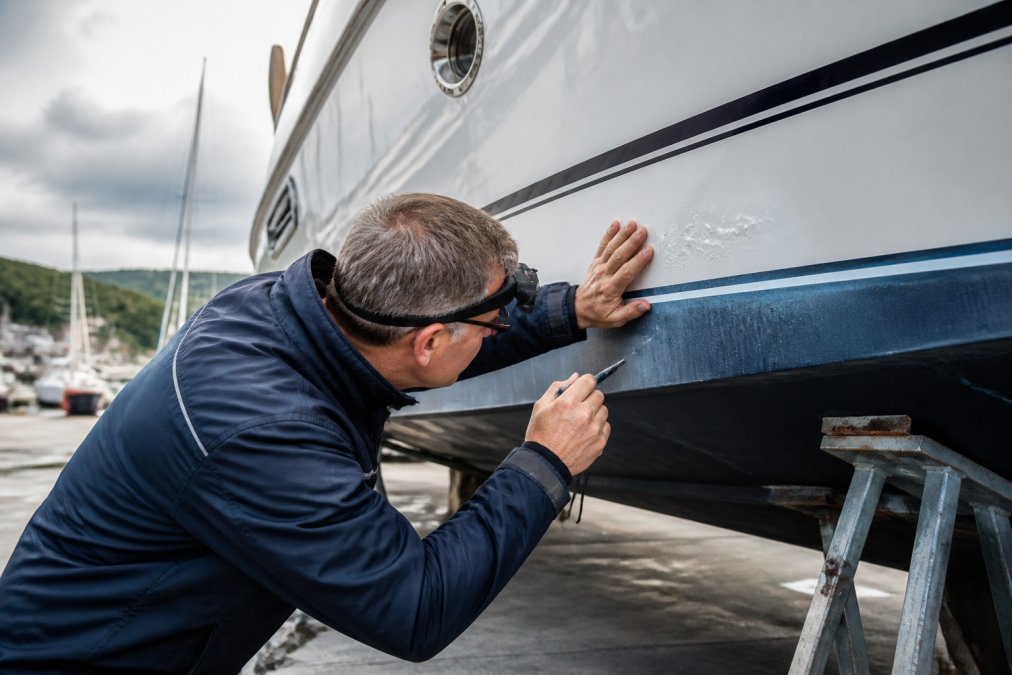
The hull is the foundation. Look for osmotic blistering, cracks, or soft spots indicating delamination.
Engine hours tell a critical story. A diesel engine with 5,000 hours is early-to-mid-life; above 10,000 hours, major overhauls become likely within years.
Check through-hull fittings, sea strainers, and zinc anodes for salt water corrosion. Corroded systems suggest deferred maintenance elsewhere.
Marine survey and sea trial essentials
A professional survey is non-negotiable for any pre-owned purchase, covering structural integrity, systems functionality, equipment condition, and safety compliance.
The sea trial follows the survey, testing engines, steering, electrical systems, and seaworthiness under real conditions. Problems often emerge on the water that don’t show in static inspection.
A good surveyor saves far more by identifying problems before you commit.
Top Pre-Owned Yacht Models Offering Strong Value
Certain models consistently deliver strong resale value and proven reliability where the market has validated quality and demand.
Sunseeker Manhattan 52: Reliability and resale strength
The Sunseeker Manhattan 52 has earned its reputation through consistent build quality and strong market demand. Pre-owned examples hold value well, with moderate maintenance costs and strong global parts availability.
Azimut 55 Fly: Italian design with proven performance
Azimut’s 55 Fly combines Italian design with practical cruising capability and contemporary comfort. Well-maintained examples represent excellent value if you negotiate based on condition rather than age.
Princess V50: Performance-focused engineering
The Princess V50 delivers responsive handling and strong resale value for performance-oriented owners, though the cabin layout is compact for extended cruising.
Ferretti 530: Classic construction and comfort
The Ferretti 530 represents traditional Italian yacht building with strong construction. Many examples from the 1990s and 2000s remain in active service. Solid engineering means fewer surprises and straightforward maintenance.
Fairline Targa 50: Versatile express cruising
The Fairline Targa 50 balances sportiness with comfort through its retractable roof design. The open-air cruising option appeals to buyers in warm climates, while the hardtop provides protection in variable conditions.
The roof mechanism requires maintenance, but Fairline’s reputation for build quality means fewer mechanical failures than competitors. Resale remains solid for well-maintained examples.
Princess V65: Larger performance and luxury
The Princess V65 scales up the performance formula with additional space and power. This model suits experienced owners ready to upgrade from smaller vessels.
Get in touch with us to discuss your yachting needs. →
Operational costs rise significantly with size, fuel consumption, insurance, and crew expenses all increase. But for buyers with the budget and usage to justify a larger platform, the V65 delivers genuine capability and luxury.
Yacht Brokerage Negotiation Tips for Securing Better Terms
Negotiation skill directly impacts your final acquisition cost. Most buyers leave money on the table through passive acceptance of asking prices.
Timing your purchase for seasonal advantage
Yacht sales follow seasonal patterns. Inventory peaks in spring and early summer as owners list vessels for the season. Demand drops in late autumn and winter, when fewer buyers are shopping.
Sellers in slow seasons face pressure. A broker holding inventory through winter incurs carrying costs. A private owner may need liquidity. These conditions create negotiating use. You don’t need to be aggressive, simply being a serious buyer ready to move in October carries weight that the same buyer in June doesn’t.
Regional variations matter too. Mediterranean demand peaks differently than other regions. Understanding local cycles gives you advantage.
Understanding broker commission and fees
Broker commission typically runs 5-10% of the sale price, split between the selling and buying brokers. This is embedded in the asking price, it’s not additional cost to you.
Knowing this matters because it shows where flexibility exists. A broker may discount commission to close a deal. They might offer incentives for quick closing. Understanding the economics helps you identify where a seller has room to negotiate.
Additional fees, survey, documentation, registration, are separate from the purchase price.
Negotiating beyond the asking price
The asking price is a starting point, not a ceiling. Professional buyers routinely negotiate 5-15% below asking on pre-owned vessels, depending on market conditions and vessel condition.
The Luxury Yacht Acquisition Process: Step-by-Step
The acquisition process involves legal, financial, and operational elements that must align for a smooth closing.
Due diligence and vessel documentation
Before making an offer, verify the vessel’s title and ownership history. Confirm there are no liens or encumbrances. Request all documentation: original build specifications, maintenance records, previous survey reports, and insurance history.
Flag registration and legal compliance
Every yacht operates under a flag, a registry that establishes legal jurisdiction and compliance requirements. Different flags carry different regulatory burdens and tax implications.
Financing and ownership structure
Most yacht acquisitions involve financing. Marine lenders typically require a comprehensive appraisal, proof of insurance, and detailed documentation.
Bill of sale and final closing
The bill of sale is the legal document transferring ownership. It should specify the vessel, purchase price, condition at closing, and any included equipment or exclusions.
Total Cost of Ownership: Beyond the Purchase Price
The purchase price represents only part of your actual investment. Operating costs, maintenance, insurance, and mooring create ongoing expenses that dwarf the initial acquisition.
Operating expenses and maintenance budgets
Annual operating costs typically run 5-10% of the vessel’s value for a well-maintained yacht. A 50-meter vessel worth several million in acquisition cost might require 250,000-500,000 annually in operating expenses.
Insurance, mooring, and ancillary costs
Marine insurance typically costs 0.5-1.5% of the vessel’s insured value annually. A 5-million-euro yacht costs 25,000-75,000 per year in insurance, depending on use, location, and crew experience.
Market Trends and Seasonal Timing for Optimal Deals
Understanding market dynamics helps you identify when to buy and what to expect in terms of value.
Regional market dynamics and inventory patterns
The global yacht market has shifted. Mediterranean and Caribbean inventory remains strong, but regional preferences vary. Some regions see increased demand for smaller, more efficient vessels. Others favor larger superyachts.
Off-season buying advantages
Off-season purchases, typically November through March in most regions, offer genuine advantages. Inventory sits longer. Brokers have fewer competing offers to manage. Sellers facing carrying costs become more negotiable.
Frequently Asked Questions
What factors define a high-value yacht purchase?
High-value yacht purchases combine strong resale value, proven reliability, and reasonable operating costs. Look for vessels with documented maintenance records, low engine hours, and hull inspections showing no structural issues. Market demand for the model, brand reputation, and age significantly influence value. Pre-owned yachts typically depreciate 15-20% in the first five years, then stabilize. Newer models with modern systems and efficient engines retain value better than older vessels requiring immediate refits.
How should I evaluate pre-owned yacht condition before committing?
Commission a professional marine survey covering hull integrity, engine condition, electrical systems, and interior fittings. Request engine hours and full service history. Conduct a sea trial to assess performance, handling, and system functionality. Check for signs of water damage, corrosion, or deferred maintenance. Review the vessel’s flag registration and any outstanding liens. Verify insurance history and previous ownership. These steps reveal hidden defects and confirm the yacht matches its asking price and condition claims.
What are the best months to buy a yacht for better deals?
Late autumn and winter typically offer the strongest buyer advantages. Fewer buyers are active during colder months, reducing competition and giving sellers motivation to negotiate. Spring and early summer see peak demand, driving prices up. End-of-year sales often feature incentives as brokers clear inventory. Regional weather patterns also matter: Mediterranean markets slow in winter, while Arabian Gulf demand peaks in cooler months. Timing your purchase during low-demand seasons can yield 5-15% savings compared to peak periods.
How does yacht brokerage negotiation work, and what should I know?
Brokers typically earn 5-10% commission split between buyer and seller representatives. Negotiate beyond the asking price by referencing recent comparable sales, survey findings, and repair estimates. Request the seller cover specific repairs or include equipment. Discuss delivery costs, surveys, and closing timelines. Professional brokers access off-market inventory and have relationships with sellers, often securing better terms than direct negotiations. Broker expertise in maritime law, financing, and due diligence protects you during acquisition and can identify hidden costs or liabilities before purchase.