
Table of Contents
Last Updated: June 23, 2026
Understanding Private Superyacht Charter Booking
Private superyacht charter booking is a layered, high-stakes decision in luxury travel that requires substantial preparation. The process involves contract negotiation, itinerary approval, crew briefings, and a financial structure that includes the base charter fee plus variable operating costs. Most first-time charterers treat it like a hotel reservation, a critical mistake.
A superyacht is a privately owned vessel exceeding 24 meters in length, professionally crewed, and available for private hire through a licensed broker or management company. This distinction determines the regulatory framework, insurance requirements, and service standards governing your experience.
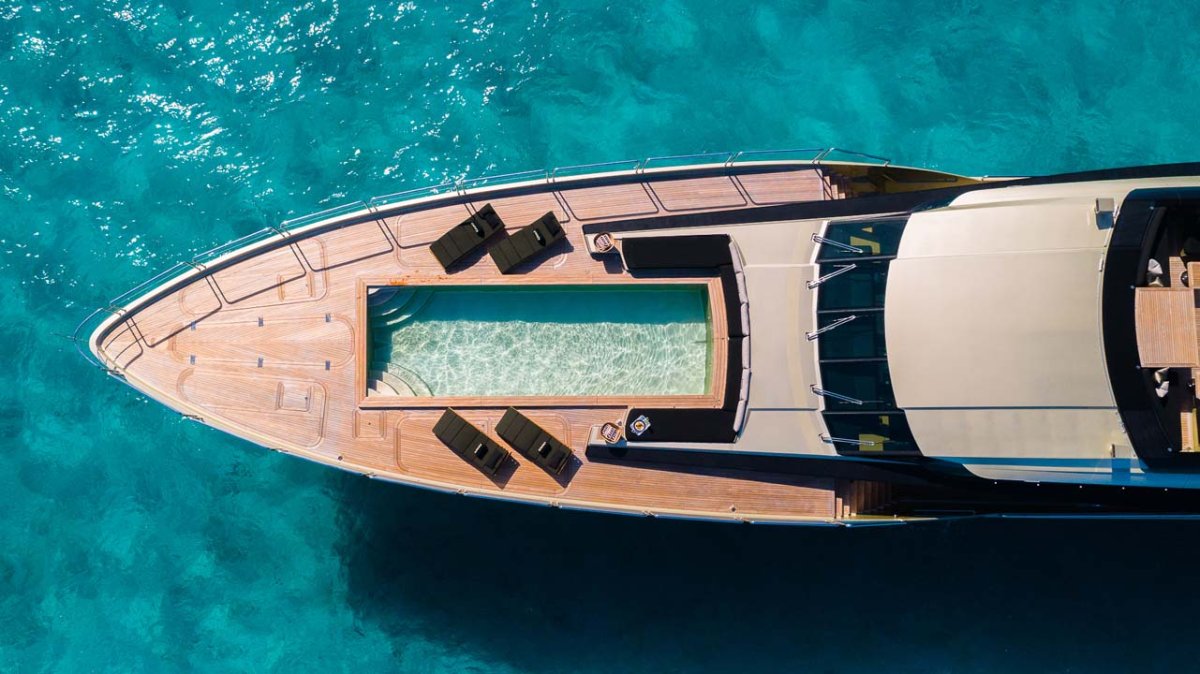
Aerial view of a luxury white motor superyacht anchored in clear turquoise Mediterranean waters, with a tender deployed and water toys visible on the aft deck under bright midday sun
According to the Mediterranean Yacht Brokers Association (MYBA), standardised charter agreements exist to protect both charterer and owner, and understanding their structure before signing is non-negotiable.
Motor Yachts vs. Sailing Yachts vs. Catamarans
The vessel type shapes every aspect of the charter experience, from speed and stability to onboard atmosphere.
Vessel Type | Best For | Speed Profile | Stability | Typical Use Case |
|---|---|---|---|---|
Motor Yacht | Island-hopping, corporate events | High | Good in moderate seas | Mediterranean, Gulf |
Sailing Yacht | Authentic sailing, eco-conscious | Wind-dependent | Variable | Atlantic, Caribbean |
Catamaran | Families, shallow anchorages | Moderate | Excellent | Caribbean, Indian Ocean |
Explorer Yacht | Remote destinations, expedition | Moderate | Very good | Arctic, Pacific |
Motor yachts dominate the Mediterranean charter market because they cover distance quickly and offer the interior volume clients expect. Sailing yachts attract charterers who want the experience of actual sailing. Catamarans excel for family groups because the dual-hull design eliminates rolling that makes guests uncomfortable overnight. Explorer yachts are built for destinations where infrastructure is minimal and self-sufficiency is mandatory.
How to Choose a Yacht Charter Broker
The broker you select determines the quality of every subsequent decision. A skilled charter broker qualifies your requirements, negotiates on your behalf, manages the contract process, and remains accessible throughout the charter.
Ask any prospective broker how many charters they personally managed in the last twelve months and which destinations they know from direct experience. Vague answers are a red flag.
MYBA Standards and Broker Credentials
The Mediterranean Yacht Brokers Association sets the industry benchmark for professional standards in superyacht chartering. MYBA membership requires brokers to operate under a standardised charter agreement, maintain professional indemnity insurance, and adhere to a code of conduct that protects the charterer’s deposit and rights.
MYBA membership means the charter contract you sign has been reviewed and standardised by an industry body, which limits ambiguous clauses that could expose you to unexpected costs. Always confirm your broker holds current MYBA membership or an equivalent credential from a recognised body such as ICOMIA.
The Private Superyacht Charter Booking Process
The private superyacht charter booking process follows a defined sequence that prevents delays and protects your deposit.
Initial Inquiry to Confirmation
The process begins with a detailed brief: your preferred dates, destination, group size, activity preferences, and budget range. A competent broker uses this to filter the yacht fleet and present options that genuinely match your requirements.
Once you select a vessel, the broker places a hold (typically 48 to 72 hours) while the charter agreement is drafted. The MYBA standard agreement covers the base charter fee, payment schedule, cancellation terms, and the APA framework. You sign, pay the initial deposit (usually 50% of the base fee), and the booking is confirmed.
Here is the standard booking sequence:
Submit charter brief with dates, destination, and group profile
Review shortlisted vessels and specifications
Conduct a sea trial or virtual walkthrough if required
Negotiate terms and review the charter agreement
Sign the agreement and pay the initial deposit
Submit the APA payment prior to embarkation
Complete crew preference forms and provisioning lists
Board and commence the charter
Sea Trial and Final Negotiations
A sea trial is the physical inspection of the vessel before you commit to the full charter fee. For longer or higher-value bookings it is worth requesting. Final negotiations typically cover the APA percentage, crew gratuity expectations, and any bespoke additions to the standard package. This is also when you confirm the itinerary in writing with the captain.
Superyacht Charter Itinerary Planning Essentials
Itinerary planning is where the charter experience is either elevated or wasted. A route built around your specific interests, seasonal conditions, and the vessel’s capabilities is unforgettable.
Luxury Destinations and Seasonal Considerations
The Mediterranean remains the world’s most active superyacht charter market, with the Western Mediterranean (Balearics, French Riviera, Sardinia) peaking from June through August and the Eastern Mediterranean (Greek Islands, Turkey, Croatia) offering strong value from May through October. The Red Sea and Arabian Gulf are increasingly popular for winter charters, particularly for clients based in the GCC region.
Seasonal timing matters significantly. The Mistral wind in the Western Mediterranean can disrupt itineraries in spring. The Meltemi in the Aegean peaks in July and August, making certain island groups uncomfortable for smaller vessels. A knowledgeable broker factors these patterns into the route from the outset.
Bespoke Experience Customization
A bespoke superyacht charter itinerary integrates provisioning preferences, water toy schedules, private dining arrangements, and shore excursions into a coherent daily programme. The captain and chief steward work from a preference form you complete before departure, covering everything from dietary requirements to preferred wake-up times.
Understanding Luxury Yacht Charter Costs and APA
Luxury yacht charter cost is consistently the area where first-time charterers encounter the most surprises. The base charter fee is only one component of the total expenditure.
What Is APA in Yacht Charter
The Advanced Provisioning Allowance (APA) is a pre-paid fund, typically calculated as a percentage of the base charter fee, that covers all onboard running costs during the charter. These costs include fuel, provisioning, port fees, marina charges, and crew expenses.
The APA is held by the captain and spent on your behalf throughout the charter. At the end of the trip, a full itemised account is provided. If the APA is underspent, the balance is refunded. If expenses exceed the APA, the shortfall is settled on departure.
All-Inclusive vs. Variable Expense Models
Some charter operators offer all-inclusive packages where a fixed fee covers all expenses without an APA. This model suits clients who prefer budget certainty. The trade-off is that all-inclusive packages are typically priced conservatively, meaning charterers who use fewer resources effectively subsidise those who use more.
The variable APA model rewards moderate consumption and gives the captain flexibility to adjust provisioning to your actual preferences. For most experienced charterers, the APA model is preferred because it produces a more personalised onboard experience.
Cost Component | All-Inclusive Model | APA Model |
|---|---|---|
Base Charter Fee | Fixed | Fixed |
Fuel | Included | Variable via APA |
Provisioning | Pre-set menu | Customised |
Port Fees | Included | Variable via APA |
Budget Certainty | High | Moderate |
Flexibility | Low | High |
Charter Legal Framework and Insurance Protection
The legal and insurance framework governing a private superyacht charter determines what happens when things go wrong. This section is critical, not secondary.
Standard Contract Terms and Liability
The MYBA standard charter agreement allocates liability clearly between owner, operator, and charterer. The owner is responsible for the vessel’s seaworthiness and the crew’s professional conduct. The charterer is responsible for damage caused by guests beyond normal wear. The broker holds the deposit in a bonded account, which protects the charterer if the vessel becomes unavailable after payment.
Key clauses to review include force majeure provisions, the cancellation schedule, and the governing law jurisdiction. Many charters are governed by English law regardless of where the vessel operates, which has practical implications for dispute resolution.
Charterer’s liability insurance is separate from the vessel’s own P&I (Protection and Indemnity) cover. Some high-net-worth travel insurance policies include yacht charter liability as a rider; others require a standalone policy. Charterers bear personal responsibility for the conduct of their guests aboard, which makes adequate liability cover essential rather than optional.
Crewed Yacht Experience and Onboard Service Standards
The crew is the single greatest variable in the quality of a superyacht charter experience. A vessel with an exceptional crew will consistently outperform a technically superior yacht with an average one.
A professional superyacht crew operates to STCW (Standards of Training, Certification and Watchkeeping) certification standards, but certification is the floor, not the ceiling. The captain’s local knowledge, the chef’s culinary range, and the chief steward’s ability to anticipate guest preferences are what separate a memorable charter from an adequate one.
The crew-to-guest ratio typically runs from 1:1 to 1:2, depending on vessel size and configuration. This ratio enables the personalised service that distinguishes a crewed yacht charter from other luxury hospitality.
The crew briefing you provide before departure is as important as the one the crew gives you. The more specific you are about preferences, routines, and expectations, the better the crew can calibrate the experience to your group. Confirm the full inventory of water toys, tenders, and onboard amenities in writing before booking, including whether jet skis, paddleboards, diving equipment, and the tender are included in the charter fee or subject to additional charges.
Sustainability and Eco-Conscious Chartering
The superyacht industry is under pressure to address its environmental footprint, and forward-thinking operators are responding with concrete changes.
Hybrid propulsion systems are now available on an increasing number of charter vessels, allowing electric operation in anchorages and low-speed passages. This reduces fuel consumption and noise, improving the onboard experience while reducing emissions. Shore power connections, responsible waste management protocols, and single-use plastic elimination programmes are becoming standard expectations.
For charterers who want to align their private charter with environmental values, ask the broker specifically about the vessel’s fuel efficiency rating, waste management procedures, and whether the captain holds any recognised eco-certification. Some vessels operate under programmes aligned with the Blue Flag environmental standard.
A superyacht charter is not a zero-impact activity. The goal for eco-conscious charterers is meaningful reduction: choosing vessels with hybrid or optimised diesel systems, selecting itineraries that minimise unnecessary passage miles, and supporting anchorage areas that operate under formal marine protection frameworks.
Choosing the right approach to private superyacht charter booking requires more than browsing a fleet list. The complexity of the financial structure, legal framework, and itinerary planning means that expert guidance is the difference between a seamless experience and a costly one. Palm Lifestyle provides comprehensive end-to-end charter management, from initial vessel selection and contract negotiation to bespoke itinerary design and crew briefing, backed by direct access to a worldwide fleet and deep regional expertise in the Mediterranean and GCC markets. Get in touch with us to discuss your yachting needs.
Frequently Asked Questions
How far in advance should I book a private superyacht charter?
Booking 3–6 months in advance is ideal for popular destinations and peak seasons, though flexibility can yield last-minute opportunities. High-demand megayachts and summer Mediterranean charters often require longer lead times. Your charter broker can advise on optimal timing based on your preferred vessel and itinerary. Early booking also allows time for detailed bespoke itinerary planning and crew coordination.
What is APA in yacht charter and why does it matter?
APA (Advanced Provisioning Allowance) is an estimated amount you deposit upfront to cover variable expenses—fuel, food, crew gratuities, port fees, and water toys—during your charter. It's not a fixed fee; unused portions are refunded, and overages are billed post-charter. Understanding APA ensures transparency in luxury yacht charter costs and helps you budget accurately for your private superyacht charter booking without hidden surprises.
Do I need a charter broker for private superyacht charter booking?
While not legally required, a reputable charter broker streamlines the entire process. Brokers provide access to exclusive fleet options, negotiate terms, handle legal documentation, arrange sea trials, and ensure MYBA compliance. They save time and reduce risk by vetting vessels and crews. For first-time charterers especially, a broker's expertise in private superyacht charter booking is invaluable for securing the right vessel and crafting a seamless bespoke experience.
What's typically included in a private superyacht charter package?
Most all-inclusive packages cover the vessel, professional crew, standard provisioning, water toys, and tender services. Specifics vary by broker and charter type. Bareboat charters offer just the yacht; crewed charters add a gourmet chef and service team. Fuel, port fees, and premium experiences are often separate (covered by APA). Clarify inclusions with your charter broker to avoid misunderstandings about what your luxury yacht charter costs actually cover.