
Table of Contents
- Understanding Dubai Yacht Charter Options
- Yacht Rental Dubai Marina: Locations and Fleet Options
- Dubai Yacht Tour Duration: Planning Your Experience
- Dubai Maritime City Authority Regulations and Safety Standards
- Luxury Yacht Features and Onboard Entertainment
- Booking a Dubai Yacht: Step-by-Step Process
- Sustainable Yachting Practices in the Region
- Conclusion
Dubai Yacht Charters: A Complete Guide to Luxury Vessel Rentals
Last Updated: August 4, 2026
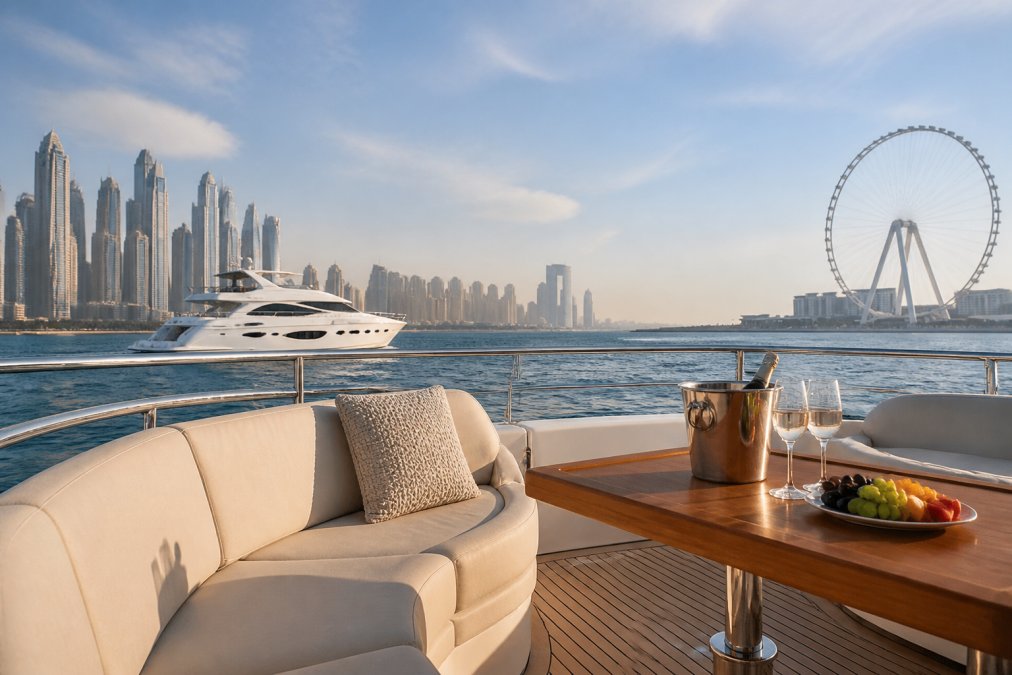
When you think of luxury maritime experiences in the Middle East and Mediterranean, a dubai yacht charter immediately comes to mind. The waters around this iconic destination offer spectacular cruising opportunities, from intimate sunset voyages to corporate celebrations aboard superyachts. At Palm Lifestyle, we’ve spent years curating premium yacht experiences for discerning clients who demand sophistication and seamless service. Whether you’re planning a bespoke charter for a special occasion or exploring yacht ownership logistics, this guide walks you through everything you need to know about luxury vessel rentals in this region and beyond.
The yacht charter market has evolved dramatically. What was once exclusive to ultra-wealthy individuals is now accessible through flexible rental options, shared tours, and transparent pricing. Growing demand for experiential maritime services continues across the Gulf region and Mediterranean. The key is understanding your options, knowing what questions to ask, and recognizing the difference between mediocre bookings and genuine luxury.
Below, we’ll show you exactly how to navigate dubai yacht charters, from comparing private rentals versus shared experiences to understanding regulatory requirements and costs that catch first-time charterers off guard.
Understanding Dubai Yacht Charter Options
The charter market splits into two fundamentally different experiences. Private charters give you complete control over the vessel, itinerary, and guest list. Shared tours put you on a boat with other guests at a fraction of the cost.
Private charters work best when you need exclusivity, flexibility, or have specific requirements. You control departure times, catering choices, water sports options, and routes. Corporate events, family celebrations, and proposals all benefit from this customization.
Shared tours operate on fixed schedules and predetermined routes. You board at a set time, follow a planned itinerary highlighting Dubai Marina, the Palm Jumeirah, or Ain Wheel, and share amenities with other guests. These experiences work well for first-time visitors, solo travelers, or anyone sampling the yachting lifestyle without major financial commitment.
Most first-time charterers underestimate how much they value flexibility. If your schedule is rigid or your group has specific preferences (dietary restrictions, photography requirements, timing around sunset), private charter costs itself back quickly through avoided complications.
Private Charters vs. Sharing Tours
Private charters demand advance planning. You’ll work with a broker weeks in advance, discussing vessel specifications, crew requirements, catering menus, and itinerary preferences.
Shared tours prioritize simplicity. You book online, show up 30 minutes early, and board with everyone else. The captain follows a tested route with standardized entertainment, refreshments, and activities.
Superyacht Specifications and What They Offer
Superyachts begin at 24 meters in length, though most charter superyachts fall between 30-60 meters. A typical superyacht in the 40-50 meter range sleeps 8-12 guests, carries a crew of 4-6, and features spacious cabins with en-suite bathrooms, fully equipped galleys, formal dining areas, multiple deck spaces, and often a hot tub or swimming platform.
Smaller motor yachts (9-12 meters) represent the sweet spot for many charterers. They’re large enough to feel genuinely luxurious, small enough to navigate tight marina spaces and shallow anchorages. These vessels typically accommodate 6-10 guests and carry a captain plus one crew member.
Modern superyachts reflect contemporary luxury standards: minimalist aesthetics, high-quality furnishings, premium sound systems, and climate control throughout. Many feature open-plan layouts that blur the line between indoor and outdoor living, critical for Mediterranean and Gulf cruising where weather permits year-round deck time.
Yacht Rental Dubai Marina: Locations and Fleet Options
Dubai Marina stands as the region’s premier yacht departure point, hosting over 1,800 berths and serving as home port for hundreds of charter vessels. The marina’s location between the iconic Palm Jumeirah and downtown Dubai makes it the logical starting point for most charters. From here, you can reach Ain Wheel, the Palm, Burj Al Arab, and open water within 30 minutes.
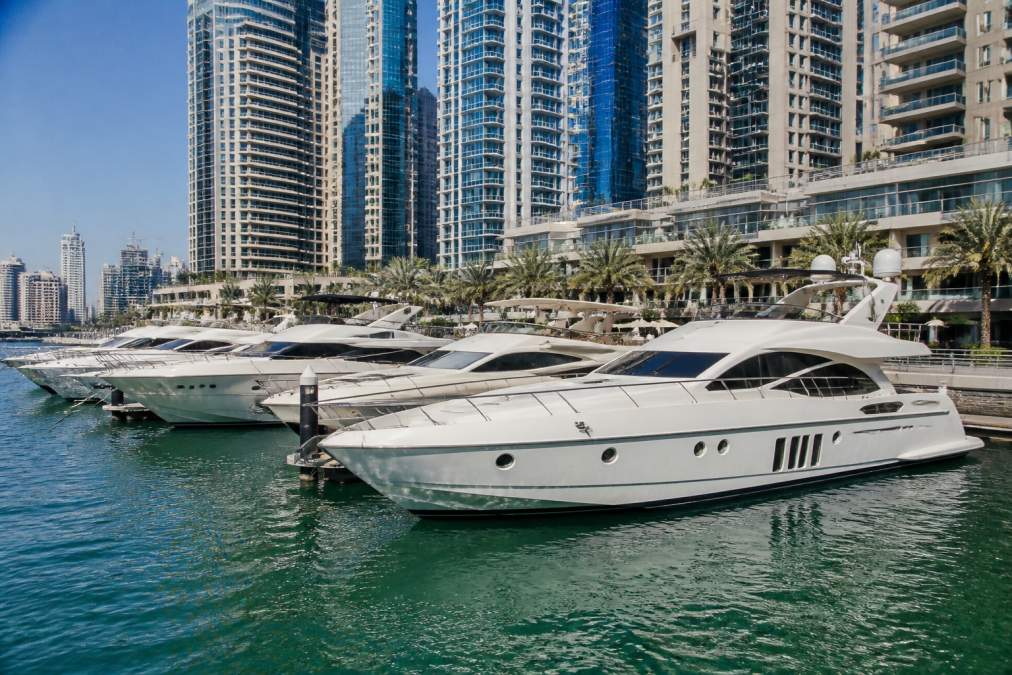
Several other departure points now compete with Dubai Marina. Dubai Harbour offers a contemporary alternative with modern facilities and direct access to open water. Business Bay provides an urban setting for guests maximizing time on the water. Palm Jumeirah has emerged as a premium departure point for guests staying at nearby resorts.
Marina Facilities and Departure Points
Professional marinas provide mooring space, fueling stations, provisioning services, waste management, and crew facilities. Dubai Marina’s infrastructure operates 24/7 with multiple fuel docks and hundreds of charter operators, enabling last-minute catering or equipment rentals. Newer marinas like Dubai Harbour prioritize efficiency with wider channels and modern traffic management, though fewer charter operators call them home.
Vessel Types and Onboard Amenities
Motor yachts dominate the charter market because they offer speed, comfort, and predictable performance. A 14-meter motor yacht cruises at 20-25 knots, reaching most destinations within 1-2 hours.
Sailing yachts appeal to purists seeking a more intimate maritime experience. They’re slower (10-15 knots) and depend on wind conditions, but offer unmatched elegance and connection to traditional seafaring.
Catamarans provide exceptional stability and spacious deck areas. They’re slower than comparable motor yachts but offer superior comfort in choppy conditions.
Onboard amenities vary by vessel size and age. Modern superyachts feature fully equipped galleys, formal dining areas, multiple guest cabins with premium bedding and en-suite facilities, spacious saloons with entertainment systems, outdoor Jacuzzis or swimming platforms, and water sports equipment.
Vessel selection should match your group size, budget, and intended activities. Right-sizing your vessel is the single most important decision [in the](/2026/07/02/luxury-yacht-charter-middle-east-guide/) charter process.
Dubai Yacht Tour Duration: Planning Your Experience
Charter duration dramatically affects both cost and experience quality. Short cruises (2-4 hours) work for first-time charterers, corporate team-building, and celebrations where the boat is the venue. Half-day charters (4-6 hours) allow deeper exploration with multi-stop itineraries. Full-day charters (8-10 hours) include lunch and multiple activities. Multi-day charters (2-7 days) transform the vessel into floating accommodation.
Half-Day, Full-Day, and Multi-Day Options
A half-day charter typically runs 4-6 hours with light refreshments and snacks. Full-day charters (8-10 hours) include lunch and allow for two or three distinct activities. Multi-day charters shift the focus from activity to atmosphere, with you living aboard and experiencing the maritime lifestyle fully.
Pricing scales non-literally with duration. An 8-hour charter isn’t double a 4-hour charter because some expenses (crew, fuel, marina fees) are fixed. Multi-day charters offer even better per-day economics because fixed costs are amortized across more days.
Seasonal Considerations and Best Times to Charter
October through April represents peak season, with temperatures ranging from 20-28°C and manageable humidity. Booking 4-6 weeks in advance is standard.
May through September brings summer conditions with temperatures exceeding 35°C and high humidity. However, summer offers significant advantages if you can tolerate the heat. Charter prices drop because demand plummets, marinas are less crowded, and crew availability improves. Early morning departures (5-6 AM) and evening returns become standard to avoid midday heat.
Late April and early September represent shoulder seasons with warm but not oppressive weather, moderate pricing, and manageable crowds.
Never underestimate summer heat if planning a multi-day charter. Even experienced sailors find extended deck time exhausting when temperatures exceed 40°C. Plan activities for early morning and evening, invest in quality sun protection, and ensure your vessel has strong air conditioning.
Dubai Maritime City Authority Regulations and Safety Standards
The maritime industry operates under strict regulatory frameworks designed to protect passengers and vessels. The Dubai Maritime City Authority oversees vessel registration, crew licensing, and safety compliance. Every charter yacht must be registered, maintain current insurance, and undergo regular safety inspections. Captains must hold appropriate maritime licenses, and crew members must demonstrate competency in safety procedures and emergency response.
Licensing, Insurance, and Compliance Requirements
Every commercial yacht must carry comprehensive insurance covering passenger liability, vessel damage, and crew injuries. Reputable charter companies display insurance documentation openly and include coverage details in booking confirmations.
Vessel registration requires proof of ownership, maritime classification, and documentation of all major systems. Compliance inspections verify that safety equipment is present and functional, including life jackets, lifeboats or life rafts, fire suppression systems, communication equipment, and first aid supplies.
Passenger manifests are required for all charters. You’ll provide names, passport numbers, and emergency contacts before departure.
Captain and Crew Qualifications
Captains operating commercial yachts must hold appropriate maritime licenses issued by regional maritime authorities. These licenses require documented sea time, formal training, and demonstrated competency in vessel operation, navigation, and emergency procedures.
Crew members must complete safety training and demonstrate competency in specific roles. Professional crews make an enormous difference in charter quality, anticipating guest needs and handling unexpected situations calmly.
Luxury Yacht Features and Onboard Entertainment
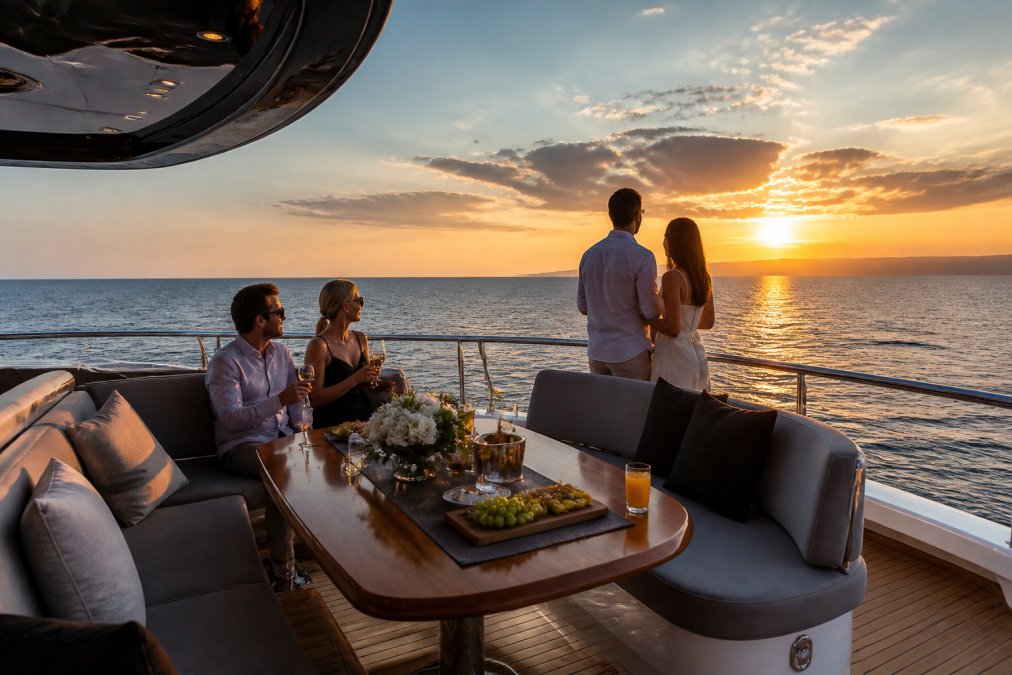
Modern superyachts blur the line between vessels and floating resorts. Interior design, amenities, and entertainment options rival five-star hotels, with the added advantage that your accommodation moves to new locations while you sleep.
Contemporary superyacht design emphasizes open-plan living, natural light, and seamless transitions between indoor and outdoor spaces. Cabins feature premium bedding, marble bathrooms, climate control, and entertainment systems. Saloons showcase minimalist aesthetics with high-end furnishings. Galleys are equipped with commercial-grade appliances and staffed by trained chefs.
Interior Design and Comfort Standards
Luxury yacht interiors reflect contemporary design principles: clean lines, neutral color palettes, premium materials, and functional elegance. Cabins typically feature queen or twin beds with Egyptian cotton linens, walk-in closets, and marble-clad bathrooms with rainfall showers. Climate control is individual per cabin.
The main saloon serves as the social hub, designed for both intimate gatherings and larger celebrations. High-end sound systems, flat-screen entertainment, and carefully curated lighting create ambiance. Many superyachts include formal dining areas separate from casual lounging spaces.
Water Sports, Dining, and Activity Options
Water sports equipment varies by vessel and operator. Most charters include snorkeling gear, paddleboards, and sometimes jet skis. Premium operators offer diving equipment, fishing gear, and underwater photography drones.
Dining aboard reflects the chef’s expertise and your preferences. Many charters allow you to discuss menus in advance, accommodating dietary restrictions or cuisine preferences. Some operators offer Michelin-trained chefs for premium charters.
Activities extend beyond water sports. Sunset cruises emphasize relaxation and photography. Corporate charters often include team-building activities or celebrations. The vessel becomes a platform for whatever experience you design.
Booking a Dubai Yacht: Step-by-Step Process
Start by defining your requirements: preferred dates, group size, budget range, and must-have amenities. This clarity helps brokers match you with appropriate vessels.
Next, request quotes from multiple operators. Provide your requirements and ask for detailed proposals including vessel specifications, crew details, catering options, and activity inclusions. Review proposals carefully, comparing not just price but what’s included.
Once you’ve selected a vessel, the operator will request a deposit to secure your reservation. The remaining balance is due 4-6 weeks before departure.
The charter agreement deserves careful review. It specifies vessel specifications, charter duration, included amenities, cancellation policies, liability terms, and dispute resolution procedures.
Getting a Quote and Understanding Costs
Yacht charter pricing depends on vessel size, charter duration, season, and what’s included. A quote should itemize every cost: the base charter fee, fuel surcharges, crew gratuities, catering costs, water sports equipment, and special requests.
The base charter fee covers the vessel, captain, and basic crew. Fuel surcharges are often separate from the base rate. Catering costs depend on your preferences, from simple provisions to fine dining with a professional chef. Crew gratuities (tips) are customary but discretionary.
Hidden Costs, Deposits, and Cancellation Policies
Beyond obvious costs, several expenses catch charterers off guard. Marina fees for departure and return can add to your bill. Provisioning fees sometimes include markups. Water sports equipment rentals (if not included) can add costs.
Cancellation policies vary dramatically. Some operators offer full refunds if you cancel 60+ days before departure, reduced refunds for later cancellations, and no refund if you cancel within 14 days. Travel insurance that covers yacht charter cancellation is worth considering.
Damage deposits are standard. You’ll typically pay a security deposit held during your charter. If the vessel is returned in normal condition, the deposit is refunded. If damage occurs, the operator deducts repair costs from the deposit.
Always request an itemized quote showing every cost. “All-inclusive” pricing sometimes excludes fuel surcharges, gratuities, or special requests. Confirm what’s included and what’s additional before signing agreements. The most common complaint from first-time charterers involves unexpected charges at checkout.
Sustainable Yachting Practices in the Region
Environmental consciousness has become increasingly important in the yachting industry. Modern operators recognize that preserving the marine environment ensures the long-term viability of charter tourism.
Sustainable practices begin with fuel efficiency. Modern vessels use advanced engine technology and hull designs that reduce fuel consumption and emissions. Some operators are experimenting with hybrid propulsion systems combining diesel engines with electric motors.
Waste management aboard yachts requires deliberate systems. Gray water is treated before discharge. Black water is stored and pumped ashore at marinas, never discharged at sea. Solid waste is separated for recycling or proper disposal.
Marine life protection involves anchoring practices that minimize seagrass damage, speed restrictions in sensitive areas, and prohibition of single-use plastics. Responsible operators educate guests about marine conservation.
Several charter operators have achieved environmental certifications demonstrating commitment to sustainable practices. Choosing certified operators supports environmental responsibility while ensuring you’re working with professionally managed companies.
Conclusion
Navigating the dubai yacht charter market requires understanding your options, knowing what questions to ask, and recognizing the difference between legitimate professional operators and those cutting corners on safety or service quality. Proper research upfront prevents frustration and ensures your maritime experience matches your expectations.
At Palm Lifestyle, we specialize in matching discerning clients with vessels and experiences tailored to their specific needs. Our team maintains direct relationships with premium operators across the Gulf and Mediterranean, provides transparent pricing without hidden surprises, and manages every detail from initial consultation through post-charter follow-up. Get in touch with us to discuss your yachting needs and explore how a professionally managed charter can deliver exactly the experience you’re seeking.
| Charter Type | Duration | Best For |
|---|---|---|
| Shared sunset tour | 2-3 hours | First-time visitors, budget-conscious guests |
| Half-day private charter | 4-6 hours | Small groups, corporate team-building |
| Full-day private charter | 8-10 hours | Families, multi-activity itineraries |
| Multi-day superyacht | 3-7 days | Corporate retreats, milestone celebrations |
Frequently Asked Questions
How much does it cost to rent a Dubai yacht?
Yacht rental pricing varies significantly based on vessel size, duration, and season. Hourly rates typically range from AED 400 for smaller vessels to AED 10,000+ for superyachts. Pricing depends on your specific requirements, dates, and whether you choose a private charter or shared tour. Contact a broker for a customized quote based on your exact needs and preferences.
Do I need a license to rent a yacht in Dubai?
No, you do not need a personal boating license to charter a yacht in Dubai. The vessel must be operated by a licensed captain who meets Dubai Maritime City Authority standards. Professional crew members handle all navigation and vessel operation. You simply need to be a passenger and enjoy the experience while trained professionals manage the yacht.
What is the difference between a private charter and a sharing tour?
A private charter means you rent the entire yacht exclusively for your group, offering complete control over the itinerary, schedule, and guest list. A sharing tour places you with other guests on the same vessel, which reduces costs but limits flexibility. Private charters suit corporate events and family celebrations, while sharing tours work well for individuals or couples seeking a more affordable maritime experience.
What are the best areas to visit on a yacht charter in Dubai?
Popular routes include Dubai Marina with its iconic skyline views, the Palm Jumeirah for luxury waterfront sightseeing, Dubai Harbour for modern maritime attractions, and the Dubai Canal for a unique urban perspective. Sunset cruises along the coast are highly sought after. Coastal tours often include views of the Ain Wheel and waterfront landmarks. Your captain can customize the route based on your interests and available time.
Key References:
[EXTERNAL_LINK: Luxury travel market analysis 2026 | statista.com]
[EXTERNAL_LINK: McKinsey yacht charter market report | mckinsey.com]
[EXTERNAL_LINK: International Maritime Organization safety standards | imo.org]