
Table of Contents
- Why the Mediterranean Rewards Yachts That Go Quiet
- Corsica and Sardinia: The Anchorage Pairing Most Itineraries Miss
- The Ionian Islands: Where Yacht Cruising Slows Down
- Bespoke Mediterranean Yacht Itineraries Built Around Privacy
- How Luxury Yacht Charter Duration Shapes What You Actually See
- Best Practices for Mediterranean Island Hopping Without the Crowds
- Matching the Yacht to the Route
- Conclusion
- Frequently Asked Questions
Last Updated: September 12, 2026
Why the Mediterranean Rewards Yachts That Go Quiet
The most memorable anchorages for mediterranean yacht cruising are rarely the ones with the loudest reputations. A growing number of charter guests are discovering that the region’s true appeal lies in the coves, granite archipelagos, and slow island chains that large vessels simply cannot reach. This guide from Palm Lifestyle maps the hidden gems for mediterranean yacht cruising, from the limestone approaches of Corsica to the unhurried Ionian.
The logic is simple. Where crowds gather, the experience flattens. Where they don’t, you get anchorages to yourself, water that stays clear, and harbours where the morning catch still dictates the menu. Below, we break down the routes, durations, and vessel choices that make that possible.
Corsica and Sardinia: The Anchorage Pairing Most Itineraries Miss
The stretch of water between Corsica and Sardinia holds some of the finest secluded anchorages in the western Mediterranean. Most itineraries rush past it. Yours shouldn’t.
Bonifacio’s Limestone Approach
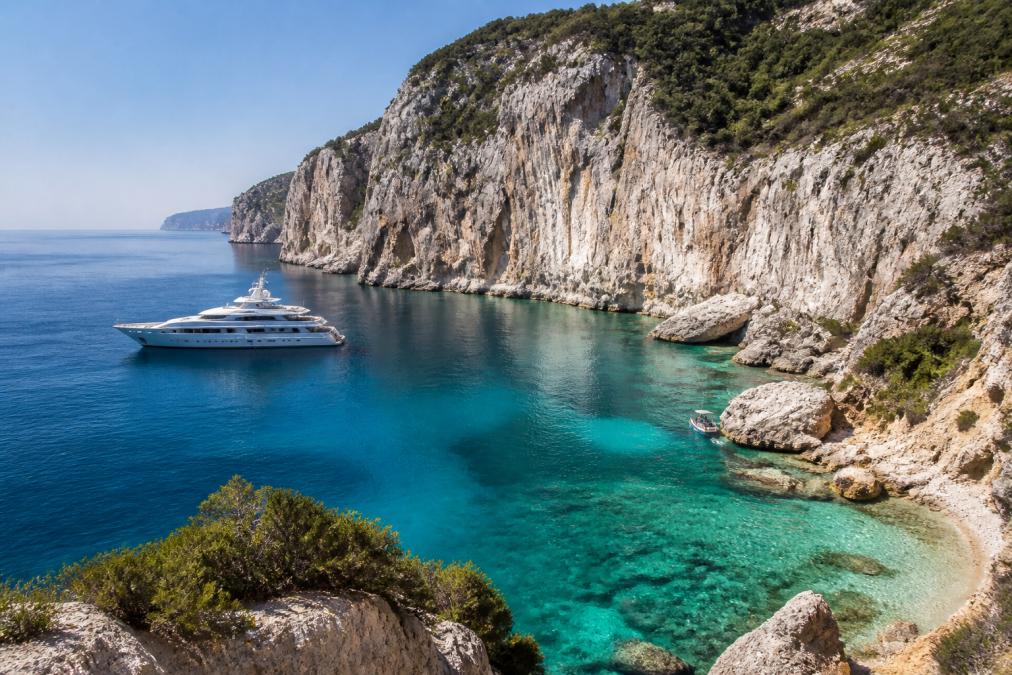
Bonifacio sits atop white limestone cliffs that drop sharply into the sea, creating a natural harbour that feels carved rather than built. Approach from the sea and the town appears slowly, stacked along the cliff edge. The anchorage inside the strait offers shelter and a view most ports cannot match. Go early in the season or late; midsummer brings day traffic from across the region.
La Maddalena’s Pink Granite Archipelago
La Maddalena is a cluster of islands off Sardinia’s northeast coast, known for granite formations that shift from grey to pink in low light (parks.it). The water between the islands is shallow and clear, ideal for anchoring and swimming. A common mistake is treating it as a day stop. Give it two or three nights and you’ll understand why.
The Ionian Islands: Where Yacht Cruising Slows Down
The Ionian chain rewards a slower pace than most charterers allow. These islands sit off Greece’s western coast, greener and softer than the Aegean, with anchorages that stay calm through the summer meltemi. Meganisi, Kastos, and the smaller satellites around Lefkada offer quiet bays within short hops of each other.
What most guides miss is the timing. The Ionian works best in late spring and early autumn, when the water is warm, the tavernas are open, and the anchorages are empty. Charter duration matters here: a week is enough to touch the highlights, but ten days to two weeks lets you linger.
Bespoke Mediterranean Yacht Itineraries Built Around Privacy
Privacy is the real luxury in this region, and it is engineered, not stumbled upon. A bespoke itinerary starts with the question of who is on board and what they want to avoid. Families with children need shallow, sheltered water and short passages. Corporate groups need space for hosting and reliable connectivity. Both can be served on the same coastline if the route is planned around them.
Palm Lifestyle builds bespoke mediterranean yacht itineraries around exactly these variables, using direct access to a worldwide fleet of charter yachts and a network that spans the GCC and Europe. The difference between a standard route and a tailored one usually comes down to two or three anchorages that never appear in the brochures.
How Luxury Yacht Charter Duration Shapes What You Actually See
Luxury yacht charter duration is the single biggest factor in what you experience, and it is the one most guests underestimate. A seven-day charter in the western Mediterranean typically allows four or five anchorages once you account for passage time. A fourteen-day charter doubles that and adds the option of crossing between regions.
Get in touch with us to discuss your yachting needs. →
Duration | Typical Reach | Best For | Trade-off |
|---|---|---|---|
5-7 days | One island group | First-time charterers | Limited flexibility |
10-12 days | Two regions linked | Families, mixed groups | More planning required |
14+ days | Multi-region crossing | Full immersion | Higher overall commitment |
The rule of thumb: add two days to whatever you think you need. Passage time, weather, and the simple pleasure of staying put eat into schedules faster than most people expect.
Best Practices for Mediterranean Island Hopping Without the Crowds
Best practices for mediterranean island hopping come down to timing, routing, and restraint. Start with the calendar. July and August concentrate traffic in the same handful of anchorages; May, June, September, and early October open up the same coastline with a fraction of the vessels (medcruise.com).
Route against the flow. If most itineraries move east to west, move west to east. Anchor earlier in the day than the crowd, and leave before they arrive.
Matching the Yacht to the Route
The vessel decides the route as much as the route decides the vessel. Shallow-draft yachts open up the Ionian’s inner bays and La Maddalena’s granite channels. Larger displacement yachts trade that access for range and onboard space. Neither is better; they serve different itineraries.
For guests weighing a purchase against a charter, this is the moment to be honest about use. A yacht chosen for Mediterranean summers and GCC winters needs to handle both. Palm Lifestyle’s team works through that decision with clients, from valuation and purchase through to charter placement.
Conclusion
The Mediterranean still holds quiet anchorages, but they reward the guests who plan for them. Timing, duration, and vessel choice decide whether you see the region or just its busiest corners. Palm Lifestyle handles the charter, the itinerary, and the logistics end to end, with direct access to a worldwide fleet and a team that knows which coves stay empty in August. Get in touch with us to discuss your yachting needs.
Frequently Asked Questions
What are the most secluded islands in the Mediterranean for yachting?
The La Maddalena archipelago off Sardinia’s northern coast, the Ionian islands of Meganisi and Kalamos, and the smaller Cycladic islets around Milos all reward yachts that anchor early and stay late. These spots have limited berthing for larger vessels, so a private charter accesses them in a way cruise schedules cannot. Plan around the shoulder months of May, June, September and October, when anchorages clear out and sea conditions stay settled for swimming and tender excursions.
How do I plan a bespoke Mediterranean yacht itinerary?
Start with the experience you want rather than the map. Decide whether the priority is quiet anchorages, cultural stops, or water sports, then build a route with no more than two to three hours of cruising between stops. A bespoke Mediterranean yacht itinerary should also account for wind patterns, marina reservation windows and guest arrival schedules. Working with a charter specialist who knows the region shortens this process considerably and avoids routing that looks good on paper but fails on the water.
What is the best time of year for a private yacht charter in the Mediterranean?
Late May through June and September through early October offer the best balance of warm water, reliable weather and thinner crowds. July and August deliver the hottest conditions but also the busiest anchorages and the highest demand for berths, which limits flexibility on shorter charters. If your schedule allows, the shoulder seasons give you access to the same hidden coves with far more privacy and easier last-minute routing changes.
How does a luxury yacht charter differ from a cruise ship?
A cruise ship follows a fixed schedule and calls at ports built to handle thousands of passengers. A luxury yacht charter sets its own timetable, anchors in bays too shallow or too small for larger vessels, and adjusts the route around weather or guest preferences. The crew-to-guest ratio is also far higher, which means dining, water sports and shore transfers happen on your terms rather than a published programme.