
Table of Contents
- Understanding Yacht Charter Types: Crewed vs Bareboat
- Planning Your Mediterranean Yacht Charter Itinerary
- Choosing the Right Sailing Season for Your Charter
- Navigating Yacht Charter Contract Terms and Agreements
- Selecting Your Yacht: Size, Style, and Specifications
- Understanding Costs: What You’ll Actually Pay for Your Charter
- How to Charter a Yacht: Step-by-Step Process
- Conclusion
Last Updated: August 11, 2026
Understanding Yacht Charter Types: Crewed vs Bareboat
A bareboat charter is a rental agreement where you lease a yacht without crew, handling navigation and operations yourself. A crewed charter includes a professional captain and crew who manage the vessel, allowing you to relax and enjoy the experience.
Bareboat charters suit experienced sailors comfortable with navigation and vessel handling. You’ll need valid sailing certifications and must demonstrate competency to the charter company. This option costs less but demands active participation and responsibility for the yacht’s safety.
Crewed charters appeal to those prioritizing comfort and stress-free travel. Your captain handles all navigation while you focus on destinations, dining, and relaxation. The crew typically includes a chef who prepares meals tailored to your preferences, water sports coordinators, and deckhands managing daily operations. This service level commands premium pricing but delivers personalized experiences.
For corporate events or family gatherings, crewed charters offer flexibility that bareboat cannot match. Your crew adapts to changing schedules, handles complex logistics, and ensures every guest feels attended to. Palm Lifestyle specializes in curating crewed charter experiences that balance your specific needs with authentic Mediterranean culture and seamless logistics.
Planning Your Mediterranean Yacht Charter Itinerary
Your Mediterranean yacht charter itinerary should balance iconic destinations with hidden coves that larger vessels cannot access. Smart planning means deciding your priorities before departure rather than figuring it out underway.
Start by identifying anchor points: which three to five locations matter most to your group? Greece offers ancient history and island-hopping flexibility. Croatia delivers dramatic coastlines and affordable mooring. Italy combines cultural richness with world-class dining. France provides sophistication and Michelin-starred restaurants. Pick one or two regions and explore them thoroughly rather than rushing through all four.
Factor in sailing distances and weather windows. Daily sailing should rarely exceed six to eight hours, leaving afternoons for exploration and relaxation. A typical week covers 100-150 nautical miles comfortably. Ambitious itineraries pushing 200+ miles create fatigue and reduce enjoyment.
Consider seasonal conditions. Spring and autumn offer ideal sailing weather with moderate crowds. Summer brings peak tourism and higher prices. Winter sailing is possible but demands experienced crews and flexible guests.
Your crew should contribute to itinerary decisions. Experienced captains know which anchorages offer protection from forecasted wind, which restaurants justify the detour, and which beaches suit your group’s interests. An effective itinerary remains flexible enough to capitalize on unexpected opportunities while hitting your essential destinations.
Choosing the Right Sailing Season for Your Charter
Timing your Mediterranean yacht charter around seasonal conditions dramatically affects your experience. The sailing season runs roughly May through October, though shoulder months offer distinct advantages.
High season (July-August) brings warm, predictable weather but also crowds and higher prices. Expect to share popular coves with dozens of other vessels and pay premium rates.
Shoulder season (May-June and September-October) offers the sweet spot for most charterers. Weather remains excellent with fewer crowds and lower prices. Winds tend to be steadier, making for better sailing conditions. Many experienced sailors prefer September specifically, when summer heat has peaked and the season’s busiest period has passed.
Winter sailing (November-April) suits only experienced sailors and flexible groups. Weather becomes unpredictable, with occasional gales and rough seas. However, prices drop significantly, and those willing to accept weather delays discover Mediterranean coastlines in their quietest state. Winter sailing demands a professional captain and crew.
Consider your group’s tolerance for heat, crowds, and uncertainty. Families with young children generally prefer June or September when temperatures are warm but not extreme. Corporate groups benefit from shoulder-season scheduling when ports are less congested. Experienced sailors often choose May or September for superior sailing conditions.
Navigating Yacht Charter Contract Terms and Agreements
A yacht charter contract is a legally binding agreement specifying your responsibilities, the yacht’s condition, payment terms, cancellation policies, and liability limits. Understanding these terms before signing protects both you and the charter company.
Most contracts require a security deposit, typically 10% of the charter fee, held as protection against damage beyond normal wear. The contract should clearly define what constitutes acceptable wear versus chargeable damage. Scratches and minor stains don’t trigger charges. Broken equipment and structural damage do.
Liability clauses typically limit the charter company’s responsibility for injuries or property loss. You remain responsible for damage to the yacht caused by negligence or misuse. Most contracts require comprehensive boat insurance covering collision, theft, and third-party liability.
Payment terms usually require deposit at booking, with final balance due 30-60 days before departure. Confirm whether pricing is in euros, US dollars, or another currency.
Provisioning allowance (APA) covers fuel, mooring fees, water, and crew expenses during your charter. This is typically calculated at 30-40% of the charter fee and billed after your charter ends based on actual usage. Understanding APA prevents billing surprises.
Selecting Your Yacht: Size, Style, and Specifications
Your yacht choice determines comfort level, crew requirements, and overall charter cost. Vessels range from approximately 9 meters in length, accommodating four guests, to over 45 meters, hosting 20+ people.
Sailboats (9-15 meters) suit couples and small groups seeking authentic sailing. These vessels require active participation, offer intimate experiences, and cost significantly less than motor yachts. Most sailboats sleep 4-8 guests in compact cabins.
Motor yachts (12-24 meters) balance comfort with maneuverability. They deliver speed, stability, and spacious deck areas. Motor yachts suit families prioritizing comfort over sailing authenticity. They access shallow anchorages and narrow channels. Typical configurations sleep 8-10 guests with en-suite cabins.
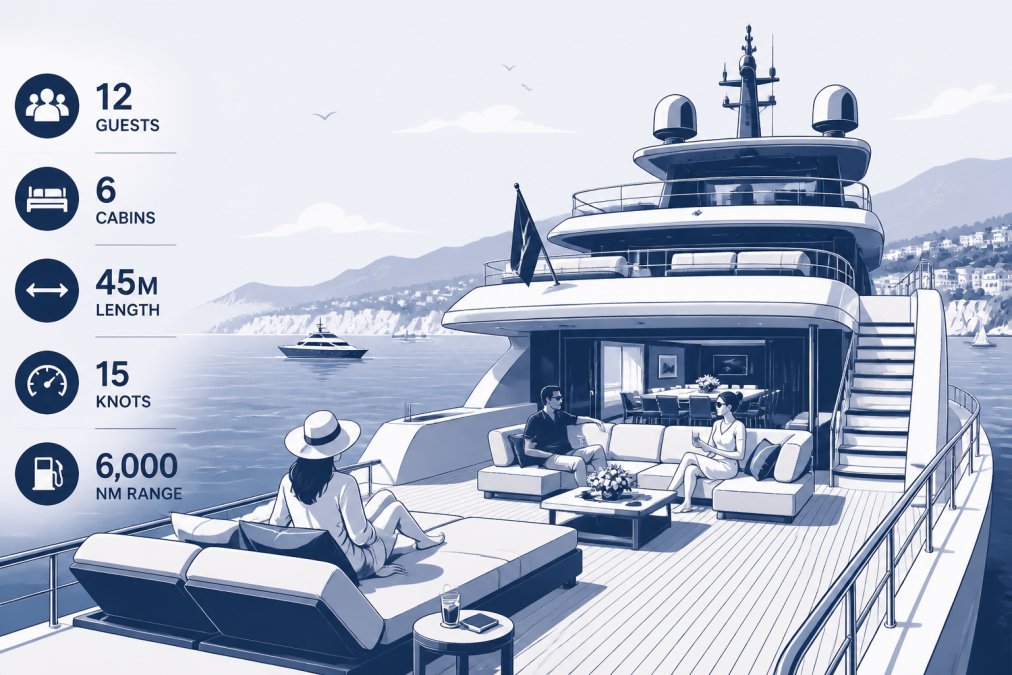
Superyachts (24-45+ meters) deliver luxury resort experiences afloat. These vessels feature multiple decks, gourmet galleys, water sports equipment, and professional crews of 8-20 staff. Superyachts accommodate 10-14 guests in lavish suites with private bathrooms and premium linens.
Cabin configuration matters significantly. Ensure adequate cabins for your group, as sharing accommodations strains relationships on week-long charters. Ensuite bathrooms are standard on modern vessels. Natural ventilation and air conditioning affect comfort in warm months.
Onboard amenities shape your experience. Water sports equipment (jet skis, paddleboards, snorkeling gear, seabob) extends activities beyond sailing. Entertainment systems and Wi-Fi matter for groups with varying interests. Galley size and equipment determine meal quality.
Get in touch with us to discuss your yachting needs. →
Consider your group’s composition. Families with teenagers benefit from larger vessels offering private spaces. Couples enjoy intimate sailboats. Corporate groups require spacious deck areas. Multigenerational families need cabins accommodating varying mobility levels.
Understanding Costs: What You’ll Actually Pay for Your Charter
A Mediterranean yacht charter’s total cost extends beyond the quoted charter fee.
Base charter fee covers the yacht rental, standard insurance, and basic provisioning. Pricing varies by season, vessel size, and charter duration.
Advanced Provisioning Allowance (APA) covers fuel, mooring fees, water, electricity, and crew expenses during your charter. This is typically calculated at 30-40% of the base charter fee and billed after your charter concludes based on actual usage.
Optional expenses accumulate quickly. Provisioning services that pre-stock your galley, water sports equipment rentals, diving excursions, and shore activities add costs. Spa services and special event coordination increase expenses further.
Crew gratuities are customary for crewed charters. Standard practice is 5-10% of the charter fee, distributed among crew members. Budget for this separately, as it’s not included in quoted pricing.
Insurance may or may not be included in your charter fee. Confirm coverage details: does it cover collision, theft, third-party liability? Travel insurance covering cancellation and medical emergencies is strongly recommended.
Currency considerations matter when chartering internationally. Confirm whether quoted prices are fixed or subject to currency adjustments.
A realistic weekly budget includes the base fee, APA (30-40%), crew gratuities (5-10%), provisioning services, and miscellaneous shore activities. Total costs scale with vessel size and service level.
How to Charter a Yacht: Step-by-Step Process
Successfully chartering a Mediterranean yacht involves deliberate planning and professional guidance.
Step 1: Define your requirements. Determine your group size, preferred dates, budget, and priorities. Are you sailing or motoring? Do you need a professional crew? What destinations matter most?
Step 2: Engage a charter broker. A reputable broker like Palm Lifestyle has access to extensive yacht inventories and understands market pricing. Brokers earn commissions from yacht owners, aligning their incentive with matching you to the right vessel.
Step 3: Review vessel options and contracts. Your broker presents available yachts matching your criteria, including detailed specifications and pricing. Request references from previous charterers if considering a specific vessel.
Step 4: Finalize contract terms. Negotiate any modifications to standard terms and clarify APA calculations. Don’t rush this step, as a clear contract prevents disputes later.
Step 5: Arrange payment and insurance. Submit your security deposit to secure the booking. Arrange comprehensive boat insurance if not included in the charter fee.
Step 6: Plan your itinerary. Work with your broker and the yacht’s captain to develop your Mediterranean yacht charter itinerary. Share your priorities, dietary restrictions, and special requests.
Step 7: Prepare documentation. Ensure passports are valid, visas are arranged if necessary, and any required sailing certifications are current. Arrange travel insurance and transportation to the yacht’s base.
Step 8: Final confirmation. Two weeks before departure, confirm all details: guest list, arrival time, dietary requirements, and special requests. Clarify weather contingencies and safety procedures.
Step 9: Embark and enjoy. Arrive at the yacht with realistic expectations. Trust your crew’s expertise, remain flexible with your itinerary, and embrace the Mediterranean experience.
Chartering a Mediterranean yacht transforms how you experience this historic region. Whether you choose a bareboat sailboat for intimate exploration or a crewed superyacht for luxury immersion, the process demands clarity about your priorities, realistic budgeting, and professional guidance navigating contracts and logistics.
The difference between a mediocre charter and an exceptional one often comes down to preparation and partnership with experienced professionals. Palm Lifestyle specializes in curating bespoke Mediterranean yacht charter experiences that match your lifestyle standards with seamless execution. Our team manages every detail, from vessel selection and contract negotiation to itinerary planning and crew coordination, so you focus entirely on the experience itself. Get in touch with us to discuss your yachting needs and discover how a thoughtfully planned charter transforms your Mediterranean journey.
Frequently Asked Questions
What qualifications do I need to charter a bareboat yacht in the Mediterranean?
Most bareboat charters require proof of sailing experience, typically a valid sailing certification or logbook showing previous command hours. Many charter brokers ask for evidence of at least 100 hours of sailing experience within the past three years. If you lack formal credentials, you can hire a professional skipper to command the vessel, which converts your bareboat into a skippered charter. Some brokers offer practical assessments or refresher courses before departure to ensure you're comfortable with the specific yacht.
When is the best time to charter a yacht in the Mediterranean?
The Mediterranean sailing season peaks from May through September, with July and August offering warm weather but crowded anchorages and higher prices. May, June, and September provide ideal conditions: calm seas, reliable winds, and fewer vessels competing for moorings. Winter charters (November to March) are possible but weather becomes unpredictable, with occasional storms and some marinas operating on reduced schedules. Consider shoulder seasons if you want to avoid peak crowds while maintaining excellent sailing conditions.
What is included in a Mediterranean yacht charter contract, and what hidden costs should I expect?
Your charter agreement typically covers the vessel, basic equipment, and insurance. However, you'll encounter additional expenses: the Advanced Provisioning Allowance (APA), which covers fuel, provisioning, and port fees, usually runs 30–50% of the weekly charter rate and is refunded for unused portions. Mooring fees at popular marinas, water-sports equipment rental, tender fuel, and crew gratuities add significantly. Some contracts exclude VAT or impose last-minute charges for damage deposits. Always request a detailed cost breakdown before signing and clarify what happens if you use less fuel or provisions than anticipated.
How do I choose between a crewed yacht and a bareboat charter for my Mediterranean vacation?
Bareboat charters suit experienced sailors who want independence and lower daily costs; you manage the vessel yourself with complete freedom over your itinerary. Crewed charters include a professional skipper and often a chef or steward, eliminating navigation stress and providing bespoke service—ideal for families, groups mixing skill levels, or those prioritizing relaxation over hands-on sailing. Skippered charters split the difference: a captain handles navigation while you enjoy sailing. Consider your group's sailing experience, desired comfort level, and whether you value customization over convenience when deciding.