
Table of Contents
- Understanding Custom Yacht Build vs Brokerage Yacht: Key Differences
- Cost of Custom Yacht vs Used: Financial Breakdown
- Yacht Build Timeline: What to Expect
- Yacht Customization Options: Personalization Potential
- Resale Value of Custom Yachts and Brokerage Options
- Advantages and Disadvantages: Custom Builds
- Advantages and Disadvantages: Brokerage Yachts
- Technology and Sustainability in Modern Yacht Ownership
Custom Yacht Build vs Brokerage Yacht: A 2026 Guide
Last Updated: July 20, 2026
When ready to own a superyacht, you face a fundamental decision: commission a custom build from a shipyard or purchase a pre-owned vessel through a broker. This choice shapes your timeline, budget, design freedom, and long-term ownership experience. At Palm Lifestyle, we’ve guided dozens of UHNW clients through this decision. Below, we’ll show you how to evaluate both paths so you can make the choice that aligns with your vision, timeline, and investment strategy.
Understanding Custom Yacht Build vs Brokerage Yacht: Key Differences
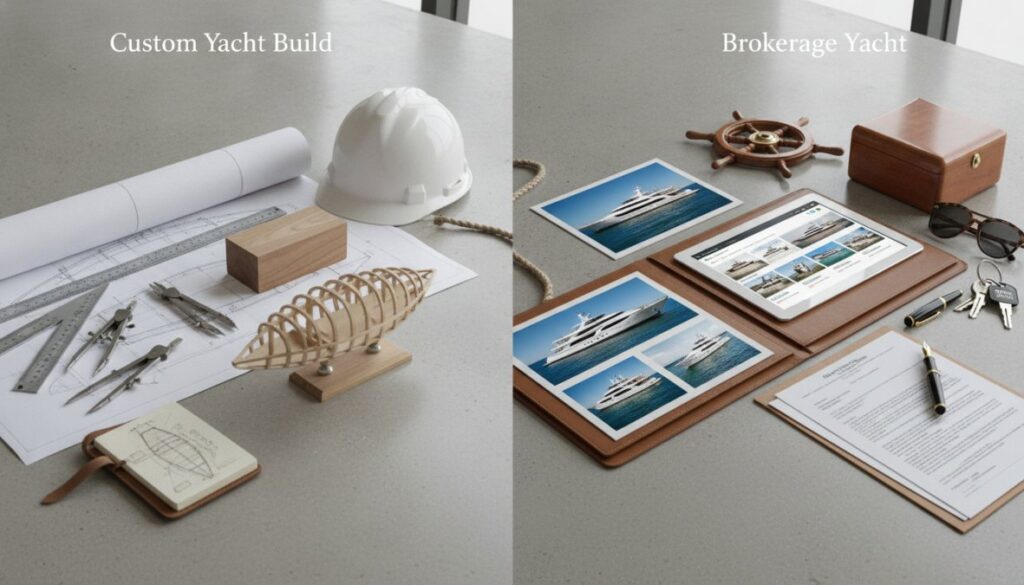
A custom yacht build is a purpose-designed vessel constructed from your specifications at a shipyard, typically taking 3-5 years from contract to delivery. A brokerage yacht is a pre-owned vessel already in the market, ready for immediate acquisition. Custom builds offer complete design control and owner involvement throughout construction. Brokerage yachts provide proven operational history, immediate availability, and established resale markets.
The decision hinges on five core variables: personalization appetite, capital deployment timeline, total cost of ownership, design flexibility, and comfort with construction risk.
What Is a Custom Yacht Build?
A custom yacht represents your vision translated into steel, composite, and engineering. You work with naval architects and designers to define every element: hull design, interior layout, propulsion systems, automation, and aesthetic details. Custom builds typically fall into two categories: fully custom (completely bespoke design) and semi-custom (your selections applied to an existing hull design). Semi-custom builds compress timelines and reduce costs compared to fully custom projects, though they sacrifice some design freedom.
Throughout the process, you’ll have owner’s representatives, naval architects, and project managers ensuring your specifications are met. This level of involvement appeals to owners who view the yacht as an extension of their lifestyle and brand. If you’re considering this path, our Yacht Builders resource connects you with reputable shipyards and provides guidance through the commissioning process.
What Is a Brokerage Yacht?
A brokerage yacht is a pre-owned vessel offered for sale through a yacht broker or brokerage firm. These vessels range from 5-year-old near-new yachts to vintage classics with decades of history. The vessel comes with documented operational history, maintenance records, and proven performance data, critical advantages when evaluating reliability.
Brokerage yachts appeal to owners seeking immediate availability, transparent pricing based on comparable sales, and the ability to inspect the vessel before committing. You’re purchasing a known quantity: the yacht has been tested in real-world conditions, systems have been proven, and any design flaws are already apparent. Our Yacht for Sale listings showcase carefully vetted pre-owned vessels across all size categories and price points.
Cost of Custom Yacht vs Used: Financial Breakdown
Initial Investment and Hidden Costs
The headline cost of a custom build typically exceeds a comparable brokerage yacht by 20-40%. However, custom builds carry hidden costs that many owners discover mid-project:
- Design and engineering fees: 5-8% of total build cost
- Owner’s representative: Independent project managers cost tens of thousands annually
- Change orders: Design modifications during construction trigger additional costs
- Contingency reserves: Prudent owners reserve 10-15% of budget for unforeseen issues
- Financing costs: Multi-year construction timelines mean years of interest payments before the yacht generates any charter revenue
Brokerage yachts present higher financial transparency: you pay the negotiated purchase price, broker commissions (typically 5-10%), and survey costs. However, pre-owned vessels may require immediate refits, system upgrades, or cosmetic restoration.
Insurance, Crew, and Maintenance Considerations
New yachts with the latest safety systems typically command lower insurance premiums. Pre-owned yachts, especially those over 15 years old, may face higher rates or require additional surveys.
Crew costs are independent of the vessel’s age, determined primarily by size and location. However, crew familiarity with systems matters. A custom-built yacht with modern automation may require training, while a pre-owned vessel benefits from crew experience and readily available spare parts.
Annual maintenance for a superyacht typically runs 5-10% of the vessel’s value. Custom builds with new systems and warranty support may trend toward the lower end initially. Pre-owned vessels, especially if actively chartered, may require higher maintenance spending in the first 1-2 years post-acquisition.
Yacht Build Timeline: What to Expect
Custom Build Delivery Schedules
Custom yacht builds typically span 3-5 years from contract signature to delivery:
- Design phase: 6-12 months
- Construction: 18-36 months
- Testing and commissioning: 2-6 months
Delays are common due to supply chain disruptions, design changes, and unforeseen engineering challenges. The multi-year timeline carries psychological and financial implications: you’re committing capital years before using the yacht, financing costs accumulate, and your preferences may shift.
Brokerage Yacht Acquisition Speed
Acquiring a brokerage yacht typically takes 30-90 days from offer to closing:
- Inspection and survey: 1-2 weeks
- Negotiation and offer: 1-3 weeks
- Due diligence: 2-4 weeks
- Financing and legal closing: 2-4 weeks
This rapid timeline appeals to owners with immediate needs or time-sensitive opportunities. However, you’re making a substantial commitment with limited time for reflection.
Yacht Customization Options: Personalization Potential
Design Flexibility in Custom Builds
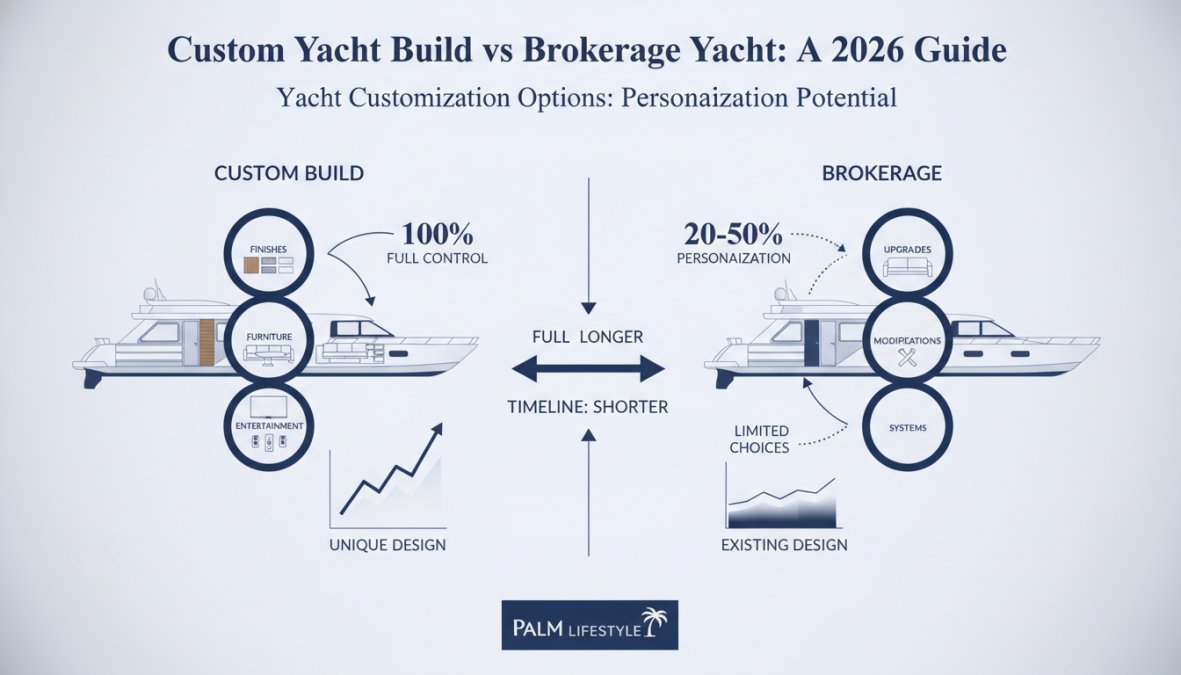
Custom yacht builds offer unparalleled personalization. You control the hull form, interior layout, material selections, technology systems, and aesthetic details. Want a wine cellar instead of a fourth guest cabin? Specify it. Need integrated smart systems that sync with your home automation? Build it in from the start.
This design flexibility extends to systems and technology. Custom builds can incorporate the latest navigation systems, entertainment platforms, propulsion innovations, and sustainability features. However, every customization adds cost and complexity. Changes mid-construction are exponentially more expensive than changes in the design phase.
Refit and Upgrade Possibilities for Pre-Owned Vessels
Pre-owned yachts offer customization through refits and upgrades. You can update interiors, replace propulsion systems, upgrade technology, and refresh exterior finishes. The advantage: you see the vessel’s baseline before committing to changes.
The disadvantage: retrofitting is typically more expensive than building systems in initially. Installing new automation systems into a yacht designed without them requires extensive rewiring. Refits also extend your timeline to full enjoyment, as you purchase the yacht then spend months in a shipyard while upgrades are completed.
Resale Value of Custom Yachts and Brokerage Options
Depreciation Patterns and Market Performance
Custom yachts typically lose 10-15% of value in the first year, then depreciate 2-4% annually over the next 5-10 years. Pre-owned yachts depreciate more slowly because they’ve already absorbed initial value loss, typically 1-3% annually.
However, custom builds sometimes appreciate if they become iconic designs or if the builder gains prestige. Conversely, a custom build with dated aesthetics may depreciate faster than comparable pre-owned alternatives. Market conditions matter enormously: in strong markets, both hold value well; in weak markets, pre-owned yachts often sell faster.
Charter Potential as Revenue Strategy
Charter revenue can offset 30-50% of annual operating costs. Custom yachts often command premium charter rates but require 6-12 months of operational shakedown before they’re charter-ready. Pre-owned yachts often enter the charter market faster because they have established operational histories and proven performance. Our [Yacht Charter](https://palmlifestyle.ae/yacht-charter/) service provides access to both newly delivered custom builds and established pre-owned vessels, allowing you to experience different ownership models before committing.
If charter revenue is central to your financial strategy, a pre-owned yacht with proven charter history may outperform a new build during critical early years.
Advantages and Disadvantages: Custom Builds
Why Owners Choose Custom Yachts
Owners commission custom builds for several compelling reasons. Exclusivity ranks first, you’re building a one-of-a-kind vessel that reflects your personal vision. Design perfection motivates others, allowing you to specify every detail optimized for your family’s needs. Latest technology attracts owners who prioritize innovation. Warranty and predictability appeal to risk-averse owners, as new builds come with builder warranties covering systems and structure. Investment narrative matters to some owners, as the multi-year process becomes part of the ownership story.
Potential Pitfalls and Risk Factors
Custom builds carry real risks. Timeline delays happen frequently, extending 4-year builds to 5-6 years. Cost overruns can add 10-20% to the original budget through change orders and scope creep. Design regret emerges mid-project or post-delivery when specifications don’t meet expectations. Builder reputation risk is real, a shipyard experiencing financial difficulties or quality issues can derail your project. Operational learning curve affects new builds, as systems are unfamiliar to crew and supply chains for replacement parts haven’t been established.
Advantages and Disadvantages: Brokerage Yachts
Why Buyers Prefer Pre-Owned Vessels
Pre-owned yachts appeal to pragmatic buyers. Immediate availability lets you take possession within weeks, not years. Proven performance is invaluable, the yacht has been tested in real-world conditions and systems have demonstrated reliability. Transparent pricing based on comparable sales gives buyers confidence. Lower financial commitment appeals to owners uncertain about long-term ownership. Established supply chains and service networks reduce operational friction. Faster charter market entry benefits owners focused on revenue generation.
Limitations and Considerations
Pre-owned yachts come with trade-offs. Limited customization is the primary constraint, you’re purchasing a vessel designed for another owner. Maintenance uncertainty requires thorough due diligence, as hidden issues may emerge post-purchase. Depreciation acceleration affects older vessels, especially if market conditions weaken. Outdated systems and technology characterize many pre-owned yachts. Seller’s motivation uncertainty creates negotiation complexity. Crew and operational history gaps sometimes exist, requiring extra diligence during acquisition.
Technology and Sustainability in Modern Yacht Ownership
Smart Systems and Latest Navigation Technology
Modern yachts increasingly feature integrated smart systems that enhance safety, efficiency, and comfort. Custom builds have the advantage of designing these systems in from the start, with smart automation platforms managing lighting, climate control, entertainment, and propulsion from a single interface.
Pre-owned yachts can be retrofitted with many systems, though retrofitting is typically more complex and expensive. However, retrofitting allows selective upgrades based on your priorities. The technology landscape evolves rapidly, a custom build’s “latest technology” may feel dated by delivery, while pre-owned yachts with 5-year-old systems may be more practical, with proven support networks and crew familiarity.
Environmental Practices and Sustainable Building
Custom builds can incorporate sustainable practices from the design phase: hull optimization for fuel efficiency, hybrid or LNG propulsion systems, waste management systems, and renewable energy. Pre-owned yachts can be retrofitted with sustainability upgrades, though economics vary. Well-maintained pre-owned yachts with efficient hull designs can achieve comparable operational efficiency to new builds, especially if propulsion systems are upgraded.
Vessel efficiency depends heavily on design and propulsion systems, which favors custom builds optimized from the start. However, this financial incentive aligns with environmental responsibility, making sustainability a practical consideration for both paths.
Choosing between a custom yacht build and a brokerage yacht ultimately depends on your priorities, timeline, and tolerance for complexity. Custom builds offer exclusivity and design perfection but demand patience and capital commitment. Brokerage yachts provide immediate availability and proven performance at lower financial risk. Palm Lifestyle specializes in both paths, guiding clients through custom build projects with shipyards worldwide and providing access to a curated global fleet of premium pre-owned vessels. Get in touch with us to discuss your yachting needs and explore which path aligns with your vision.
Factor | Custom Yacht Build | Brokerage Yacht |
|---|---|---|
Timeline | 3-5 years | 30-90 days |
Design Control | Complete | Limited |
Initial Cost | Higher | Lower |
Warranty | 2-3 years builder coverage | None (as-is) |
Customization | Unlimited | Refit required |
Proven Performance | Unknown | Documented |
Charter Ready | 6-12 months post-delivery | Immediate |
Depreciation | 10-15% year one, then 2-4% annually | 1-3% annually |
Operational Learning Curve | Steep | Minimal |
Supply Chain Maturity | Developing | Established |
Frequently Asked Questions
Is it cheaper to build a custom yacht or buy a brokerage yacht?
Generally, brokerage yachts have lower upfront costs due to economies of scale and no design fees. However, custom yacht builds offer long-term value through personalization and tailored specifications. The total cost of ownership—including insurance, crew, maintenance, and potential charter revenue—differs significantly between the two options. Your financial decision depends on your budget, usage plans, and investment timeline. Consult with a yacht purchase specialist to compare total lifecycle costs.
How long does it take to build a custom yacht compared to buying pre-owned?
Custom yacht builds typically require 3–5 years from contract to delivery, depending on size and complexity. Brokerage yachts can be acquired in weeks to months, making them ideal for buyers with immediate needs. If you're chartering in the Mediterranean or need a vessel quickly, a pre-owned option allows faster deployment. Custom builds suit buyers who prioritize specific design requirements and can wait for their vision to materialize.
What yacht customization options are available in a custom build versus a brokerage yacht?
Custom builds offer unlimited personalization: hull design, interior layout, materials, technology systems, and owner-specific features. Brokerage yachts come as-is but can be refit and upgraded post-purchase. If you require a unique layout, sustainable propulsion, or integrated smart systems tailored to your lifestyle, a custom build delivers full control. Pre-owned vessels offer proven performance and established operational histories, with flexibility to modernize selectively.
Do custom yachts hold their resale value better than brokerage yachts?
Resale value depends on design timelessness, maintenance quality, and market demand. Well-maintained brokerage yachts with strong operational histories often maintain value predictably. Custom yachts can appreciate if designed by renowned naval architects, but niche personalization may limit buyer appeal. Charter potential—whether through your own efforts or professional management—can offset depreciation for both types. Discuss resale strategy and charter opportunities with your broker when evaluating long-term investment value.
What role does a yacht broker play in a custom build versus a brokerage purchase?
For custom builds, a broker acts as your owner's representative, managing contracts, timelines, and communication with shipyards and naval architects. For brokerage purchases, they provide market expertise, valuation guidance, and facilitate transactions. A reputable broker ensures transparency on all costs, handles legal procedures, and protects your interests. Whether building or buying, professional guidance streamlines the process and maximizes your investment's value.
