
Table of Contents
- How to Value a Superyacht for Sale: Key Factors
- The Marine Survey and Yacht Appraisal Process
- Yacht Maintenance Records Importance in Valuation
- Superyacht Depreciation Rates and Market Trends
- The Role of a Yacht Broker in Valuation
- Hidden Costs and Flag State Impact on Value
- Custom Build vs. Production Superyacht Value
- Valuing a Superyacht: New vs. Pre-Owned
How to Value a Superyacht for Sale: Complete Guide
Last Updated: July 15, 2026
Understanding how to value a superyacht for sale requires a systematic approach that goes far beyond asking price. At Palm Lifestyle, we’ve guided countless clients through this complex process, and the reality is that most people underestimate the factors that truly drive a yacht’s market value. Below, we’ll walk you through the exact methodology used by professional appraisers, brokers, and serious buyers to determine what a superyacht is actually worth.
The valuation process combines technical assessment, market analysis, and financial projections. Whether you’re buying, selling, or simply curious about your current vessel’s value, this guide covers everything you need to know.
How to Value a Superyacht for Sale: Key Factors
The foundation of any superyacht valuation starts with understanding which characteristics move the needle on price. Not all factors carry equal weight, and experienced buyers know which ones to prioritize when evaluating a potential purchase.
Vessel specifications and size form the baseline for valuation. Length overall (LOA) is the primary driver, a 50-meter superyacht commands vastly different pricing than a 120-meter megayacht. However, size alone tells an incomplete story. A vessel’s beam (width), draft (depth), and gross tonnage all influence operational costs and market appeal. Custom-built yachts with unique specifications often command premiums over production models of similar size, provided the design remains desirable in current market conditions.
Age and construction method significantly impact valuation trajectories. A 15-year-old custom build by a renowned naval architect may appreciate in value if its design remains timeless, while a production yacht of the same age typically depreciates. The shipyard’s reputation matters considerably, vessels built by Lürssen, Benetti, or Feadship hold their value better than lesser-known builders. Modern construction techniques and materials also affect durability and future maintenance costs, which informed buyers factor into their offers.
The year of construction determines which regulations the vessel must comply with. Older superyachts may require costly retrofits to meet current International Maritime Organization (IMO) standards, which directly reduces their market value.
The Marine Survey and Yacht Appraisal Process
A professional marine survey is non-negotiable when determining a superyacht’s true value. This formal assessment examines structural integrity, mechanical systems, and overall condition, providing the hard data that separates realistic pricing from wishful thinking.
What a professional marine surveyor evaluates goes well beyond a visual inspection. The surveyor examines the hull for osmotic blistering, corrosion, and structural fatigue. All mechanical systems, engines, generators, HVAC, plumbing, and electrical, are tested under load. The surveyor reviews maintenance records, identifies deferred maintenance, and estimates costs for necessary repairs or replacements. Interior finishes, upholstery, and galley equipment are assessed for condition and remaining useful life.
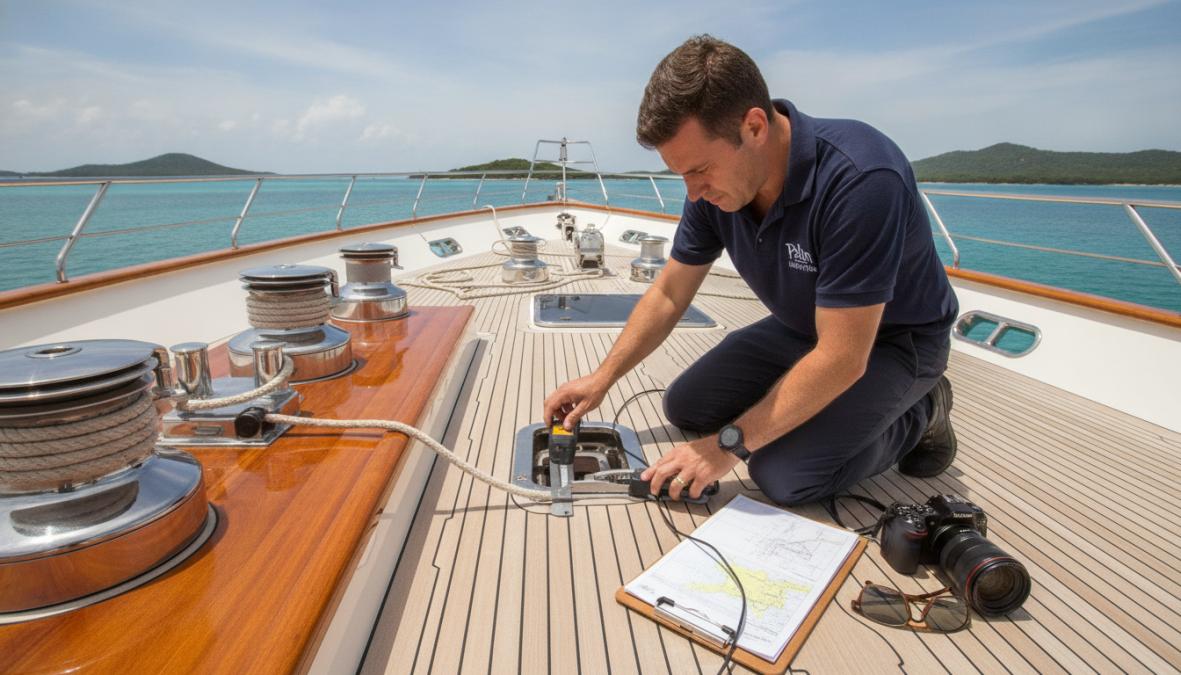
The surveyor also evaluates the yacht’s systems for compliance with current safety and environmental regulations. A vessel that requires significant upgrades to meet modern standards will see its valuation reduced by the estimated cost of those upgrades.
Marine surveyor cost and timeline vary based on vessel size and complexity. A comprehensive survey for a superyacht typically takes 3-5 days and costs several thousand dollars depending on the yacht’s size and age. While this expense feels substantial upfront, it prevents far costlier surprises after purchase. The survey report becomes your negotiating document, any major findings provide legitimate grounds for price reductions or repair demands before closing.
Yacht Maintenance Records Importance in Valuation
The paper trail matters as much as the physical condition. A superyacht with meticulous documentation of every service, repair, and upgrade is worth significantly more than an identical vessel with spotty records.
Refit history and capital improvements tell the story of how well an owner maintained the asset. A vessel that underwent a major refit in the past 3-5 years, new engines, updated electrical systems, refreshed interior, commands premium pricing because the buyer inherits a vessel with known recent work. Conversely, a yacht that hasn’t been refitted in 20 years carries hidden risk; potential buyers will assume major systems are near end-of-life and price accordingly.
Documentation of routine maintenance, regular engine service, hull inspections, system upgrades, demonstrates responsible stewardship. Brokers and appraisers weight this heavily. A 25-year-old vessel with complete maintenance logs often appraises higher than a 15-year-old yacht with missing service records, because the older vessel’s condition is verifiable and predictable.
Capital improvements beyond routine maintenance add value when they’re desirable upgrades. New navigation systems, modern stabilizers, upgraded water-making capacity, or enhanced communication systems appeal to buyers. However, highly personalized modifications, custom artwork, niche entertainment systems, specialized equipment, may not add proportional value, as future buyers may not share those preferences.
Superyacht Depreciation Rates and Market Trends
Understanding how superyachts lose value over time is essential for realistic valuation. Unlike automobiles, which depreciate on predictable curves, yacht depreciation is influenced by market conditions, design trends, and technological obsolescence.
How age affects resale value depends heavily on the vessel’s original construction quality and maintenance. New superyachts typically lose 10-15% of value in the first year, as they transition from new inventory to pre-owned status. From years 2-10, annual depreciation averages 3-5% per year for well-maintained vessels. After 10 years, depreciation rates slow considerably for quality builds, as the remaining market consists of buyers who prioritize value over newness.
However, exceptional yachts, those with timeless design, superior construction, and impeccable maintenance, may appreciate or hold value. A 30-year-old Lürssen custom build in pristine condition can command higher prices than newer production models, because serious buyers recognize the quality and rarity.
Market conditions and historical sales data shift valuation baselines significantly. According to industry maritime reports tracking superyacht transactions, the superyacht market experienced notable fluctuations between 2020 and 2026. During periods of strong economic growth, asking prices rise and inventory moves faster. During downturns, sellers must adjust expectations, and comparable sales data becomes the primary valuation tool.
Historical sales data reveals what similar vessels actually sold for, not what owners hoped to receive. A broker’s asking price is an opening position; the actual sale price is what determines true market value. Access to transaction data from the past 12-24 months for comparable vessels (similar size, age, builder, and condition) provides the most accurate valuation baseline.
The Role of a Yacht Broker in Valuation
A qualified yacht broker serves as your market intelligence source, translating comparable sales data and current demand into realistic pricing guidance. The best brokers have access to proprietary transaction data, understand regional market nuances, and can identify which features currently appeal to buyers.
Brokers conduct comparative market analysis (CMA) by reviewing recent sales of similar vessels. They adjust for differences in size, age, condition, location, and specifications to estimate fair market value. Their experience with actual buyer behavior, what features drive offers, which upgrades justify premium pricing, where buyers negotiate hardest, informs their valuations in ways that generic appraisal methods cannot.
At Palm Lifestyle, our brokerage team specializes in yacht purchase and sale transactions across worldwide markets, with deep expertise in the Middle East and Mediterranean regions. This geographic focus means we understand local market dynamics, regulatory requirements by flag state, and regional buyer preferences that directly impact valuation. A superyacht positioned for charter in the Mediterranean may command different pricing than an identical vessel marketed for private use in the Caribbean.
A broker’s valuation carries weight because their reputation depends on accuracy. If they consistently overvalue vessels, sellers become frustrated; if they undervalue, buyers suspect manipulation. Professional brokers aim for defensible valuations backed by comparable sales data.
Hidden Costs and Flag State Impact on Value
Sophisticated buyers factor total cost of ownership (TCO) into their valuation logic. A superyacht with low acquisition price but high operating costs may be less attractive than a more expensive vessel with efficient systems and lower ongoing expenses.
Operating costs and legal registration considerations directly influence what a buyer will pay. A vessel flagged under a jurisdiction with high annual registration fees, complex compliance requirements, or poor maritime reputation will command lower prices than an identical yacht flagged in a more favorable jurisdiction. Flag state also affects crew recruitment, insurance costs, and resale liquidity.
Vessels registered in established maritime nations (Malta, Cyprus, Marshall Islands) typically enjoy better resale prospects and lower insurance premiums than those flagged in less-recognized jurisdictions. Some buyers specifically seek vessels registered under particular flags due to tax implications or operational preferences.
Operating costs include crew salaries, fuel, maintenance, insurance, docking fees, and regulatory compliance. A superyacht with efficient engines, modern water-making systems, and recently upgraded mechanical systems will operate at lower cost than an older vessel requiring frequent repairs. Buyers will pay a premium for vessels with predictable, controllable operating expenses.
The condition of the hull and propulsion systems directly impacts fuel consumption. A 20-year-old vessel with original engines may consume 20-30% more fuel than a newer design with modern propulsion technology. Over a decade of ownership, this efficiency gap translates to hundreds of thousands in additional operating costs, a factor savvy buyers include in their valuation math.
Custom Build vs. Production Superyacht Value
The distinction between custom-built and production yachts carries significant valuation implications. Understanding these differences helps explain why two vessels of similar size and age command vastly different prices.
Custom-built superyachts are constructed to an owner’s specifications by a shipyard, with unique design elements, interior layouts, and systems configurations. The design process takes 1-2 years, construction takes 3-5 years, and the final vessel reflects the original owner’s vision and budget. Quality custom builds by renowned designers and builders often appreciate or hold value exceptionally well, because subsequent buyers recognize the craftsmanship and exclusivity.
However, highly idiosyncratic custom builds, those with extremely personalized interiors, niche design choices, or specialized systems, may appeal to fewer future buyers. A custom yacht designed for a specific owner’s hobbies or lifestyle preferences may require repositioning or modifications to attract the next buyer, reducing its resale value.
Production superyachts are built to a standardized design, with multiple units constructed from the same mold and specifications. Production builds offer faster delivery timelines, more predictable costs, and often lower prices than comparably-sized custom vessels. However, production yachts typically depreciate faster, as they lack the exclusivity and customization appeal of bespoke builds.
The builder’s reputation influences valuation for both types. A production model from Benetti or Feadship holds value better than a production yacht from a lesser-known builder, because the brand name carries market recognition and resale liquidity.
Valuing a Superyacht: New vs. Pre-Owned
The new-versus-pre-owned decision fundamentally shapes valuation expectations. New superyachts command premium pricing but experience steeper initial depreciation, while pre-owned vessels offer better value but carry unknown history.
New superyachts are purchased directly from shipyards during construction or immediately after launch. The buyer pays the full asking price with no negotiating room, but receives a vessel with warranty coverage, the latest systems and design trends, and zero unknown maintenance history. New yachts depreciate 10-15% in the first year as they transition to pre-owned status, then settle into slower depreciation curves.
The advantage of new construction is predictability. You know exactly what you’re getting, systems are under warranty, and there are no hidden surprises. The disadvantage is cost, new superyachts command the highest prices, and buyers absorb the initial depreciation hit.
Pre-owned superyachts have existing history, known condition, and established market pricing based on comparable sales. A well-maintained pre-owned vessel often represents better value than new construction, because you avoid the steep initial depreciation. However, pre-owned purchases require thorough due diligence, professional survey, detailed maintenance review, sea trial evaluation, to identify any condition issues before committing.
Pre-owned pricing is negotiable. Unlike new construction where the shipyard sets the price, pre-owned vessels are priced based on market conditions and comparable sales. Buyers with patience and market knowledge can identify undervalued vessels and negotiate favorable prices.
The choice between new and pre-owned hinges on budget, timeline, and risk tolerance. New construction appeals to buyers prioritizing the latest design and systems; pre-owned appeals to value-conscious buyers willing to accept older technology in exchange for lower acquisition cost and better depreciation economics.
Valuing a superyacht accurately requires synthesizing technical assessment, market data, and financial analysis. Whether you’re evaluating a potential purchase or positioning a vessel for sale, the process demands diligence and expertise. Professional guidance from experienced brokers and surveyors is invaluable, the cost of proper evaluation is minimal compared to the financial consequences of mispricing. At Palm Lifestyle, our team specializes in comprehensive yacht valuations, market positioning, and transaction management across worldwide markets. We combine proprietary sales data, technical expertise, and regional market knowledge to ensure accurate pricing and successful outcomes. Get in touch with us to discuss your yachting needs and explore how we can assist with your superyacht valuation or purchase.
Frequently Asked Questions
What factors affect the resale value of a superyacht?
Superyacht resale value depends on vessel condition, age, maintenance history, size (length overall), custom specifications, market demand, and flag state. A comprehensive marine survey reveals the true condition. Depreciation rates vary by builder and market segment. Pre-owned superyachts typically depreciate 10-15% in the first year, then stabilize. Refit history, naval architecture reputation, and charter revenue history also influence asking price significantly.
Do I need a professional marine surveyor to value my superyacht?
Yes, a professional marine surveyor is essential for accurate yacht appraisal. They assess hull and machinery condition, structural integrity, systems functionality, and compliance with maritime regulations. This formal appraisal process provides objective documentation that supports market value claims to potential buyers. While surveyor costs vary, the investment protects your capital and accelerates the sale by providing credible valuation evidence.
How does yacht maintenance records importance affect pricing?
Comprehensive maintenance records directly increase superyacht value by demonstrating proper care and reducing buyer risk. Detailed logs of service intervals, refit work, and upgrades provide transparency on vessel condition and operating costs. Yachts with complete documentation command higher asking prices because buyers have confidence in hull and machinery integrity. Missing records typically result in lower valuations, even for well-maintained vessels, due to uncertainty about hidden issues.
What is the difference between market value and replacement value?
Market value reflects what a superyacht will sell for in current market conditions based on comparable sales and demand. Replacement value is the cost to build an identical new vessel, typically much higher. For valuation purposes, market value is what matters to sellers and buyers. Replacement value is useful for insurance and asset management but doesn't determine actual selling price. Yacht brokers use historical sales data and current market trends to establish realistic market value.