
Table of Contents
- What Is the Advance Provisioning Allowance in Yacht Charters?
- Why Does the Advance Provisioning Allowance Exist?
- What Does APA Cover in Yacht Charters?
- How Is the Advance Provisioning Allowance Calculated?
- Understanding Yacht Charter Expenses in the UAE
- APA vs. Base Charter Fee: Key Differences
- Crew Gratuity and Yacht Charter in the UAE
- Managing Your Yacht Charter Preference Sheet for APA Control
Advance Provisioning Allowance in Yacht Charters Explained
Last Updated: July 30, 2026
What Is the Advance Provisioning Allowance in Yacht Charters?
The advance provisioning allowance, or APA, represents a pre-paid fund that covers the variable operational costs of your charter, everything from fuel and crew meals to port fees and water toys. Unlike your base charter fee, which pays for the yacht itself and its crew, the APA acts as a floating account that your captain manages throughout the voyage.
The APA exists because yacht operating costs fluctuate based on your itinerary, guest preferences, fuel prices, and seasonal demand. Rather than guessing these expenses upfront, the industry standard is to collect an estimated amount before departure. At the end of your charter, your captain reconciles actual spending against the APA, refunding any surplus or invoicing any overage. This transparency protects both charterers and yacht owners, ensuring no surprise bills arrive weeks after your vacation ends.
The key insight is that the APA isn’t profit for the yacht company, it’s your money held in trust. You’re not paying extra; you’re pre-funding legitimate operational costs that would occur regardless.
Why Does the Advance Provisioning Allowance Exist?
Yacht operations involve genuine unpredictability that land-based travel doesn’t. Your charter might visit a remote island where provisions cost three times what they would in a major port. Fuel consumption depends on weather, sea conditions, and your captain’s routing decisions. Crew gratuities, marina fees, and dockage charges vary wildly by destination and season.
Without an APA system, charter companies would face two problems. First, they’d need to build worst-case-scenario costs into every charter quote, making prices artificially high. Second, they’d have no mechanism to cover legitimate expenses that emerge during the charter itself, emergency repairs, unplanned port stops due to weather, or premium provisions you request mid-voyage.
The APA solves this by creating a variable cost mechanism. Your base charter fee remains fixed and predictable. The APA adjusts based on your specific itinerary, guest count, and preferences. This structure has become the industry standard across the Mediterranean, Caribbean, and beyond, endorsed by organizations like MYBA (Mediterranean Yacht Brokers Association) in their standard charter agreements.
From a captain’s perspective, the APA provides operational flexibility. Rather than rationing provisions or cutting corners on guest experience, the captain can source quality ingredients, maintain optimal fuel efficiency, and respond to guest requests without financial constraint.
What Does APA Cover in Yacht Charters?
Your APA funds every variable operational cost that isn’t included in the base charter fee.
Fuel and Water
Fuel represents the largest APA expense for most charters, typically consuming 30-50% of the total depending on yacht type and itinerary. A motor yacht burning 150-300 liters per hour will consume substantial fuel over a week-long cruise. Your APA covers diesel for the main engines, generators, and water-heating systems, plus water production through reverse osmosis generators or port purchases.
Fuel costs vary dramatically by region and season. Mediterranean fuel in summer costs more than winter. Your captain optimizes routing to balance fuel efficiency against your preferred itinerary, but fuel consumption remains a genuine variable.
Water consumption depends on guest count and usage patterns. A superyacht with 12 guests and full crew can consume 5,000+ liters daily. Extended charters or arid regions may require water purchases at ports, flowing directly into the APA.
Food, Beverages, and Provisioning
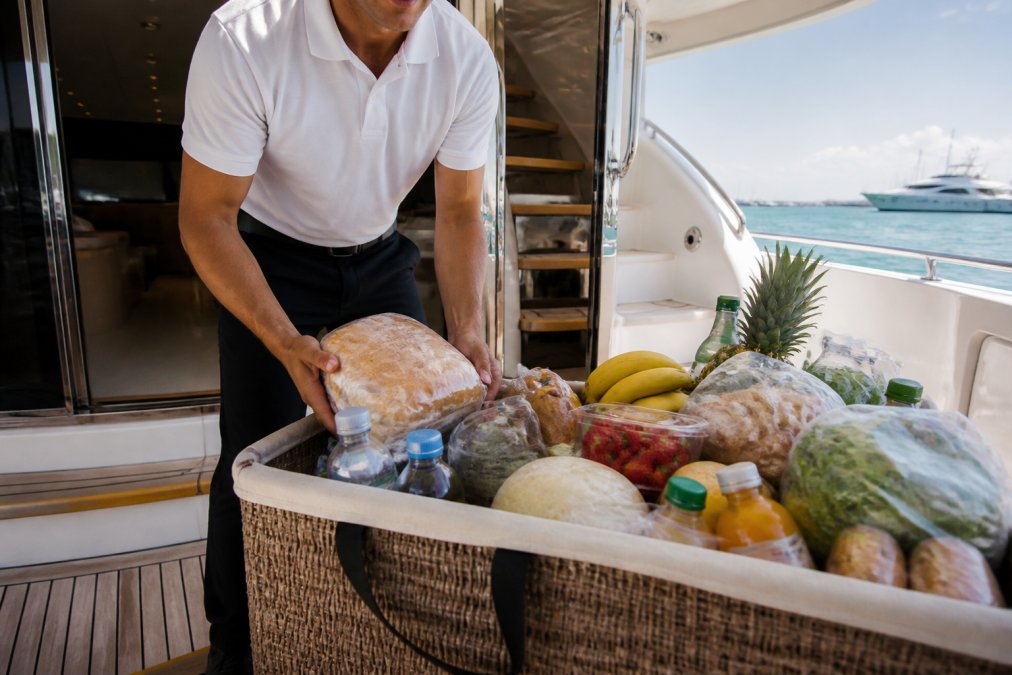
Your captain and chef source all food and beverages through the APA. This includes breakfast, lunch, dinner, snacks, bar service, and special requests. The provisioning budget varies enormously based on your preferences, a casual family charter costs less than hosting 20 business clients with premium wine service.
A chef provisioning for 10 guests in Mykonos or Dubai sources higher-quality ingredients than the same charter in less developed regions. Premium wines, imported spirits, and specialty items add quickly. If you request specific cuisines or premium ingredients, those premiums flow through the APA.
Your preference sheet becomes critical here. Communicating dietary restrictions, favorite cuisines, and beverage preferences upfront allows your captain to source efficiently.
Marina and Port Fees
Every time your yacht docks or anchors at a marina, you pay fees. These vary from nominal amounts at small anchorages to premium rates at luxury marinas in Monaco or Dubai. The APA covers all dockage, mooring, and harbor fees, plus tender services and water-taxi services if needed.
Port fees include pilotage, line handlers, and security services at some facilities. Mediterranean ports charge differently than Caribbean ports. Seasonal demand affects pricing, August in Croatia costs more than May. Your itinerary directly determines these costs.
Charter in shoulder seasons (May-June or September-October) to reduce port fees and fuel costs while enjoying excellent weather.
How Is the Advance Provisioning Allowance Calculated?
The APA calculation follows a logical formula based on four primary factors: yacht type and size, itinerary and distance, guest count and preferences, and seasonal demand.
Larger yachts consume more fuel and require more crew provisions. A 30-meter sailing yacht has different operating costs than a 50-meter motor yacht. Itinerary matters enormously, a week cruising the Greek islands 50 kilometers apart burns less fuel than a transatlantic crossing. Guest count directly affects provisioning, water consumption, and tender services.
Most brokers estimate APA as a percentage of the base charter fee, typically ranging from 35-50% depending on yacht type and itinerary. Your preference sheet refines this estimate. If you request premium provisioning or frequent port changes, the APA increases. If you’re flexible on itinerary and happy with standard provisioning, it decreases.
At the charter’s conclusion, your captain provides a detailed accounting of APA spending. Every fuel purchase, provisioning transaction, port fee, and service charge appears on the statement. You receive an invoice for any overage or a refund for any surplus.
| Cost Category | Typical % of APA | Variables |
|---|---|---|
| Fuel | 35-50% | Yacht size, distance, sea conditions |
| Provisioning | 25-35% | Guest preferences, regional pricing, dietary needs |
| Marina & Port Fees | 10-20% | Destination, season, itinerary complexity |
| Crew Gratuities & Misc. | 5-15% | Guest satisfaction, service level, extras |
Understanding Yacht Charter Expenses in the UAE
The UAE has become a premier yacht charter destination, particularly from Dubai and Abu Dhabi. The Arabian Gulf and Arabian Sea present different operational challenges than the Mediterranean or Caribbean.
Fuel costs in the UAE tend to be competitive due to major refineries in the region. However, marina fees at luxury facilities like Dubai Marina and Abu Dhabi’s Zayed Port are among the world’s highest, particularly during the winter season (November-March) when international clients flock to the region.
Provisioning in the UAE offers unique advantages. Dubai’s cosmopolitan market provides access to premium international ingredients and specialty items from across the world. However, this premium access comes at premium pricing. If your charter includes cultural sensitivity requirements, halal provisioning, alcohol restrictions, or specific dietary protocols, these preferences influence APA costs and require advance communication with your captain.
The UAE’s regulatory environment also affects APA. Certain activities, water sports, tender services, and diving operations may require special permits or certified operators, adding to operational costs. Your broker should clarify these requirements upfront.
Winter season (December-February) in Dubai sees APA costs spike due to premium marina fees and increased provisioning demand. Consider shoulder-season charters for better value.
APA vs. Base Charter Fee: Key Differences
Your base charter fee is fixed and covers the yacht itself, its crew, insurance, and maintenance. When you book a yacht for a specific week at a quoted price, that’s your base fee. It doesn’t change based on how much fuel you burn or how many ports you visit.
The APA is variable and covers only operational costs incurred during your specific charter. It’s not profit for the yacht company, it’s your money held in trust. The APA increases if you request premium provisioning, take longer routes, or visit expensive ports. It decreases if you’re flexible on itinerary or accept standard provisioning.
This distinction matters for budgeting. Your base charter fee is your primary cost and remains fixed throughout planning. The APA is supplementary and adjustable. If you’re cost-conscious, you can control APA spending through itinerary choices and provisioning preferences.
Crew Gratuity and Yacht Charter in the UAE
Crew gratuities represent a distinct APA component that deserves careful attention. Industry standard in professional yacht charters is 5-15% of the base charter fee distributed among crew members. This isn’t mandatory, gratuities are voluntary, but it’s customary for satisfied guests. The captain typically receives the largest share, with crew distributed proportionally by rank and service quality.
In the UAE, crew gratuities follow similar patterns to international charters, though cultural sensitivity matters. Many crew members working in UAE waters are expatriates from the Philippines, India, and Eastern Europe. Gratuities are highly appreciated and often represent significant income.
Some charterers prefer to distribute gratuities directly to individual crew members. Others prefer to provide a lump sum to the captain for distribution. Both approaches are acceptable. The key is communicating your intention to the captain before the charter ends.
Budget 5-15% of your base charter fee for crew gratuities, factored into your total APA. This is customary in professional yacht charters and directly impacts crew morale and service quality.
Managing Your Yacht Charter Preference Sheet for APA Control
(/2026/07/16/maximize-yacht-charter-income/) Preference Sheet for APA Control]
Your preference sheet is the single most powerful tool for controlling APA costs. This document communicates your expectations, dietary needs, activity preferences, and special requests to your captain and crew before the charter begins. A detailed preference sheet allows your captain to provision efficiently, plan the itinerary strategically, and anticipate your needs without last-minute premium purchases.
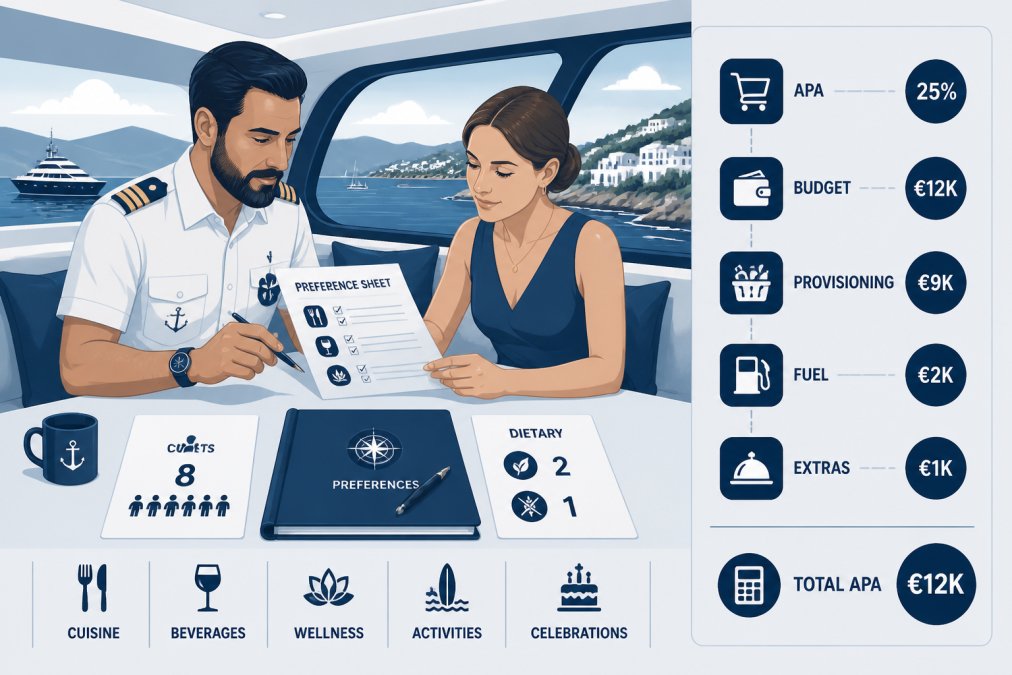
Preference sheets typically cover dietary preferences and restrictions, beverage preferences, activity preferences, and special requests. The itinerary section is where APA control becomes tangible. If you’re flexible on which ports to visit, your captain can route the yacht through less expensive marinas and anchorages. Communicating flexibility upfront allows the captain to optimize fuel consumption and port fees.
Provisioning preferences directly impact APA spending. If you specify "standard international provisioning with fresh local ingredients," the captain sources accordingly. If you request "premium provisioning with imported specialties," costs increase predictably. Being honest about your budget constraints allows the captain to deliver excellent value.
A detailed preference sheet provides clarity, enabling efficient provisioning and cost control. The 2-3 hours spent completing a thorough preference sheet can easily save thousands in unnecessary APA spending. Your broker should provide a comprehensive preference sheet template, complete it honestly and in detail.
Navigating yacht charter costs requires understanding how the advance provisioning allowance works and what it actually covers. The APA isn’t a hidden fee, it’s a transparent mechanism for managing legitimate operational expenses that vary based on your specific charter. By clearly communicating your preferences, itinerary flexibility, and budget constraints to your captain and broker, you maintain control over costs while ensuring an exceptional experience.
At Palm Lifestyle, we specialize in customized Mediterranean and worldwide yacht charters that match your lifestyle and budget. Our team manages every detail, from preference sheet optimization to transparent APA reconciliation, ensuring you understand exactly what you’re paying for and receiving exceptional value. Whether you’re chartering for a family vacation, corporate event, or bespoke adventure, our expertise in yacht operations and regional knowledge delivers seamless, worry-free experiences. Get in touch with us to discuss your yachting needs and discover how transparent charter management transforms your maritime journey.
Frequently Asked Questions
What does the Advance Provisioning Allowance cover in a yacht charter?
The Advance Provisioning Allowance covers operational variable costs including fuel consumption, water, food and beverages, marina fees, port dockage charges, and tender operations. It typically does not cover the captain's gratuity, water toy rentals, or specialty services arranged outside the charter agreement. The exact scope depends on your charter contract and the vessel type, sailing yachts and motor yachts may have different fuel profiles and provisioning requirements.
How is the Advance Provisioning Allowance calculated for yacht charters?
APA is typically calculated as a percentage of the base charter fee, ranging from 20% to 50% depending on vessel type, size, itinerary, and expected operational demands. Factors include fuel consumption rates, crew size, anticipated port visits, and guest preferences. The captain and broker provide an estimated APA based on the proposed itinerary, guest count, and customization requests outlined in your preference sheet. The final APA is adjusted and settled after the charter concludes.
Is the Advance Provisioning Allowance refundable if I don't use it all?
Yes, APA is typically refundable if unused. The captain maintains detailed receipts and accounts for all expenses throughout the charter. After the voyage, actual costs are reconciled against the pre-paid APA fund. If expenses are lower than estimated, you receive a refund; if higher, you are invoiced for the difference. This transparency is standard under MYBA charter terms and most professional brokers' agreements, ensuring fair accounting and no hidden charges.
How can I minimize APA expenses during my luxury yacht charter in Dubai or the Mediterranean?
Minimize APA by clearly communicating preferences through your preference sheet, specify preferred dining styles, port selections, and activities to avoid unexpected costs. Choose itineraries with fewer marina stops, plan provisioning strategically to reduce waste, and coordinate with the captain on fuel-efficient routing. Working with an experienced broker like Palm Lifestyle ensures realistic APA estimates upfront, transparent expense management, and expert guidance on balancing luxury with cost control throughout your charter.