
Table of Contents
- Luxury Yacht Charter Middle East: Destinations & Experiences
- Best Time to Visit Middle East by Yacht
- Top Yachting Destinations: Dubai, Red Sea & Oman
- Dubai Yacht Charter Prices & Charter Selection
- Luxury Yacht Charter Itinerary Middle East: Planning Your Route
- Cultural Etiquette, Visas & Legal Requirements
- Curated Onboard Experiences: Culinary & Sustainability
- Private Jet-to-Yacht Logistics & Seamless Transfers
Luxury Yacht Charter Middle East: Ultimate Guide
Last Updated: June 30, 2026
Luxury Yacht Charter Middle East: Destinations & Experiences
The Middle East has emerged as one of the world’s most coveted superyacht destinations. Turquoise waters, world-class marinas, ancient heritage, and modern infrastructure create an unparalleled backdrop for private yacht adventures. Seamless access to ultramodern skylines and untouched anchorages, paired with professional crew expertise and privacy-focused regulatory frameworks, sets the region apart.
This guide covers destination highlights, seasonal timing, yacht selection, itinerary planning, cultural protocols, and logistics that distinguish an exceptional charter experience.
Why the Middle East is a Premier Yachting Destination
The Middle East boasts deep-water anchorages, protected marinas with 24/7 support, and service providers experienced with superyachts. According to Gulf Cooperation Council maritime infrastructure reports, the region has invested heavily in marina technology and vessel support systems, making it operationally comparable to established Mediterranean ports.
Year-round yachting is possible, though seasonal variation matters significantly. Waters support diverse activities: diving in pristine coral ecosystems, cultural shore excursions along ancient trade routes, and private anchorages free from commercial traffic.
Understanding Crewed vs. Bareboat Charters
A crewed charter includes a professional skipper, engineer, chef, and stewardess who manage all operations. For luxury yacht charter Middle East, crewed is the standard. The region’s regulatory environment, navigation complexity, and expectation of personalized service make bareboat charters rare. Crewed charters allow you to focus entirely on the experience while your crew handles weather decisions, port procedures, and provisioning.
Best Time to Visit Middle East by Yacht
The Middle East follows an inverse seasonal pattern to the Mediterranean, with winter as peak season.
Climate and Weather Considerations
Summer (May through September) brings extreme heat exceeding 45°C (113°F), making extended cruising impractical. Most superyachts are repositioned during these months.
Winter and early spring (October through April) offer ideal conditions: air temperatures between 20-28°C (68-82°F), calm seas, and minimal rainfall. Water remains warm enough for comfortable swimming and water sports.
Shoulder seasons (April-May and September-October) present trade-offs. Fewer yachts compete for anchorages, but weather becomes less predictable.
Seasonal Availability and Peak Periods
Peak season runs November through March. Superyacht availability tightens considerably, and charter rates reflect demand. Booking 6-8 weeks in advance is standard.
Shoulder season (April-May) offers a sweet spot: fewer crowds, pleasant weather, and better availability than winter. Research from Middle East Tourism Board seasonal analysis indicates March and October see the highest charter activity. April or May offers comparable conditions with 20-30% fewer vessels competing for premium anchorages.
Top Yachting Destinations: Dubai, Red Sea & Oman
The three primary cruising zones each deliver distinct experiences. Most multi-week itineraries combine all three, though week-long charters often focus on one region.
Dubai: Modern Skyline Meets Arabian Heritage
Dubai serves as the primary hub for luxury yacht charter Middle East operations. World-class marinas (Jebel Ali, Dubai Marina, Port Rashid) offer advanced provisioning infrastructure. The coastline contrasts ultramodern architecture with traditional souks and heritage districts. Anchorages near the Palm islands provide privacy while remaining minutes from urban amenities.
Red Sea: Turquoise Waters & Secluded Anchorages
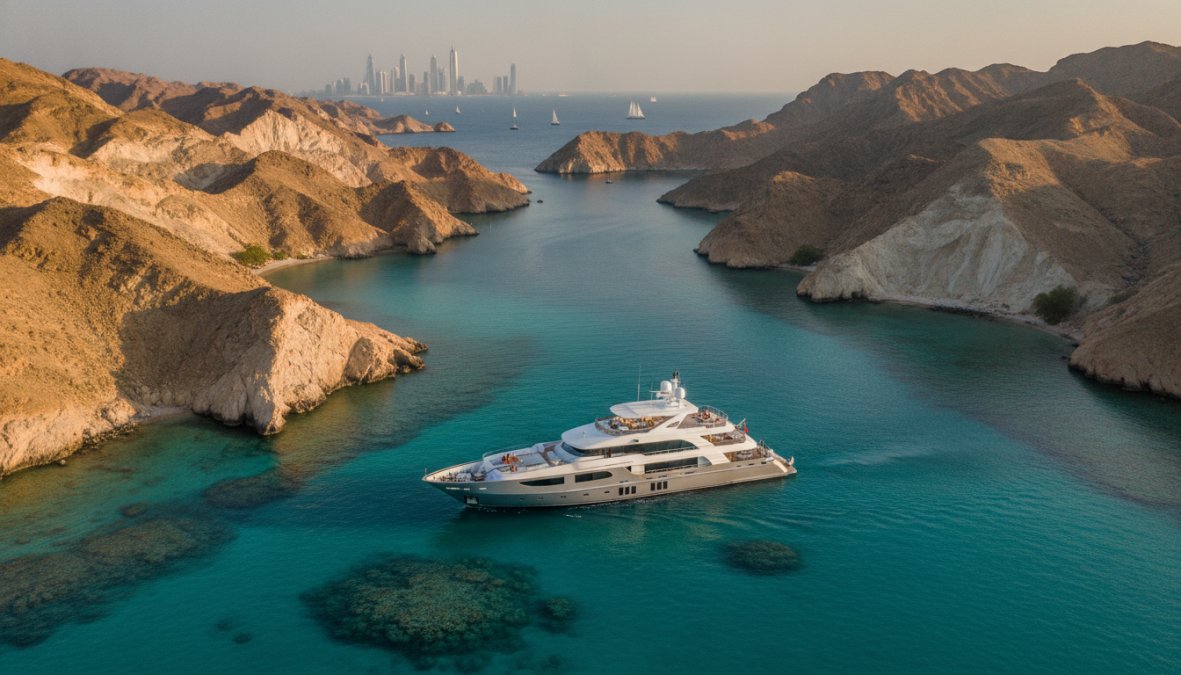
The Red Sea represents the frontier of Middle Eastern yachting. Accessed via the Strait of Bab el-Mandeb, it offers pristine cruising: dramatic desert landscapes, world-class diving sites, and anchorages where you may be the only yacht for miles.
Saudi Arabia’s Red Sea coast has opened substantially to international yachting, with new marinas in Jeddah and Yanbu. Water clarity exceeds most Mediterranean destinations, with visibility often reaching 30+ meters. Coral gardens and wreck sites rank among the world’s best.
Red Sea cruising requires more planning than Gulf-based itineraries. Provisioning is less centralized, and weather windows matter more significantly. However, the reward is genuine remoteness paired with extraordinary natural beauty.
Oman: Ancient Culture & Pristine Coastlines
Oman’s 1,600+ kilometer coastline offers anchorages ranging from developed ports (Muscat) to utterly secluded coves. The Omani government has deliberately preserved its coastline from overdevelopment, creating an environment where modern yachting infrastructure exists alongside untouched landscapes.
Muscat provides a natural hub: world-class marina facilities, crew provisioning, and cultural experiences grounded in Omani heritage. Many multi-week itineraries position Dubai as the departure point, cruise south through the Emirates’ east coast, and spend the final week exploring Oman.
Dubai Yacht Charter Prices & Charter Selection
Pricing for luxury yacht charter Middle East varies based on vessel size, season, crew experience, and included amenities.
Superyacht Types & Fleet Availability
Superyachts available for charter range from 24-meter motor yachts to 150+ meter mega-yachts. Most charter clients gravitate toward 35-65 meter vessels, large enough for genuine comfort and sophisticated crew, compact enough to access anchorages and navigate narrow channels.
Motor yachts dominate the Middle East charter fleet. Sailing yachts are less common, as the region’s wind patterns and preference for rapid repositioning favor motorized vessels. Newer builds (launched within the past 5 years) command premium rates but offer modern systems and minimal mechanical risk.
At Palm Lifestyle, our luxury yacht charter services provide access to a curated global fleet, with particular depth in the Middle East region.
What’s Included in Your Charter Rate
A typical charter rate covers the vessel, crew (skipper, engineer, chef, stewardess), fuel, insurance, port fees, and basic provisioning.
Included typically:
- Vessel and crew
- Fuel and basic port charges
- Crew meals and standard provisioning
- Basic water toys (snorkeling gear, paddleboards)
Not included typically:
- Gourmet or specialty provisioning
- Premium water toys (jet skis, tenders with outboards)
- Helicopter or seaplane transfers
- Shore excursion guides or private vehicle rentals
- Spa services or specialized entertainment
Luxury Yacht Charter Itinerary Middle East: Planning Your Route
A well-designed itinerary balances sailing distance, anchorage quality, cultural experiences, and operational logistics.
Multi-Country Cruising: Dubai to Oman Routes
A classic week-long itinerary departs Dubai, cruises south along the UAE coast, and concludes in Muscat, Oman. This route covers approximately 250-300 nautical miles, allowing 3-4 days of actual cruising and 3-4 days anchored at premium locations.
A two-week itinerary adds substantial depth. Extend the Red Sea component, allowing 4-5 days exploring Saudi or Egyptian anchorages, or expand the Oman portion, cruising further south toward Salalah.
Marina Infrastructure & Anchorages
Dubai’s marinas (Jebel Ali, Dubai Marina) rival any Mediterranean facility: 24/7 security, advanced fuel systems, and provisioning services. Muscat’s marina is modern and well-maintained. Secondary ports like Fujairah have adequate facilities for refueling and crew rest.
The real magic lies in anchorages, not marinas. Protected bays, islands, and reef-fringed coves allow you to drop anchor in pristine settings. A typical week might include 2 marina days and 5 anchorage days.
Cultural Etiquette, Visas & Legal Requirements
The Middle East operates under distinct cultural and legal frameworks. Understanding these prevents misunderstandings and enriches your experience.
Local Customs & Dress Codes Onboard
The region is predominantly Muslim. While international yachts operate with considerable autonomy, respecting local sensibilities matters when interacting with authorities or visiting markets.
Dress codes onboard are your choice; the vessel is your private space. However, when going ashore, modest dress is expected. Women should avoid sleeveless tops and shorts above the knee; men should wear shirts in public settings.
Alcohol is legal aboard international yachts in most jurisdictions. However, discretion is appropriate when ashore. Photography requires sensitivity, always ask permission before photographing individuals, particularly in traditional or religious settings.
Multi-Country Visa & Documentation Essentials
Visa requirements depend on your nationality and specific countries visited. UAE entry is straightforward for most nationalities (visa-on-arrival or visa-free). Oman similarly welcomes international visitors with accessible visa processes.
The Red Sea presents more complexity. Saudi Arabia has liberalized tourism visas, but requirements vary by nationality. Egypt has established tourist visa procedures.
Vessel documentation must include:
- International Certificate of Registry
- Insurance documentation
- Crew manifests and certifications
- Customs and immigration clearance certificates
- Radio licenses and maritime safety documentation
Professional charter companies handle these requirements. According to International Maritime Organization regulations for superyachts, vessels over 24 meters require compliance with specific safety and environmental standards.
Curated Onboard Experiences: Culinary & Sustainability
The superyacht experience extends far beyond navigation. Onboard lifestyle, dining, and environmental stewardship define whether a charter becomes memorable.
Gourmet Dining & Regional Cuisine
Professional charter yachts employ trained chefs capable of executing fine-dining standards. Many clients arrange specialized menus in advance: specific dietary preferences, cuisine styles, or ingredient sourcing.
The Middle East offers extraordinary culinary opportunities. Regional specialties, Omani frankincense-infused dishes, Emirati seafood preparations, Lebanese mezze traditions, can be incorporated into menus. Provisioning in Dubai or Muscat provides access to global ingredients, allowing chefs to blend regional flavors with international techniques.
Eco-Friendly Yachting in the Middle East
Environmental consciousness increasingly shapes luxury yachting. The Middle East’s coral ecosystems deserve protection, and forward-thinking operators adopt sustainable practices.
Responsible anchoring uses mooring buoys rather than dropping anchor on seagrass or coral. Crews trained in marine conservation minimize impact during water activities. Some yachts employ advanced wastewater treatment systems allowing gray water discharge without environmental degradation.
Research from International Superyacht Society sustainability guidelines indicates that clients increasingly prioritize environmental credentials when selecting vessels.
Private Jet-to-Yacht Logistics & Seamless Transfers
Most international clients arrive via Dubai International Airport or Abu Dhabi International Airport. Ground transportation to the marina takes 45 minutes to 2 hours.
Some charterers arrange private car service; others use helicopter transfers for dramatic effect and time savings. For clients arriving from further afield, private jet positioning can transfer you directly to the marina with the yacht provisioned and crew positioned to depart immediately.
At Palm Lifestyle, we coordinate these logistics end-to-end, liaising with aviation partners, ground handlers, and crew to ensure seamless arrival and departure.
Frequently Asked Questions
What is the best time of year for a luxury yacht charter in the Middle East?
The optimal season for luxury yacht charter in the Middle East runs from November through March, when temperatures are mild and sea conditions are favorable. Summer months (June–August) bring extreme heat exceeding 40°C, making water activities uncomfortable. During winter, the Arabian Gulf and Red Sea offer ideal conditions for cruising, with calm seas and pleasant weather perfect for both onboard relaxation and water sports. Peak availability for superyachts occurs during these cooler months.
How much does a luxury yacht charter cost in Dubai and the broader Middle East?
Luxury yacht charter rates in Dubai and the Middle East vary significantly based on vessel size, season, duration, and crew inclusions. Smaller motor yachts typically cost less than larger superyachts. High-season rates (winter) command premium pricing compared to shoulder seasons. Most charter brokers provide customized quotes after understanding your specific requirements, destination preferences, and onboard experience expectations. Working with an experienced charter specialist ensures transparent pricing and value for your investment.
Do I need a visa to charter a yacht across multiple Middle Eastern countries?
Visa requirements depend on your nationality and the countries you plan to visit. Many nationalities enjoy visa-free or visa-on-arrival access to UAE and Oman, while Saudi Arabia and other nations may require advance visas. For multi-country cruising itineraries, it's essential to verify entry requirements for each destination well before departure. Your charter broker and yacht's skipper can guide you through documentation needs, and some charter companies offer concierge support for visa coordination and legal compliance across borders.
What are the most popular yachting destinations when chartering a luxury superyacht in the Middle East?
Dubai dominates as a premier hub with world-class marinas and modern infrastructure, offering access to the Arabian Gulf's contrasting desert and skyline experiences. The Red Sea attracts those seeking secluded anchorages, pristine turquoise waters, and vibrant marine life. Oman appeals to travelers valuing ancient heritage, untouched coastlines, and authentic cultural immersion. Many luxury yacht charters combine these destinations into multi-week itineraries, allowing clients to experience the region's diverse lifestyle, architecture, and natural beauty in a single voyage.
