
Table of Contents
- What Is Motor Yacht Charter and How It Works
- Motor Yacht Types: Choosing the Right Vessel
- Motor Yacht Charter Destinations: Mediterranean & Beyond
- Understanding Motor Yacht Charter Costs and Pricing
- Yacht Charter Itinerary Planning and Customization
- What to Pack for a Motor Yacht Charter
- Special Considerations: Insurance, Legal, and Sustainability
- Conclusion
Motor Yacht Charter: The Complete 2026 Guide
Last Updated: July 1, 2026
What Is Motor Yacht Charter and How It Works
A motor yacht charter is the rental of a luxury motor-powered vessel for a defined period, typically ranging from a few days to several weeks, allowing you to experience private maritime travel without the commitment of ownership. Motor yachts rely on engine power rather than wind, offering greater control, predictability, and comfort in varying sea conditions.
When you charter a motor yacht, you rent the vessel and its crew for your exclusive use. The process involves selecting your yacht, agreeing on dates and destinations, paying a charter fee plus an Advanced Provisioning Allowance (APA) for expenses incurred during the trip, and then boarding for your vacation. The charter fee covers only the vessel and core crew; fuel, food, port fees, and water activities come from the APA or are billed separately.
Crewed vs. Bareboat Motor Yacht Charters
Crewed charters come with a professional captain and crew (chef, stewardess, deckhand) who manage navigation, cooking, and daily operations. Bareboat charters put you in command; you navigate, cook, and manage the yacht yourself, assuming you hold proper certifications. For most luxury motor yacht charters, crewed is the industry standard.
The Chartering Process Explained
The process begins when you contact a yacht broker, a professional intermediary who maintains relationships with yacht owners and charter companies. Once you’ve selected a yacht, you’ll review the charter agreement (typically a MYBA, Mediterranean Yacht Brokers Association, standard contract), confirm the charter rate and APA terms, and arrange payment. Most brokers require a deposit (typically 30-50% of the charter fee) to secure your dates.
Two to three weeks before departure, you’ll have a pre-charter call with your captain and crew to discuss your itinerary, dietary preferences, and water sports interests. On arrival day, you’ll meet the crew, receive a safety briefing, and review the vessel’s systems before casting off.
Motor Yacht Types: Choosing the Right Vessel
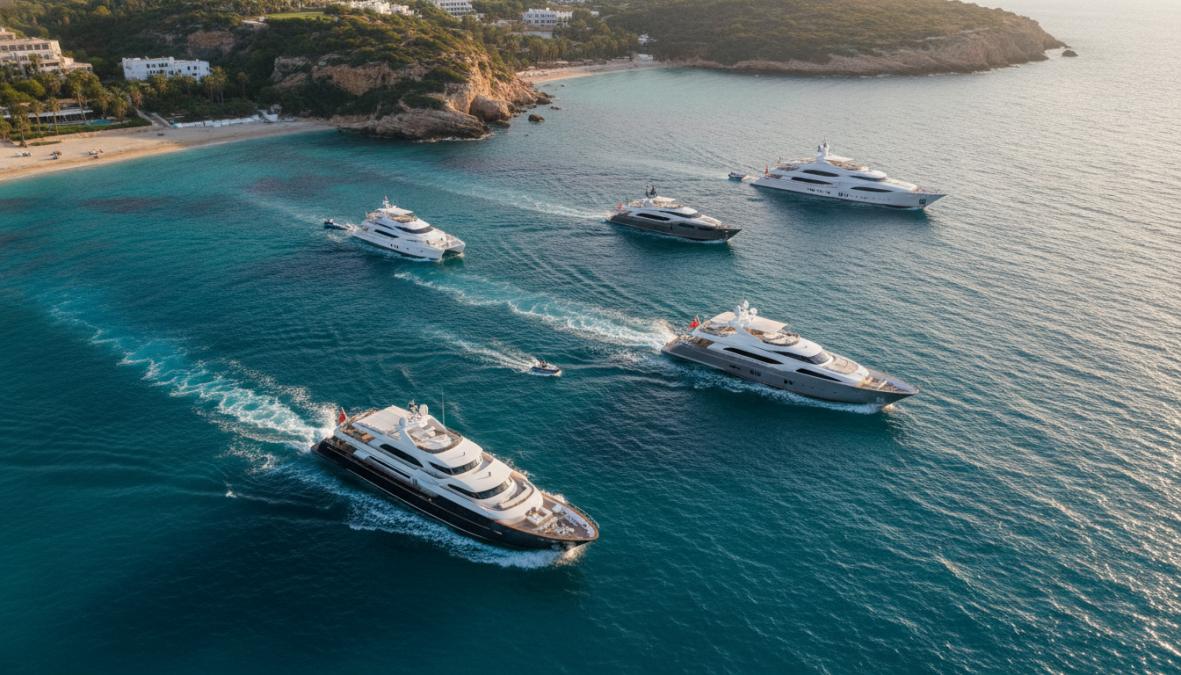
Motor yachts range from 40-foot day cruisers to 180-foot megayachts, each serving different needs and budgets.
Motor Yachts vs. Sailing Yachts vs. Catamarans
A traditional motor yacht is a monohull vessel powered entirely by diesel engines. Sailing yachts use wind as primary propulsion with auxiliary engines. Catamarans are twin-hulled vessels that can be motor-powered or sail-assisted.
Motor yachts excel at speed, comfort, and weather resilience. They cruise faster than sailing yachts (typically 12-15 knots versus 8-10 knots), maintain stability in rough seas, and offer larger interior volumes. The trade-off is fuel consumption and environmental impact. For first-time charterers seeking comfort, speed, and predictability, motor yachts are the default choice.
Megayachts and Superyachts for Luxury Charters
Megayachts (80+ feet) and superyachts (120+ feet) are floating palaces with multiple guest cabins, spa facilities, cinema rooms, tenders, and water toys. They carry larger crews (often 8-12 staff for a 120-footer) and offer concierge-level service. Megayachts occupy the sweet spot for many charterers: large enough to feel genuinely luxurious and accommodate 8-12 guests comfortably, yet more affordable than true superyachts.
Motor Yacht Charter Destinations: Mediterranean & Beyond
The Mediterranean and Caribbean dominate the charter market because they offer reliable weather, stunning anchorages, world-class provisioning infrastructure, and established broker networks.
Mediterranean Sailing Seasons and Popular Routes
The Mediterranean season runs May through October, with peak demand in July and August. Spring and fall offer better weather, fewer crowds, and lower rates. Popular routes include the Greek Islands (Cyclades and Dodecanese), the Croatian Adriatic coast, the French Riviera, the Italian coast (Amalfi, Cinque Terre), and the Spanish Balearic Islands.
A typical one-week Mediterranean itinerary covers 80-120 nautical miles, visiting 4-6 ports or anchorages. Unlike land-based travel, a yacht charter allows you to change plans mid-trip, if you discover a hidden anchorage you love, you stay longer. If weather deteriorates, you shelter in a nearby port. The Mediterranean’s established infrastructure means excellent provisioning, reliable marinas with modern facilities, and abundant water sports opportunities, making it ideal for first-timers.
Caribbean and Global Charter Hotspots
The Caribbean season extends year-round, with December through April offering ideal conditions (warm, dry, minimal hurricane risk). Popular grounds include the U.S. Virgin Islands, British Virgin Islands, Grenadines, and Bahamas. Caribbean charters differ from Mediterranean ones in pace and culture. Sailing distances are shorter, the water is warmer and calmer, and islands emphasize relaxation over sightseeing.
Beyond these traditional hotspots, yacht charters operate in the South Pacific (Fiji, Tahiti), Southeast Asia (Thailand, Indonesia), and the Middle East (UAE, Oman), each offering unique character and seasonal windows.
Understanding Motor Yacht Charter Costs and Pricing
Motor yacht charter pricing follows a standard structure, but hidden costs and variable expenses often surprise first-time charterers.
Weekly Rates, APA, and Hidden Costs Breakdown
The weekly charter rate is the base cost for the vessel and crew. This covers the yacht, captain, crew salaries, insurance, and basic maintenance. The Advanced Provisioning Allowance (APA) is a separate payment, typically 30-50% of the weekly charter rate, held in trust and used for expenses incurred during the charter: fuel, food, beverage, port fees, and water sports equipment rentals. At the end of your charter, the crew provides an itemized accounting and refunds unused funds.
Additional costs often include crew gratuities (10-15% of the weekly rate), water sports equipment rentals, and positioning fees if the yacht must reposition to your departure location. A transparent broker will itemize these upfront. Many clients budget 40-60% additional to the weekly rate to account for APA, gratuities, and incidentals.
VAT, Port Fees, and What’s Included in Your Charter
VAT (Value Added Tax) is charged in most Mediterranean jurisdictions (typically 17-21%). Some charter agreements include VAT in the quoted rate; others add it separately. Always clarify with your broker. Port fees vary by destination; mooring in a Mediterranean marina costs 2-4 euros per meter per night.
What’s included in the charter rate:
- Vessel and crew
- Basic insurance
- Crew meals and beverages
- Basic water toys (snorkel equipment, paddleboards)
What’s NOT typically included:
- Food and beverage for guests
- Alcohol beyond house wine
- Specialized water sports (diving, wakeboarding)
- Crew gratuities
- VAT (in some quotes)
- Positioning fees
Cost Component | Typical Range | Notes |
|---|---|---|
Weekly charter rate | $15,000-$150,000+ | Varies by yacht size, season, location |
APA (% of weekly rate) | 30-50% | Fuel, food, port fees, water sports |
Crew gratuity | 10-15% of weekly rate | Customary but not mandatory |
VAT | 17-21% | Varies by jurisdiction; sometimes included |
Yacht Charter Itinerary Planning and Customization
One of the greatest pleasures of a motor yacht charter is the flexibility to design your own itinerary. You’re not locked into hotel locations or tour schedules; you move your accommodation to new destinations each day.
Working with Your Yacht Broker for Bespoke Routes
A skilled yacht broker becomes your itinerary partner. They understand regional conditions, hidden anchorages, local customs, and seasonal opportunities. During your pre-charter consultation, discuss your preferences: Are you seeking cultural immersion, active adventure, pure relaxation, or a mix? The broker and captain then craft an itinerary that balances your interests with practical constraints: daily cruising distances (typically 4-6 hours for comfort), weather windows, fuel stops, and provisioning opportunities.
Customization extends beyond the route. Discuss special celebrations, dietary restrictions, preferred activities, and any accessibility needs. A professional crew adapts to your preferences seamlessly.
Onboard Amenities, Crew Services, and Water Toys
Modern motor yachts are floating resorts. A 60-foot yacht typically features 3-4 guest cabins with ensuite bathrooms, a spacious saloon with entertainment systems, a fully equipped galley, and outdoor dining and lounging areas. Larger yachts add hot tubs, gyms, cinema rooms, and spa facilities.
The crew delivers service that rivals five-star hotels. Your captain ensures safe, comfortable passage. The chef prepares meals tailored to your preferences. The stewardess manages cabins and housekeeping. Deckhands handle water sports setup. Water toys commonly include snorkeling gear, paddleboards, kayaks, jet skis (on larger yachts), fishing equipment, and diving certification with guided dives.
What to Pack for a Motor Yacht Charter
Packing for a yacht differs from land-based travel because space is limited and the marine environment demands specific gear.
Clothing essentials:
- Lightweight, breathable clothing (cotton, linen, moisture-wicking synthetics)
- Layers for evening cool-downs
- One formal outfit for upscale dinners ashore
- Comfortable walking shoes and non-marking deck shoes
- Swimsuits (bring 2-3)
- Light rain jacket or windbreaker
- Sun hat and sunglasses
- Casual evening wear
Toiletries and personal items:
- High-SPF reef-safe sunscreen (reapply frequently)
- Aloe vera gel for sunburns
- Seasickness medication if prone
- Prescription medications in original containers
- Travel-size toiletries
- Moisturizer (sun and salt air dry skin)
Electronics and documents:
- Passport (required for international waters)
- Travel insurance documents
- Credit cards and some cash
- Phone and charger
- Camera or GoPro
Miscellaneous:
- Waterproof phone case
- Dry bag for excursions
- Reusable water bottle
What NOT to pack:
- Excessive luggage (one suitcase per person is standard)
- Heavy jewelry or valuables
- Formal business attire
Most yachts provide bathrobes, slippers, hairdryers, and basic toiletries. Ask your broker what’s included.
Special Considerations: Insurance, Legal, and Sustainability
Motor yacht charters operate within maritime law and international regulations.
Insurance, MYBA Agreements, and Legal Essentials
Most charter agreements follow MYBA (Mediterranean Yacht Brokers Association) standard terms, which protect both charterer and yacht owner. The agreement specifies liability, damage deposits, cancellation terms, and dispute resolution.
Standard charter insurance covers the vessel and crew but typically excludes charterer liability for negligence. Many brokers recommend purchasing charterer liability insurance, which protects you if you accidentally damage the yacht or injure crew members. Cancellation insurance is optional but valuable, covering your charter fee if you must cancel due to illness or family emergency.
Eco-Friendly Chartering and Sustainable Practices
The marine environment faces pressure from tourism and vessel operations. Responsible chartering minimizes environmental impact through reef-safe sunscreen, minimizing single-use plastics, respecting marine protected areas, responsible wildlife observation, anchoring responsibly, and proper waste management.
Many brokers now track yacht operators’ environmental certifications. If environmental responsibility matters to you, ask your broker to recommend yachts with strong sustainability records.
Frequently Asked Questions
How much does it cost to charter a motor yacht?
Motor yacht charter costs vary significantly based on vessel size, season, destination, and charter duration. Weekly rates for mid-range motor yachts typically range from modest to premium pricing depending on your chosen location and onboard services. Beyond the base charter fee, budget for APA (Advanced Provisioning Allowance), which covers fuel, port fees, and crew expenses. VAT may apply depending on your charter location. Working with a yacht broker ensures transparent pricing and helps you understand all costs upfront.
What is included in a motor yacht charter price?
Standard motor yacht charter packages typically include the vessel, professional onboard crew, basic accommodations, and standard amenities. Additional inclusions depend on your charter agreement. Crewed charters often feature chef services, water toys, and tender boats. The APA covers provisioning, fuel, and operational costs during your charter. Always clarify with your yacht broker what's included versus what incurs extra charges, as luxury rentals can vary significantly in their offerings.
What is the difference between a motor yacht and a sailing yacht charter?
Motor yachts rely on engines for propulsion, offering greater speed, stability, and comfort—ideal for covering long distances and exploring multiple destinations. Sailing yachts depend on wind and require active sailing skills, providing a more traditional nautical experience. Catamarans combine stability with speed and come in both motor and sailing configurations. Motor yachts typically suit travelers seeking relaxation and predictable itineraries, while sailing yachts appeal to enthusiasts wanting hands-on maritime engagement. Your choice depends on your experience level, time available, and preferred vacation style.
How far in advance should I book a motor yacht charter?
For popular destinations and peak seasons—particularly Mediterranean charters during summer—book 6–12 months in advance to secure your preferred vessel and dates. Off-season charters may require only 2–3 months' notice. Booking early through a yacht broker like Palm Lifestyle allows customization of your itinerary, crew selection, and onboard services. Last-minute bookings are sometimes possible but offer limited vessel selection and higher rates. Plan ahead to ensure the superyacht or motor yacht that matches your vision is available.
What are the most popular destinations for motor yacht charters?
The Mediterranean remains the premier motor yacht charter destination, with routes spanning the French Riviera, Greek Islands, Croatia, and Italian coasts. The Caribbean offers year-round warm waters and island-hopping opportunities. Other global hotspots include Southeast Asia, the Middle East, and the Bahamas. Each region has optimal sailing seasons—Mediterranean peaks in summer, while Caribbean charters flourish during winter months. Your yacht broker can recommend destinations based on your preferences, available time, and desired experiences, ensuring your charter itinerary matches your vacation goals.
