
Table of Contents
- What Is Yacht Charter Mediterranean?
- Best Mediterranean Destinations for Your Sailing Vacation
- Types of Yachts: Catamaran vs. Monohull vs. Superyacht
- Mediterranean Yacht Charter Cost: Understanding Pricing and Hidden Expenses
- Crewed vs. Bareboat Charters: Which Is Right for You?
- Best Mediterranean Sailing Routes and Itinerary Planning
- Mediterranean Yacht Charter Season: When to Book Your Adventure
- How to Choose the Right Yacht and Charter Broker
Yacht Charter Mediterranean: Complete 2026 Guide
Last Updated: July 3, 2026
What Is Yacht Charter Mediterranean?
A yacht charter Mediterranean experience lets you rent a private vessel to explore stunning coastlines from the Greek Islands to the French Riviera. Unlike traditional vacation rentals, it gives you complete freedom to set your own pace, discover hidden anchorages, and experience luxury on the water without ownership commitment.
According to International Yacht Brokers Association market data, Mediterranean charters account for approximately 35% of global luxury yacht bookings annually. The real value isn’t the vessel itself, it’s waking up in a different country each morning, anchoring in secluded coves unreachable by cruise ships, and experiencing Mediterranean culture at your own rhythm.
Best Mediterranean Destinations for Your Sailing Vacation
Greek Islands and Croatian Coast
The Greek Islands remain the gold standard for yacht charter Mediterranean vacations. The Cyclades, including Santorini, Mykonos, and Paros, offer dramatic white-cliffed landscapes and world-class anchorages. Understanding the meltemia winds, predictable northerly breezes that make summer sailing consistent, is essential for proper route planning.
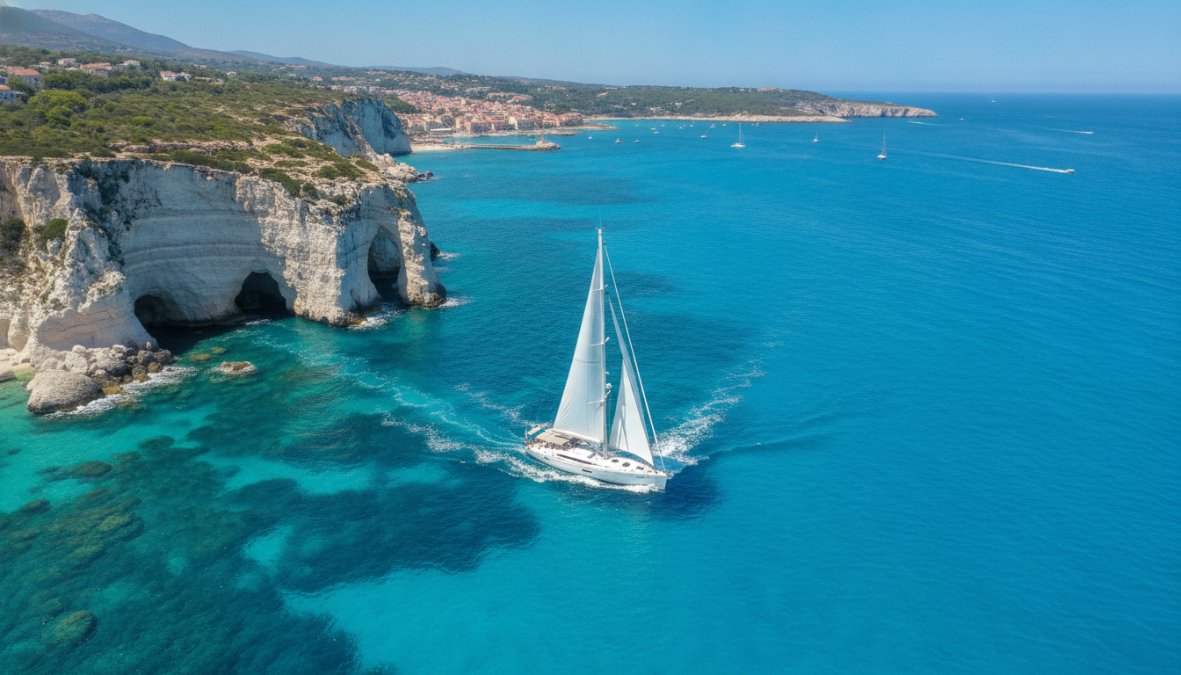
The Ionian Islands on Greece’s western coast offer fewer tourists, lush vegetation, and calmer waters, ideal for families seeking tranquility. Corfu, Lefkada, and Kefalonia provide protected anchorages and shorter sailing distances.
Croatia’s Dalmatian Coast has emerged as the region’s best-kept secret. Dramatic limestone cliffs, crystal-clear water, and affordable provisioning make it increasingly popular. Research from European Yacht Charter Association shows Croatian charters have grown 18% annually over the past three years. Hvar, Vis, and the Pakleni Islands deliver Mediterranean beauty without summer crowds.
:::pro Most charterers mistake trying to cover too much distance. The Croatian coast rewards slow sailing, anchor for two or three days in one location rather than moving daily, revealing the region’s character and reducing fatigue. :::
Amalfi Coast and French Riviera
The Amalfi Coast delivers pure Mediterranean drama. Positano, Ravello, and Salerno sit on steep cliffsides plunging directly into the Tyrrhenian Sea. The sailing season is shorter than Greece, typically June through September, due to unpredictable winter storms.
The French Riviera extends from Marseille eastward to the Italian border, combining sophisticated coastal towns (Cannes, Antibes, Saint-Tropez) with protected anchorages. Provisioning is exceptional, and marina infrastructure is well-developed. A common mistake is assuming the Riviera is too crowded for authentic experiences, venture 10 nautical miles beyond main ports and you’ll find solitude alongside stunning scenery.
Types of Yachts: Catamaran vs. Monohull vs. Superyacht
The yacht you select fundamentally shapes your charter experience.
Catamarans offer stability, spaciousness, and shallow-draft capability. Twin hulls reduce heeling, making them ideal for families with children or those prone to seasickness. Multiple cabins with en-suite facilities suit groups well. They excel in light wind conditions and anchor closer to shore. The tradeoff: they’re slower than monohulls in strong winds and less maneuverable in tight marina spaces.
Monohulls represent traditional sailing yachts. They’re faster, more responsive, and deliver authentic sailing experiences. Single-hull designs slice through water efficiently, superior for longer passages or strong-wind sailing. They’re also more affordable than comparable catamarans. The disadvantage: narrower cabins, more pronounced heeling, and deeper draft limiting anchorage options.
Superyachts (typically 24+ meters) represent luxury’s pinnacle. These vessels feature professional crews, onboard chefs, water toys, and hotel-like accommodations. Superyachts eliminate physical sailing demands. For groups of 8-12 people, per-person costs can be competitive with monohulls when factoring in crew services and amenities.
Yacht Type | Ideal For | Key Advantage | Primary Tradeoff |
|---|---|---|---|
Catamaran | Families, comfort-focused groups | Stability, spacious cabins, shallow draft | Slower in strong winds, less maneuverable |
Monohull | Experienced sailors, couples | Speed, responsive handling, authentic sailing feel | Narrower cabins, deeper draft, more heeling |
Superyacht | Large groups, luxury-focused travelers | Professional crew, premium amenities, zero sailing responsibility | Highest cost, less intimate experience |
Mediterranean Yacht Charter Cost: Understanding Pricing and Hidden Expenses
Base charter rates typically represent 40-50% of your total cost. A 40-foot catamaran during shoulder season (May or September) costs significantly less than peak summer rates (July-August), which can be 60-80% higher. Monohulls generally cost 15-25% less than comparable catamarans.
Breaking Down APA and Additional Fees
The Advanced Provisioning Allowance (APA) is a prepaid fund covering fuel, provisioning, port fees, and crew expenses, typically 20-35% of the base charter rate. You’ll receive an APA statement after your charter detailing actual expenses; unused portions are refunded.
VAT (Value Added Tax) applies to charter rates in EU countries, typically adding 18-23% to base costs. Mooring fees in popular anchorages like Mykonos or Saint-Tropez run significantly higher than lesser-known ports. Water toys and equipment rentals often incur additional fees.
Crew gratuities, while not mandatory, are customary for crewed charters, typically 10-15% of the base charter rate. Request a detailed cost breakdown before committing to prevent budget surprises.
Crewed vs. Bareboat Charters: Which Is Right for You?
Bareboat charters put you in command. You handle navigation, sailing, and all onboard operations. This appeals to experienced sailors seeking autonomy and costs less than crewed options. You’ll need a valid sailing qualification and proof of recent sailing experience.
Bareboat sailing is more physically demanding than many anticipate. Anchoring, sail handling, navigation, and problem-solving fall entirely on you. Bad weather becomes stressful rather than scenic.
Crewed charters invert this dynamic. A professional captain handles navigation and sailing. A chef manages meals. Crew members handle housekeeping and maintenance. You focus entirely on enjoying the experience. This suits families with children, groups where not everyone sails, and travelers prioritizing comfort. Crewed charters cost more, but the value proposition is compelling: professional expertise, gourmet meals, and zero operational stress.
What separates good crewed charters from exceptional ones is crew quality. The difference between competent crew and outstanding crew is substantial, it’s the difference between a nice vacation and a transformative experience.
Best Mediterranean Sailing Routes and Itinerary Planning
Route selection determines which destinations you’ll visit and what experiences you’ll encounter.
The Cycladic Circuit (Greek Islands) covers roughly 200-250 nautical miles over 7-10 days. You’ll typically base yourself in Mykonos or Paros, making day sails to neighboring islands. The predictable meltemia winds make navigation straightforward.
The Dalmatian Progression (Croatia) stretches 150-200 nautical miles from Split southward toward Dubrovnik. Many charterers spend 10-14 days covering what could theoretically be done in 5-7, because each anchorage (Hvar, Vis, Korčula) deserves multiple days. Sailing distances are shorter than Greece, making this route accessible to less experienced sailors.
The Riviera Traverse (French and Italian Coasts) connects Marseille to the Italian border, covering roughly 180 nautical miles. This route emphasizes coastal exploration over open-water sailing. Provisioning is exceptional, but summer congestion in popular spots requires strategic timing.
The Amalfi-to-Sicily Route combines the dramatic Amalfi Coast with southern Italy and Sicily. This 300+ nautical mile journey requires 10-14 days and suits experienced sailors comfortable with longer passages.
Most successful charters cover 40-60 nautical miles daily, leaving time for swimming, exploration, and rest. Attempting 100+ daily miles exhausts crews and eliminates the relaxation that makes yacht charter Mediterranean vacations valuable.
Mediterranean Yacht Charter Season: When to Book Your Adventure
May and September represent the sweet spot for many charterers. Weather is stable, winds are moderate, and crowds are lighter than summer. Water temperatures hover around 20-22°C. Prices fall between shoulder-season and peak rates, offering good value.
June through August delivers the most reliable weather and warmest water temperatures (24-27°C). This peak season attracts families with school-age children. The tradeoff: popular anchorages become crowded and prices peak. If chartering during peak season, book less-famous destinations (Croatian coast, Ionian Islands) to escape crowds.
October through April requires more flexibility. Weather becomes unpredictable, sudden storms can develop, and some anchorages become unsafe. Water temperatures drop significantly. However, this off-season appeals to experienced sailors seeking solitude and lower costs.
The meltemia winds (summer northerlies in Greece) blow most reliably June-August, making Greek sailing predictable but occasionally creating challenging conditions in narrow channels.
How to Choose the Right Yacht and Charter Broker
Start by defining your non-negotiables. Are you prioritizing cost, comfort, sailing quality, or specific destinations? Do you need a crewed yacht or can you handle bareboat sailing? How many guests will you accommodate?
Yacht specifications matter significantly. A 40-foot catamaran and a 45-foot monohull deliver vastly different experiences despite similar prices. Request detailed deck plans and cabin photos before committing.
Charter brokers serve as intermediaries between you and yacht owners. A good broker understands Mediterranean sailing, knows individual yachts intimately, and advocates for your interests. Poor brokers treat charters as transactional sales.
Palm Lifestyle maintains direct relationships with yacht owners across the Mediterranean, allowing us to curate vessels matching your specific needs. Our team has personally sailed many yachts in our portfolio, providing firsthand knowledge about handling characteristics, cabin comfort, and onboard systems. We manage charter agreements, insurance coordination, and pre-charter logistics.
The Mediterranean’s appeal lies in the combination of accessible luxury, cultural richness, and freedom that makes yacht charter Mediterranean vacations transformative. Whether sailing the Greek Islands, exploring Croatia’s Dalmatian coast, or anchoring off the French Riviera, the experience rewards thoughtful planning and realistic expectations.
Palm Lifestyle specializes in curating bespoke yacht charter Mediterranean itineraries matching your lifestyle standards. Our team manages every detail, from yacht selection and itinerary planning to crew coordination and logistics, so you focus entirely on the experience. Get in touch to discuss your Mediterranean yachting needs and create an unforgettable voyage tailored to your vision.
Frequently Asked Questions
How much does it cost to charter a yacht in the Mediterranean?
Mediterranean yacht charter costs vary widely depending on yacht type, size, season, and charter duration. A bareboat catamaran typically ranges lower than a crewed superyacht. Beyond the base charter fee, budget for APA (Advanced Provisioning Allowance), marina fees, fuel, VAT, and crew gratuities. Working with a charter broker helps you understand the complete cost structure and find options matching your budget.
What is the best time of year for a Mediterranean yacht charter?
The Mediterranean yacht charter season peaks from May to September, with July and August offering warmest weather but highest prices and crowding. May, June, and September provide ideal conditions with moderate temperatures, lighter winds, and fewer vessels competing for anchorages. Winter months (November–March) offer lower rates but unpredictable weather. Plan your sailing vacation timing based on your preferred climate and budget constraints.
Do I need a sailing license to charter a bareboat yacht in the Mediterranean?
Most bareboat charter companies require proof of sailing competency—either a valid sailing license or demonstrated experience. Crewed charters have no such requirement since your professional crew handles navigation. Charter brokers can advise on specific credentials needed for your chosen vessel and destination. If unlicensed, consider a crewed charter or take a certification course before your sailing vacation.
What's included in a Mediterranean yacht charter price, and what costs extra?
Base charter fees typically cover the yacht rental and basic amenities. The APA (Advanced Provisioning Allowance) covers fuel, provisioning, marina fees, and port charges—often a significant additional cost. Crewed charters include crew salaries and meals; bareboat charters do not. Water toys, tender use, and specialized equipment may incur extra fees. A transparent charter agreement from your broker should itemize all inclusions and optional expenses upfront.
