
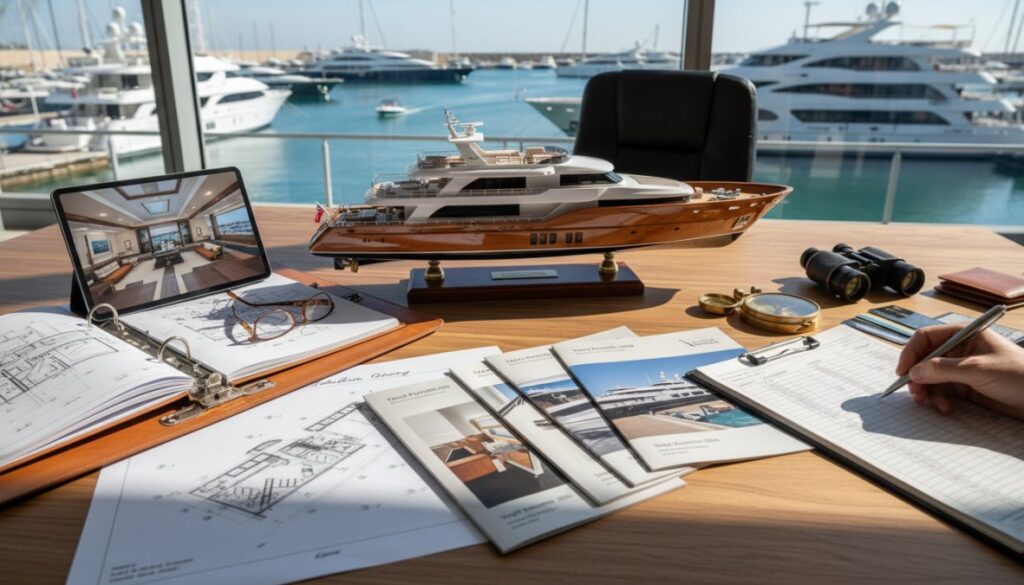
Table of Contents
Working with a Yacht Broker vs. Buying from a Private Seller
Yacht Lifestyle and Usage Profiles: Matching a Vessel to Your Life
Last Updated: June 2, 2026
Finding the right motor Yacht for sale is one of the most significant purchasing decisions a person can make, and getting it wrong is expensive in ways most first-time buyers never anticipate. At Palm Lifestyle, we work with buyers across the Middle East and worldwide who come to us after weeks of scrolling listing sites, confused by conflicting specifications and overwhelmed by brokerage jargon. This guide cuts through that noise. Below, we cover everything from hull types and vessel specifications to financing, marine surveys, and the real cost of yacht ownership, so you can make a decision with confidence.
The superyacht and megayacht market is more accessible than it has ever been, but that accessibility comes with a catch: more listings, more variables, and more ways to overpay.
How to Find the Right Motor Yacht for Sale
The biggest mistake buyers make is searching by price alone. A motor yacht for sale that fits your budget on paper can destroy that budget within the first year of ownership if the engine hours are excessive, the hull condition is poor, or the vessel is registered under a flag state with complex compliance requirements.
Start your search with a clear picture of your usage profile: coastal day cruising, extended bluewater passages, or Mediterranean charter seasons. That single decision narrows the field dramatically and determines the LOA (Length Overall), berth count, fuel capacity, and cruising speed you actually need.

According to the International Maritime Organization’s vessel registration guidelines, flag state selection affects everything from crew certification requirements to resale value. Choose the wrong flag state early and you create legal complications that follow the vessel for years.
Search Filters: Location, LOA, and Price Range
Effective yacht searches use at least four simultaneous filters: geographic region, LOA range, price range, and vessel age. Most listing aggregators allow you to filter by these parameters, but professional yacht brokers add a fifth filter that listing sites cannot: condition history.
LOA determines where the vessel can berth. A 30-meter yacht cannot enter many marina berths in the GCC region without advance booking. Draft, similarly, restricts access to shallower anchorages popular across the Red Sea and Arabian Gulf. Beam affects whether the vessel fits standard berths in Mediterranean marinas.
Price ranges should be set conservatively. Budget 10-15% above your listed purchase price for immediate post-purchase costs: survey fees, flag registration, crew provisioning, and any deferred maintenance the survey reveals.
New Vessels vs. Pre-Owned Yachts: Which Is Right for You?
New vessels offer manufacturer warranties, modern stabilizer technology, and the ability to customize specifications before build completion. Pre-owned yachts offer lower entry prices, immediate availability, and a documented maintenance history that tells you exactly what you are buying.
The honest answer: for most first-time buyers, a well-maintained pre-owned vessel from a reputable brokerage is the smarter starting point. New builds from top yards carry lead times of 18 to 36 months and require substantial deposit commitments. Pre-owned listings let you conduct a marine survey, verify engine hours, and negotiate based on actual condition rather than projected specifications.
The exception is buyers with very specific configuration requirements or those entering the superyacht category where custom builds are standard.
Best Motor Yacht Brands Worth Knowing Before You Buy
Brand selection is one of the most consequential decisions in a yacht purchase, and it is one that listing aggregators almost never help buyers make. A brand name affects not just aesthetics but resale liquidity, parts lead times, warranty enforceability, and the practical reality of getting a technician to your vessel in Abu Dhabi or Jeddah at short notice. The brands below are consistently respected across the global brokerage community, but each occupies a distinct position that suits different buyer profiles.
Brand-by-Brand Breakdown
Sunseeker (UK) Sunseeker builds in Poole, England, and has established one of the strongest dealer networks in the GCC, with representation in the UAE that covers both sales and after-sales service. Their Manhattan and Predator series are the most commonly transacted models in the 20-40 metre range across the Middle East market. Sunseeker hulls are GRP up to approximately 34 metres, transitioning to composite construction at larger sizes. Resale values hold reasonably well in the Mediterranean and GCC markets because the brand has genuine name recognition among buyers, which matters when you eventually sell.
Azimut (Italy) Azimut is the volume leader in the Italian production segment and offers one of the broadest LOA ranges of any single manufacturer, from approximately 10 metres to over 35 metres. Their hull engineering prioritises fuel efficiency through IPS (Inboard Performance System) pod drive configurations on many models, which reduces fuel burn at cruising speeds compared to traditional shaft-drive arrangements. This is a meaningful operational advantage for owners who cruise frequently. Azimut’s build quality is production-grade rather than semi-custom, which keeps entry prices competitive but means interior fit-out is less bespoke than Ferretti or Princess at equivalent sizes.
Ferretti Group (Italy) Ferretti Group is a holding company that owns multiple brands including Ferretti Yachts, Riva, Pershing, and Custom Line. Buyers considering Ferretti should understand they are choosing within an ecosystem: a Riva is a different product from a Ferretti Yacht, even though they share some engineering infrastructure. Riva carries exceptional brand prestige and commands a premium on resale that is partly emotional, the name carries decades of Mediterranean heritage. Pershing is the performance-oriented brand within the group, with planning hulls designed for higher cruising speeds. For buyers who prioritise speed over range, Pershing is worth serious consideration.
Princess Yachts (UK) Princess builds in Plymouth and is widely regarded as offering strong value at the quality tier just below fully custom builds. Their V-Class and Y-Class series have been well received in the GCC market. Princess vessels are known for practical interior layouts that maximise usable accommodation space relative to LOA, which matters for buyers who use their vessels for extended family trips rather than day entertaining. The brand’s after-sales network in the UAE has expanded in recent years, reducing the parts lead-time issue that historically affected British-built vessels in the region.
Benetti (Italy) Benetti operates at the superyacht end of the market, with most production above 30 metres and a significant portion above 50 metres. They offer both semi-custom and fully custom build programmes. For buyers entering the superyacht category, Benetti’s build quality and project management reputation are well established, but lead times on new builds are substantial, typically 24 to 48 months depending on specification complexity. Pre-owned Benetti vessels transact regularly through major brokerages and represent a more accessible entry point into the brand.
Gulf Craft (UAE) Gulf Craft deserves specific mention for GCC buyers because it is the only major production yacht manufacturer with a build facility in the region (Umm Al Quwain, UAE). Their Majesty series extends from approximately 48 feet to 175 feet and is engineered with Gulf sea conditions in mind, specifically the shallow drafts, high ambient temperatures, and the operational demands of the Arabian Gulf and Red Sea. Parts availability and service response times are structurally faster for Gulf Craft owners in the region than for any European brand. For buyers whose primary cruising ground is the GCC, this is a practical advantage that often outweighs the prestige differential versus European marques.
Brand | Typical LOA Range | Hull Material | Drive System Options | GCC Service Network | Best Buyer Profile |
|---|---|---|---|---|---|
Sunseeker | 10m – 40m | GRP / Composite | Shaft, IPS | Strong (UAE dealer) | Mediterranean + GCC cruising |
Azimut | 10m – 35m | GRP | Shaft, IPS, Zeus | Moderate | Fuel-efficient day cruising |
Ferretti / Riva | 10m – 30m | GRP | Shaft, IPS | Moderate | Prestige buyers, performance |
Princess Yachts | 10m – 40m | GRP | Shaft, IPS | Growing (UAE) | Family extended cruising |
Benetti | 30m – 100m+ | Steel / Aluminium / GRP | Shaft, Azipod | Limited (superyacht specialists) | Superyacht custom builds |
Gulf Craft Majesty | 14m – 53m | GRP / Composite | Shaft, IPS | Strongest in GCC | GCC-based owners |
Resale Liquidity: The Factor Buyers Ignore
Brand choice affects how easily you can exit the asset. Vessels from brands with strong global brokerage presence, Sunseeker, Azimut, Princess, transact more quickly on the secondary market because there is an established pool of buyers who recognise and trust the name. Niche or regional brands may offer better value at purchase but can sit longer on the market when you sell, particularly if you are trying to sell internationally.
For buyers in the GCC who anticipate selling within five to eight years, prioritising brands with active Mediterranean and international brokerage networks is a practical resale strategy, not just a vanity preference.
Working with a Yacht Broker vs. Buying from a Private Seller
Professional yacht brokers provide access to a wider inventory, handle the legal and documentation procedures, and carry professional liability for the transaction. Private sellers offer potential price advantages but shift all due diligence responsibility to the buyer.
The calculus here is straightforward: for transactions above a certain vessel size, the cost of a mistake far exceeds any savings from avoiding brokerage commission. A broker who misrepresents a vessel faces professional and legal consequences. A private seller does not.
Palm Lifestyle operates as a full-service yacht brokerage with a global network and deep expertise in the GCC market, managing the complete purchase process from initial search through flag registration and legal documentation. For buyers in the Middle East looking at international listings, that regional expertise is not a luxury, it is a practical necessity.
According to the British Marine Federation’s guidance on yacht purchase transactions, buyers using professional brokers experience significantly fewer post-purchase disputes than those transacting directly with private sellers.
Yacht Survey Checklist: What to Inspect Before You Commit
A marine survey is non-negotiable. No reputable lender will finance a vessel without one, and no experienced buyer should purchase without one either. The marine survey is your primary defense against buying a vessel with concealed structural damage, mechanical failure, or undisclosed modifications.
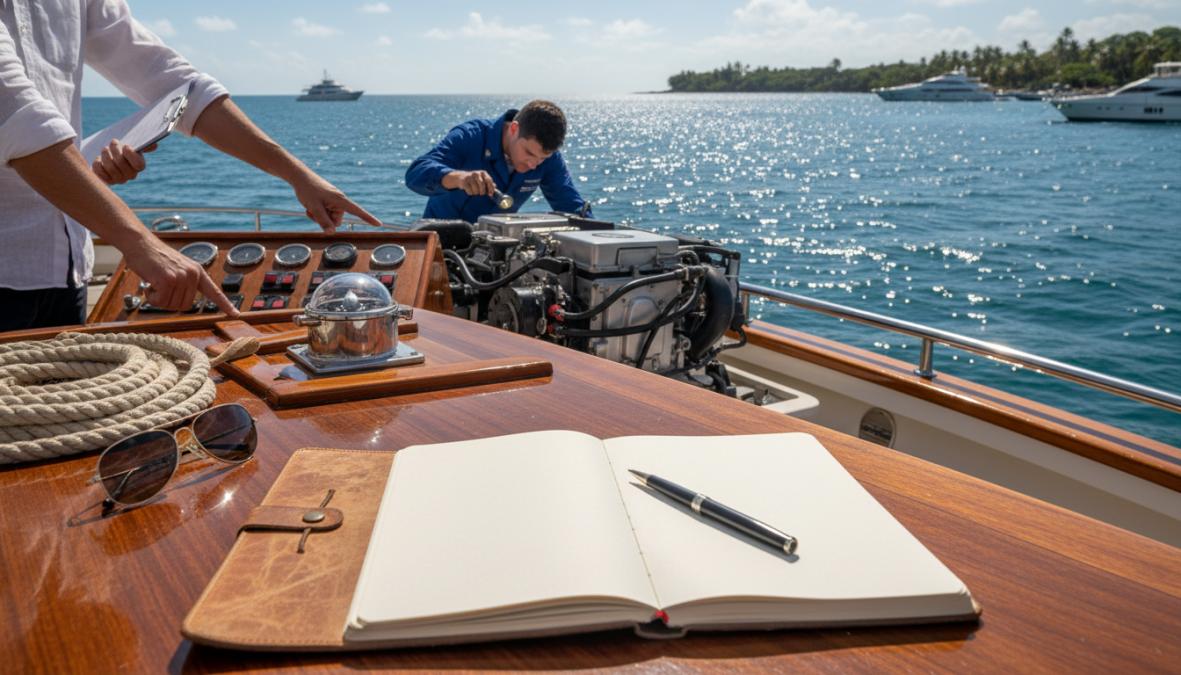
The survey should be conducted by a certified surveyor independent of the seller and the brokerage. Budget for a sea trial as part of the process: static inspections miss problems that only appear under load.
Engine Hours, Draft, Beam, and Vessel Specifications to Verify
Use this checklist as your pre-purchase verification framework:
Engine hours logged vs. claimed in listing (cross-reference service records)
Draft measurement verified against official documentation
Beam measurement and marina berth compatibility confirmed
Hull osmotic testing completed (for GRP vessels)
All through-hull fittings inspected for corrosion
Electrical systems tested under load
Navigation and safety equipment certified and in-date
Stabilizer system operational test completed
Fuel tank integrity and capacity verified
Flag state documentation and registration confirmed current
Outstanding maritime liens or encumbrances checked
Engine hours are the most commonly misrepresented specification in yacht listings. A diesel engine in good condition with documented service history at 3,000 hours is preferable to a low-hour engine with no maintenance records. Hours without context mean nothing.
Yacht Financing Options and Marine Insurance Explained
Yacht financing and marine insurance are the two areas where buyers most frequently receive inadequate guidance, because listing sites have no incentive to explain them and brokers vary widely in how thoroughly they walk clients through the process. Getting either wrong on a high-value asset creates problems that persist for the life of the loan or the policy. This section covers both in the detail they deserve.
How Yacht Financing Actually Works
Yacht financing is not the same as property financing, and buyers who approach it with property-lending assumptions frequently encounter surprises. The key structural differences are:
Asset depreciation: Unlike property, yachts depreciate. Lenders price this into their loan-to-value ratios and term lengths. Most marine lenders will not extend terms beyond the point where the projected vessel value falls below the outstanding loan balance, which is why terms on older vessels are shorter.
Survey dependency: No marine lender will advance funds without a current marine survey, typically conducted within the previous 12 months. The loan is made against the surveyed value, not the asking price. If the survey comes in below the agreed purchase price, the buyer must either renegotiate the price, increase their deposit, or walk away.
Vessel age limits: Most specialist marine lenders set a maximum vessel age at the end of the loan term, commonly 20 to 25 years. A vessel that is already 15 years old at purchase may only qualify for a 5 to 10 year term, which increases monthly payments significantly relative to what a buyer might expect from a longer amortisation.
Financing Routes Available to GCC Buyers
Private banking facilities: For buyers with existing private banking relationships, a yacht loan structured against a broader asset portfolio is often the most flexible and competitively priced route. Private banks in the UAE and wider GCC frequently structure these as Lombard-style facilities, where the yacht is one component of a collateral package. Interest rates and terms are negotiated individually and can be more favourable than standalone marine loans for high-net-worth clients.
Specialist marine lenders: International marine finance specialists, including firms that operate specifically in the superyacht segment, offer standalone yacht loans with terms structured around the asset class. These lenders understand vessel valuations, flag state implications, and the nuances of marine security documentation in a way that general commercial banks typically do not. Loan-to-value ratios from specialist marine lenders commonly range from 60% to 80% of surveyed value, with the buyer funding the remainder as a deposit.
Manufacturer and dealer financing: Some production yacht manufacturers offer financing programmes through affiliated financial institutions, particularly for new builds. These programmes can carry promotional rates during launch periods but should be compared carefully against independent marine finance options, promotional rates sometimes apply only to the initial period before reverting to standard terms.
Cash purchase with structured drawdown: For buyers purchasing through a new build programme, payments are typically structured in tranches tied to build milestones rather than a single settlement. Understanding the drawdown schedule before signing a build contract is essential, as the capital commitment accelerates significantly as the build progresses.
The Marine Survey and Its Role in Financing
The marine survey serves two functions simultaneously: it protects the buyer by identifying defects, and it establishes the value basis for the lender’s security. When the survey reveals deferred maintenance or structural issues, the lender may require those items to be remedied before funds are advanced, or may reduce the loan amount to reflect the vessel’s condition-adjusted value.
This is why experienced buyers commission the survey before finalising financing arrangements, not after. A survey that reveals significant issues gives the buyer negotiating leverage on price and gives the lender accurate information to structure the facility correctly.
Marine Insurance: What the Policy Actually Covers
Marine insurance for a motor yacht typically comprises three components:
Hull and machinery (H&M): Covers physical damage to the vessel, its engines, and onboard systems. The insured value should reflect the current market value of the vessel, not the original purchase price. Underinsuring a depreciating asset is a common error, if the vessel is worth less than the insured value at the time of a claim, some policies apply averaging provisions that reduce the payout proportionally.
Protection and indemnity (P&I): Covers third-party liability, damage your vessel causes to other vessels, marina infrastructure, or third parties. P&I coverage limits should be set with reference to the marinas and cruising grounds you intend to use; some Mediterranean marinas require minimum P&I limits as a condition of berthing.
Personal effects and crew coverage: Covers personal property aboard and, where applicable, employer’s liability for professional crew. If you operate with a paid captain or crew, employer’s liability is not optional, it is a legal requirement in most flag states.
The Charter Use Insurance Problem
This is the single most commonly misunderstood insurance issue in the yacht market, and it costs owners real money when it goes wrong.
A standard pleasure-use hull policy covers the vessel when it is used by the owner and their guests at no charge. The moment a third party pays to use the vessel, even informally, even for a single trip, the vessel is engaged in commercial activity. Most pleasure-use policies exclude commercial use entirely, meaning a claim arising during a paid charter trip would be declined regardless of the circumstances.
Owners who intend to charter their vessel, even occasionally, must obtain a commercial hull policy or a specific charter endorsement on their pleasure policy before the first charter trip takes place. The premium difference is real but is substantially smaller than the cost of an uninsured claim on a vessel worth several million dollars.
As documented in Lloyd’s Market Association guidance on marine insurance coverage, vessels used for commercial charter require explicit commercial endorsements on their hull policies. Operating a charter vessel under a pleasure-use-only policy voids coverage entirely.
Geographic Navigation Limits
Marine insurance policies define the geographic area within which the vessel is covered. A policy written for Mediterranean cruising may not automatically extend to the Arabian Gulf, Red Sea, or Indian Ocean. Buyers who intend to move their vessel between cruising grounds, a common pattern for owners who summer in the Mediterranean and winter in the GCC, must confirm that their policy covers the transit route and both operating regions, or obtain separate coverage for each.
Some insurers apply additional premiums or exclusions for specific geographic zones, including areas with elevated piracy risk. Verify navigation limits explicitly before the vessel moves outside its primary cruising ground.
Key Questions to Ask Before Signing Any Finance or Insurance Document
What is the loan-to-value ratio, and is it based on purchase price or surveyed value?
What vessel age limit applies at the end of the loan term?
Does the policy cover the vessel during delivery passages between cruising grounds?
Is charter use covered, and if so, under what conditions and with what crew certification requirements?
What are the lay-up conditions, does the policy require the vessel to be out of the water during specific periods, and does this conflict with your intended use?
Are there flag state restrictions on the insurance policy, some policies are written for specific flag states only?
Motor Yacht Maintenance Costs: What Owners Actually Spend
Motor yacht maintenance costs are the number that listing sites never show you, and they are the number that determines whether yacht ownership is sustainable or financially painful.
A general working principle in the industry: annual maintenance costs run approximately 10-15% of the vessel’s purchase price. This covers routine servicing, antifouling, marina fees, crew costs, insurance, and flag state compliance. It does not cover major unexpected repairs, which are a statistical certainty over any 5-year ownership period.
Engine servicing is the largest single maintenance line item for motor yachts. Diesel engines at typical cruising hours require major service intervals that are time-consuming and expensive. Fuel costs at typical cruising speeds add substantially to operational budgets, particularly for vessels with larger displacement hulls.
Marina fees vary enormously by location. Mediterranean marinas in peak season carry berth fees that rival luxury hotel rates. GCC marinas are generally more competitive, which is one reason many owners base their vessels in the UAE for the majority of the year.
Charter Potential: Offsetting Ownership Costs
Charter potential is one of the most underexplored tools for offsetting yacht ownership costs. A vessel placed into a managed charter program generates income during periods when the owner is not using it, directly reducing net ownership costs.
Palm Lifestyle manages charter operations across the Mediterranean and provides direct access to a worldwide fleet, connecting vessel owners with qualified charter clients. Owners who charter their vessels effectively can offset a meaningful portion of annual operating costs, though the exact figure depends on vessel size, specification, and the number of charter weeks achieved per season.
The trade-off is real: charter use accelerates wear on soft furnishings, tenders, and water toys. Build a replacement budget into your charter revenue projections from the start.
According to the Mediterranean Yacht Brokers Association’s overview of charter market dynamics, vessels in the 20-40 meter range generate the strongest charter demand in the Mediterranean market, with peak season bookings often secured 6-12 months in advance.
Yacht Lifestyle and Usage Profiles: Matching a Vessel to Your Life
The most expensive mistake in yacht purchasing is buying a vessel for the life you imagine rather than the life you actually live. A 40-meter megayacht with a full-time crew of eight is not the right vessel for a family that takes four two-week trips per year.
Match vessel size to realistic usage frequency. Smaller vessels are easier to manage, cheaper to run, and can be handled with minimal crew. Larger vessels offer more comfort and charter revenue potential but require professional crew year-round, whether the owner is aboard or not.
Usage profiles fall into three broad categories:
Weekend and coastal cruiser: Vessels in the 10-20 meter range, operated by the owner with minimal crew, suited to day trips and coastal overnight passages. Maintenance is manageable and marina costs are lower.
Extended passage maker: Vessels in the 20-35 meter range with full crew, designed for longer passages including Mediterranean seasons and transatlantic routes. Requires more operational infrastructure and a higher annual budget.
Superyacht owner: Vessels above 35 meters, typically with permanent professional crew, used for extended seasons and potentially placed into charter. The full ownership experience, with the full ownership cost structure.
The right choice is the one that matches your actual schedule, your actual crew appetite, and your actual budget, not the vessel that looks best at the marina.
Buying a motor Yacht for sale without expert guidance is how buyers end up with vessels that drain their finances and sit unused at the dock. Palm Lifestyle provides end-to-end support across the entire purchase process, from initial search and valuation through financing arrangements, legal documentation, and flag registration, with deep expertise across the GCC market and a global brokerage network that gives buyers real access to the best available inventory. Get in touch with Palm Lifestyle to discuss your yachting needs and find a vessel that genuinely matches your lifestyle.
Frequently Asked Questions
What should I look for when buying a used motor yacht?
When buying a pre-owned motor yacht, prioritize a professional marine survey and sea trial before committing. Key items to verify include engine hours, hull material condition, fuel capacity, stabilizers, berth count, and flag state registration. Check for osmotic blistering on fiberglass hulls, inspect all through-hull fittings, and review service records carefully. Working with an experienced yacht broker ensures you have expert guidance through every step of the due diligence process.
How much does it cost to maintain a motor yacht annually?
Motor yacht maintenance costs vary significantly by vessel size and usage, but owners generally budget between 10% and 15% of the yacht's purchase price per year. This covers routine servicing, engine maintenance, antifouling, insurance, marina berth fees, crew costs if applicable, and unexpected repairs. A 50-foot motor yacht might cost between $50,000 and $100,000 annually to maintain. Charter potential can offset a meaningful portion of these ongoing ownership costs.
Is it better to buy a new or used motor yacht?
New vessels offer manufacturer warranties, modern vessel specifications, and the ability to customize layout and equipment. Pre-owned yachts offer better value for money and faster delivery. For first-time buyers, a well-surveyed pre-owned motor yacht from a reputable brokerage is often the smarter financial choice. If budget allows and you have specific requirements around flybridge design, hull material, or onboard technology, a new build may justify the premium.
Do I need a yacht broker to buy a motor yacht?
While it is possible to buy directly from a private seller, working with professional yacht brokers significantly reduces risk. A qualified broker provides access to a wider range of listings, handles negotiations, manages legal documentation, coordinates the marine survey and sea trial, and ensures flag state compliance. For buyers in the GCC region or purchasing internationally, a broker with maritime expertise and a global network is especially valuable for navigating cross-border transactions.
What are the best motor yacht brands available on the market?
Reliable and highly regarded motor yacht brands include Sunseeker, Azimut, Ferretti, Princess Yachts, Pershing, and Benetti — spanning luxury powerboat to superyacht and megayacht categories. Each brand offers distinct strengths in cruising speed, hull design, interior fit-out, and fuel capacity. The best brand for you depends on your intended usage profile, preferred LOA (Length Overall), and budget. A knowledgeable yacht broker can match you with the right brand and listing for your specific needs.
What yacht financing options are available for buyers?
Yacht financing options include marine mortgages through specialist lenders, asset-backed loans, and structured financing arrangements for superyachts and megayachts. Lenders typically require a deposit of 20% to 30% of the vessel's value. Terms, interest rates, and eligibility criteria vary by flag state, vessel age, and buyer profile. Buyers in the UAE and wider GCC region should work with a brokerage that offers end-to-end support including financing introductions and legal procedure management.
This article was written using GrandRanker