
Table of Contents
Last Updated: June 19, 2026
The decision between buying a yacht and chartering is a complex asset management choice, not merely a lifestyle question. This guide breaks down the true financial architecture of both paths, covering capital expenditure, depreciation, tax structures, and exit strategy. We show you how to evaluate each option against your sailing goals, balance sheet, and tolerance for operational complexity.
Most guides compare sticker price against annual chartering costs and stop there. The real comparison is far more nuanced. Yacht ownership carries operating expenses, crew management obligations, and depreciation that can erode asset value faster than anticipated. Chartering offers turnkey access to new models with zero maintenance exposure. The right answer depends on how often you sail, where you want to sail, and how much operational involvement you actually want.
Buying a Yacht vs Chartering: The Core Financial Comparison
The core comparison comes down to capital expenditure versus recurring variable cost. Ownership demands significant upfront capital followed by predictable operating expenses year-round, regardless of usage frequency. Chartering converts all of that into a pay-per-use model with no residual liability.
Capital Expenditure: Purchase Price and Initial Investment
Yacht ownership begins with a purchase price that varies enormously by vessel type, size, and specification. A 40-50 foot mono-hull sailing yacht commands a different acquisition cost than a 30-metre motor superyacht. Both require additional capital at purchase: professional surveyor inspection, flag state registration fees, initial insurance premiums, and often delivery or transport costs.
Hidden capital costs catch many first-time buyers off guard. A thorough pre-purchase survey by a qualified marine surveyor is non-negotiable, and any deficiencies identified will either reduce the purchase price or require immediate remediation. Berthing fees in premium marinas like the Mediterranean or Arabian Gulf can require significant upfront deposits.
Charter guests pay only for time used. There is no survey cost, registration, or initial insurance outlay. The charter agreement covers all costs within the daily or weekly rate.
Comparison Table: Buying vs Chartering at a Glance
Factor | Buying a Yacht | Chartering a Yacht |
|---|---|---|
Initial Cost | High (purchase price + fees) | Low (charter fee only) |
Ongoing Costs | Berthing, crew, insurance, maintenance | None beyond charter fee |
Flexibility | Limited to one vessel | Access to global fleet |
Depreciation | Yes, ongoing | None |
Crew Management | Owner’s responsibility | Handled by charter company |
Customization | Full | Limited to vessel spec |
Asset Value | Potential (declining) | None |
Tax Exposure | Complex, flag-state dependent | Minimal |
Entry Commitment | Long-term | Trip-by-trip |
Yacht Ownership Costs: The True Price of Ownership
Yacht ownership costs extend far beyond the purchase price. Industry benchmarks suggest annual operating expenses typically run between 10% and 15% of a vessel’s purchase price per year, though this can climb considerably for larger or older vessels.
Operating Expenses and Hidden Costs
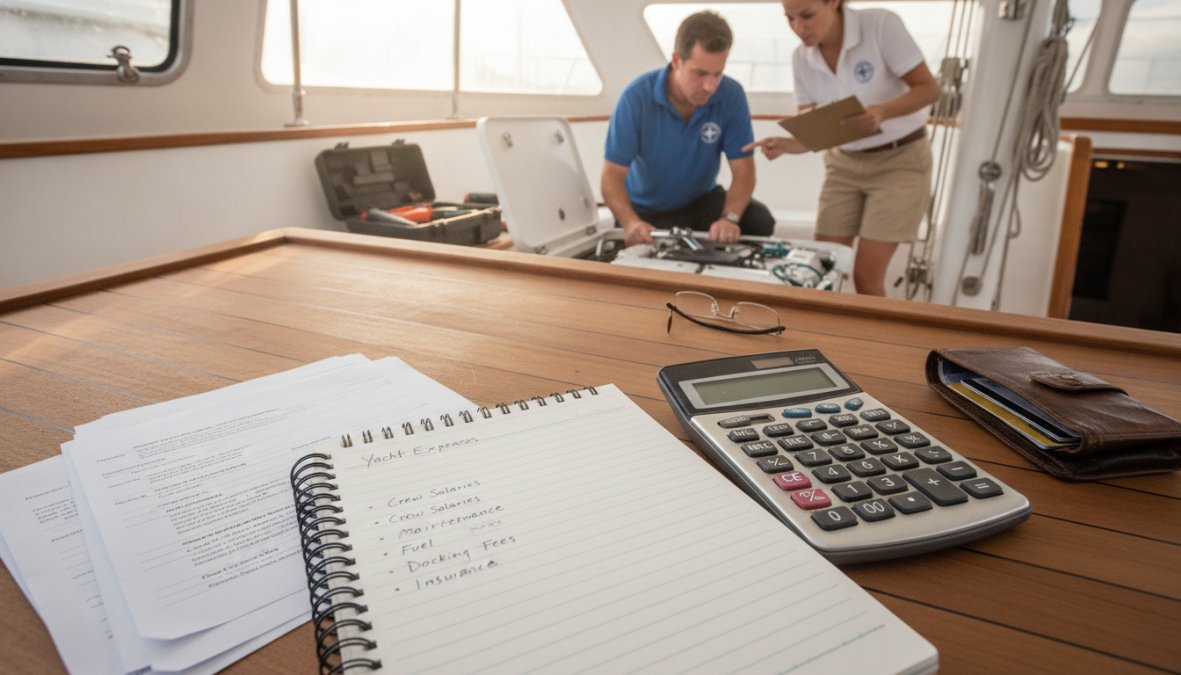
Operating expenses include berthing fees at premium marinas, substantial insurance premiums that increase with vessel age and operating range, and considerable fuel costs for motor yachts. Additional costs include provisioning, port fees, communication systems, safety equipment certification, and flag state compliance administration. A vessel operating under a commercial flag for charter revenue faces additional regulatory requirements.
Maintenance, Dry Dock, and Crew Management
Every vessel requires periodic dry dock haul out for hull cleaning, antifouling treatment, and structural inspection. A biennial dry dock is a reasonable planning assumption for most privately owned yachts.
Crew management adds another layer of complexity and cost. Vessels above a certain size require professional crew: a captain at minimum, and often a full complement including engineer, chef, and deckhands for larger yachts. Crew salaries, accommodation, flights, and professional certification costs are all owner responsibilities. A yacht management company can handle crew recruitment and payroll administration, though their service fees add to overall costs.
Yacht Chartering Benefits: Flexibility Without Commitment
Chartering is the cleaner financial proposition for anyone who sails fewer than four to six weeks per year. You pay for exactly what you use, carry no residual liability, and access a professionally maintained vessel with vetted crew.

Turnkey Experience and Destination Variety
When you charter through a reputable company, the vessel arrives provisioned, crewed, and ready. The captain handles routing, weather monitoring, and port authority interactions. The crew manages provisioning and service. Your only obligation is to arrive and enjoy the voyage.
Destination variety is a structural advantage ownership cannot match. An owner is tied to one vessel in one location at a time. Repositioning a yacht from the Mediterranean to the Caribbean involves significant logistical cost and time. A charter client can book a mono-hull in Croatia one season, a multihull in the Maldives the next, and a motor superyacht in the UAE the season after, all without owning a single vessel.
According to the Mediterranean Yacht Brokers Association’s charter market overview, the Mediterranean remains the world’s most active charter market, with demand concentrated in summer across Greece, Croatia, and the French Riviera.
Access to New Models and Modern Vessels
Ownership locks you into a single vessel that ages from purchase. Chartering gives you access to the newest models in the global fleet each time you book. The charter fleet is constantly refreshed by owners placing vessels into charter management programs to offset operating costs, which means available inventory skews toward newer, better-equipped vessels.
Fractional Yacht Ownership: The Middle Ground
Fractional yacht ownership divides purchase price, operating costs, and usage rights among multiple parties. It offers the status and customization of ownership without the full capital commitment or year-round operating cost burden.
A typical fractional structure divides ownership into shares, with each shareholder receiving proportional usage time managed through a scheduling system administered by a yacht management company. Operating expenses, maintenance costs, and berthing fees are split proportionally.
Practical limitations include scheduling conflicts among co-owners requiring disciplined management, decision-making on major expenditure requiring consensus, and resale of fractional shares being considerably more complex than selling a wholly owned vessel.
For clients using a vessel four to eight weeks per year who want customization and familiarity chartering cannot offer, fractional ownership is compelling. As documented in Boat International’s guide to shared yacht ownership, the fractional model has gained significant traction among GCC-based buyers splitting time between the Mediterranean and home waters.
Depreciation, Resale Value, and Asset Liquidity
Yachts are depreciating assets. A new vessel loses meaningful value in the first few years, with the depreciation curve flattening as the vessel ages. Depreciation rate depends on builder reputation, vessel condition, maintenance records, and prevailing market conditions.
Resale value is not guaranteed, and asset liquidity in the yacht market is lower than most other asset classes. Selling a yacht requires engaging a yacht broker, listing on platforms like YachtWorld’s global brokerage marketplace, conducting sea trials, and navigating flag state registration transfer. The process typically takes months, and final sale price is subject to negotiation and survey findings.
Tax Implications and Legal Structures for Yacht Ownership
Tax treatment of a privately owned yacht varies significantly by flag state, owner’s country of residence, and whether the vessel is operated commercially.
Flag State, VAT, and Charter Revenue Considerations
Flag state selection determines the regulatory framework under which a vessel operates. Different flag states impose different safety standards, crew certification requirements, and commercial operating conditions. Some jurisdictions offer favorable tax treatment for vessels operated under a charter management program, while others impose VAT on both vessel purchase and charter revenue.
VAT on yacht purchases and charters is significant for vessels operating in European waters. The EU VAT framework for yachts is complex, and rules around VAT-paid status, temporary importation, and charter revenue have evolved. A vessel without proper VAT-paid status in EU waters can expose the owner to substantial retrospective liability.
Charter revenue, if the vessel is placed into a charter management program, may be treated as business income in some jurisdictions, potentially allowing the owner to offset operating expenses against taxable revenue. This requires proper legal documentation, a commercial operating license, and flag state commercial vessel regulation compliance.
Which Option Aligns With Your Sailing Goals?
The right answer is almost entirely determined by how you actually use the water, not how you imagine you will use it.
Ownership for Dedicated Sailors; Chartering for Flexibility
Ownership makes financial and lifestyle sense for sailors who use their vessel consistently, have strong preference for a specific vessel type and home port, and derive satisfaction from operational involvement. A dedicated sailor spending 12 or more weeks per year on the water in the same cruising area with a clear vessel vision is a strong ownership candidate.
Chartering is rational for everyone else. If you sail fewer than six weeks per year, want to explore different destinations and vessel types, or find managing crew and maintenance schedules unappealing, chartering delivers superior experience at lower total cost.
A useful framework:
Annual usage below 4 weeks: Charter every time. Ownership economics do not support this usage pattern.
Annual usage 4-8 weeks: Evaluate fractional ownership or charter management programs seriously before committing to full ownership.
Annual usage above 8 weeks: Full ownership becomes financially competitive, provided the vessel is properly maintained and exit strategy is planned.
Specific vessel preference: Strong views on a particular builder, hull type, or specification favor ownership for customization chartering cannot offer.
Operational appetite: If you want involvement in vessel management, ownership is rewarding. If you want to arrive and sail, charter.
According to the International Yacht Brokers Association’s annual market report, the most common reason former owners cite for transitioning back to chartering is underestimating the time commitment required to manage a privately owned vessel effectively.
Making the Right Decision: Your Yachting Path Forward
The buying vs chartering decision is not one-size-fits-all. It is a function of usage patterns, financial structure, appetite for operational involvement, and long-term sailing goals. Ownership offers customization, asset value, and the satisfaction of having your own vessel ready when needed. Chartering offers flexibility, access to a global fleet of new models, and zero operational burden.
The importance of exit strategy and tax structure at acquisition point is often missed. Both factors materially change ownership’s financial outcome and are best addressed before signing a purchase agreement.
Fractional ownership deserves more serious consideration, particularly for GCC buyers wanting meaningful ownership without full capital commitment. For anyone genuinely uncertain, chartering the specific vessel type you are considering buying, in the waters where you intend to base it, is the single best due diligence before committing.
Choosing between yacht ownership and chartering deserves the same rigor you would apply to any significant asset acquisition. Palm Lifestyle provides comprehensive end-to-end support for clients navigating this decision, from professional yacht valuation and strategic acquisition guidance to curated charter itineraries across the Mediterranean and beyond. Our team manages the full process, including financing structures, legal procedures, and flag state compliance, so you focus on the sailing. Get in touch with Palm Lifestyle to discuss your yachting needs and find the path that genuinely fits your lifestyle and financial goals.
Frequently Asked Questions
Is it cheaper to buy or charter a yacht?
Chartering is typically cheaper for occasional users—a week-long charter may cost $10,000–$50,000 depending on vessel size. Buying requires capital expenditure ($500,000+), plus annual operating expenses (10–15% of purchase price). Ownership breaks even only if you use the yacht 4+ weeks yearly or generate charter revenue. For casual sailors, chartering eliminates depreciation and maintenance costs entirely.
What are the hidden costs of owning a yacht?
Beyond purchase price, yacht ownership includes berthing fees ($5,000–$25,000+ annually), insurance premiums ($3,000–$15,000+), crew management salaries, fuel, provisioning, and scheduled maintenance. Dry dock services every 2–3 years cost $50,000–$200,000+. Flag state registration, VAT implications, and surveyor fees add complexity. Many owners underestimate these operating expenses, which can total 15% of the vessel's value yearly.
What is fractional yacht ownership, and is it worth considering?
Fractional ownership divides purchase and operating costs among multiple owners, typically 8–12 shares. You pay a fraction of capital expenditure and maintenance while accessing the yacht for guaranteed weeks annually. This middle-ground option reduces financial burden compared to sole ownership but offers more control than chartering. It's ideal for committed sailors who want asset ownership without full operational responsibility.
How does depreciation affect yacht resale value and exit strategy?
Yachts depreciate 15–20% in the first year, then 5–10% annually thereafter. A $1 million yacht may be worth $600,000–$700,000 after five years. Resale liquidity depends on vessel condition, market demand, and flag state. Working with a yacht broker ensures strategic marketing and maximized returns. Charter management programs can offset depreciation through revenue, improving overall asset performance and exit timing flexibility.