
Table of Contents
- Understanding the Pre-Owned Luxury Yacht Market
- Yacht Survey Process Explained: What You Need to Know
- Luxury Yacht Inspection Checklist for Buyers
- Used Yacht Maintenance Costs and Total Cost of Ownership
- Pre-Owned Yacht Financing Options and Registration
- Finding Reputable Brokers and Evaluating Yacht Listings
- Market Trends, Investment Value, and Resale Potential
- Legal and Tax Implications of International Yacht Purchase
Pre-Owned Luxury Yachts: The Complete Buyer’s Guide
Last Updated: July 6, 2026
The pre-owned luxury yacht market has experienced steady growth, with buyers increasingly recognizing the value of established vessels over new construction. At Palm Lifestyle, we’ve guided hundreds of clients through acquisition, revealing that most approach this decision without understanding the distinction between a bargain and a genuine investment. This guide covers market fundamentals, due diligence, ownership costs, and legal considerations, the framework you need to acquire a pre-owned luxury yacht matching your lifestyle and financial objectives.
Understanding the Pre-Owned Luxury Yacht Market
The pre-owned sector operates differently than new construction. Established vessels offer proven performance data, existing service records, and immediate availability, advantages for buyers who want to begin their maritime journey without waiting 18-36 months for a custom build.
Motor yachts dominate pre-owned sales across all size categories, prioritizing comfort, range, and operational simplicity. A motor yacht with 12-knot cruising speed and 3,000-nautical-mile range offers practical advantages for owners valuing reliability and minimal crew requirements.
Request service logs for main engines and generators. Vessels with consistent maintenance records command higher resale prices and carry lower risk of unexpected mechanical failures.
Sailing vessels and catamarans attract buyers seeking different ownership experiences. Sailing yachts demand active crew expertise. Catamarans offer stability, shallow draft, and reduced heeling, making them popular for extended family cruising. The catamaran’s dual-hull design increases interior volume compared to equivalent monohull sailing vessels.
Motor Yachts vs. Sailing Vessels and Catamarans
Motor yachts excel at point-to-point cruising with minimal weather delays. A 100-foot motor yacht maintains 12-14 knots regardless of wind, ideal for owners valuing schedule predictability.
Sailing vessels demand active participation in sail management and weather navigation. This appeals to sailors viewing the process as part of the experience. A 60-foot sailing yacht cruises at 8-10 knots under sail, using the auxiliary engine only for maneuvering.
Catamarans occupy a middle ground, combining motor-yacht comfort with reduced fuel consumption. The wider platform creates more interior space and shallower draft, accessing anchorages unavailable to deeper-hulled monohulls.
| Yacht Type | Typical Cruising Speed | Fuel Efficiency | Best For | Crew Requirements |
|---|---|---|---|---|
| Motor Yacht | 12-14 knots | Moderate | Schedule-focused cruising | 2-4 crew |
| Sailing Yacht | 8-10 knots under sail | High | Active sailing engagement | 2-3 crew |
| Catamaran | 10-12 knots | Good | Stability and shallow draft | 2-3 crew |
Motor yachts suit owners prioritizing schedule. Sailing vessels reward active sailors. Catamarans balance comfort, efficiency, and stability.
Superyachts and Mega Yachts: Size Categories Explained
The superyacht category begins at 24 meters (79 feet) Length Overall (LOA), marking the transition to vessels requiring professional crew and complex systems management. Superyachts between 24-40 meters remain owner-operated or with minimal crew.
Mega yachts exceed 40 meters and typically require full-time professional crews of 8-12 personnel: captain, officers, engineers, stewards, and deck crew. A 50-meter mega yacht might displace 400-600 tons and consume 100-150 gallons per hour at cruising speed.
Displacement, measured in tons, affects fuel consumption, stability, and seaworthiness. A 40-meter motor yacht displacing 150-200 tons consumes 40-60 gallons per hour at cruising speed.
Vessels over 500 tons may require additional maritime certifications, insurance classifications, and international registration compliance. These regulatory factors increase operational complexity.
Yacht Survey Process Explained: What You Need to Know
A comprehensive marine survey is the foundation of informed purchasing. This independent inspection evaluates structural integrity, mechanical systems, electrical configuration, and safety equipment, producing a detailed report documenting condition and repair costs.
The survey unfolds across three phases: desktop review, physical inspection, and sea trial. The desktop phase examines documentation, build specifications, maintenance records, and class certifications. The physical inspection involves systematic examination of hull, deck, superstructure, engine room, and systems using moisture meters and thermal imaging. A thorough survey of a 50-meter yacht typically requires 3-5 days.
The sea trial evaluates performance under operating conditions, observing engine behavior, fuel consumption, and system responsiveness.
Marine Survey Fundamentals and Inspection Standards
Professional marine surveyors follow established standards published by organizations like the Society of Accredited Marine Surveyors (SAMS), ensuring consistency across firms.
A pre-purchase survey examines condition as-is, identifying defects and estimating repair costs. Condition surveys assess current state for insurance purposes. Damage surveys investigate specific incidents and determine causation and repair scope.
The surveyor’s report becomes your primary document for negotiation, identifying defects, listing recommendations, and providing cost estimates.
Luxury Yacht Inspection Checklist for Buyers
Begin with hull and structural elements. Examine gelcoat and paint for crazing, blistering, or delamination. Check for cracks around through-hull fittings and stress points. Assess window and portlight condition.
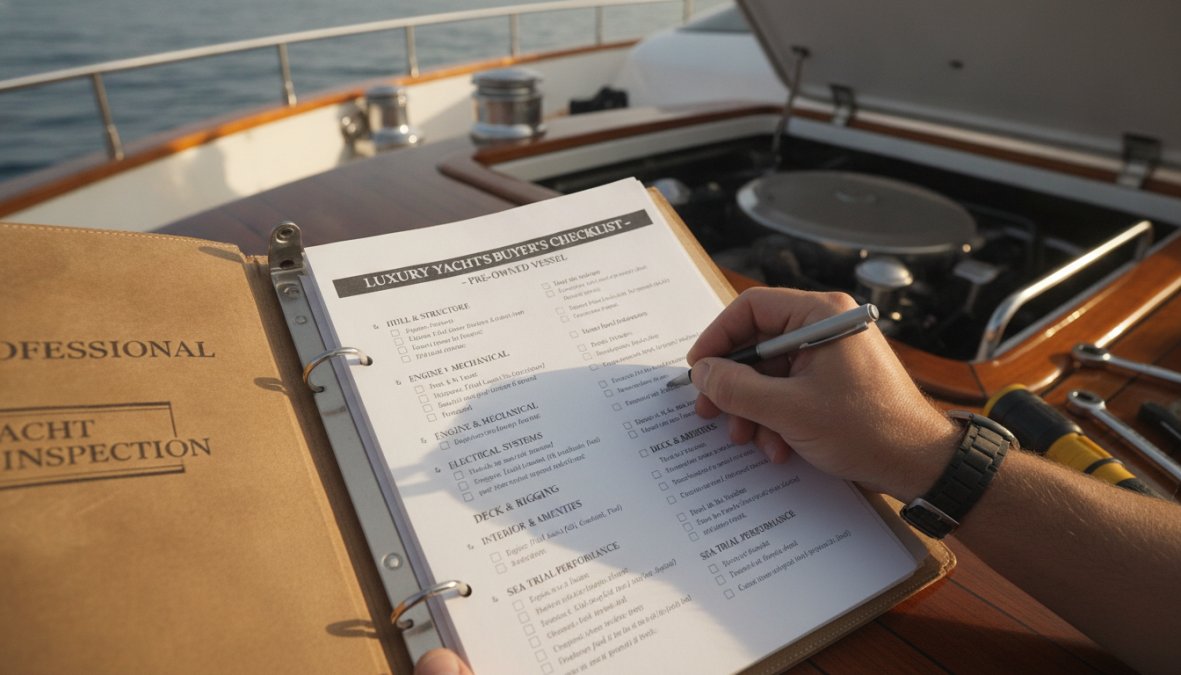
Interior inspection evaluates cabinetry, upholstery, flooring, and systems integration. Check for soft spots in cabin soles indicating water damage. Assess galley ventilation and appliance condition. Refurbishing cabinetry and upholstery can consume significant budgets.
Engine room inspection reveals mechanical foundation. Examine main engines for leaks, corrosion, or damage. Check fuel filters, oil analysis records, and maintenance documentation. Assess generator sets, air compressors, and hydraulic systems.
Electrical systems require systematic evaluation. Check battery banks, chargers, and inverter configuration. Examine AC and DC distribution panels for corrosion. Assess shore power connection and safety grounding.
Navigation and communication systems should be tested during sea trial. Verify GPS accuracy, radar functionality, autopilot responsiveness, and VHF operation.
Safety equipment inspection is non-negotiable. Verify life raft certification and condition. Check fire suppression systems, emergency beacons, and life jackets.
Request haul-out inspection if the yacht hasn’t been hauled in 24 months. This allows underwater hull inspection, propeller assessment, and through-hull fitting evaluation.
Hull Type, Displacement, and Naval Architecture Considerations
Displacement hulls move through water by displacing a volume equal to vessel weight, operating efficiently at specific speeds with excellent seaworthiness. A displacement motor yacht cruises at 8-12 knots with excellent fuel efficiency.
Planning hulls achieve higher speeds by generating lift, partially rising from water. These require more power and consume significantly more fuel at higher speeds.
Semi-displacement hulls represent a compromise, offering better speed than pure displacement while maintaining reasonable fuel efficiency. Many modern motor yachts employ semi-displacement designs delivering 12-15 knot cruising speeds.
Naval architecture documents reveal intended performance characteristics. Length-to-beam ratio affects stability and interior space. Draft determines which anchorages and marinas the yacht can access.
Interior and Exterior Design Assessment
Exterior design encompasses hull color, superstructure styling, and deck layout. Assess how well design has aged. Modern trends favor cleaner lines and larger window areas.
Deck layout should provide safe passage, adequate working space, and logical flow. Examine stanchion condition, rail integrity, and non-slip surface condition.
Interior design reflects builder philosophy and previous owner preferences. Evaluate cabin arrangement, headroom, and natural light. Check that systems are accessible for maintenance.
Galley design should support meal preparation with adequate counter space, proper ventilation, and logical appliance arrangement. Master cabin should provide privacy, storage, and comfort. Guest cabins should offer reasonable comfort without consuming excessive space.
Lighting design significantly affects interior ambiance. Modern LED systems offer efficiency and flexibility compared to older incandescent and halogen systems.
Used Yacht Maintenance Costs and Total Cost of Ownership
Total cost of ownership extends far beyond purchase price. Annual maintenance typically consumes 5-10% of yacht value. A $2 million pre-owned yacht might require $100,000-$200,000 annually for maintenance, repairs, and systems upgrades.
Engine maintenance represents significant costs. Diesel engines require regular oil changes and periodic major overhauls costing $50,000-$150,000 depending on engine size.
Hull maintenance includes antifouling paint application during haul-outs, typically required every 12-24 months, costing $10,000-$30,000 per event.
Interior maintenance covers cabinetry refinishing, upholstery replacement, and appliance repairs, typically $30,000-$50,000 annually for a 50-meter yacht.
Systems maintenance includes electrical, plumbing, HVAC, and specialized equipment. Modern yachts incorporate complex integrated systems demanding specialized technician expertise.
Insurance typically costs 0.5-1.5% of insured value annually. A $2 million yacht might carry insurance costs of $10,000-$30,000 annually.
Berthing, Management, and Crew Expenses
Berthing costs vary dramatically by location. Mediterranean marinas charge $500-$2,000 per meter annually, meaning a 50-meter yacht might occupy a berth costing $25,000-$100,000 yearly.
Professional yacht management services handle maintenance coordination, crew management, and operational oversight, typically costing 8-12% of annual operating expenses.
Crew expenses represent substantial ongoing costs. A captain earns $60,000-$120,000 annually. Deckhands earn $30,000-$50,000. Stewards earn $35,000-$60,000. A crew of four might represent $150,000-$250,000 in annual salary and benefits.
Provisioning, fuel, and consumables add variable costs depending on cruising intensity. An actively cruising vessel might spend $5,000-$15,000 monthly on fuel, food, and supplies.
Pre-Owned Yacht Financing Options and Registration
Most yacht purchases involve financing. Marine lenders typically require 20-30% down payment, with remaining balance financed over 10-15 years. A $2 million yacht with 25% down ($500,000) might finance $1.5 million over 12 years.
Registration determines tax treatment, insurance classification, and legal jurisdiction. Many owners register yachts in favorable maritime jurisdictions like the Cayman Islands, Malta, or Cyprus, offering confidentiality and simplified procedures.
Flag state selection affects regulatory compliance, crew requirements, and insurance costs. Major flag states (US, UK, Germany) may require extensive certifications. Convenience flags offer regulatory flexibility but may affect insurance availability.
Finding Reputable Brokers and Evaluating Yacht Listings
Yacht brokers serve as intermediaries between buyers and sellers. Reputable brokers maintain extensive listings, understand market dynamics, and facilitate transactions professionally. Verify broker credentials and market reputation. Understand their fee structure, typically 5-10% of sale price.
Yacht listings should include comprehensive specifications: LOA, beam, draft, displacement, engine specifications, year built, and recent survey reports. High-quality listings feature professional photography.
Be cautious of incomplete listings lacking survey reports, maintenance records, or engine hour documentation. Request AIS (Automatic Identification System) history to verify operational patterns.
New Construction vs. Pre-Owned: Making the Right Choice
New construction offers customization, warranty coverage, and latest technology integration. However, new construction typically requires 18-36 months delivery and demands substantial progress payments.
New yachts command premium pricing. A 50-meter new-construction motor yacht might cost 30-50% more than equivalent pre-owned vessels.
Pre-owned yachts offer immediate availability, proven performance data, and established service records. You can evaluate the exact vessel rather than relying on renderings.
New construction suits buyers with specific customization requirements and time flexibility. Pre-owned vessels reward buyers seeking immediate availability and proven performance.
Market Trends, Investment Value, and Resale Potential
The pre-owned luxury yacht market has demonstrated resilience through economic cycles. Well-maintained vessels with regular updates typically maintain value better than neglected examples.
Certain brands command stronger resale value. Established European builders like Benetti, Lürssen, and Feadship maintain value better than lesser-known yards.
Market trends favor fuel-efficient designs and modern systems integration. Older vessels with outdated engines depreciate faster as operating costs increase. Vessels with recent engine rebuilds and updated systems command stronger resale prices.
Location affects resale potential. Vessels with established service records in popular cruising areas (Mediterranean, Caribbean) typically sell faster.
International Yacht Register market analysis
Legal and Tax Implications of International Yacht Purchase
Yacht ownership involves complex legal considerations spanning multiple jurisdictions. The flag state determines regulatory compliance, crew requirements, and tax treatment.
International treaties govern yacht operation. The International Convention for the Safety of Life at Sea (SOLAS) establishes safety standards. The International Maritime Organization (IMO) sets environmental standards.
Tax implications vary dramatically by jurisdiction. Some countries impose annual wealth taxes on yacht ownership. The United States taxes citizens on worldwide yacht income. European countries apply VAT to yacht purchases.
IMO International Maritime Organization standards
Proper documentation and registration protect ownership rights. A clear bill of sale, documented chain of title, and proper registration establish legal ownership. Many buyers engage maritime attorneys to review purchase agreements.
Crew employment contracts must comply with international maritime labor standards. The Maritime Labour Convention (MLC) establishes minimum standards for crew wages, working conditions, and certifications.
Insurance documentation should clearly establish ownership and coverage terms. Marine insurance policies specify the insured party, coverage limits, and exclusions.
US Coast Guard vessel registration and documentation
The decision to purchase a pre-owned luxury yacht represents a significant commitment spanning financial, legal, and lifestyle dimensions. The complexity of yacht acquisition demands professional guidance. At Palm Lifestyle, we specialize in navigating this complexity for discerning clients throughout the Middle East and worldwide. Our team manages every aspect of the acquisition process, from initial market analysis through post-purchase management, ensuring seamless integration of your new vessel into your lifestyle. Get in touch with us to discuss your yachting needs and begin your acquisition journey with confidence.
Frequently Asked Questions
What should I look for when inspecting a pre-owned luxury yacht?
When inspecting pre-owned luxury yachts, examine the hull condition, engine performance, electrical systems, and interior amenities. Request a comprehensive marine survey from a certified surveyor. Check the yacht's maintenance history, sea trial performance, and structural integrity. Verify all systems, navigation, safety equipment, and propulsion, function properly. Review the yacht's registration and documentation carefully. Professional guidance ensures you identify potential issues before purchase.
How much does it cost to maintain a pre-owned luxury yacht annually?
Maintenance costs for used yachts vary by size and condition but typically include hull maintenance, engine servicing, crew salaries, berthing fees, insurance, and fuel. Larger vessels and superyachts incur higher expenses. Budget for unexpected repairs and upgrades. Total cost of ownership extends beyond the purchase price and should be carefully calculated. Consulting with yacht management specialists helps estimate realistic ongoing expenses for your specific vessel.
What financing options are available for pre-owned yacht purchases?
Pre-owned yacht financing options include marine mortgages, secured loans, and specialized yacht financing through maritime lenders. Terms typically range from 5 to 20 years depending on the vessel's age and value. Down payments usually range from 20-50%. International yacht purchases may involve additional considerations regarding registration and currency. Professional yacht brokers and financial advisors can guide you through available options and help structure favorable financing arrangements.
Is it a good idea to buy a used luxury yacht instead of new construction?
Pre-owned luxury yachts offer advantages including lower initial cost, proven performance history, and immediate availability. New construction allows customization but requires longer delivery times and higher investment. Pre-owned vessels may need updates but provide established maintenance records and performance data. The choice depends on your budget, timeline, and specific requirements. Many buyers find pre-owned options deliver excellent value while avoiding depreciation curves associated with brand-new builds.
This article was written using GrandRanker