

Table of Contents
- What to Look for When Buying a Used Yacht: The Essential Framework
- Hull Integrity and Soft Spots: Structural Assessment
- Transom, Stringers, and Through-Hull Fittings
- Marine Survey Checklist: What a Professional Surveyor Evaluates
- Common Yacht Engine Problems and Service History Review
- Electrical Systems, Marine Electronics, and Wiring Integrity
- Interior Upholstery, Gelcoat, and Cosmetic Condition
- Title, Bill of Sale, and Documentation Verification
What to Look for When Buying a Used Yacht
Last Updated: July 8, 2026
When you’re serious about purchasing a used yacht, the stakes are high. A single structural oversight or hidden mechanical issue can cost tens of thousands in repairs. This guide explains what to look for when buying a used yacht, covering everything from hull integrity to engine history, so you can make an informed decision with confidence.
Yacht-Specific vs. Boat-Specific Inspections
The inspection process for a used yacht differs fundamentally from what most boat buyers expect. Unlike smaller recreational vessels, yachts demand specialized expertise in marine engineering, luxury systems, and high-performance mechanics. A typical boat inspection focuses on basic seaworthiness and engine function. A yacht-specific inspection accounts for advanced marine electronics, integrated automation systems, crew quarters infrastructure, and systems designed for extended offshore voyages.
Yachts operate in demanding conditions for extended periods. A system failure 200 miles offshore carries consequences that a weekend boater never faces. Professional yacht surveyors understand these operational realities and inspect accordingly, checking not just whether systems work, but whether they’re reliable enough for serious cruising. A comprehensive yacht survey typically costs between $2,000 and $8,000 depending on size and complexity, a necessary investment that protects far larger capital.
Hull Integrity and Soft Spots: Structural Assessment
The hull is your yacht’s foundation. Everything else depends on a structurally sound hull that won’t leak, crack, or fail under stress.
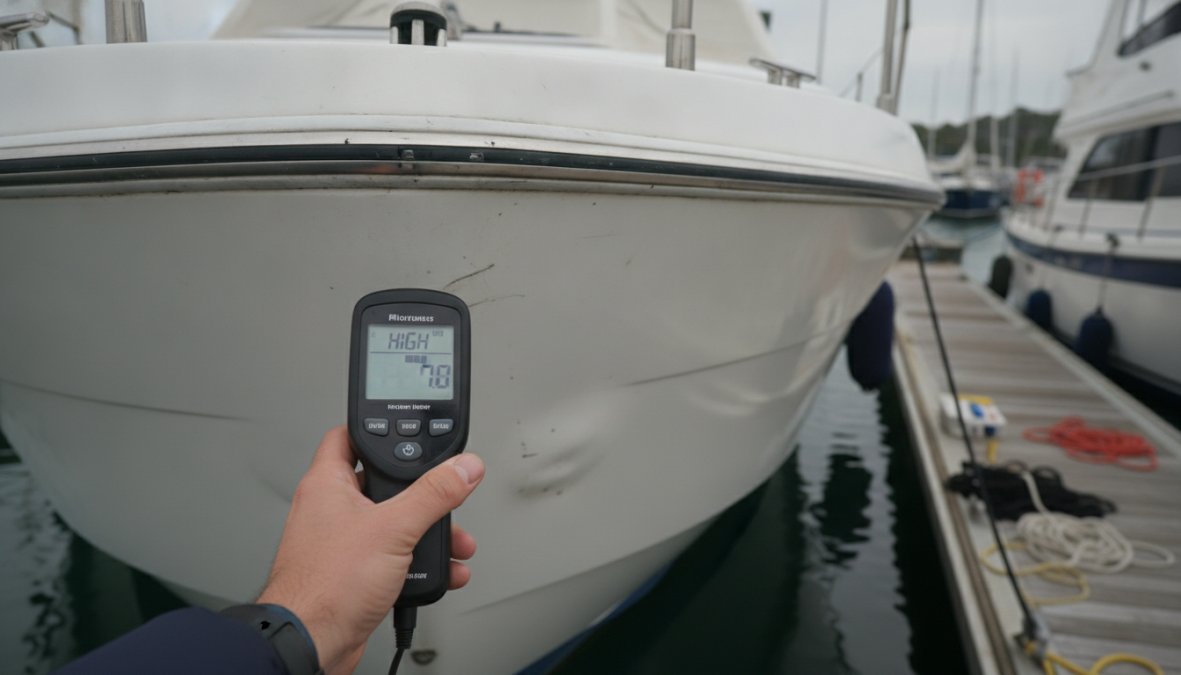
Start with a visual inspection of the entire hull exterior. Look for stress cracks, particularly around the keel attachment point and along the waterline. Run your hand across the gelcoat surface; a smooth finish is good, while rough patches or chalky areas suggest UV damage and potential underlying issues. Check for soft spots by pressing firmly on the hull with your palm. A properly constructed hull resists this pressure. Areas that feel spongy indicate delamination, a separation between fiberglass layers that compromises structural integrity.
Water staining below the waterline often signals past leaks or poor drainage. Discoloration in the bilge area, particularly rust streaks or salt deposits, suggests moisture intrusion that may have damaged internal structures.
Identifying Delamination and Osmosis
Delamination occurs when fiberglass layers separate due to moisture penetration, impact damage, or poor original construction. You’ll notice it as soft, squishy areas that feel different from solid hull material. A marine surveyor uses specialized moisture meters and ultrasonic thickness gauges to detect delamination before it becomes visible.
Osmosis is more insidious, water molecules migrate through the gelcoat and into the fiberglass matrix, causing the resin to weaken and blister. Early osmosis appears as tiny blisters or a wrinkled texture on the hull surface. Ask the seller directly about any history of osmosis treatment or hull repairs, and request documentation of any work performed.
Checking the Keel and Draft
The keel is a critical structural element. Inspect the keel-to-hull joint carefully for cracks, movement, or separation. A keel that shifts or shows signs of stress has likely experienced grounding or collision damage. For centerboard yachts, operate the centerboard mechanism multiple times. It should move smoothly and lock securely in both positions. Grinding sounds or resistance indicate wear or corrosion in the pivot mechanism.
Transom, Stringers, and Through-Hull Fittings
The transom is the flat or curved section at the stern. It bears enormous stress from engine weight, wave action, and operational loads. Inspect it thoroughly for cracks, soft spots, or separation from the hull. Press firmly on the transom with your palm. It should feel solid and immobile. Any flexing, creaking, or soft response indicates delamination or internal rot.
Stringers are internal reinforcement beams that run lengthwise through the hull. Assess their condition by checking for hull flexing when you press on the sides. Excessive movement suggests compromised stringers.
Through-hull fittings are the small openings where pipes, hoses, and cables pass through the hull for engine cooling, sewage discharge, bilge pumps, and other systems. Each fitting is a potential leak point. Inspect every through-hull fitting for corrosion, cracks, or loose fasteners. Test the through-hull seacocks (shut-off valves) by operating them; they should move smoothly and seal completely when closed. A single failed through-hull fitting can sink a yacht.
Marine Survey Checklist: What a Professional Surveyor Evaluates
A comprehensive marine survey is your most important protection. A qualified surveyor produces a detailed report covering structural condition, mechanical systems, electrical integrity, safety equipment, and operational readiness.
The surveyor will measure hull thickness in multiple locations using ultrasonic gauges, inspect the engine room for leaks and corrosion, test all through-hull fittings under pressure, evaluate electrical systems and battery condition, check all safety equipment, and verify that systems operate as designed. The survey report should be detailed enough that you understand exactly what you’re buying. Vague language like “systems appear functional” is a red flag.
Digital Inspection Checklists and Documentation
Request the yacht’s complete maintenance records in digital format. These should show service dates and intervals for engine and mechanical systems, parts replaced and repairs performed, fluid analysis results, haul-out dates and any bottom work, and warranty information for major systems. A yacht with meticulous records has likely been well-maintained. Gaps in documentation suggest either poor maintenance or a seller unwilling to be transparent.
Use a digital checklist during your sea trial to document system performance. Test every major system: engines, generators, navigation equipment, autopilot, water systems, sanitation systems, and climate control. Record any anomalies.
Common Yacht Engine Problems and Service History Review
The engine is the heart of the yacht. Engine problems are expensive to diagnose and catastrophically expensive to repair, especially if you discover them at sea. Understanding the yacht’s engine history and identifying potential issues before purchase is essential.
Most yachts use either diesel inboard engines or outboard systems. Diesel engines are workhorses, reliable and fuel-efficient when properly maintained. Outboard engines offer simplicity and easier maintenance but have different failure modes.
Engine Hours, Diesel vs. Outboard, and Maintenance Records
Engine hours are the equivalent of mileage on a car. A diesel engine with 3,000 hours is still relatively young; 10,000 hours suggests significant use. However, hours alone don’t tell the whole story. An engine with 5,000 hours that was regularly serviced is likely in better condition than one with 3,000 hours that was neglected.
Diesel engines typically run longer and more reliably than gasoline engines, but they require consistent maintenance. Check the maintenance records for regular oil changes at proper intervals, fuel filter replacements, and coolant flushes. Outboard engines are simpler mechanically but more exposed to saltwater corrosion. Inspect them for corrosion, especially around the powerhead and fuel system.
Request the engine manufacturer’s service records directly if possible. Ask about any major repairs, overhauls, or replacements. An engine that’s been rebuilt or had a complete overhaul is essentially a “new” engine and should be valued accordingly.
Fluid Analysis and Bilge Condition
Fluid analysis, examining engine oil, transmission fluid, and coolant under laboratory conditions, reveals engine health that visual inspection cannot. Oil analysis identifies metal particles (indicating wear), water contamination (indicating seal failure), and fuel dilution (indicating combustion problems). A professional surveyor will collect fluid samples and have them analyzed as part of the comprehensive inspection.
The bilge is the lowest point inside the hull where water collects. Inspect it carefully. It should be relatively clean and dry. Oily residue is normal, but excessive oil, fuel smell, or standing water indicates leaks or poor maintenance. Check the bilge pump operation manually and electrically. It should activate immediately and discharge water overboard.
Electrical Systems, Marine Electronics, and Wiring Integrity
Modern yachts are complex electrical systems. Navigation, engine control, safety systems, and comfort systems all depend on reliable electrical infrastructure. Faulty wiring or corroded connections can cause fires, system failures, or complete loss of power at sea.
Inspect all visible wiring for corrosion, damage, or improper connections. Check battery terminals and connections for white or blue corrosion deposits. Corroded connections create resistance, reduce power delivery, and can overheat and cause fires. Test all electrical systems: navigation lights, cabin lights, galley equipment, water heaters, and air conditioning. They should operate reliably. Flickering lights or systems that work intermittently suggest corroded connections or failing components.
Marine electronics, GPS, radar, chartplotter, autopilot, VHF radio, are expensive to replace. Verify that all electronics function properly and that you have documentation and user manuals. Check the electrical panel for proper labeling and circuit protection. Every circuit should be clearly labeled and protected by an appropriately sized breaker or fuse.
Interior Upholstery, Gelcoat, and Cosmetic Condition
While structural and mechanical systems determine whether the yacht is seaworthy, the interior condition affects your enjoyment and resale value. Inspect all upholstery, cushions, and soft furnishings for stains, tears, mold, or odors. Mold is particularly concerning in damp marine environments and indicates moisture problems that may extend beyond visible surfaces.
Gelcoat is the outer protective layer of fiberglass. Inspect it for cracks, chalking (white powder residue from UV damage), or discoloration. Check all cabin headliners, wall panels, and flooring for water damage, warping, or delamination. Test all faucets, toilets, and shower systems. Plumbing leaks are common in yachts and can cause hidden water damage if not addressed promptly.
Inspection Element | What to Check | Red Flag |
|---|---|---|
Hull exterior | Cracks, soft spots, staining | Soft spots near keel or transom |
Through-hull fittings | Corrosion, operation, sealing | Corroded or non-functional seacocks |
Engine records | Service history, maintenance intervals | Missing documentation or gaps |
Bilge condition | Cleanliness, pump operation | Excessive oil, fuel smell, or standing water |
Electrical systems | Wiring condition, connections, functionality | Corrosion, flickering lights, improper installations |
Interior | Upholstery, mold, water damage | Extensive mold, warping, or delamination |
Title, Bill of Sale, and Documentation Verification
Legal documentation is as important as physical condition. A yacht with a clear title and proper registration protects your investment. Request the original bill of sale and verify that the seller is the registered owner. Check the yacht’s registration with the maritime authority in its home country. Confirm that there are no outstanding liens or claims against the vessel. A lien search should be performed by a maritime attorney to ensure the yacht is free of legal encumbrances.
Verify that all equipment, engines, generators, and electronics match the description in the documentation. Request documentation of any major repairs or modifications. Check insurance history by requesting the yacht’s insurance records to identify any claims or damage history.
Sea Trial: Final Operational Evaluation
A sea trial is your final opportunity to evaluate the yacht under operational conditions. Take the yacht out on the water. Run the engines at various speeds and loads. Test the steering, throttle response, and overall handling. Listen for unusual noises, grinding, knocking, or vibrations indicate mechanical problems. Operate all systems while underway to ensure they function reliably.
The sea trial reveals problems that static inspection cannot. An engine may start and idle smoothly in the marina but perform poorly under load. Navigation systems may work fine docked but lose signal when offshore. Document everything during the sea trial with photos and video of system performance. Note any anomalies.
Purchasing a used yacht requires diligence, expertise, and attention to detail. The investment is substantial, and the consequences of a poor decision are significant. If you’re ready to move forward with confidence, our Yacht for Sale service can guide you through the entire evaluation and purchase process, coordinating professional surveys and managing all documentation to ensure you’re making an informed decision backed by complete transparency.
Frequently Asked Questions
What is the most important thing to check when buying a used yacht?
Hull integrity is paramount. Look for soft spots, delamination, and osmosis damage, which can be expensive to repair. A professional marine surveyor should assess the structural condition using specialized equipment. Also verify the service history and engine hours, as these directly impact long-term reliability and total cost of ownership.
How much does a marine survey cost for a yacht?
Marine survey costs depend on vessel size, age, and complexity. Rather than a fixed price, contact a qualified marine surveyor for a detailed quote based on your specific yacht. The investment in a thorough pre-purchase inspection is essential—it often uncovers issues that could cost far more if discovered after purchase.
What are the common yacht engine problems to watch for?
Common yacht engine problems include corrosion in diesel engines, worn impellers in cooling systems, and deteriorated fuel lines. Always review maintenance records and engine hours. Request a fluid analysis to check for contamination or wear particles. Inboard and outboard engines have different failure patterns, so ensure service history matches the engine type.
How do I determine fair market value and negotiate a yacht purchase?
Research comparable vessels and their sale prices. Use a professional yacht valuation service to establish realistic market value. When negotiating, leverage inspection findings—soft spots, deferred maintenance, or missing documentation all justify lower offers. Understand total cost of ownership, including insurance, moorage, and fuel, before making your final offer.