
Table of Contents
- The 10% Rule: A Starting Point for 50m Yacht Maintenance Costs
- Annual Operating Budget: Where the Money Goes
- Yacht Insurance Premiums for Large Vessels
- Yacht Dry Docking and Refit Costs
- Tax, Flag State Compliance, and Charter Revenue Offsets
- How Inflation and Green Tech Are Reshaping 50m Yacht Maintenance
- Frequently Asked Questions
Last Updated: September 14, 2026
The 10% Rule: A Starting Point for 50m Yacht Maintenance Costs
The cost of maintaining a 50m yacht is best understood through the 10% rule: annual running costs typically equal roughly 10% of the vessel’s purchase price. For a 50m superyacht, that single figure shapes everything from crew payroll to dry dock scheduling.
This guide breaks down where that money actually goes, which line items owners consistently underestimate, and how flag state compliance and charter revenue change the math. The 10% rule is a planning tool, not a budget. It tells you the scale of commitment before you commit.
What most guides miss is that the rule assumes a specific usage pattern: moderate cruising, a permanent crew, and one yard period per year. Change any of those and the percentage moves.
Annual Operating Budget: Where the Money Goes
An annual operating budget for a 50m superyacht splits into four dominant categories: crew, fuel and provisioning, insurance, and maintenance and dockage. Across most ownership structures, crew absorbs the single largest share, typically followed by yard and technical costs, with fuel swinging sharply depending on itinerary, speed profile, and how many nights the vessel spends at anchor running generators.
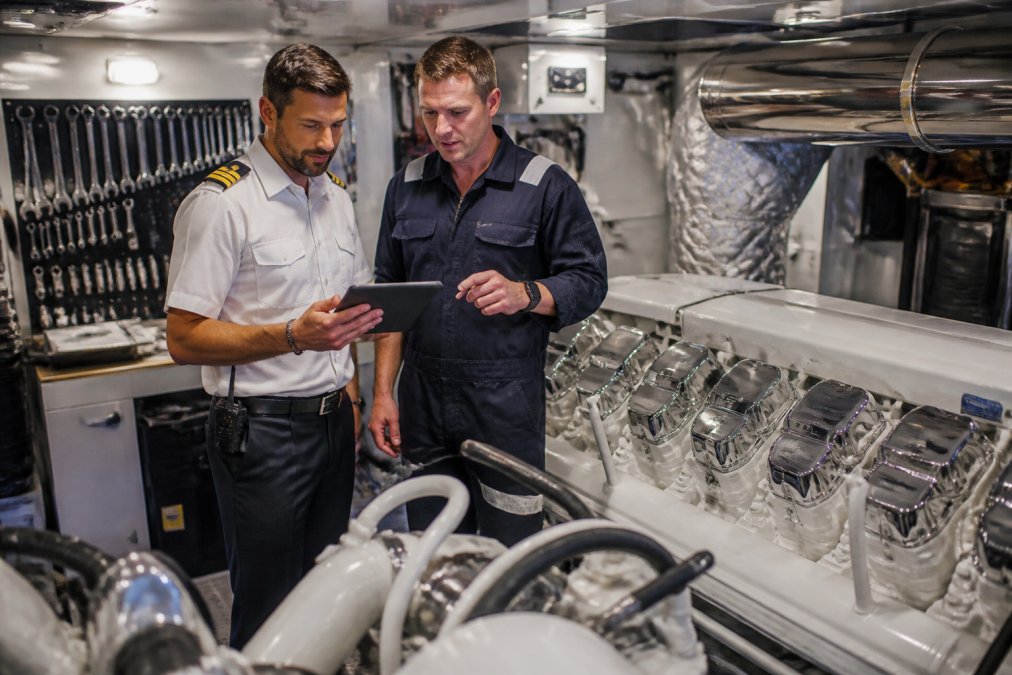
Owners who track spend by category rather than as one lump sum spot overruns earlier. The categories below are the ones that move the total most, and each behaves differently: crew is largely fixed once contracts are signed, fuel is semi-variable, insurance is annual and negotiable, and yard costs are lumpy and event-driven.
Crew Payroll and Salary Requirements
Yacht crew salary requirements depend on rank, certification, and vessel size, and a 50m yacht needs a full complement: captain, chief engineer, chief stewardess, chef, deckhands, and interior staff. On a vessel of this length, the permanent crew typically numbers between nine and twelve, with additional seasonal hands during peak charter periods.
Salaries are only part of it. Payroll also carries:
- Social security and pension contributions, which vary by flag and crew nationality
- Rotation travel, flights, and repatriation
- Medical cover and crew insurance
- Training and certification renewals, including STCW refreshers and rank-specific tickets
- Food, uniform, and onboard living allowances
A common mistake is budgeting gross salaries and forgetting the on-costs, which can add a meaningful margin on top. A second mistake is under-budgeting rotation: on a 50m vessel, most departments run a rotation cycle, which means overlapping travel, handover time, and duplicate accommodation costs during changeover weeks.
Fuel, Bunkering, and Provisioning
Bunkering costs depend on engine hours, cruising speed, and generator load, not just distance covered. A 50m yacht running generators continuously at anchor burns fuel even when stationary, and in warm cruising grounds the air-conditioning load alone can keep generators at high output around the clock.
Three variables dominate the fuel line:
- Speed. Fuel consumption rises steeply with speed. A modest reduction in cruising speed can cut consumption disproportionately, which is why many captains plan longer passages at displacement speed.
- Generator load. Anchoring in hot climates with full guest occupancy pushes generator hours up sharply.
- Tender and toy use. A 50m yacht typically carries a tender, jetski, and other toys, all of which consume fuel and require their own servicing.
Provisioning scales with guest numbers and expectations. Fine dining, specialist dietary requirements, and premium beverages shift the weekly figure considerably. Owners planning heavy charter use should model provisioning per guest-day rather than per trip, because the per-day figure is far more stable and easier to benchmark against actual invoices.
Insurance, Dockage, and the Fixed-Variable Split
Insurance and dockage behave very differently from fuel and provisioning, and separating them matters for planning. Insurance is an annual fixed cost quoted as a percentage of hull value, so it is predictable once the policy is bound. Dockage is semi-fixed: a home berth is a standing annual commitment, while visitor berths during cruising are variable and often the largest surprise line in a busy season.
A useful planning discipline is to split the budget into three buckets:
- Fixed, crew payroll, insurance, home berth, classification and compliance costs.
- Semi-variable, provisioning, routine servicing, shore power and utilities.
- Event-driven, yard periods, refit works, emergency repairs, and any unplanned technical intervention.
Event-driven costs are where budgets fail. A single unexpected engineering failure on a 50m yacht can consume a meaningful share of the annual maintenance allowance, which is why many owners hold a contingency reserve sized against the vessel’s systems rather than against a flat percentage.
Yacht Insurance Premiums for Large Vessels
Yacht insurance premiums for large vessels reflect hull value, cruising area, crew experience, and claims history. A 50m yacht sits in a specialist marine market, not a standard recreational policy.
Underwriters assess:
- Agreed hull value and deductible structure
- Navigation limits, including any high-risk regions
- Charter usage, which raises exposure and premium
- Crew qualifications and manning levels
- Survey and classification status
International Maritime Organization guidance on large yacht safety sets the wider regulatory backdrop insurers reference. Premiums are quoted as a percentage of hull value, so the absolute figure scales directly with the vessel. Reviewing cover annually against actual usage often surfaces savings.
Yacht Dry Docking and Refit Costs
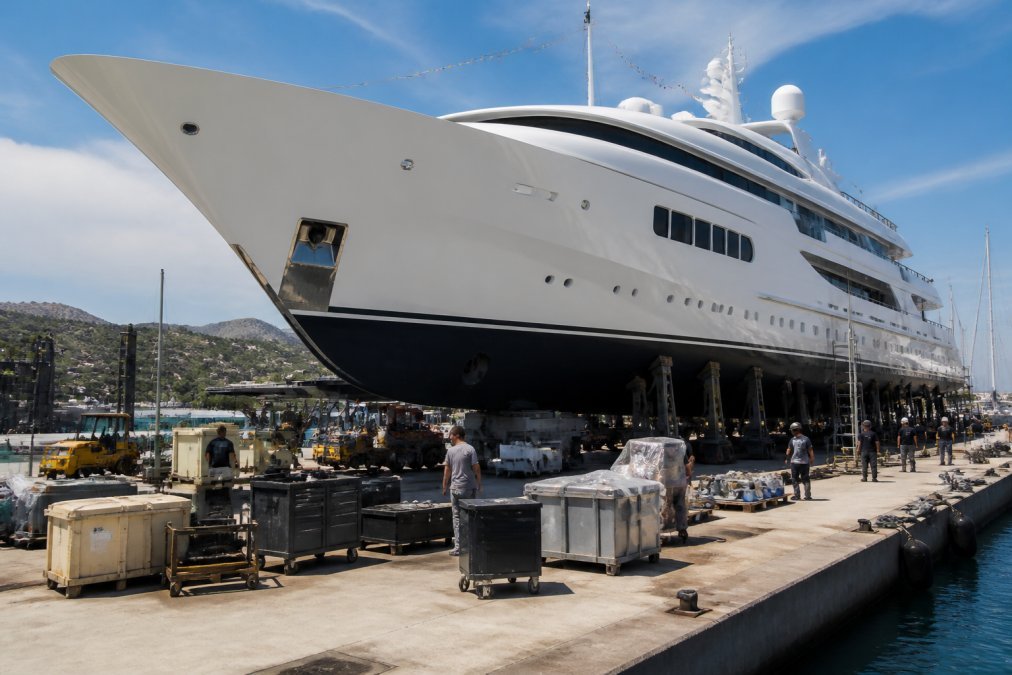
Yacht dry docking and refit costs are the most volatile line in the budget. A routine yard period covers lifting, hull works, and surveys; a refit covers upgrades and can rival a fraction of the original build cost.
Costs depend on yard location, duration, and scope. Mediterranean yards during peak season command a premium; off-season slots and alternative regions cost less.
Preventative Maintenance and Hull Care
Preventative maintenance protects resale value more than any single decision an owner makes. Anti-fouling, teak deck maintenance, engine servicing, and system checks on schedule prevent small faults becoming yard-scale repairs.
Maintenance Area | Frequency | Why It Matters |
|---|---|---|
Anti-fouling and hull | Annual | Fuel efficiency, speed |
Engine servicing | Per manufacturer hours | Avoids catastrophic failure |
Teak deck care | Seasonal | Prevents costly replacement |
Classification surveys | Per class schedule | Keeps vessel certified |
System and safety checks | Ongoing | Compliance and insurance validity |
Tax, Flag State Compliance, and Charter Revenue Offsets
Flag state compliance and tax treatment often outweigh the visible operating costs, and they are the two areas most cost guides skip entirely. Registration determines which ISM Code and ISPS Code obligations apply, along with survey and manning requirements, and it shapes how the vessel is treated for VAT and import purposes as it moves between cruising regions.
How Flag Choice Changes the Cost Base
The flag a 50m yacht flies is not a formality. It sets:
- Manning requirements. Some flags require a minimum crew complement and specific certification levels, which directly affects payroll.
- Survey regime. Classification and statutory survey cycles determine how often the vessel must enter a yard, and yard periods are among the largest single costs in the budget.
- Tax exposure. Flag, ownership structure, and the jurisdiction in which the owning entity is resident interact to determine how the vessel is taxed on purchase, on charter income, and on any eventual sale.
A common pattern is for owners to hold the vessel through a corporate structure and register it under a flag chosen for its regulatory and tax profile. The trade-off is real: a flag with lighter manning requirements may reduce payroll but restrict where the vessel can charter or how it is treated under EU VAT rules when cruising the Mediterranean. Owners weighing these choices should model them against the actual itinerary, not in the abstract.
Charter Revenue Offsets
Charter revenue offsets are the angle most cost guides ignore. Placing a 50m yacht on the commercial charter market can cover a substantial portion of annual running costs, provided the vessel meets commercial compliance and the crew holds the right certifications.
The mechanism is straightforward but the conditions are not. To charter commercially, a vessel generally needs:
- Commercial registration and the corresponding survey and certification
- A commercially certified crew, which may mean additional tickets and therefore higher payroll
- Insurance extended to cover commercial charter operations
- Compliance with the local rules of each jurisdiction in which charters are offered
The trade-off is that commercial compliance raises the fixed cost base, more certification, more insurance, more crew training, while charter income is seasonal and demand-dependent. In the Mediterranean, the charter season is concentrated into a relatively short window, so the revenue offset is strongest for owners whose vessel is already positioned in a high-demand cruising area and whose crew is already commercially certified.
For owners not pursuing charter, the same logic applies in reverse: a private, non-commercial vessel has a lower fixed cost base but no revenue offset, and the entire maintenance budget is carried by the owner.
The Jurisdictional Layer Most Guides Miss
VAT, import duty, and temporary admission rules vary by region, and a 50m yacht that cruises between the Mediterranean and other waters will encounter different treatment in each. Temporary admission regimes, for example, allow a non-EU flagged vessel to remain in EU waters for a limited period without triggering import VAT, but the conditions are strict and the clock resets only under specific circumstances.
Owners who plan itineraries without modelling these rules often discover the cost only when the vessel crosses a threshold. The practical discipline is to treat jurisdictional exposure as a budget line in its own right, reviewed annually alongside insurance and crew costs, rather than as a one-off purchase consideration.
Palm Lifestyle arranges both yacht charter and purchase advisory, which means the same team can model operating costs against realistic charter income rather than guesswork, and can flag jurisdictional exposure before it becomes a line item.
How Inflation and Green Tech Are Reshaping 50m Yacht Maintenance
Post-pandemic inflation hit yacht maintenance harder than most owners expected, with yard labour, parts, and specialist trades rising faster than general inflation. Green tech upgrades add a new capital consideration: hybrid propulsion, shore power compatibility, and emissions compliance are increasingly factored into resale value.
Sustainability is shifting from optional to expected. Owners planning a refit now often bundle efficiency upgrades with routine works, spreading the capital cost across a yard period already scheduled. The cost of maintaining a 50m yacht in 2026 reflects both pressures: higher running costs and a clearer premium on vessels that modernise early.
Frequently Asked Questions
What is the 10% rule for yacht maintenance?
The 10% rule is a common industry guideline suggesting annual operating costs for a superyacht roughly equal 10% of its purchase price. For a 50m yacht, this covers crew, fuel, insurance, dockage, and routine servicing. However, the rule is a starting point, not a precise forecast. Actual 50m yacht maintenance costs vary with usage, age, flag state, and whether the vessel is chartered. Owners should treat it as a budgeting framework rather than a fixed figure.
How do crew salary requirements affect the total maintenance budget?
Crew salary requirements typically represent the single largest line item in a 50m yacht’s annual operating budget. A vessel of this size needs a captain, engineer, chef, deckhands, and interior staff, often 10 to 12 people. Salaries vary by experience, nationality, and flag state regulations, and owners must also budget for training, medical cover, rotations, and crew travel. Because payroll is recurring and contractual, it is the cost category least open to short-term reduction.
How do yacht insurance premiums for large vessels get calculated?
Yacht insurance premiums for large vessels depend on hull value, cruising area, crew experience, claims history, and whether the yacht is privately used or chartered. Insurers also assess compliance with ISM and ISPS codes and the vessel’s classification society status. Premiums are typically higher for yachts operating in hurricane-prone regions or those with complex tender and toy inventories. Owners should review cover annually as values and cruising plans change.
What drives yacht dry docking and refit costs?
Yacht dry docking and refit costs are driven by the scope of work, yard location, and time in dock. Routine dry docking includes anti-fouling, hull inspection, and engine servicing, while a refit may involve teak deck replacement, interior upgrades, or systems overhauls. Classification society surveys and flag state compliance checks also influence the final bill. Planning dry docking well in advance helps owners control costs and avoid premium rates for urgent yard slots.