
Table of Contents
Mediterranean Yacht Charter Season: When to Book and Why It Matters
Best Mediterranean Yacht Charter Itineraries for Motor Yachts
Eco-Friendly and Sustainable Motor Yacht Charters in the Mediterranean
Conclusion: Start Planning Your Mediterranean Motor Yacht Charter
Last Updated: June 2, 2026
Choosing a Motor Yacht for charter in the Mediterranean is one of the most consequential decisions a discerning traveler will make, and getting it right requires more than browsing glossy brochures. At Palm Lifestyle, we work with clients across the GCC region and beyond who want the full picture before they sign a charter agreement: real costs, honest destination advice, and itineraries that actually deliver. Below, we break down everything from yacht selection and seasonal timing to hidden expenses and eco-conscious options, so you arrive at the marina informed, not surprised.
Here’s what most charter guides get wrong: they lead with destinations and save the financial details for the fine print. We do the opposite. The logistical and financial realities of a Mediterranean yacht charter are where the real decisions live, and understanding them upfront is what separates an unforgettable voyage from an expensive disappointment.
Why Choose a Motor Yacht for Charter in the Mediterranean
A motor yacht charter in the Mediterranean offers something no other vacation format can match: complete freedom over your schedule, your anchorage, and your pace. You’re not tied to hotel check-in times or ferry timetables. You wake up in a secluded cove, move to a bustling marina for lunch, and anchor off a private beach by sunset, all on the same day.
Motor yachts specifically excel in the Mediterranean context because the sea’s geography rewards speed. The Western Med, the Adriatic, the Aegean, these are not vast ocean crossings. They’re networks of islands, coves, and coastal towns separated by nautical miles that a capable motor yacht covers in hours rather than days. That range unlocks itineraries that sailing yachts and catamarans simply cannot match within a standard one-week charter window.
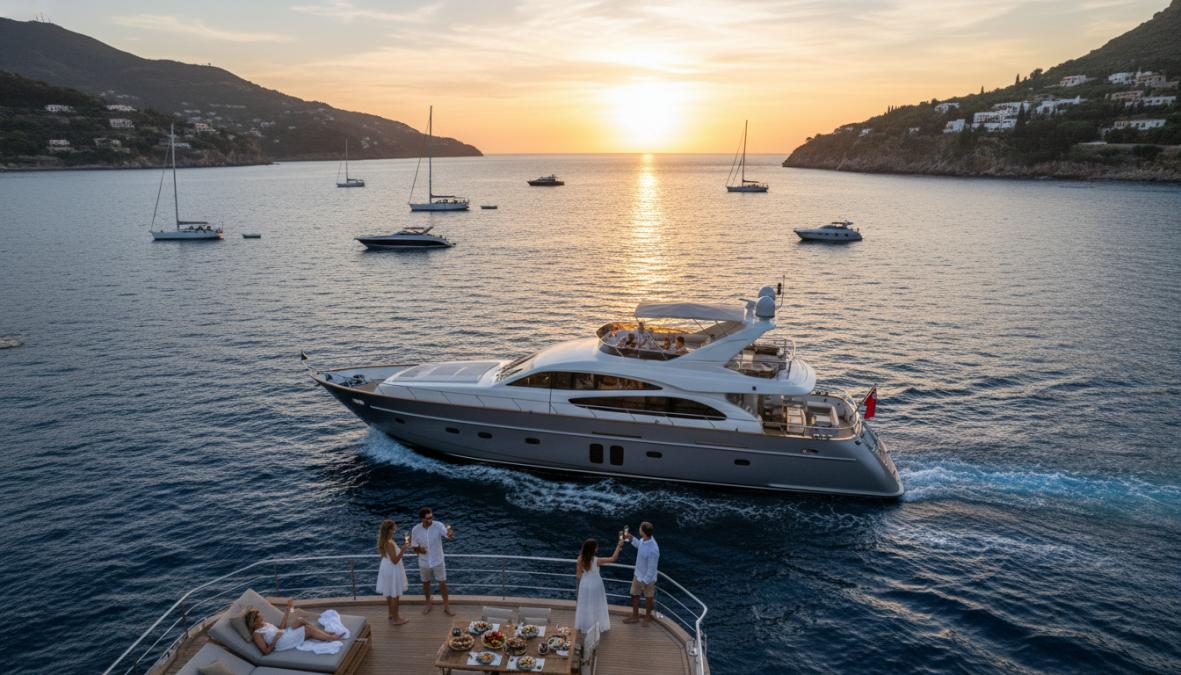
The onboard amenities on modern superyacht and mid-range motor yachts have also reached a level that rivals five-star hotels. Stabilizers eliminate rolling at anchor, climate control is precise, and water toys ranging from jet skis to inflatable slides are standard on most crewed charter vessels. The tender, typically a rigid inflatable, gives you independent access to beaches and villages without moving the main vessel.
Motor Yacht vs. Sailing Yacht vs. Catamaran: Which Is Right for You?
The right vessel depends on your priorities. Here’s a direct comparison:
Vessel Type | Speed | Stability at Anchor | Space | Weekly Rate Range | Best For |
|---|---|---|---|---|---|
Motor Yacht | High | Excellent (stabilizers) | Compact to expansive | Higher end | Covering distance, luxury amenities |
Sailing Yacht | Low-moderate | Moderate | Moderate | Mid-range | Authentic sailing experience, budget |
Catamaran | Low-moderate | Very good (twin hulls) | Excellent deck space | Mid to high | Families, shallow anchorages |
Gulet | Low | Good | Generous | Mid-range | Coastal cruising, Turkish routes |
A common mistake is choosing a sailing yacht for the romance of it, then spending the week motoring anyway because the Mediterranean summer winds are unpredictable. If you want to cover ground and prioritize comfort, a motor yacht is the honest choice.
Top Mediterranean Destinations for Motor Yacht Charters
The Mediterranean Sea stretches across three continents and dozens of distinct cruising grounds, each with a genuinely different character, infrastructure level, and crowd profile. Choosing well is as important as choosing the right vessel, the wrong destination in the wrong month can undermine even the best-equipped charter.
What follows is an honest assessment: the headline destinations with their real trade-offs, and a detailed section on the anchorages and cruising grounds that experienced repeat charterers actually return to, the ones that rarely appear in brokerage brochures.
The Headline Destinations: What They Deliver and What They Don’t
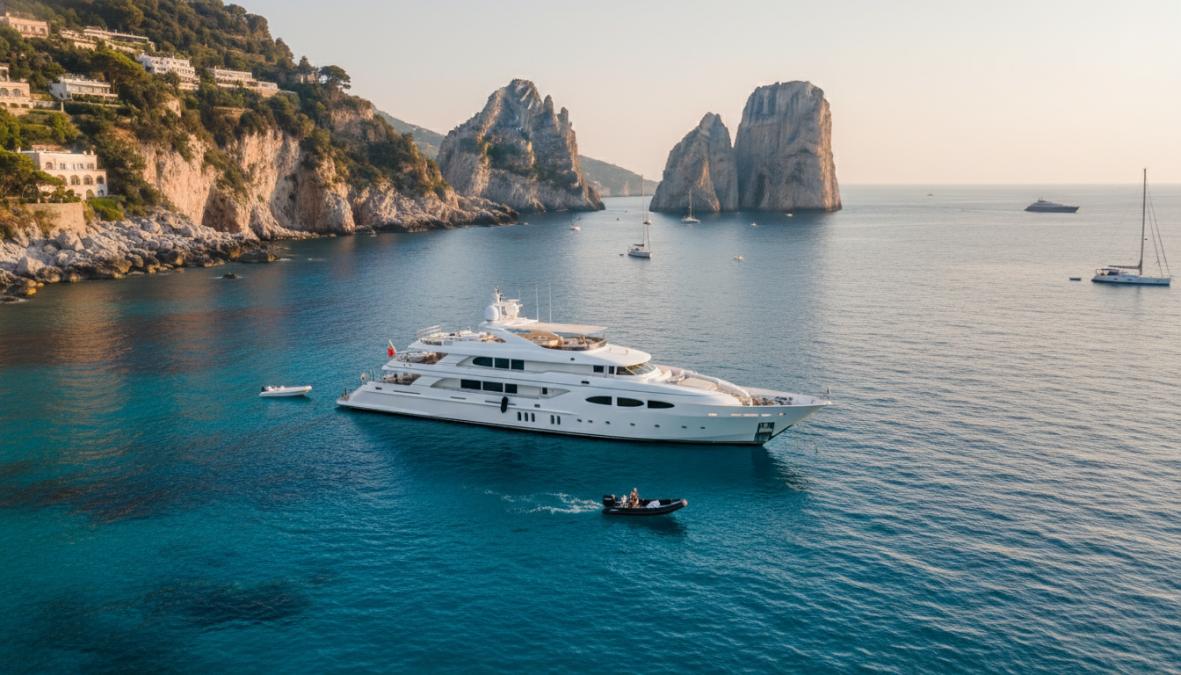
French Riviera and Corsica The French Riviera remains the most glamorous Mediterranean charter destination by reputation, and it largely earns it. Monaco, Antibes, Saint-Tropez, and the Iles de Lérins are all within easy range of each other, and the marina infrastructure is world-class. The honest trade-off: Saint-Tropez in July and August is genuinely congested, port fees are among the highest in the Mediterranean, and the experience can feel more like a floating social scene than a private escape. Corsica, a short run south, corrects for all of this, dramatic granite coastline, protected natural reserves, and anchorages that feel genuinely remote even in peak season. The Golfe de Porto and the Scandola Nature Reserve (accessible only by sea) are among the most visually striking anchorages in the entire Mediterranean. The combination of Riviera glamour and Corsican wilderness in a single week is a classic itinerary for good reason.
Amalfi Coast and Sardinia The Amalfi Coast is visually spectacular and logistically punishing. Anchorages are limited, the holding ground is variable, port fees in Positano and Capri are high, and summer traffic, both marine and tourist, is intense. The experience of arriving by yacht is genuinely special; the experience of competing for a mooring buoy with 30 other vessels is not. Sardinia, by contrast, offers the Costa Smeralda’s famous turquoise waters alongside quieter anchorages in the south and west that most charterers never reach. The Maddalena Archipelago, a national park north of the Costa Smeralda, offers protected anchorages with exceptional water clarity and strict environmental controls that keep it from becoming overrun. For first-time charterers who want Italy without the Amalfi frustrations, Sardinia is the stronger recommendation.
Dalmatian Islands, Croatia Croatia’s Dalmatian Coast has become one of the fastest-growing Mediterranean charter markets over the past decade, and the infrastructure has kept pace. Hvar, Vis, Korčula, and Brač offer medieval towns, exceptional water clarity, and marina facilities at rates generally 20-35% below comparable Western Mediterranean ports. The practical consideration: Croatia requires a cruising permit (the vinjeta) for all foreign-flagged vessels, which your broker will arrange, and the Bora wind can arrive with little warning in certain channels. The Kornati Islands National Park, a labyrinth of 89 uninhabited limestone islands in the northern Dalmatian archipelago, is one of the genuinely underused charter destinations in the Mediterranean, extraordinary scenery, minimal crowds, and anchoring fees that are a fraction of the Riviera.
Greek Islands The Greek Islands remain the benchmark for island hopping, and the motor yacht’s range advantage is most tangible here. The Cyclades (Mykonos, Santorini, Paros, Naxos) attract the largest crowds and the most superyacht traffic; the Dodecanese (Rhodes, Symi, Patmos, Kastellorizo) offer more historical depth and significantly fewer vessels. The Ionian Islands (Corfu, Lefkada, Kefalonia, Ithaca) on the western side of Greece are a different experience again, greener, more sheltered, and with a sailing culture that predates the superyacht era. For charterers who want Greece without the Mykonos scene, the Ionian or the Dodecanese are the honest recommendations.
Turkey Turkey’s Aegean and Turquoise coasts, particularly around Bodrum, Göcek, and Marmaris, offer scenery that is directly comparable to Greece at rates that are consistently lower. The gulet tradition is strong here, but motor yachts are equally well-served by the marina infrastructure. The practical note for non-EU travelers: Turkey is outside the Schengen Area, which means time spent in Turkish waters does not count against your 90-day Schengen allowance, a meaningful consideration for GCC nationals and others managing their European visa time carefully.
Hidden Gems vs. Tourist Traps: The Honest Guide
This is the section most charter guides skip because it requires saying something specific. Here it is.
The tourist traps, approach with realistic expectations:
Positano and Capri (Amalfi Coast, July-August): The popular advice to visit Positano by yacht sounds appealing until you arrive and find 30-40 other vessels competing for a handful of mooring buoys. Capri’s anchorage in peak season is similarly congested, and the town itself is overwhelmed with day-trippers arriving by hydrofoil from Naples. Both are worth visiting, but in May, June, or late September, not in the heart of summer, and never without advance marina reservations.
Santorini’s Oia anchorage (August): The caldera anchorage at Santorini is genuinely dramatic, but August brings superyacht density that makes the experience feel more like a parking lot than a private discovery. The island is also exposed to the Meltemi wind, which can make the anchorage uncomfortable or untenable. Visit in September when the crowds thin and the wind eases.
Monaco Grand Prix week: Unless you specifically want the Grand Prix experience, and some clients absolutely do, this is the single most expensive and congested week in the Western Mediterranean calendar. Berth prices in Monaco during race week are multiples of the standard rate, and the surrounding anchorages fill with overflow traffic. Book a year in advance if this is your goal; avoid it entirely if it isn’t.
The hidden gems, where experienced charterers actually go:
Vis Island, Croatia: Vis was a restricted military zone until 1989 and consequently has almost no tourist development relative to Hvar or Korčula. The town of Komiža on the western side is one of the most authentic fishing villages in the Adriatic, and the Blue Cave on the nearby island of Biševo is accessible by tender in calm conditions. Vis rewards charterers who want Croatia without the Hvar party scene.
The Aeolian Islands, north of Sicily: Seven volcanic islands, Lipari, Vulcano, Stromboli, Panarea, Salina, Filicudi, Alicudi, sitting in the Tyrrhenian Sea north of Sicily. Stromboli’s active volcano is visible from the anchorage and erupts regularly, producing one of the most extraordinary nighttime spectacles in the Mediterranean. Panarea has a small but genuinely stylish scene; Filicudi and Alicudi are almost entirely undeveloped. The Aeolians are dramatically undervisited relative to the Amalfi Coast despite being scenically superior in many respects.
The Mani Peninsula, southern Greece: The middle finger of the Peloponnese, the Mani is one of the least-visited regions of mainland Greece, a landscape of tower houses, Byzantine churches, and deserted coves that feels nothing like the Cyclades. The anchorage at Limeni, a small fishing village at the head of a deep inlet, is one of the most peaceful overnight stops in Greek waters.
Gulf of Gökova, Turkey: A long, sheltered inlet on Turkey’s Aegean coast between Bodrum and Marmaris, the Gulf of Gökova is designated a Special Environmental Protection Area. The anchorages at English Harbour and Sedir Island (home to a beach of shell fragments found nowhere else in the world) are accessible only by sea. Superyacht traffic is minimal compared to the Greek islands directly opposite.
Kornati Islands National Park, Croatia: As noted above, 89 uninhabited limestone islands in the northern Dalmatian archipelago. The landscape is stark and lunar, the water is clear, and the anchoring fees within the national park are a fraction of what you would pay in any marina. Experienced charterers who have done the Dubrovnik-Split route multiple times consistently cite the Kornati as the most memorable anchorage in Croatian waters.
Mediterranean Yacht Charter Season: When to Book and Why It Matters
The Mediterranean charter season runs from May through October, with high season concentrated between late June and early September. Understanding the seasonal rhythm is essential for both experience quality and cost management.
May and June: Water temperatures are still cool for swimming in the northern Med, but the weather is stable, anchorages are accessible, and weekly rates are 15-25% lower than peak summer. This is the best time for the French Riviera and Italy, where summer crowds haven’t yet arrived.
July and August: High season across the entire Mediterranean. The best anchorages fill quickly, port fees increase, and yacht availability is tightest. The Meltemi wind in the Aegean can be strong and persistent in August, which affects sailing comfort and routing. Book at least six months ahead for this window.
September and October: Many experienced charterers consider early September to mid-October the sweet spot. Water is warm, crowds thin noticeably after the first week of September, and rates begin to ease. The Greek islands and Turkish coast are particularly good in this period.
The off-season (November to April) exists for delivery voyages and specific winter charters, but most charter fleets relocate to the Caribbean or the Middle East during these months.
According to The International Yacht Brokers Association’s charter market guidance, booking demand for Mediterranean summer charters has consistently outpaced available inventory in recent years, making early reservation critical for preferred vessels and dates.
Mediterranean Yacht Charter Cost Breakdown by Yacht Size
The weekly rate is the headline number, but it is rarely the total cost. A realistic Mediterranean yacht charter budget has several components, and understanding each one prevents the single most common complaint in the charter industry: arriving home to a final invoice that is 60% higher than the number you originally saw advertised.
The table below uses publicly documented market ranges drawn from MYBA fleet data, broker rate cards, and industry reporting. Figures represent the Western Mediterranean high season (July-August). Shoulder season (May-June, September-October) rates typically run 15-25% lower across all categories.
Yacht Size | Typical Weekly Base Rate | Guests | APA Estimate | VAT (France/Italy) | Crew Gratuity (15%) | Realistic Total Week |
|---|---|---|---|---|---|---|
15-20m Motor Yacht | €15,000-€35,000 | Up to 8 | €5,000-€12,000 | €1,500-€5,000 | €2,250-€5,250 | €24,000-€57,000 |
20-30m Motor Yacht | €35,000-€80,000 | Up to 10 | €11,000-€28,000 | €3,500-€12,000 | €5,250-€12,000 | €55,000-€132,000 |
30-40m Motor Yacht | €80,000-€160,000 | Up to 12 | €25,000-€56,000 | €8,000-€24,000 | €12,000-€24,000 | €125,000-€264,000 |
40-50m Superyacht | €160,000-€350,000 | Up to 12 | €50,000-€120,000 | €16,000-€52,000 | €24,000-€52,500 | €250,000-€575,000 |
50m+ Superyacht | €350,000+ | Up to 14 | €120,000+ | €35,000+ | €52,500+ | €560,000+ |
Ranges are indicative of publicly reported market conditions and will vary by specific vessel, operator, and charter region. VAT figures reflect French and Italian rates as a reference; other jurisdictions differ.
Cost Per Guest: The Number That Actually Matters
The most practical way to evaluate charter value is cost per guest per night, because it makes the comparison to hotels and villa rentals concrete.
A 20m motor yacht at €35,000 per week carrying 8 guests works out to approximately €625 per guest per night, inclusive of accommodation, all meals, a professional crew, water toys, and unlimited anchorage changes. A comparable five-star hotel room in Saint-Tropez or Positano in peak season routinely exceeds €800-€1,200 per night per room, without meals, without a private chef, and without the ability to wake up in a different location each morning.
At the superyacht end, a 40m vessel at €160,000 per week for 10 guests is approximately €2,285 per guest per night before APA and VAT, which is genuinely expensive by any measure, but comparable to a private villa with full staff in the same markets.
Understanding APA, Port Fees, VAT, and Other Hidden Expenses
APA (Advanced Provisioning Allowance) is the fund provided to the captain at the start of the charter to cover running expenses: fuel, provisioning, port fees, mooring charges, and crew gratuities. It is typically 30-40% of the base weekly rate and is reconciled at the end of the charter, with any unspent balance returned to the client.
The APA components that most clients consistently underestimate:
Fuel is the largest single variable. Motor yachts are fuel-intensive by design, a 30m motor yacht running at cruising speed can consume 200-400 litres per hour depending on hull type and throttle setting. A week with long daily passages (French Riviera to Corsica and back, for example) can consume €8,000-€15,000 in fuel alone on a mid-size vessel. A quieter week anchored in a single bay will cost a fraction of that. Discuss your intended itinerary with the captain before departure and get a realistic fuel estimate.
Port fees and marina charges vary enormously by location. Mooring in Monaco, Porto Cervo (Sardinia), or Portofino in peak season is charged per metre of vessel length per night, and rates at the most prestigious marinas can reach €150-€300 per metre. A 30m yacht mooring in Monaco for two nights can therefore add €9,000-€18,000 to the APA before a single meal is purchased. Anchoring off a quiet cove costs nothing.
VAT on yacht charters is one of the most misunderstood costs in the industry. The applicable rate depends on where the charter contract is issued, where the vessel is flagged, and where it actually operates. France charges 20% TVA on the full charter fee for charters that begin and end in French waters. Italy applies a reduced rate for charters that spend time in international waters, but the calculation requires documentation. Greece has its own charter tax regime. A qualified broker will structure the charter to minimize VAT exposure legally, this is a legitimate and significant financial consideration, not a loophole.
Crew gratuity is not included in the base rate and is not part of the APA. The industry standard is 10-15% of the base weekly rate, paid in cash to the captain at the end of the charter for distribution to the crew. On a €50,000 charter, that is €5,000-€7,500. It is discretionary but strongly expected if the crew performed well, and most do.
Provisioning is covered by the APA but deserves a separate mention. A full week of food and beverages for 8-10 guests, including quality wine and spirits, typically runs €3,000-€8,000 depending on preferences. Requesting premium labels or specific dietary requirements adds cost. Discuss provisioning preferences with the captain or charter manager before departure to avoid surprises.
MYBA’s standard charter contract guidelines and APA framework
Best Mediterranean Yacht Charter Itineraries for Motor Yachts
Itinerary planning is where the motor yacht’s range advantage becomes most tangible. A well-designed route balances cruising time with time at anchor, mixes busy social stops with quiet anchorages, and accounts for prevailing winds and sea conditions.
The most common planning mistake is over-scheduling. Clients often plan seven destinations for a seven-day charter, which means spending most of each day underway rather than swimming, exploring, or simply enjoying the vessel. A realistic motor yacht itinerary covers four to five main stops per week, with flexibility built in for weather.
Sample 7-Day Cruising Routes for First-Time Charterers
Route 1: French Riviera and Corsica
Day 1: Antibes (embarkation, provisioning)
Day 2: Saint-Tropez or Iles de Lérins
Day 3: Passage to Corsica, anchor at Bonifacio
Day 4: Corsica’s west coast, Porto-Vecchio
Day 5: Calvi or Girolata Gulf
Day 6: Return passage, anchor off Cap Ferrat
Day 7: Monaco or Nice (disembarkation)
Route 2: Dalmatian Islands, Croatia
Day 1: Split (embarkation)
Day 2: Hvar town
Day 3: Vis island, Komiza
Day 4: Korčula old town
Day 5: Mljet National Park
Day 6: Dubrovnik approach, Elaphiti Islands
Day 7: Dubrovnik (disembarkation)
Route 3: Greek Islands – Cyclades
Day 1: Athens (embarkation, Piraeus)
Day 2: Hydra or Spetses
Day 3: Paros
Day 4: Mykonos
Day 5: Delos, Naxos
Day 6: Santorini
Day 7: Return to Athens or fly from Santorini
For bespoke experience planning that accounts for your group’s specific interests, the Palm Lifestyle team builds custom itineraries based on vessel range, seasonal conditions, and client preferences.
How to Book a Private Yacht Charter: A Step-by-Step Process
Booking a private yacht charter is more structured than booking a hotel, and the steps matter. Skipping any of them creates risk.
Step 1: Define your requirements. Group size, travel dates, preferred region, budget range (including APA), and any specific requirements (water sports, specific ports, dietary needs).
Step 2: Engage a reputable yacht broker. A qualified broker provides access to vetted vessels, negotiates charter terms, and manages the paperwork. Working directly with an unknown owner without broker representation carries real legal and financial risk.
Step 3: Review the charter agreement. The MYBA (Mediterranean Yacht Brokers Association) standard charter agreement is the industry benchmark. Understand the cancellation policy, the APA terms, and liability provisions before signing.
Step 4: Pay the deposit. Standard deposit is 50% of the weekly rate at signing, with the balance due 4-6 weeks before departure.
Step 5: Plan the itinerary. Work with the captain and broker to finalize the route, provisioning preferences, and any special arrangements.
Step 6: Board and brief. The captain will conduct a safety briefing and walk through the vessel on embarkation day.
According to MYBA’s standard charter contract guidelines, using the standard MYBA charter agreement provides legal protections for both charterer and owner that informal arrangements do not.
Legal and Visa Requirements for Non-EU Travelers
This is the section most charter guides skip entirely. It matters.
Non-EU travelers, including GCC nationals, US citizens, and others, need to verify their visa situation for each country in the charter itinerary. Schengen Area rules apply across most of Western Europe: travelers from many non-EU countries can spend up to 90 days in the Schengen Zone within any 180-day period without a visa. However, Croatia uses the Schengen system for visa purposes but has its own nuances, and Turkey is entirely outside Schengen.
For yacht-specific entry: vessels entering EU waters from non-EU ports must clear customs at the first port of entry. The captain handles this process (known as “clearing in”), but charterers should carry valid passports and any required visas for every planned port.
GCC nationals specifically should verify current Schengen visa requirements, as these have been subject to policy changes. The European Union’s official Schengen visa information portal provides current entry requirements by nationality.
Eco-Friendly and Sustainable Motor Yacht Charters in the Mediterranean
Sustainability is no longer a niche concern in the Mediterranean charter market. Marine protected areas are expanding, several ports have introduced restrictions on anchoring in seagrass (Posidonia) zones, and client demand for greener options is rising among younger charter clients.
The practical options available in 2026:
Hybrid motor yachts: A growing number of charter vessels now feature hybrid propulsion systems, allowing zero-emission operation at low speeds and at anchor. This reduces both fuel consumption and noise, which matters significantly in protected anchorages.
Shore power: Most modern marinas offer shore power connections, allowing vessels to run air conditioning and systems without running generators overnight. Responsible captains use it wherever available.
Sustainable provisioning: Some charter crews now source provisions locally and seasonally, reducing the carbon footprint of food while supporting local economies. This is worth requesting explicitly when setting up your provisioning list.
Anchoring practices: Responsible charter crews avoid anchoring on Posidonia seagrass beds, which are protected across much of the Mediterranean. Using designated mooring buoys in protected areas is both legally required in many zones and ecologically sound.
The broader context: the Mediterranean is one of the world’s most ecologically sensitive seas, with limited water exchange with the Atlantic. Choosing operators and vessels that take marine stewardship seriously is both an ethical and a practical consideration, as regulatory restrictions on irresponsible anchoring and waste disposal are tightening across the region.
Planning a Mediterranean motor yacht charter involves more moving parts than most luxury travel experiences, and the gap between a well-organized voyage and a frustrating one usually comes down to preparation and professional support. Palm Lifestyle provides end-to-end charter management: direct access to a worldwide fleet of vetted vessels, transparent cost breakdowns including APA and VAT, and customized itineraries built around your group’s specific priorities and schedule. Get in touch with Palm Lifestyle to discuss your charter requirements and receive tailored recommendations for your 2026 Mediterranean season.
Frequently Asked Questions
How much does it cost to charter a motor yacht in the Mediterranean?
Motor yacht charter costs in the Mediterranean vary widely based on yacht size and specification. Smaller motor yachts (40–60 ft) typically start from around €10,000–€25,000 per week, mid-range superyachts (60–100 ft) range from €25,000–€80,000 per week, and larger superyachts can exceed €150,000 per week. On top of the weekly rate, budget an additional 30–40% for APA (Advanced Provisioning Allowance), port fees, fuel, VAT, and crew gratuity.
What is the best time of year to charter a yacht in the Mediterranean?
The Mediterranean yacht charter season runs from May through October, with July and August being peak high season — ideal for island hopping but with higher weekly rates and busier marinas. June and September offer an excellent balance of warm weather, calmer anchorages, and slightly lower costs. The off-season (October–April) is suited to experienced charterers seeking quiet cruising grounds at reduced rates, particularly in the western Mediterranean.
What is included in a Mediterranean motor yacht charter price?
A standard crewed charter weekly rate typically includes the yacht, its professional crew, and onboard amenities such as water toys, a tender, and standard equipment. It does not usually cover fuel, food and beverages, port fees, marina charges, or VAT. These extras are covered by the APA — typically 25–35% of the base rate — paid upfront and reconciled at the end of the charter. Always review your charter agreement carefully with your yacht broker.
Do I need a license to charter a motor yacht in the Mediterranean?
For a crewed charter, no personal license is required — the professional captain handles all navigation. If you opt for a bareboat charter (no crew), most charter companies require proof of a recognized sailing or powerboat license, such as an RYA or ICC certificate. Non-EU travelers should also check visa requirements for each country visited, as Mediterranean itineraries often cross multiple national waters with different entry regulations.
How far in advance should I book a Mediterranean yacht charter?
For peak summer season (July–August), booking your motor yacht charter 6–12 months in advance is strongly recommended, especially for popular superyachts and sought-after destinations like the French Riviera, Amalfi Coast, and Sardinia. For June, September, or shoulder-season charters, 3–6 months is generally sufficient. Last-minute bookings are occasionally possible but limit your yacht selection and itinerary flexibility significantly.