

Table of Contents
- What Superyacht Sales and Acquisition Experts Do
- Understanding the Superyacht Brokerage Process
- How to Buy a Superyacht: Step-by-Step Approach
- Due Diligence and Legal Frameworks in Yacht Acquisition
- Yacht Broker Commission Fees and Pricing Transparency
- Total Cost of Ownership: Beyond the Purchase Price
- Why Choose Superyacht Sales and Acquisition Experts
- Sustainability and Green Technology in Modern Superyachts
Last Updated: June 20, 2026
Acquiring a superyacht is one of the most complex transactions in the luxury asset market. Working with superyacht sales and acquisition experts is the single most consequential decision you’ll make in the process. At Palm Lifestyle, we’ve guided clients across the Middle East and beyond through every stage of this journey, from initial market analysis to final flag registration. The difference between a smooth acquisition and a costly mistake almost always comes down to who’s in your corner from day one.
A superyacht acquisition expert is a licensed professional who manages the full lifecycle of a yacht purchase or sale, combining vessel valuation, legal compliance, technical inspection, and negotiation into a single coordinated service.
What Superyacht Sales and Acquisition Experts Do
The value of superyacht sales and acquisition experts isn’t in access to listings, it’s in market intelligence you can’t buy anywhere else.
Market Intelligence and Vessel Valuation
Vessel valuation in the superyacht market combines technical assessment with market analysis. A certified broker evaluates hull condition, refit history, engine hours, builder reputation, flag state, and comparable sales to establish a defensible market price. Unlike residential real estate, there’s no public registry of superyacht sales, creating opacity where inexperienced buyers get burned.
According to the International Yacht Brokers Association’s guidance on professional standards, certified brokers must maintain fiduciary responsibilities to clients, including transparent disclosure of valuation methodology. A professional broker who can’t explain their pricing rationale isn’t worth retaining.
Good market intelligence includes comparable sales analysis from the last 12-24 months, builder reputation scoring, refit cost projections, seasonal pricing trends by flag state, and demand signals from the charter market that affect resale value.
Vessels actively generating charter revenue often carry a premium on the sales market because buyers can offset ownership costs immediately. Ask your broker to pull the charter history before you set a budget ceiling.
Navigating Off-Market and On-Market Acquisition Strategies
Most desirable superyachts in the 40-80 metre range trade off-market through broker-to-broker relationships built over years. On-market listings represent vessels that couldn’t find buyers privately or where the seller has no confidentiality concerns. Neither is necessarily a red flag, but the distinction matters for pricing and negotiation.
Off-market acquisitions typically move faster, require stronger buyer credibility, and demand a broker with genuine industry relationships. On-market deals offer more transparency and comparative pricing but attract competing buyers. The right strategy depends on your timeline, budget, and flexibility on specification.
Understanding the Superyacht Brokerage Process
The superyacht brokerage process follows a structured sequence, though execution quality varies enormously between advisors.
Initial Consultation and Needs Assessment
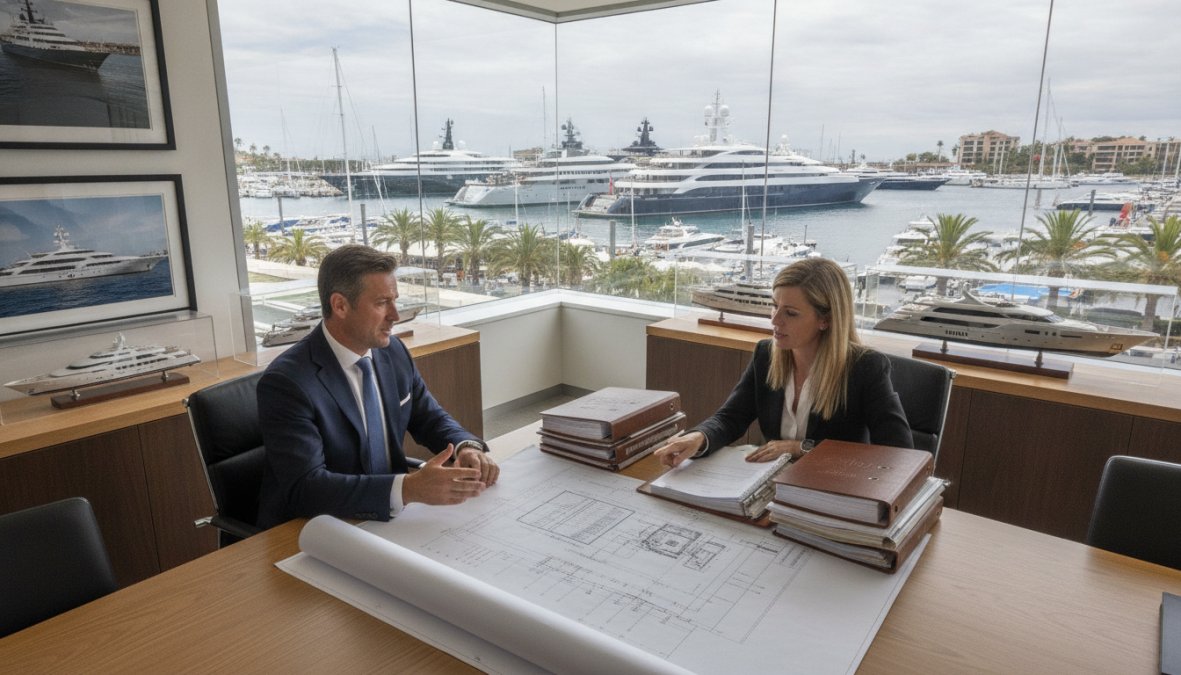
Every credible brokerage engagement starts with a thorough needs assessment covering intended use (private cruising, charter, or both), preferred cruising regions, crew capacity requirements, flag state preferences, and ownership structure. Family offices and high-net-worth individuals often have specific holding structures that affect which flag states are viable and how the vessel can be commercially operated.
A strong advisor spends the first meeting asking questions, not sending listings.
Vessel Selection and Inspection
Once the brief is defined, your broker presents a shortlist from both on-market listings and off-market opportunities within their network. The selection process should include preliminary technical review before any offer is made. A broker who sends you to view a vessel without basic mechanical assessment signals more interest in commissions than outcomes.
Negotiation and Contract Finalization
Negotiation on superyachts extends beyond price to delivery condition, inventory inclusions, sea trial parameters, acceptance criteria, and escrow terms. Most superyacht transactions use the MYBA (Mediterranean Yacht Brokers Association) standard form, which provides a recognized framework for both parties.
Never sign a Letter of Intent or Memorandum of Agreement without independent legal review. A poorly structured LOI can lock you into unfavorable terms before due diligence begins, with limited recourse if the survey reveals problems.
How to Buy a Superyacht: Step-by-Step Approach
Understanding how to buy a superyacht means accepting that this is a multi-month process with no shortcuts worth taking.
Setting Your Budget and Defining Your Vision
The purchase price is only the beginning. A realistic budget accounts for total cost of ownership, including crew, insurance, maintenance, mooring, and flag state compliance. Many first-time buyers set a purchase budget without modeling annual operating costs, then find themselves financially stretched within the first season.
Define your vision before setting your budget ceiling:
- Primary use: private, charter, or mixed
- Preferred cruising grounds (Mediterranean, Caribbean, GCC waters, Pacific)
- Minimum crew complement required
- Guest capacity and interior specification preferences
- New build vs. pre-owned preference
- Preferred flag state and ownership structure
- Timeline to delivery or handover
Engaging Professional Advisors
The professional team for a superyacht acquisition typically includes a certified broker, a maritime lawyer, an independent surveyor, and a technical superintendent. Each serves a distinct function: your broker manages the commercial process, your lawyer handles title verification and contract structure, your surveyor assesses physical condition, and your superintendent reviews mechanical systems.
Consolidating these roles to save fees is a false economy. On a transaction of this scale, professional advisor costs are marginal relative to the risk they mitigate.
Due Diligence and Legal Frameworks in Yacht Acquisition
Due diligence for yacht acquisition is where deals either get done properly or fall apart later.
Survey and Technical Inspection
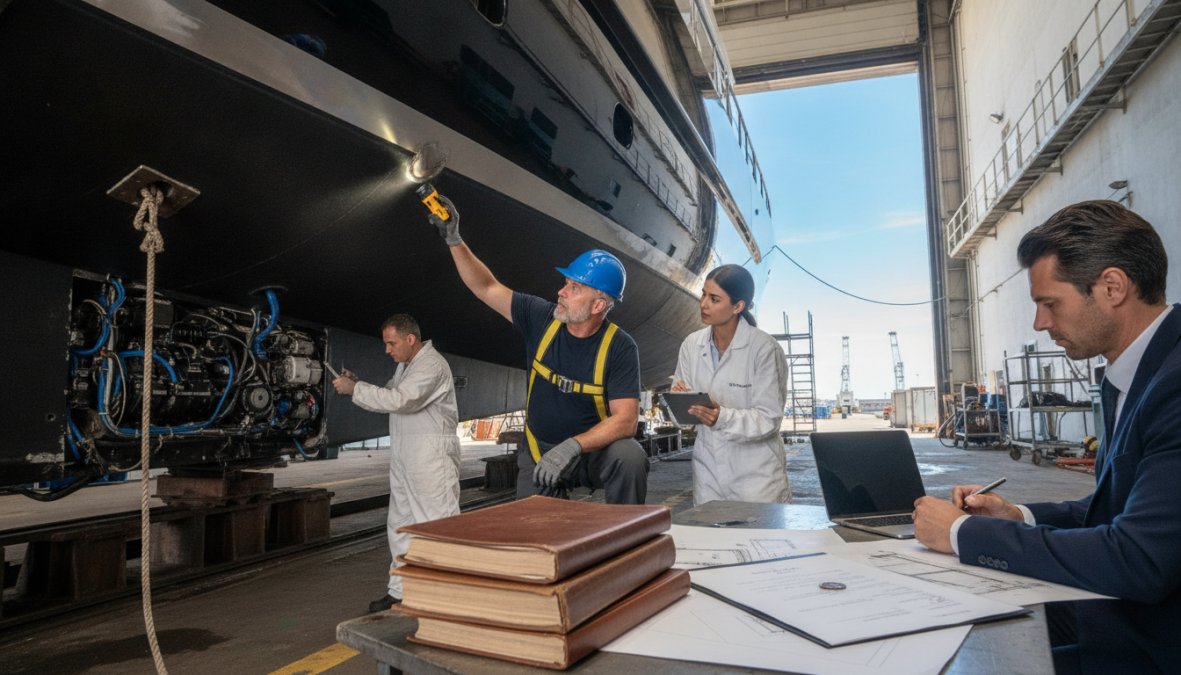
A yacht survey is a comprehensive physical and mechanical assessment by an independent marine surveyor. For vessels above 24 metres, this includes out-of-water hull inspection, machinery survey, structural assessment, and review of safety equipment certifications. The survey report becomes the primary document for price renegotiation if defects are found.
According to guidance published by the Society of Accredited Marine Surveyors, buyers should appoint their own independent surveyor rather than relying on any survey commissioned by the seller. Sea trials under buyer-specified conditions are equally non-negotiable. Any seller who resists a full sea trial is telling you something important about the vessel.
Title Verification and Maritime Law Compliance
Title verification confirms that the seller has unencumbered legal ownership and that no maritime liens, mortgages, or encumbrances exist. This requires searches across the vessel’s flag state registry, any previous flag states, and admiralty court records in jurisdictions where the vessel has operated.
Maritime law compliance covers flag state requirements, SOLAS (Safety of Life at Sea) certification, MCA (Maritime and Coastguard Agency) compliance for commercially operated vessels, and crew certification standards. As documented in the International Maritime Organization’s regulatory framework overview, vessels operating commercially must meet standards significantly beyond those required for private use. Getting this wrong creates liability that follows the vessel.
Yacht Broker Commission Fees and Pricing Transparency
Yacht broker commission fees in superyacht transactions are typically structured as a percentage of the final sale price, paid by the seller. The industry standard sits at 10%, though this varies based on deal complexity, vessel size, and dual agency arrangements.
Buyers often assume broker services are free because they don’t pay commissions directly. In a dual agency scenario, the broker’s incentive is to close the deal, not necessarily to maximize the buyer’s negotiating position. Appointing a buyer’s broker with a separate fee arrangement is a more defensible position for serious acquisitions.
Pricing transparency extends to ancillary costs: survey fees, sea trial fuel, legal fees, flag state registration, and pre-delivery refit work. A credible advisor presents all costs before you sign anything.
Total Cost of Ownership: Beyond the Purchase Price
The purchase price of a superyacht is rarely the number that surprises owners. The operating costs are.
Operational Costs and Crew Management
Crew placement and management represent one of the largest ongoing costs in superyacht ownership. A 40-metre vessel typically requires a minimum crew of six to eight, including captain, chief officer, chief engineer, chef, and deck/interior crew. Crew salaries, benefits, travel, training, and MLC (Maritime Labour Convention) compliance add up to a substantial annual figure that many buyers underestimate.
Palm Lifestyle’s end-to-end service model addresses this directly by coordinating operational support as part of the acquisition process, ensuring the vessel is commercially and operationally ready from handover.
Maintenance, Insurance, and Mooring
Annual operating costs for a superyacht typically run at a meaningful percentage of the vessel’s value, with maintenance, insurance, and mooring forming the core. Refit cycles for vessels above 500 GT are governed by class survey requirements, which mandate drydocking at regular intervals regardless of apparent condition.
Insurance for a mega yacht is a specialist market. Specialist underwriters assess the vessel’s class status, crew certification, cruising area, and intended use before quoting. Mooring costs vary dramatically by location: a berth in Monaco or Ibiza commands a premium that a GCC berth does not, which is one reason the region attracts yacht owners seeking more cost-effective home port options.
The total cost of superyacht ownership typically runs well beyond what buyers model from the purchase price alone. Build a five-year operating budget before committing to any vessel.
Why Choose Superyacht Sales and Acquisition Experts
The case for working with superyacht sales and acquisition experts comes down to asymmetric information. Sellers and their brokers know things about the vessel, the market, and the negotiating landscape that a first-time buyer simply doesn’t. Professional advisors close that gap.
Global Network and Market Access
A broker’s global network is their most valuable asset. Access to off-market listings, relationships with shipyards handling new construction, and intelligence on vessels about to come to market all derive from years of relationship-building across the marine industry.
Palm Lifestyle’s worldwide fleet access and strong presence across the GCC, including the UAE and Saudi Arabia, gives clients a distinct advantage in a region where the yachting market has grown considerably. The team’s connections span Mediterranean shipyards, major brokerage networks, and charter operators, providing genuine market access that solo buyers can’t replicate.
Professional Credentials and Industry Experience
Professional credentials matter in superyacht brokerage. Membership in organizations such as MYBA (The Worldwide Yachting Association) or IYBA signals commitment to ethical standards and industry best practice. As noted by MYBA’s professional standards documentation for yacht brokers, member brokers are bound by a code of conduct covering disclosure, client representation, and commission transparency.
Experience matters equally. A broker who has closed dozens of transactions above 30 metres understands the nuances of class surveys, flag state politics, and cross-border ownership structures in ways a generalist doesn’t. Ask any broker you’re evaluating for a verifiable transaction history before engaging them.
Sustainability and Green Technology in Modern Superyachts
The superyacht market is undergoing a genuine shift toward sustainability, and buyers who ignore it are making a long-term mistake.
New yacht construction increasingly incorporates hybrid propulsion systems, solar integration, waste heat recovery, and shore power connectivity. Several major shipyards now offer hydrogen fuel cell options for vessels above 50 metres. Beyond environmental benefits, these systems have direct commercial rationale: vessels with lower fuel consumption and cleaner emissions face fewer restrictions in sensitive cruising areas, command higher charter rates, and face fewer regulatory barriers as maritime emissions standards tighten.
The IMO’s 2030 and 2050 emissions targets are already influencing flag state policy and port access rules across the Mediterranean. Buyers acquiring pre-owned vessels should assess not just current condition but future compliance risk: a vessel meeting today’s standards may require significant investment to meet standards five years from now. Green tech isn’t a luxury specification anymore, it’s a due diligence consideration.
For clients interested in exploring both new builds and pre-owned options with sustainability credentials, Palm Lifestyle’s yacht builders connections provide access to shipyards actively working on next-generation propulsion and design solutions.
Frequently Asked Questions
What does a superyacht broker do?
A superyacht broker specializes in facilitating the sale, purchase, and charter of luxury yachts. They provide market intelligence, vessel valuation, buyer-seller matching, and manage the entire transaction process including negotiations, due diligence, and legal documentation. Professional brokers also offer advisory services on total cost of ownership and help clients navigate complex maritime law requirements.
How do I choose a reputable superyacht sales and acquisition expert?
Look for brokers with certified credentials, extensive experience in the marine industry, and a proven track record of successful acquisitions. Verify their global network access, reputation within the yachting community, and transparency regarding fees. Request references from previous clients and confirm they provide comprehensive services including yacht survey coordination, legal support, and post-acquisition management guidance.
What is involved in due diligence for yacht acquisition?
Due diligence includes a professional yacht survey to assess structural and mechanical condition, title verification to confirm legal ownership, maritime law compliance checks, insurance assessment, and environmental compliance verification. Your broker should coordinate independent inspections, review all documentation, and ensure the vessel meets international maritime standards. This process protects your investment and uncovers any hidden liabilities before purchase.
How long does the superyacht acquisition process typically take?
The timeline varies based on vessel availability, financing requirements, and complexity of due diligence. On-market purchases typically take 3-6 months from initial offer to completion, while off-market acquisitions may take longer due to negotiation phases. Expedited transactions are possible with advance preparation, pre-arranged financing, and experienced legal teams managing maritime law documentation simultaneously.
Acquiring a superyacht without the right advisory team is a risk no serious buyer should accept. Palm Lifestyle brings end-to-end expertise to every transaction, from professional yacht valuation and strategic market access to legal coordination and operational setup across the Middle East and worldwide. Get in touch with Palm Lifestyle to discuss your yachting needs and find the vessel that genuinely fits your lifestyle and long-term ownership goals.
This article was written using GrandRanker
