
Table of Contents
- Understanding New Build Yacht Design Fundamentals
- The Custom Yacht Design Process: From Vision to Blueprint
- New Build Yacht Timeline: What to Expect
- Yacht Interior Design Trends and Space Planning
- Sustainable Yacht Design Features and Innovation
- Selecting Your Shipyard and Design Partner
- Regulatory Compliance and Maritime Standards
- Total Cost of Ownership in New Build Planning
New Build Yacht Design: The Complete Guide
Last Updated: July 4, 2026
Understanding New Build Yacht Design Fundamentals
Commissioning a new build yacht design is a collaborative process between you, naval architects, and a shipyard to create a bespoke vessel tailored to your exact specifications. Unlike purchasing an existing vessel, you control every element, from hull hydrodynamics to interior layout, shaped by your vision, intended use, and maritime regulations.
Naval architecture combines physics, engineering, and artistic vision to create vessels that perform efficiently while meeting your lifestyle requirements. The naval architect translates your desires into technical specifications that shipyards can execute.
The earliest conversations with a naval architect should focus on displacement and length overall (LOA). These fundamental parameters drive everything else: fuel consumption, crew requirements, speed, and interior volume. Getting these right at the concept stage saves months of redesign work later.
The Role of Naval Architecture in Custom Yachts
Naval architecture ensures your new build yacht design performs as intended. Modern naval architects use computational fluid dynamics (CFD) to test hull designs virtually before construction begins, analyzing wave patterns, optimizing propulsion efficiency, and modeling vessel behavior in rough seas.
The naval architect serves as translator between your desires and engineering reality, determining whether design visions compromise structural integrity, affect weight distribution, or violate stability regulations. They specify materials, structural systems, and engineering solutions, recommending displacement versus planing hulls based on your cruising patterns, calculating fuel tank capacity, and designing the vessel’s structural spine.
Bespoke vs. Semi-Custom Design Approaches
Two primary pathways exist when commissioning a new build yacht design: fully bespoke design or semi-custom modifications to an existing platform.
Fully bespoke design means starting from zero. Your naval architect creates an entirely original hull design, deck layout, and structural approach, offering unlimited customization but demanding longer timelines and higher costs.
Semi-custom design takes an existing hull platform with proven hydrodynamic data and modifies the superstructure, interior, and systems to your preferences. You might select a 50-meter semi-displacement hull, then completely redesign the interior and deck layout.
Semi-custom design typically reduces timeline by 12-18 months and costs by 15-25% compared to fully bespoke, because foundational engineering is already validated. Bespoke design offers unlimited creative freedom if your vision doesn’t fit existing platforms.
The Custom Yacht Design Process: From Vision to Blueprint
The journey from concept to construction documents follows a structured progression that helps you anticipate decisions, budget appropriately, and manage timeline expectations.
Concept Design and 3D Rendering
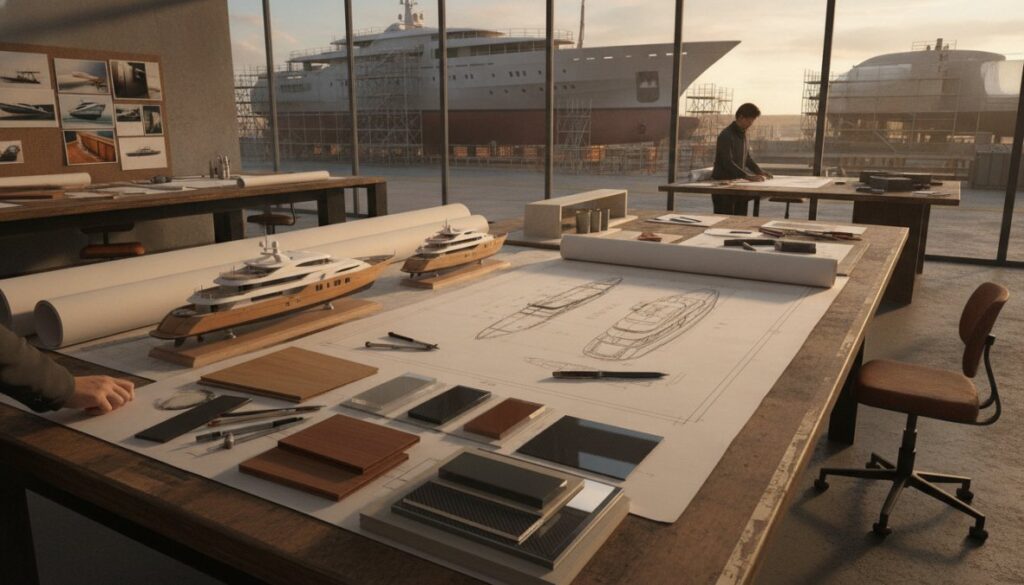
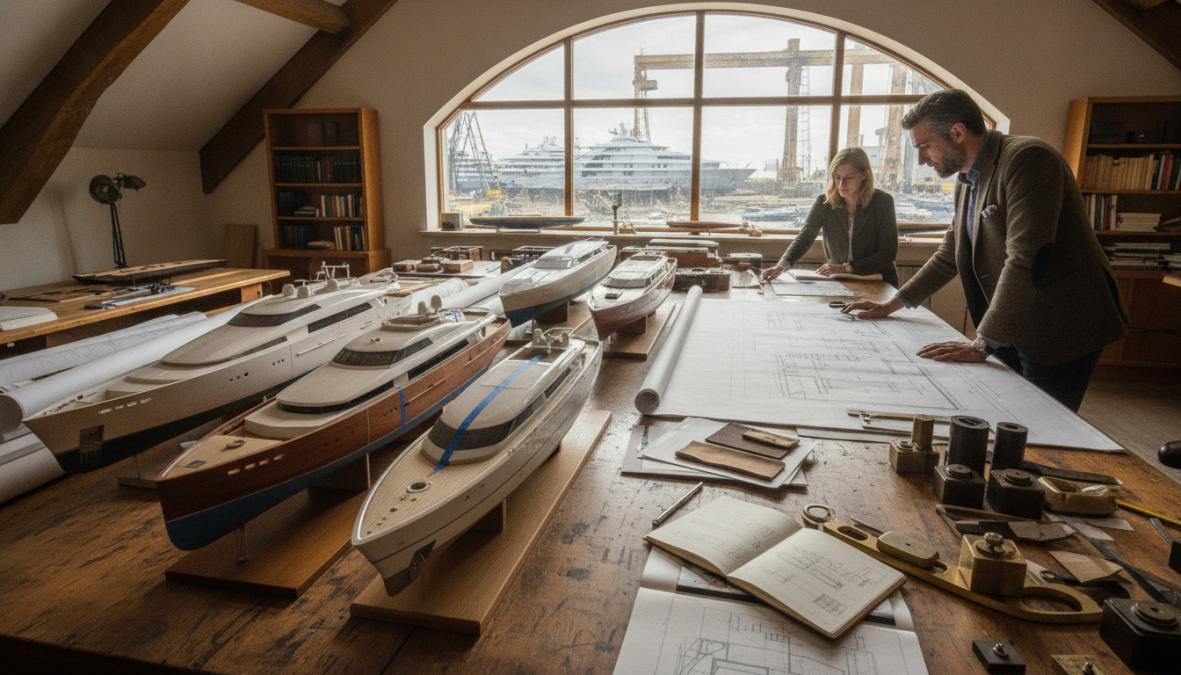
Concept design establishes the visual and functional direction for your new build yacht design. The design studio creates multiple preliminary concepts exploring different hull forms, deck arrangements, and superstructure profiles.
3D rendering reveals design intentions in ways technical drawings cannot. Rather than reviewing 2D drawings, you see photorealistic renderings showing how your yacht will look from every angle and how light interacts with the exterior. Concept design typically explores 3-5 distinct directions, each emphasizing different priorities: aggressive modern aesthetics, open deck space for entertaining, or optimized interior volume and cruising range. This phase typically requires 8-12 weeks and involves numerous iterations as you request modifications.
Technical Specifications and Hull Design
Once concept design receives approval, the design studio develops detailed technical specifications that transform aesthetic vision into engineering reality.
Hull design becomes granular. The naval architect refines the waterline shape, optimizes the bow entry, designs the stern configuration, and calculates hydrodynamic performance. They determine whether the hull will be displacement, semi-displacement, or planing.
The design studio specifies composite materials and structural systems. Modern superyachts typically use carbon fiber, fiberglass, and aramid composites in strategic locations. Technical specifications also address systems integration: engine room location, fuel and water system routing, electrical panel placement, and propulsion equipment mounting.
During this phase, preliminary regulatory analysis occurs. The design team confirms compliance pathways with classification societies that will certify your vessel.
New Build Yacht Timeline: What to Expect
Understanding the realistic timeline for new build yacht design and construction helps you plan accordingly.
Pre-Construction Planning and Approvals
Before any material reaches the shipyard, substantial planning occurs over 12-18 months. Design finalization involves completing all technical drawings, specifications, and engineering documentation. Regulatory approvals run parallel to design completion, with classification societies and flag state authorities reviewing your design against their rules.
Procurement begins during this phase. Long-lead items, engines, generators, navigation systems, often require 6-12 months lead time. Owner’s representative selection occurs during this period; this professional acts as your advocate at the shipyard.
Construction Phases and Milestones
The actual construction phase typically spans 24-36 months for a superyacht. Modern shipyards employ modular construction, building major sections simultaneously rather than sequentially.
Hull construction begins with workers laying up composite materials in molds. Parallel to hull construction, the team builds major structural components and systems. Once the hull reaches structural completion, outfitting begins, transforming raw spaces into finished staterooms and crew areas.
Major milestones punctuate construction: keel laying, hull closure, launch, trials, and delivery.
Sea Trials and Final Delivery
Before you take possession, the vessel undergoes comprehensive sea trials. Every system is tested under operational conditions: engines run at various loads, navigation systems are verified, and propulsion efficiency is measured.
Sea trials typically last 5-10 days in controlled waters near the shipyard. Issues discovered during trials get addressed before final delivery. Final delivery involves formal handover with all documentation, as-built drawings, system manuals, and crew training.
Sea trials often reveal minor issues requiring attention. Budget for a 2-4 week period after sea trials for punch-list items and final adjustments.
Yacht Interior Design Trends and Space Planning
The interior represents where you’ll spend the majority of your time aboard. Contemporary yacht interior design balances aesthetics, functionality, and the unique constraints of maritime environments.
Contemporary Luxury Aesthetics
Modern superyacht interiors have shifted toward minimalist elegance and clean lines. Neutral color palettes, soft grays, warm whites, and natural wood tones, create serene environments and allow artwork and views to become focal points.
Materials showcase natural beauty rather than applied ornamentation. Walnut, oak, and teak woods appear in their natural states. Stone surfaces replace veneers. Lighting design plays a crucial role, with hidden LED systems creating ambient effects with adjustable color temperature. Open-plan layouts create a sense of spaciousness.
Functional Layout and Owner’s Preferences
Interior design ultimately serves functional requirements. An owner who entertains extensively needs generous saloon and dining spaces, multiple guest staterooms, and invisible crew areas. An owner focused on extended cruising prioritizes efficient galley design and strong provisioning storage.
Space planning requires understanding traffic patterns and ensuring the galley operates efficiently without crew crossing through social spaces. The owner’s suite deserves particular attention, offering a private retreat with generous bed dimensions and spa-like ensuite bathrooms. Guest accommodations should balance comfort with efficiency.
Sustainable Yacht Design Features and Innovation
Environmental consciousness increasingly influences new build yacht design. Modern yachts incorporate sustainability features that reduce fuel consumption, minimize emissions, and lower operational impact.
Eco-Friendly Materials and Composite Construction
Composite materials offer significant environmental advantages over traditional steel or aluminum construction. Composites are lighter, reducing fuel consumption throughout the vessel’s operational life, a 500-ton composite hull versus equivalent steel saves roughly 20% in fuel consumption.
Modern shipyards employ closed-mold construction techniques that capture volatile organic compounds. Water-based resin systems replace solvent-based formulations. Material sourcing reflects growing environmental awareness, with sustainable forestry certifications and recycled content increasingly appearing in composite structures.
Advanced Propulsion and Energy Systems
Hybrid propulsion systems combine diesel engines with electric motors and battery banks. During low-speed cruising, electric motors provide propulsion while engines remain off, producing zero emissions. This approach reduces fuel consumption by 30-40% for vessels spending significant time at low speeds.
Advanced hull designs optimize hydrodynamic efficiency through computational fluid dynamics. Energy management systems monitor and optimize power consumption across all vessel systems. Renewable energy integration, solar panels and wind generators, increasingly appears in new designs, reducing reliance on generators.
When evaluating propulsion options for your new build yacht design, compare total fuel consumption across your anticipated operating profile. A hybrid system saves fuel on a vessel cruising at 8-10 knots but provides minimal benefit on a vessel operating primarily at higher speeds.
Selecting Your Shipyard and Design Partner
Choosing the right shipyard and design partner fundamentally determines your project’s success.
Evaluating Shipyard Credentials and Portfolio
A shipyard’s track record provides the most reliable indicator of future performance. Review their portfolio of completed vessels and examine their recent delivery history. References from previous owners provide invaluable perspective.
Certifications matter. Classification society approvals indicate that the yard meets international standards for construction quality and safety. Facility capabilities determine what the yard can execute; modern composite construction requires specialized equipment and experienced technicians.
Financial stability matters. A shipyard experiencing financial difficulty may cut corners or delay projects. When evaluating potential Yacht Builders, ensure they have established credentials and a proven track record of successful deliveries.
The Importance of an Owner’s Representative
An owner’s representative serves as your advocate at the shipyard, attending progress meetings, inspecting work quality, and ensuring the vessel meets specifications. This professional role proves invaluable, particularly on international projects where language barriers or time zone differences complicate direct oversight.
A qualified owner’s representative understands yacht construction, recognizes quality issues, and manages communication between you and the shipyard, ensuring decisions get made promptly.
Regulatory Compliance and Maritime Standards
Your new build yacht design must comply with numerous regulatory frameworks established to ensure safety, environmental protection, and operational standards.
Classification societies establish primary technical standards. Lloyd’s Register, Det Norske Veritas, and the American Bureau of Shipping maintain comprehensive rules governing hull construction, structural integrity, stability, propulsion systems, electrical installations, and fire safety.
Flag state regulations impose additional requirements based on where your yacht will be registered. International maritime conventions establish minimum standards across all flag states. The International Convention for the Safety of Life at Sea (SOLAS) mandates safety equipment and fire protection. The International Convention for the Prevention of Pollution from Ships (MARPOL) establishes environmental protection standards.
Your naval architect and shipyard manage regulatory compliance throughout the design and construction process.
Total Cost of Ownership in New Build Planning
While construction cost represents the largest initial investment, total cost of ownership encompasses all expenses associated with vessel operation over its lifetime.
Operating costs include fuel consumption, crew wages, insurance, maintenance, and provisioning. A superyacht might consume 50-150 gallons of fuel per hour depending on size and speed. Maintenance costs accumulate throughout ownership with annual haul-outs, engine overhauls, and system servicing.
When evaluating new build yacht design options, consider the operational implications of your design choices. A more efficient hull reduces fuel consumption, lowering annual operating costs. A hybrid propulsion system offers similar benefits. Strong construction materials may cost more initially but reduce maintenance expenses over time.
Navigating the Path Forward
Commissioning a new build yacht design represents a substantial commitment of time, resources, and vision. The most successful projects share common characteristics: clear initial vision, realistic timelines and budgets, experienced design and construction partners, and consistent owner engagement throughout the process.
Your yacht ultimately reflects your lifestyle and priorities. Whether you envision an explorer yacht for remote cruising, a superyacht for Mediterranean entertaining, or a specialized vessel for scientific research, the new build yacht design process offers the opportunity to create something genuinely yours.
The journey from concept to delivery spans years and involves hundreds of decisions. Yet when you step aboard your completed vessel for the first time and experience the comfort and performance your design delivers, the investment proves worthwhile. For those interested in exploring existing vessels while your new build is under construction, [Yacht Charter](https://palmlifestyle.ae/yacht-charter/) options provide an excellent way to experience different yacht styles and refine your preferences before finalizing your design.
The Palm Lifestyle team specializes in connecting discerning clients with premier shipyards and experienced design partners worldwide. Whether you’re exploring new build yacht design for the first time or refining concepts for your next project, our network and expertise simplify the process. Connect with our team to discuss your new build yacht design vision. We’re committed to transforming your maritime aspirations into reality through seamless, professional guidance at every stage of the journey.
Frequently Asked Questions
How long does it take to design and build a new build yacht?
The timeline for new build yacht design and construction typically spans 2-5 years, depending on vessel size, complexity, and customization level. Pre-design phases (concept, naval architecture, regulatory approvals) usually take 6-12 months. Construction itself ranges from 18-48 months. Factors like custom interior design, advanced propulsion systems, and composite material specifications can extend the schedule. Engaging an owner's representative early helps streamline approvals and maintain momentum.
What is the custom yacht design process and what are the main stages?
The custom yacht design process begins with concept development, where your vision is translated into preliminary sketches and 3D renderings. Next comes detailed naval architecture, including hull design, displacement calculations, and technical specifications. Interior design and space planning follow, addressing owner preferences and functional requirements. Once designs are finalized, the shipyard begins construction with staged approvals. Finally, sea trials validate performance before delivery. An experienced design studio coordinates all phases to ensure your bespoke vessel meets expectations.
What are the latest sustainable yacht design features?
Modern sustainable yacht design emphasizes eco-friendly materials like composite construction, which reduces weight and fuel consumption. Advanced propulsion systems, including hybrid engines, electric auxiliary power, and solar panel integration, minimize environmental impact. Sustainable designs also incorporate efficient hull shapes that reduce drag, advanced wastewater treatment systems, and energy-efficient HVAC and lighting. These features align with maritime regulations while lowering operational costs and environmental footprint, making them increasingly standard in new build specifications.
How do I choose a naval architect and shipyard for my new build yacht?
Select a naval architect with proven expertise in your desired vessel type and size. Review their portfolio of completed projects, certifications, and industry reputation. For shipyard selection, evaluate their construction capabilities, quality standards, maritime compliance record, and experience with custom builds. Request references from previous owners and consider hiring an owner's representative to oversee the project. This independent advisor ensures your interests are protected throughout design and construction, managing timelines, budgets, and technical specifications.
This article was written using GrandRanker
