
Table of Contents
Why Choose a Motor Yacht for Charter Over Other Vessel Types
Yacht Charter Itinerary Planning: Crafting Your Perfect Voyage
Last Updated: June 6, 2026
Choosing a motor yacht for charter is one of the most consequential decisions you’ll make for a luxury vacation at sea. At Palm Lifestyle, we work with discerning clients across the Middle East and worldwide to match them with the right vessel, crew, and itinerary. A motor yacht for charter offers speed, stability, and interior volume that transforms a week at sea into a genuinely bespoke experience. Below, we’ll show you how to choose the right vessel type, plan your itinerary, understand what’s included in your charter price, and avoid the hidden costs that catch first-time charterers off guard.
Why Choose a Motor Yacht for Charter Over Other Vessel Types
A motor yacht for charter is the right choice when comfort, range, and onboard amenities take priority over the sailing experience itself. Motor yachts deliver higher cruising speeds, typically 10 to 30+ knots, which means you cover more ground per day and spend less time in transit. For guests who want to visit multiple destinations across a week, that speed advantage is decisive.
Motor Yacht vs. Sailing Yacht vs. Catamaran: Key Differences
The real difference between vessel types comes down to what you want to feel during your charter. Sailing yachts offer a wind-driven experience but sacrifice interior volume and speed. Catamarans provide exceptional stability and shallow-draft access, popular in the Caribbean. Motor yachts prioritize interior living space, speed, and professional crew service.
Vessel Type | Typical Speed | Interior Volume | Best For | Stability |
|---|---|---|---|---|
Motor Yacht | 10-30+ knots | High | Comfort, range, amenities | Excellent |
Sailing Yacht | 6-10 knots | Moderate | Sailing experience, romance | Moderate |
Catamaran | 8-14 knots | High | Shallow anchorages, families | Very High |
Expedition Yacht | 10-15 knots | Very High | Remote destinations, adventure | Excellent |
A common mistake is choosing a sailing yacht for a Mediterranean itinerary where you want to cover significant distances. The math rarely works in your favor.
Superyacht and Megayacht Options: When Size Matters
Superyacht refers to vessels above 24 meters; megayacht typically means those exceeding 60 meters. Size determines guest capacity, stateroom count, amenities, and crew-to-guest ratio. A 40-meter motor yacht comfortably accommodates 10 guests with a crew of six to eight. A megayacht above 60 meters can carry 12 or more guests with a crew of 15+, offering gyms, beach clubs, and dedicated watertoys storage.
The MYBA (Mediterranean Yacht Brokers Association) sets the industry standard for charter contracts and crew certification. Booking through a MYBA-adherent broker provides contractual protections that informal arrangements do not.
Top Motor Yacht Charter Destinations for 2026
The best motor yacht charter destinations in 2026 combine natural beauty, superyacht infrastructure, and enough variety to fill a week without repetition. Two regions dominate: the Mediterranean and the Caribbean.
Mediterranean: The Gold Standard of Luxury Cruising
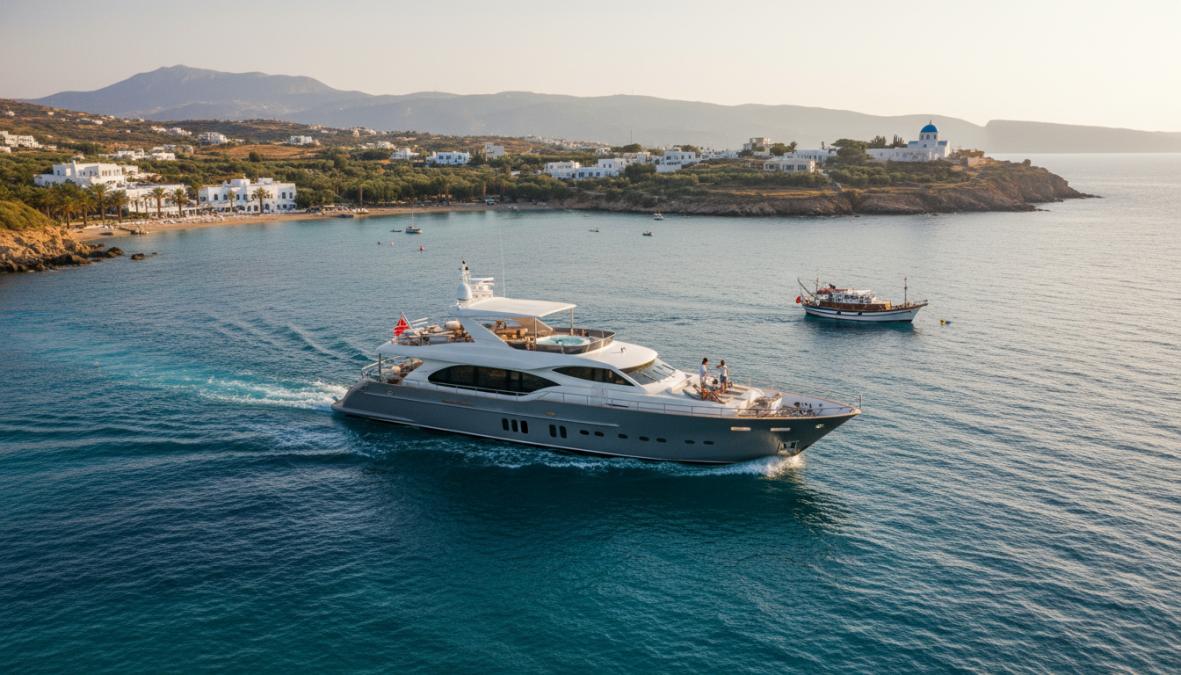
The Mediterranean is the world’s most popular cruising destination for private charter. Historical ports, Michelin-starred restaurants accessible by tender, and reliable summer weather make it the default choice for a first luxury charter. The French Riviera, Amalfi Coast, Greek Islands, and Croatian archipelago each offer distinct character within a single region. Turkey’s Aegean coast remains an underrated alternative, offering comparable scenery at lower marina costs.
Caribbean and Beyond: Exotic Alternatives Worth Considering
The British Virgin Islands, St. Barts, and the Grenadines represent the core Caribbean charter circuit. The BVI has infrastructure purpose-built for superyacht charters: protected anchorages, provisioning services, and a regulatory environment that simplifies booking. For clients seeking more remote destinations, the Maldives, Thailand’s Andaman Sea, and the Red Sea offer genuinely different experiences. Expedition yachts with ice-class hulls open up Norway’s fjords and polar itineraries.
Luxury Yacht Charter Cost: What to Budget for Your Voyage
The weekly rate is the headline number, but the all-in cost typically runs 30-40% higher once additional expenses are factored in.
Weekly Rate Ranges by Yacht Length and Category
Weekly rates vary by yacht length, season, and destination. The table below reflects general market ranges for the 2026 Mediterranean season.
Yacht Length | Category | Low Season Weekly Rate | Peak Season Weekly Rate |
|---|---|---|---|
24-30m | Motor Yacht | From €15,000 | From €25,000 |
30-40m | Motor Superyacht | From €35,000 | From €65,000 |
40-55m | Large Superyacht | From €75,000 | From €150,000 |
55m+ | Megayacht | From €200,000 | €500,000+ |
These are base charter fees only. A Feadship or similarly prestigious build commands a premium reflecting refit investment and operational standard.
Hidden Fees and the APA Explained
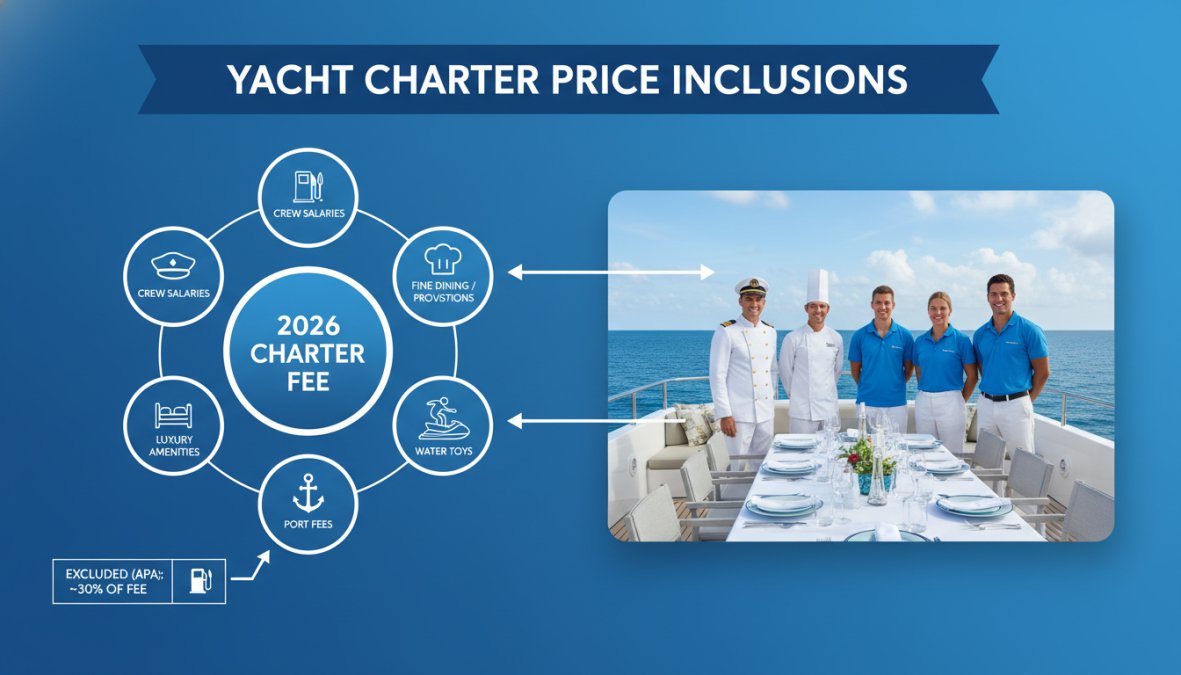
The APA (Advance Provisioning Allowance) is the most misunderstood element of yacht charter cost. It’s a prepaid fund, typically 25-35% of the base charter fee, covering all operational expenses: fuel, provisioning, marina fees, port taxes, and crew gratuity. A motor yacht running at 20+ knots burns significantly more fuel than a sailing yacht, so expect fuel to consume the majority of your APA on passage-heavy itineraries. Unused APA is refunded at charter end; overages are settled then.
Other expenses to budget for:
VAT (varies by flag state and destination, typically 5-20%)
Crew gratuity (industry standard: 10-15% of base charter fee)
Communication and internet packages
Special provisioning requests beyond standard menus
What Is Included in a Yacht Charter Price
The base charter fee covers the vessel and professional crew for the duration of your charter. Food, beverages, fuel, and port fees typically fall outside the base rate unless the charter is offered on an “all-inclusive” basis, which is more common in the Caribbean than the Mediterranean.
Professional Crew, Onboard Service, and Watertoys
A crewed yacht charter includes an elite captain, first officer, chef, stewardesses, and deck crew. Crew size scales with yacht length: a 35-meter vessel typically carries five to seven crew. The crew-to-guest ratio on premium charters often exceeds 1:1.
Watertoys are standard on most motor yachts above 30 meters and typically include jet skis, paddleboards, snorkeling gear, and kayaks. Many larger superyachts carry submersibles, seabobs, and foiling equipment. Confirm the watertoys inventory before booking.
Exquisite Cuisine and Bespoke Amenities
The onboard chef is one of the most underrated elements of a luxury charter. Most chefs on superyachts have trained in Michelin-starred kitchens. Before departure, you’ll complete a preference sheet covering dietary requirements, favorite cuisines, preferred wines, and special occasions, the chef builds your provisioning list from this. Bespoke amenities extend further: personalized welcome arrangements, custom cocktail menus, and shore excursion coordination. The distinction between a standard charter and a truly bespoke experience comes down to how thoroughly your broker and crew have been briefed before you board.
Yacht Charter Itinerary Planning: Crafting Your Perfect Voyage
The instinct is to pack as many destinations as possible into a week. The reality is that the best itineraries leave room for spontaneity. A well-structured seven-night Mediterranean itinerary typically covers four to six destinations, mixing active port towns with quiet anchorages. Your elite captain’s local knowledge, the sheltered anchorage when the meltemi picks up, the beach restaurant requiring advance reservation, is irreplaceable.
The Palm Lifestyle team builds itineraries from first principles, starting with your priorities: cultural immersion, beach time, nightlife, or remote exploration.
Practical itinerary planning steps:
Define your embarkation and disembarkation ports (these affect yacht positioning fees)
Identify two or three “must-visit” destinations and let the rest flex
Confirm whether preferred destinations require advance marina reservations
Discuss fuel range with your broker to ensure the itinerary is realistic
Build in at least one full anchor day with no scheduled movements
How to Work With a Yacht Charter Broker or Consultant
A broker’s value is not just access to listings, it’s matching your specific requirements to the right vessel and crew. According to Boat International’s guide to choosing a yacht charter broker, the best brokers maintain relationships with specific vessels and crews over years, giving them insight no database search can replicate.
What a good charter broker does:
Conducts a detailed needs assessment covering group size, budget, dates, and preferences
Provides personalized recommendations with honest assessments of each vessel’s strengths and limitations
Negotiates charter terms and reviews the MYBA contract on your behalf
Coordinates with the captain and crew on preference sheets and itinerary
Remains available throughout the charter for any issues that arise
Ask directly: how many charters have you arranged on this specific vessel? The answer tells you a great deal about whether you’re dealing with a volume broker or a genuine consultant.
Legal, Insurance, and First-Time Charterer Essentials
The legal and insurance framework around private yacht charter varies significantly by flag state, charter destination, and vessel size.
Do You Need a License? Legal Nuances Explained
For a crewed yacht charter, you do not need a boating license. The elite captain holds all required certifications and the vessel operates under commercial maritime law. Legal nuances become relevant in specific situations:
Bareboat charters require the charterer to hold appropriate qualifications, typically an RYA or IYT certification
VAT and tax treatment varies by destination: EU waters typically incur VAT, while some non-EU destinations offer more favorable treatment
Insurance: The vessel carries hull and P&I (Protection and Indemnity) insurance. Verify coverage limits and whether personal liability is included; some brokers recommend a separate charterer’s liability policy.
As documented in Maritime and Coastguard Agency’s guidance on commercial yacht operations, commercial charter vessels in UK and EU waters must meet specific safety certification standards under the MCA or equivalent authority.
First-Time Charterer’s Checklist
Define your group size, budget range, and preferred dates before contacting a broker
Confirm whether you want a Mediterranean or Caribbean charter (affects timing and vessel availability)
Request MYBA-standard charter contracts only
Review the APA estimate and ask for fuel consumption data on the specific vessel
Complete the preference sheet thoroughly: dietary needs, activity preferences, occasions
Confirm crew qualifications and ask for guest references or reviews
Verify what watertoys and tenders are included
Understand the cancellation and refund policy before signing
Check whether VAT applies to your charter and in which jurisdiction
Budget 10-15% of the base charter fee for crew gratuity
Sustainable and Eco-Friendly Motor Yacht Chartering
Sustainable yachting is no longer a niche concern, it’s becoming a standard part of the charter conversation. Several practical options exist for charterers who want to reduce their environmental impact:
Hybrid and electric propulsion: A growing segment of the fleet includes hybrid motor yachts that operate on electric power at low speeds and in sensitive marine environments, particularly valuable in protected areas like the Greek islands’ marine parks.
Shore power: When berthed in marinas, vessels equipped for shore power eliminate the need to run generators overnight. Ask specifically whether the yacht has this capability.
Provisioning choices: Requesting locally sourced provisioning reduces the charter’s carbon footprint and supports regional producers, many superyacht chefs prefer it for quality reasons anyway.
Destination choices: Avoiding overcrowded anchor zones and choosing less-trafficked itineraries reduces cumulative impact on marine ecosystems. Your captain’s local knowledge is the best resource here.
According to EYBA’s sustainability guidelines for charter operations, the charter industry is increasingly adopting standardized environmental certifications for vessels, making it easier for clients to identify genuinely sustainable options. The honest position: a motor yacht charter is not a low-impact vacation. But the choices you make within that framework can meaningfully reduce the footprint without compromising the experience.
Selecting the right motor yacht for charter involves more variables than any single search can resolve: vessel type, destination, crew quality, contract terms, and hidden costs all require expert guidance. Palm Lifestyle provides end-to-end charter management, from initial consultation and personalized recommendations to itinerary design and legal coordination, backed by direct access to a worldwide fleet of premium vessels. Get in touch with Palm Lifestyle to discuss your charter requirements and receive a curated selection matched to your exact preferences.
Frequently Asked Questions
How much does it cost to charter a motor yacht?
The luxury yacht charter cost varies widely depending on yacht length, destination, and season. Smaller motor yachts (15–25m) typically start from around $10,000–$25,000 per week, while larger superyachts and megayachts can command $100,000 or more per week. Beyond the weekly rate, budget an additional 30–40% for the Advance Provisioning Allowance (APA), which covers fuel, port fees, provisions, and crew gratuity.
What is included in a motor yacht charter price?
A standard motor yacht charter price includes the vessel itself, a professional crewed yacht with an elite captain, all staterooms, onboard service, and typically watertoys and basic amenities. What is included in the yacht charter price does not usually cover fuel, food and beverages, port fees, or crew gratuity — these are paid through the APA. Some charters offer 'all-inclusive' packages, so always confirm with your charter broker before booking.
Do I need a license to charter a motor yacht with a crew?
No license is required when you charter a crewed motor yacht — the professional crew handles all navigation and vessel operation. A license is only necessary if you intend to bareboat charter, meaning you skipper the yacht yourself. For most luxury private charters through a reputable brokerage, a fully crewed experience is standard, making it accessible to first-time charterers regardless of sailing experience.
How far in advance should I book a motor yacht for charter?
For peak season destinations like the Mediterranean in July and August or the Caribbean over the holidays, booking 6–12 months in advance is strongly recommended to secure your preferred vessel. For shoulder seasons or more flexible itineraries, 3–6 months is generally sufficient. Last-minute availability does occasionally exist, but the best yachts from a global fleet are reserved early. Working with a charter consultant ensures you get personalized recommendations within your timeline.
What are the most popular motor yacht charter destinations?
The Mediterranean remains the premier motor yacht charter destination, with the French Riviera, Greek islands, Croatia, and Italy consistently topping demand. The Caribbean — particularly the British Virgin Islands, St. Barts, and the Bahamas — is the leading winter alternative. Emerging motor yacht charter destinations include the Red Sea, the Arabian Gulf, and Southeast Asia, offering bespoke experiences for clients seeking less-charted cruising grounds.
What is the difference between a motor yacht and a sailing yacht for charter?
A motor yacht relies primarily on engine power, offering greater speed, stability, and range — ideal for covering multiple destinations in a single itinerary. Sailing yachts use wind power and appeal to those seeking a more traditional, immersive experience. Motor yachts typically offer more interior space and luxury amenities for the same yacht length, making them the preferred choice for guests prioritizing onboard comfort, exquisite cuisine, and effortless cruising.