
Table of Contents
Last Updated: June 11, 2026
The Essential Steps to Sell a Luxury Yacht Successfully
The steps to sell a luxury yacht are more complex than most owners anticipate, and the difference between a smooth transaction and a drawn-out, underpriced sale often comes down to preparation. This guide from Palm Lifestyle covers every stage of the process, from setting realistic goals to closing the deal with full legal clarity. Selling a premium vessel in 2026 means competing in a global brokerage market where informed buyers have access to extensive listing platforms and comparable sales data.
Several steps run in parallel, and missing one early stage can stall the entire process months later. Below, we walk through the complete process, including angles most guides overlook: tax implications, hidden costs, valuation differences by vessel type, and how to use interactive tools to sharpen your negotiating position.
Step 1: Define Your Selling Goals and Timeline
Before listing, be clear about what success looks like. Your motivation shapes your pricing strategy: an owner who needs to sell within 90 days should price differently from one who can wait for the right buyer. Define your minimum acceptable price, preferred timeline, and whether you’re open to international buyers, these decisions determine which brokerage markets you target and how aggressively you market the vessel.
Step 2: Gather Yacht Specifications and Maintenance Records
Incomplete documentation is one of the most common reasons deals fall apart after initial interest. Compile the following before your vessel goes live:
Full yacht specifications (LOA, beam, draft, displacement, engine hours)
Yacht maintenance records covering at least the last five years
Class certificates and survey history
Insurance documentation
Registration papers and flag state certificates
Refit and upgrade records with receipts
Thorough yacht maintenance records do more than reassure buyers, they directly support your asking price during negotiation.
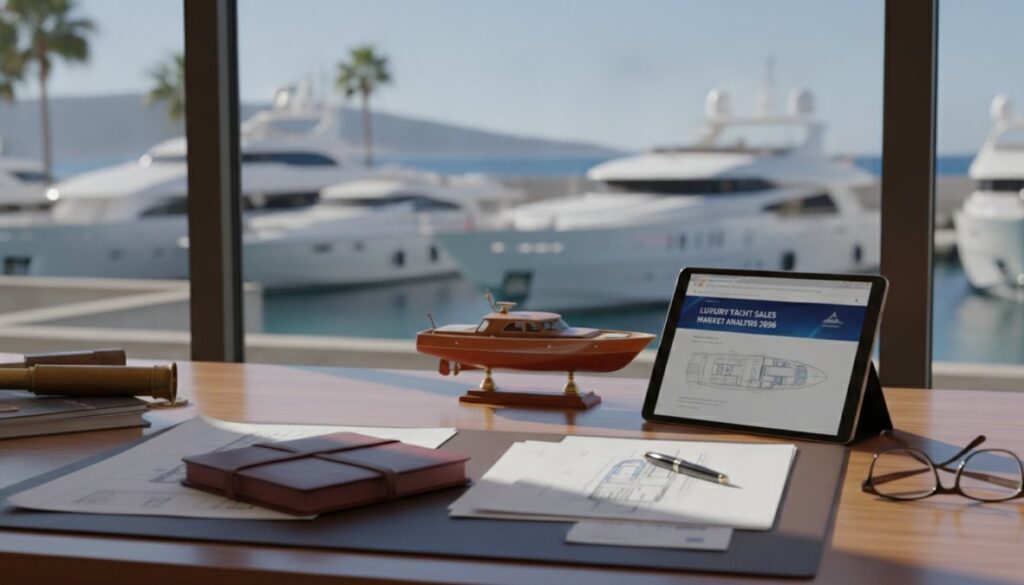
Step 3: Set a Realistic Asking Price Through Market Analysis
Pricing is where most private sellers lose money. Sophisticated buyers will immediately compare your listing against comparable sales. Work with a marine industry expert to conduct a formal market analysis before you set a number. According to the International Yacht Brokers Association’s guidance on vessel valuation, professional appraisals that account for current brokerage market trends, vessel condition, and recent comparable sales consistently result in faster transactions and stronger final prices than owner-estimated asking prices.
Factors That Influence Your Yacht’s Market Value
Market value for a luxury vessel shifts based on physical condition, market timing, and how the vessel compares to active inventory on major yacht listing platforms.
Vessel Condition, Age, and Depreciation
A well-maintained 10-year-old motor yacht with documented service history and a recent refit can hold its value far better than a newer vessel with neglected systems. The condition report produced during a formal yacht survey will quantify what buyers and their surveyors will find, proactively addressing issues before listing prevents price renegotiation after the sea trial, one of the most common ways sellers lose equity late in the process.
Key condition factors that affect market value include:
Engine hours relative to manufacturer service intervals
Hull condition (osmotic blistering, antifouling history)
Electronics and navigation system age
Interior wear and soft furnishing condition
Generator and watermaker service records
Valuation Differences by Vessel Type
Asset valuation methodology differs meaningfully across vessel categories. Motor yachts depreciate more predictably but are heavily influenced by engine hours and fuel system condition. Sailing yachts retain value differently, with rigging age and sail inventory carrying significant weight. Superyachts over 24 metres operate in a thinner market where charter revenue history and flag state registration affect perceived value. Catamarans have seen strong demand in recent years, compressing depreciation curves compared to monohull equivalents.
Work with a broker who has direct experience in your specific vessel category, a specialist in sailing yachts may not be the right advisor for a 30-metre motor yacht.
Understanding Yacht Brokerage Commission Rates
Yacht brokerage commission rates are typically a percentage of the final sale price, paid by the seller at closing. The standard rate in the international brokerage market generally falls between 8 and 10 percent for central agency agreements, varying by vessel size, market, and scope of services.
Hidden Costs of Selling You Should Budget For
The brokerage commission is visible. What catches sellers off guard are the surrounding costs:
Cost Item | Typical Timing | Notes |
|---|---|---|
Pre-listing yacht survey | Before listing | Identifies issues before buyers find them |
Repairs and detailing | Before listing | Directly affects asking price |
Professional photography | At listing | Non-negotiable for premium listings |
Sea trial fuel and crew | During sale process | Often seller’s responsibility |
Capital gains or transfer taxes | At closing | Jurisdiction-dependent |
Flag state de-registration fees | At closing | Varies by registry |
Outstanding marina fees | At closing | Must be cleared before title transfer |
The Yacht Survey and Sea Trial Process Explained
The yacht survey and sea trial process is where deals are most likely to be renegotiated or cancelled. A buyer will typically commission an independent marine surveyor once a purchase agreement is signed and a deposit placed. The surveyor inspects the vessel out of the water, reviews all systems, and produces a condition report. The sea trial follows, with the buyer, their surveyor, and often a trusted captain verifying engine performance, navigation systems, and handling.
As documented in guidance from the Society of Accredited Marine Surveyors on pre-purchase inspections, sellers who commission their own pre-listing survey and address deficiencies before going to market face significantly fewer post-survey renegotiations.
Prepare for the sea trial by ensuring all systems are operational, fuel tanks are adequately filled, and the vessel is professionally presented. This is not the moment to discover the port engine has a temperature issue.
Your Yacht Sale Documentation Checklist
The yacht sale documentation checklist below covers standard requirements for an international transaction. Specific requirements vary by flag state and the buyer’s jurisdiction.
Proof of ownership (Certificate of Registry or equivalent)
Bill of Sale (executed by seller and buyer)
Deletion certificate from current flag state (if re-flagging)
VAT status documentation (EU sales require clear VAT paid or exempt status)
Mortgage or lien release documentation
Current insurance certificate
Class survey certificates (if applicable)
Engine and equipment warranties (transferable where applicable)
Crew employment records (for vessels with employed crew)
Tax and Legal Implications of a Yacht Sale
The tax treatment of a yacht sale depends on the seller’s country of residence, the vessel’s flag state, where the transaction takes place, and whether the vessel has been used commercially. In many jurisdictions, a sale may trigger capital gains tax on the difference between purchase and sale price. In others, unclear VAT status can create significant obligations at closing.
According to the European Commission’s guidance on VAT treatment of pleasure craft, vessels used for charter within EU waters may carry complex VAT obligations that affect both the sale price and the buyer’s ability to operate the vessel post-purchase.
Engage a maritime lawyer before listing, not after accepting an offer. Legal issues discovered at the closing stage are expensive to resolve and can collapse transactions entirely.
How Long Does It Take to Sell a Yacht?
Selling a yacht typically takes between three and twelve months from listing to closing, with significant variation based on vessel size, asking price, market conditions, and listing quality. Smaller production yachts in the 10-20 metre range tend to move faster than large custom superyachts, which have a narrower pool of qualified buyers globally.
Time-on-Market Dynamics and Comparable Sales
A vessel listed for more than 12 months without a sale signals to experienced buyers that the asking price is too high, the condition is problematic, or the marketing has been inadequate. Comparable sales are the most reliable tool for setting and defending an asking price, a marine industry expert with access to closed transaction data can show you what vessels like yours actually sold for, not just what sellers hoped to achieve.
Active listings on major yacht world platforms represent asking prices, not market value. The gap between asking price and final sale price in the pre-owned market is often material, and understanding that gap is the difference between pricing strategically and pricing emotionally. Palm Lifestyle’s team monitors brokerage market trends across the GCC, Mediterranean, and global markets to provide sellers with real comparable sales data.
How to Prepare and Market Your Yacht for Maximum Exposure
Preparation and marketing are where the steps to sell a luxury yacht shift from administrative to strategic. A vessel that is immaculately presented, professionally photographed, and listed on the right platforms will attract more qualified inquiries and spend less time on the market.
(/le-duc-yacht-for-sale/) Maximum Exposure]
Staging, Photography, and Listing Platforms
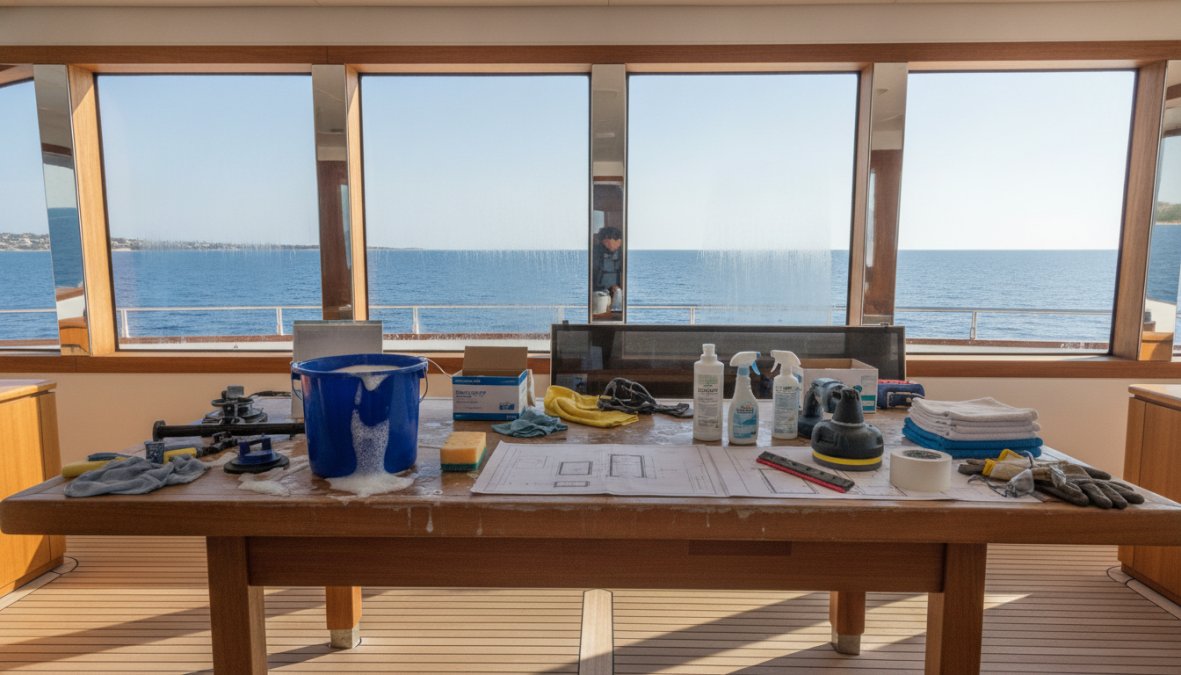
Professional photography is non-negotiable for premium vessels. Dark, cluttered, or poorly composed images signal a seller who is not serious and attract lowball offers or none at all. Staging means removing personal items, deep cleaning all surfaces, polishing brightwork, and ensuring the exterior is freshly washed. Many brokerages include photography within their central agency agreement; if yours does not, commission it independently.
For listing platform distribution, your broker should have active relationships with major international platforms and regional networks relevant to your target buyer. Reach in the GCC market, where acquisition activity has grown substantially, requires specific regional connections that not all international brokerages maintain.
Using Interactive Valuation Tools to Strengthen Negotiating Power
Interactive valuation calculators aggregate recent comparable sales, adjust for vessel age, condition, and specifications, and produce a defensible market value range. Using one before entering negotiation gives you a data-backed position: when a buyer presents a lowball offer, you can respond with documented comparable sales rather than an emotional defence of your asking price.
According to Boat Trader’s market analysis resources for vessel pricing, sellers who enter negotiations with documented comparable sales data consistently achieve closer-to-asking final prices than those who rely on intuition or a single broker’s verbal estimate. The Palm Lifestyle team provides sellers with a structured market analysis drawing on global brokerage transaction data to support pricing and negotiation strategy.
Common Mistakes to Avoid When Following the Steps to Sell a Luxury Yacht
Most errors sellers make are predictable and avoidable.
Overpricing based on emotional attachment. Buyers do not share your emotional context. Price based on market data, not sentiment.
Neglecting pre-listing maintenance. Deferred maintenance will be used by buyers to justify price reductions that are multiples of the actual repair cost.
Choosing a broker based on the highest valuation offered. Some brokers inflate their initial estimate to win the listing, then pressure the seller to reduce the price after months with no offers. Choose based on transaction history in your vessel category and market analysis methodology.
Ignoring the international buyer pool. Limiting marketing to a single regional market significantly reduces qualified inquiries, particularly for vessels above 20 metres. A globally connected brokerage will consistently outperform a local-only approach.
Failing to address documentation before listing. VAT status, mortgage clearance, and flag state registration issues should be resolved before the first buyer inquiry, not during the closing process.
Selling a luxury yacht without the right representation means navigating complex documentation, international tax obligations, and a competitive global market without a professional in your corner. Palm Lifestyle specialises in the strategic sale of premium vessels, offering professional yacht valuation, access to a worldwide buyer network, and comprehensive end-to-end support including legal procedures and financing coordination. Get in touch with Palm Lifestyle to discuss your vessel and start the sale process with a team that protects your equity at every stage.
Frequently Asked Questions
How long does it take to sell a luxury yacht?
The time it takes to sell a luxury yacht varies considerably based on vessel type, asking price, condition, and market demand. Smaller pre-owned yachts in good condition with competitive pricing can sell within a few months, while larger superyachts may remain listed for one to three years. Time-on-market is directly influenced by how accurately the asking price reflects current comparable sales and how effectively the yacht is marketed across major yacht listing platforms.
What documents are needed to sell a yacht?
A complete yacht sale documentation checklist typically includes the certificate of registry, bill of sale, VAT documentation, yacht survey reports, maintenance records, equipment inventories, and any outstanding finance or lien releases. If the vessel has been chartered commercially, charter logs and safety compliance certificates are also required. Having these documents organized in advance can significantly speed up the closing process and build buyer confidence during negotiations.
What are typical yacht brokerage commission rates?
Yacht brokerage commission rates generally range from 8% to 10% of the final sale price, though this can vary based on vessel size, market, and the scope of services provided. Some brokerages offer tiered structures for larger transactions. This fee covers professional valuation, strategic marketing, yacht listing platform placement, buyer qualification, negotiation, and management of the full legal and documentation process — making it a worthwhile investment for maximizing your return.
How is a luxury yacht valued for sale?
A luxury yacht's market value is determined through a combination of professional yacht appraisal, comparable sales analysis, vessel condition assessment, and current brokerage market trends. Key factors include the yacht's age, builder reputation, specifications, onboard systems, maintenance records, and recent refit history. Depreciation curves differ significantly by vessel type — motor yachts and sailing yachts follow different patterns. A qualified marine industry expert or yacht brokerage can provide a formal yacht condition report to establish a defensible asking price.
Should I stage my yacht before selling?
Yes — presentation directly impacts perceived value and time-on-market. Staging a luxury yacht involves professional deep cleaning, repairing minor cosmetic defects, updating soft furnishings where needed, and ensuring all systems are fully operational before viewings. Professional photography and video walkthroughs are essential for high-end listings. Buyers in the pre-owned yacht market expect immaculate presentation, and a well-staged vessel consistently commands stronger offers and shorter negotiation cycles.
What are the costs associated with selling a luxury yacht?
Beyond the brokerage commission, sellers should budget for a pre-sale yacht survey, sea trial costs, any recommended repairs identified during inspection, professional photography, marina fees during the listing period, and potential VAT or capital gains obligations depending on the jurisdiction. Legal fees for contract preparation and flag state documentation transfers are also common. These hidden costs of valuation and sale preparation can range from modest to significant depending on vessel size and condition.