

Table of Contents
Why Yacht Market Valuation for Sellers Determines Your Final Sale Price
Preparing a Yacht for Sale Checklist to Strengthen Your Valuation
Hidden Costs, Tax, and Legal Implications of Yacht Market Valuation for Sellers
Working with a Yacht Brokerage to Maximize Your Asking Price
Last Updated: June 10, 2026
Yacht market valuation for sellers is the process of determining the accurate, defensible market price of a vessel before listing it for sale. At Palm Lifestyle, the pattern is consistent across the GCC and internationally: sellers who invest in proper valuation before listing achieve better outcomes on every metric that matters. Below, we’ll show you exactly how to approach vessel pricing, what factors move the needle most, and where most sellers leave money on the table.
Most guides treat yacht pricing as a simple lookup exercise, check a few listings, find something similar, price accordingly. The problem is that asking prices and actual transaction prices are rarely the same, and the gap can be significant in the pre-owned market.
Why Yacht Market Valuation for Sellers Determines Your Final Sale Price
Price too high and you accumulate time-on-market, which signals distress to buyers and erodes negotiating power while keep paying the yacht running cost. Price too low and you forfeit equity that took years to build.
The recreational boating industry operates differently from real estate or automotive markets. Comparable sales data is fragmented across listing platforms, regional brokerages, and private transactions, there is no central registry publishing verified sale prices. This opacity benefits buyers who do their homework and disadvantages sellers who don’t. Market value is what a willing, informed buyer will actually pay in the current market; establishing that number requires active analysis, not passive guesswork.
The stakes are particularly high in the GCC, where vessel values are influenced by regional demand cycles, import duties, and a concentrated buyer pool.
Key Factors Affecting Yacht Resale Value
Several variables determine where a pre-owned yacht lands in the market.
Age and depreciation follow a predictable curve, most sharply in the first five years, then slowing, but are heavily influenced by brand reputation, build quality, and maintenance.
Vessel condition is the single most influential factor after age. A well-maintained ten-year-old yacht can command a higher price than a poorly maintained five-year-old one, encompassing hull integrity, engine hours, interior cosmetics, and electronics.
Yacht maintenance records prove condition. Buyers and their surveyors will request service logs, haul-out records, and repair history. Gaps in documentation create doubt, and doubt translates directly into lower offers or failed surveys.
Market demand fluctuates with economic conditions, fuel prices, and seasonal patterns. According to the International Council of Marine Industry Associations global report, demand for pre-owned vessels concentrates in specific seasonal windows that sellers should account for when timing their listing.
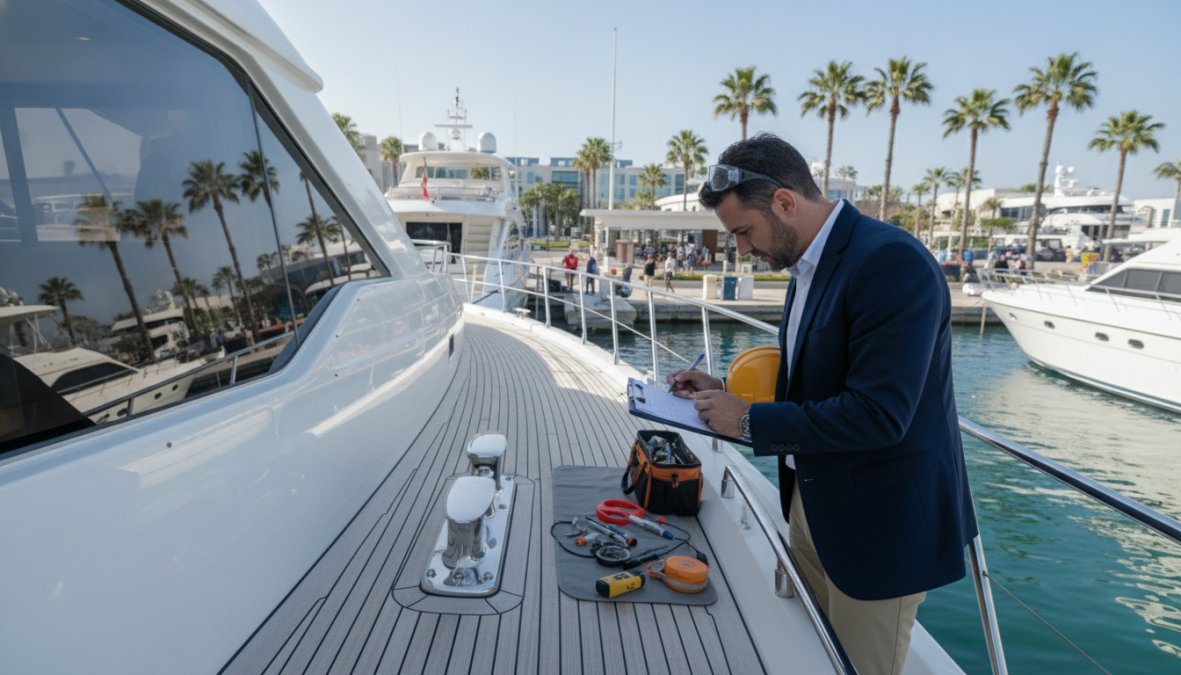
Vessel Condition, Age, and Maintenance Records
Buyers in the premium segment commission a professional yacht survey, and that survey either validates your asking price or undermines it. A yacht condition report surfacing deferred maintenance, osmotic blistering, or mechanical issues will be used aggressively in negotiation.
The practical implication: address known issues before listing, or price them in transparently. Sellers who disclose and price for known defects close faster than those who leave surprises for the survey to find. A complete service history from a reputable yard, documented engine services, antifouling cycles, system upgrades, materially supports a higher asking price and reduces buyer hesitation.
Valuation Differences by Vessel Type
Motor yachts, sailing yachts, superyachts, and explorer vessels each have distinct valuation dynamics.
Vessel Type | Key Value Drivers | Depreciation Pattern | Buyer Profile |
|---|---|---|---|
Motor Yacht (under 24m) | Engine hours, brand, condition | Steeper early depreciation | Regional leisure buyers |
Sailing Yacht | Rig condition, sails, electronics | Slower, more stable | Experienced sailors |
Superyacht (24m+) | Refit history, crew capacity, range, Country of build | Highly variable | UHNW international buyers |
Explorer/Expedition | Range, fuel capacity, build quality | Niche market, slower sales | Long-range cruising buyers |
Understanding which category your vessel falls into and who the realistic buyer pool is directly shapes how you position the asset and where you list it.
How to Price a Yacht for Sale Using Comparable Market Data
The most reliable pricing method is comparable sales analysis, examining recent transactions involving similar yachts and adjusting for differences in age, condition, specifications, and location. This requires access to actual transaction data, not just current listings. Reputable brokerages maintain transaction databases, and this is one of the primary reasons working with an experienced brokerage adds measurable value for sellers.
The adjustment process matters as much as the raw comparables. A yacht that sold in Northern Europe may not translate directly to the GCC market without accounting for import costs, local demand, and seasonal factors. A vessel with recent refit work commands a premium over an otherwise comparable yacht that hasn’t been updated.
Reading Comparable Sales and Time-on-Market Dynamics
Time-on-market is a signal, not just a statistic. A vessel listed for an extended period tells the market something, overpricing, a condition issue, or a motivated seller. Buyers track days-on-market on listing aggregators and use it accordingly.
The practical rule: if your vessel is not generating serious inquiries within 60 to 90 days at a realistic price, the price needs revisiting. Waiting longer rarely produces a better outcome. Comparable sales also reveal the typical discount from asking to final transaction price, often 5 to 15 percent in many segments, so your asking price should leave room to negotiate without falling below your target.
Market Trends Shaping Yacht Values in 2026
The pre-owned yacht market in 2026 is navigating a recalibration after years of elevated demand. Inventory has normalized, meaning buyers have more options and less urgency than during the supply-constrained period of 2021 to 2023. Pricing discipline is more important than ever. According to the NMMA annual recreational boating industry statistical report, transaction volumes and price trends are closely tied to consumer confidence and interest rate environments, both relevant context for 2026 decisions.
The GCC market shows continued strength in the 15 to 35 meter motor yacht segment, driven by regional lifestyle demand and growing international buyer interest in the UAE as a base, creating genuine opportunity for well-presented vessels in this category.
The Yacht Appraisal Process: What Sellers Need to Know
A formal yacht appraisal is a structured assessment conducted by a qualified marine industry expert, typically involving a physical inspection, documentation review, comparable market analysis, and a written valuation report. Beyond setting an asking price, appraisals are required for financing applications, insurance underwriting, legal disputes, estate settlements, and ownership transfers. In the GCC, where ownership structures and flag registrations add legal complexity, a formal appraisal provides a defensible paper trail.
The appraisal is distinct from the pre-purchase survey commissioned by the buyer. Sellers who commission their own pre-listing survey gain a significant advantage: they know what the buyer’s surveyor will find before negotiations begin.
Professional Marine Survey vs. Online Valuation Calculators
Online valuation calculators serve a useful purpose as a quick orientation tool, aggregating listing data and applying algorithmic adjustments to produce an estimated value range. For a rough order of magnitude, they provide a reasonable starting point.
The limitation is significant. Calculators cannot assess physical condition, verify maintenance records, account for recent upgrades, or reflect regional market dynamics like the GCC. They also work from asking prices rather than closed transactions, introducing systematic bias. A professional marine survey and formal appraisal from a qualified surveyor remains the gold standard, the cost is modest relative to the transaction value and its potential impact on sale price.
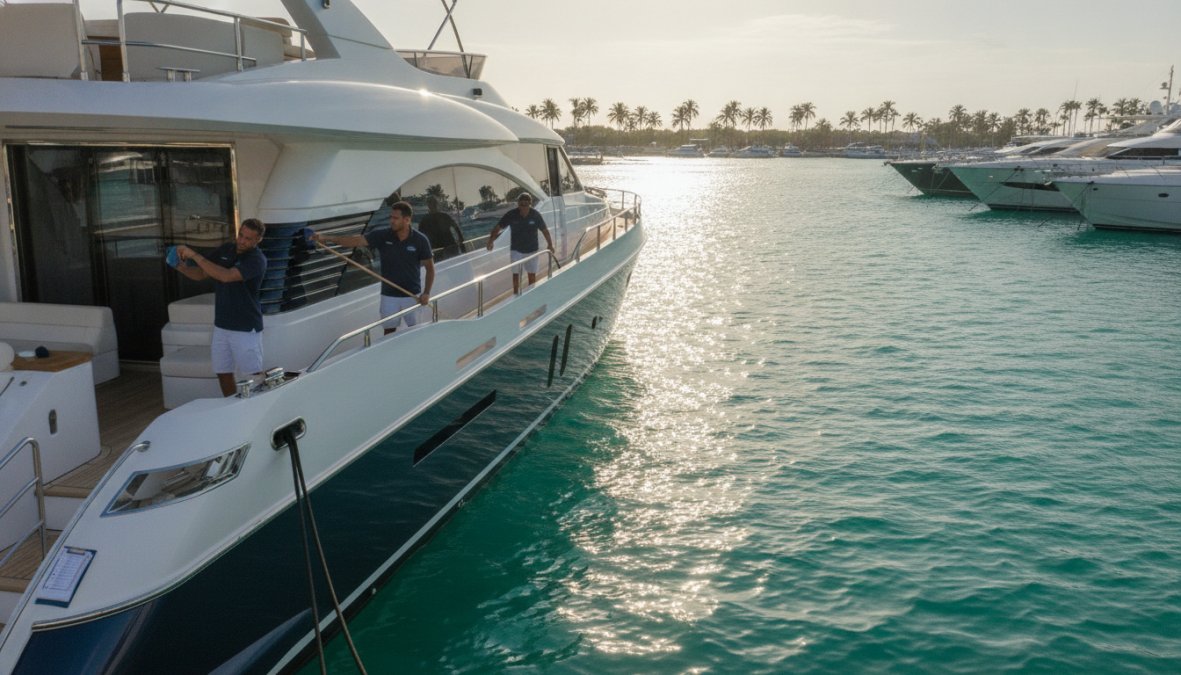
Preparing a Yacht for Sale Checklist to Strengthen Your Valuation
Presentation directly influences perceived value. A vessel that arrives at survey in excellent condition with complete documentation supports the asking price in a way a neglected vessel cannot.
Commission a pre-listing condition survey to identify issues before the buyer’s surveyor does
Complete all deferred maintenance items identified in the survey
Compile a complete maintenance record file: service logs, haul-out records, engine service history, and repair invoices
Ensure all safety equipment is current and certified (life rafts, EPIRBs, fire suppression systems)
Service all engines and generators; document the service with receipts
Detail the interior and exterior professionally
Verify that all navigation and electronics systems are operational
Confirm the vessel’s registration and flag state documentation is current
Prepare a complete inventory list of equipment and tender/toys included in the sale
Photograph the vessel professionally in favorable conditions for listing materials
(/ar/yachts-for-sale-jeddah-ar/) Checklist to Strengthen Your Valuation]
The goal is equity protection: ensuring the vessel presents at its genuine best so the valuation is not undermined by easily corrected deficiencies.
Hidden Costs, Tax, and Legal Implications of Yacht Market Valuation for Sellers
Yacht market valuation must account for the full cost structure of a transaction. Several costs reduce net proceeds significantly, and failing to model them leads to unpleasant surprises at closing.
Brokerage Commission and Transaction Fees
Brokerage commission typically ranges from 8 to 10 percent of the sale price in the mid-market segment, varying by vessel size, market, and negotiated terms, the largest single transaction cost for most sellers. Additional fees include escrow and closing costs, pre-listing survey costs, haul-out fees for the buyer’s survey, agreed post-survey repairs, and delivery costs if the vessel must be relocated.
Model these costs against your target net proceeds before setting an asking price. A vessel priced to achieve a certain gross figure may produce a materially different net result once transaction costs are accounted for.
Tax Considerations and Ownership Transfer in the GCC and Beyond
Tax treatment varies significantly by jurisdiction. In many European jurisdictions, VAT status is critical: a yacht with paid VAT commands a premium because the buyer avoids a substantial additional cost. In the GCC, the UAE and Saudi Arabia have implemented VAT frameworks applying to certain vessel transactions, with specifics depending on the transaction structure, flag state, and whether the sale is private or commercial. According to the UAE Federal Tax Authority guidance on VAT and maritime transactions, sellers should seek qualified legal and tax advice before structuring a transaction to ensure compliance and optimize net proceeds.
Ownership transfer documentation requirements also vary by flag state and buyer jurisdiction. Engage a maritime lawyer familiar with the relevant registries early in the process to avoid delays at closing.
Working with a Yacht Brokerage to Maximize Your Asking Price
The right brokerage relationship is not an expense; it is a multiplier on net sale proceeds. A brokerage with genuine market access, a qualified buyer database, and the analytical capability to price your vessel accurately will consistently outperform a DIY approach or a broker without regional expertise.
What to look for in a brokerage partner:
Access to closed transaction data, not just listing price databases
Regional market knowledge relevant to where your vessel is located and where your likely buyers are
A qualified buyer network that can be activated immediately upon listing
Professional marketing capability including photography, video, and placement on major yacht listing platforms
Legal and administrative support for ownership transfer, flag state documentation, and escrow management
Palm Lifestyle brings all of these capabilities to sellers in the GCC and internationally, with deep regional expertise in the UAE and Saudi Arabia markets, a global network of qualified buyers, and comprehensive end-to-end support from valuation through to ownership transfer. Ask any prospective broker for recent comparable closed transactions in your vessel category before signing a listing agreement.
Selling a yacht at the right price requires more than a listing and a hope. The valuation process, the preparation, the legal structuring, and the brokerage relationship all determine whether you protect your equity or give it away. Palm Lifestyle provides professional yacht valuation, strategic marketing, access to a worldwide qualified buyer network, and comprehensive legal and administrative support for sellers across the GCC and beyond. Get in touch with us to discuss your yachting needs and find out what your vessel is genuinely worth in the current market.
Frequently Asked Questions
How is a yacht's market value determined?
Yacht market valuation for sellers is determined by analyzing comparable sales of similar vessels, assessing the yacht's condition, age, specifications, and maintenance records, and reviewing current market demand. Depreciation, vessel type, and time-on-market data from yacht listing platforms also influence the final figure. A professional yacht survey combined with a brokerage market analysis typically produces the most accurate and defensible market value for sellers.
Do I need a professional marine survey to sell my yacht?
While not always legally required, a professional yacht survey is strongly recommended as part of the yacht appraisal process. It provides an independent, credible condition report that builds buyer confidence, supports your asking price, and can reduce negotiating pressure. Most serious buyers and their financiers will commission their own survey anyway, so having one ready in advance positions you as a transparent and prepared seller.
What factors decrease a yacht's resale value?
Key factors affecting yacht resale value include deferred maintenance, outdated onboard systems, cosmetic wear, incomplete service records, and high engine hours. Vessels with unclear ownership history or outstanding liens also suffer in valuation. Market-side factors such as oversupply of similar pre-owned yacht listings and weak recreational boating industry demand in a given season can further compress the price a seller can realistically achieve.
How long does it take to sell a yacht at market value?
Time-on-market varies significantly by vessel type, size, asking price, and prevailing brokerage market trends. Realistically priced yachts listed through reputable yacht brokerage channels often sell within 90 to 180 days. Overpriced listings can sit for a year or more, ultimately selling below market value after repeated reductions. Preparing the yacht thoroughly and pricing it accurately from the outset is the most reliable way to minimize time-on-market.
Is there a free online tool for yacht valuation?
Several yacht listing platforms and brokerage websites offer indicative online valuation calculators that use comparable sales data and vessel specifications to generate an estimated range. These tools are useful for initial benchmarking but should not replace a formal yacht appraisal process. For accurate asset valuation that supports negotiations and protects your equity, a professional marine survey and brokerage market analysis remain the gold standard.