
Table of Contents
Global Market Size, Valuation, and Luxury Yacht Sales Market Trends
Market Segmentation: Motor Yacht vs. Sailing Yacht and Vessel Length Categories
Regional Market Analysis: Where Luxury Yacht Sales Are Surging
Emerging Technology Trends Reshaping the Luxury Yacht Sales Market
Sustainable Yachting Trends and Eco-Friendly Design Innovation
Luxury Yacht Depreciation Rates: What Every Buyer Should Know
The True Cost of Owning a Superyacht: Annual Expenses Broken Down
How to Buy a Luxury Yacht: Financing, Insurance, and Regulatory Considerations
Last Updated: June 14, 2026
The global luxury yacht market is expanding at a pace that surprises even seasoned maritime industry veterans. Luxury yacht sales market trends in 2026 point to sustained demand from high-net-worth individuals across the Middle East, Europe, and North America, driven by new technology, shifting buyer priorities, and post-pandemic lifestyle realignment. At Palm Lifestyle, we track these shifts daily, working with buyers and sellers across the GCC and worldwide to match clients with the right vessel at the right moment.
The most important insight to grasp upfront: the luxury yacht sales market is not a monolith. Motor yachts, sailing yachts, and superyachts each follow distinct demand curves, and regional appetite varies dramatically. Understanding that segmentation is the difference between a smart acquisition and an expensive mistake.
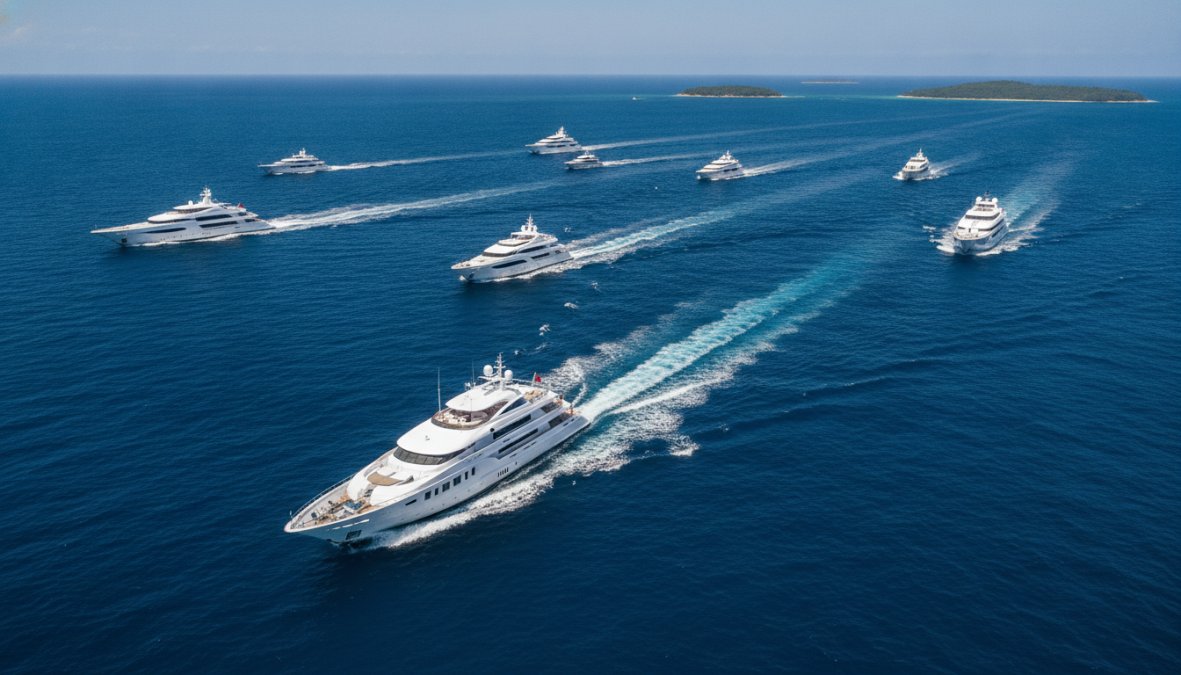
Global Market Size, Valuation, and Luxury Yacht Sales Market Trends
The luxury yacht segment is one of the most resilient corners of the broader maritime industry. According to Statista’s maritime and leisure sector analysis, the global luxury yacht market has climbed steadily through the early 2020s and continues upward into the second half of the decade. Buyers treat yacht ownership as both a lifestyle statement and a tangible asset class, not unlike premium real estate.
The buyer profile is shifting. Younger ultra-high-net-worth buyers from technology and fintech wealth are entering the market earlier, prioritizing experiential value, onboard technology, and sustainability credentials alongside traditional markers like vessel length and deck entertainment capacity.
The luxury yacht sales market trends for 2026 reflect a market that has moved past the post-pandemic demand spike and settled into a more measured but structurally healthy growth phase. New build orders remain elevated while the brokerage sector navigates a normalization of inventory after years of compressed supply.
CAGR and Forecast Projections Through the Decade
The compound annual growth rate (CAGR) for the global luxury yacht market is projected to remain in the mid-single-digit percentage range annually through 2030, underpinned by rising global wealth concentration, expanding marina infrastructure in emerging markets, and growing appetite for private maritime travel.
The superyacht segment is expected to outperform the broader market, as ultra-high-net-worth demand proves more insulated from macroeconomic volatility. New build lead times at top European shipyards currently stretch two to four years, meaning orders placed in 2026 represent genuine long-term demand conviction.
Market Segmentation: Motor Yacht vs. Sailing Yacht and Vessel Length Categories
Motor yachts dominate the luxury market by volume, offering greater speed, more interior living space, and deck configurations suited to charter and personal use. Sailing yachts command a loyal buyer base that values seamanship, lower fuel consumption, and traditional yachting aesthetics.
Segment | Primary Appeal | Typical Buyer Profile | Market Share Trend |
|---|---|---|---|
Motor Yacht (under 24m) | Speed, comfort, ease of handling | First-time luxury buyers, charter operators | Stable |
Motor Yacht (24m-60m) | Full crew capability, staterooms, range | Experienced owners, GCC buyers | Growing |
Superyacht (60m+) | Prestige, full amenity suites, global range | Ultra-high-net-worth, family offices | Fastest growing |
Sailing Yacht | Seamanship, eco credentials, lower running costs | Experienced sailors, sustainability-focused buyers | Niche, steady |
The 24-60 metre category is where the most active brokerage action occurs, balancing operational cost against genuine luxury capability. Above 60 metres, transactions are fewer but dramatically higher in value.
Superyacht Sales Statistics and Brokerage Inventory Trends
The superyacht brokerage market surged through 2021-2022, followed by inventory tightening as pandemic-era buyers held their positions. By 2026, inventory has normalized, though well-maintained superyachts in the 40-60 metre range with strong charter histories continue to attract competitive offers quickly.
A common mistake is treating brokerage listing volumes as a real-time market signal, they lag actual conditions by several months. The more reliable indicator is time-on-market for vessels that actually sell, which remains compressed relative to pre-2020 averages for quality stock.
Regional Market Analysis: Where Luxury Yacht Sales Are Surging
The Middle East, particularly the UAE and Saudi Arabia, has emerged as one of the fastest-growing regional markets. Expanded marina infrastructure in Dubai, Abu Dhabi, and along the Saudi Red Sea coast has created the operational foundation for a larger ownership base. Buyers in this region favor larger motor yachts in the 30-60 metre range with advanced stabilization, joystick controls, and high-specification deck entertainment areas.
The Mediterranean remains the world’s premier yachting region by charter volume and brokerage transaction value. North America, particularly Florida and the Pacific Coast, remains a significant volume contributor. The Asian market, led by buyers from China, Singapore, and Australia, continues to develop, though regulatory complexity moderates growth relative to the Middle East and Europe.
According to the International Council of Marine Industry Associations’ annual market overview, the Middle East and Asia-Pacific are collectively gaining ground on traditional European dominance in the luxury segment.
Emerging Technology Trends Reshaping the Luxury Yacht Sales Market
Technology is increasingly a primary purchase driver in 2026. Buyers who entered the market five years ago asking about horsepower and range are now asking about hybrid propulsion, satellite connectivity bandwidth, and autonomous docking systems.
The most commercially significant technology shifts include:
Joystick controls and dynamic positioning: Now standard specification on new builds above 20 metres, reducing crew requirements and making owner-operated handling practical.
Advanced stabilization systems: Vector fins and gyroscopic stabilizers have transformed seakeeping at anchor and underway, enabling dining and sleeping in conditions that would previously have driven guests below.
Integrated AV and smart ship systems: Whole-vessel automation covering lighting, climate, entertainment, and security is now expected at the premium brand level.
Satellite connectivity: High-bandwidth satellite internet has removed the last practical objection to extended offshore passages for business-active owners.
Technology adoption is also reshaping the brokerage market. Vessels built before approximately 2018 without modern stabilization and connectivity infrastructure face accelerating depreciation regardless of overall condition.
Sustainable Yachting Trends and Eco-Friendly Design Innovation
Sustainable yachting trends are no longer a fringe preference, they are a mainstream specification consideration, and the gap between what buyers say they want and what they actually specify at contract stage is closing fast.
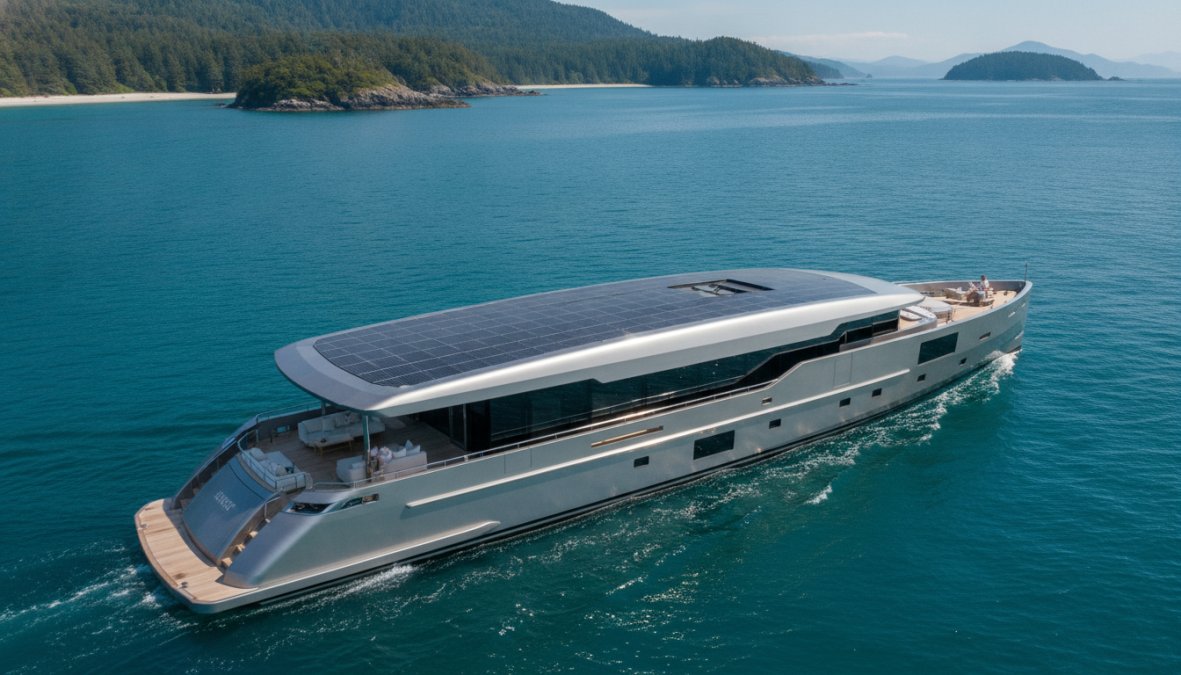
The most commercially mature eco-friendly features include hybrid diesel-electric propulsion, solar panel arrays integrated into deck and superstructure surfaces, waste heat recovery systems, and drag-reducing hull coatings. Several leading European builders now offer full hybrid variants of flagship models as standard catalogue options. Hydrogen propulsion attracts significant research investment but remains years from mainstream deployment.
The charter market is accelerating sustainable yachting trends faster than the ownership market. Corporate and incentive charter clients increasingly specify eco-friendly credentials as a booking criterion, creating a direct financial incentive for owners to invest in green upgrades, which filters back into the brokerage market as eco-specification becomes a value-add.
According to the International Maritime Organization’s guidelines on vessel emissions, regulatory pressure on leisure vessel emissions is increasing across major yachting jurisdictions, meaning eco-friendly design investment today is also regulatory risk mitigation for tomorrow.
Luxury Yacht Depreciation Rates: What Every Buyer Should Know
Luxury yacht depreciation is steepest in the first three to five years, after which well-maintained vessels in the 30-60 metre range can hold value reasonably well, particularly with active charter histories and documented refit investment. A new build loses a meaningful percentage of its purchase price in the first year simply by leaving the yard, and total depreciation by year five can be substantial for standard specification vessels. Superyachts with strong charter track records, premium brand provenance, and regular refit investment depreciate more slowly and can sometimes appreciate in tight inventory markets, as 2021-2022 demonstrated.
Sailing yachts tend to depreciate more slowly than motor yachts of comparable age due to lower running costs and a buyer base that values longevity over novelty.
The practical implication: treat the first five years as the highest-cost depreciation window. If your ownership horizon is shorter than five years, the economics of buying versus chartering deserve serious analysis before committing.
The True Cost of Owning a Superyacht: Annual Expenses Broken Down
The cost of owning a superyacht is consistently underestimated by first-time buyers. A commonly cited industry rule of thumb puts annual operating costs at roughly ten percent of the vessel’s purchase price, though this varies significantly by size, usage, and charter activity.
Major cost categories for a typical 30-50 metre superyacht include:
Crew: The single largest annual expense. A fully crewed 40-metre motor yacht requires a captain, first officer, chief engineer, chef, and deckhands.
Marina and berthing fees: Premium Mediterranean and GCC berths command significant annual fees, with peak Mediterranean months driving costs higher.
Fuel: A 40-metre motor yacht at cruise speed consumes fuel at a rate that makes passage planning a genuine financial consideration.
Insurance: Hull and liability insurance is a specialized product; premiums reflect vessel value, cruising area, and owner experience.
Maintenance and refit: Annual surveys, antifouling, mechanical servicing, and periodic refits are non-negotiable for maintaining value and charter eligibility.
Management fees: Professional yacht management companies charge a percentage of operating costs for crew, maintenance scheduling, and regulatory compliance.
Charter Market Correlation: Offsetting Ownership Costs
A well-positioned superyacht in an active charter program can generate revenue offsetting between thirty and sixty percent of annual operating costs in a good season. The Mediterranean charter season runs May through October, with July and August commanding premium weekly rates. The GCC and Red Sea offer a complementary winter season, which is why Palm Lifestyle’s positioning across both regions creates genuine value for owners seeking year-round charter revenue.
The charter market also functions as a buyer pipeline. Charter clients who repeatedly book the same vessel type frequently convert into buyers within two to three years, meaning charter history is not just a revenue offset but a source of qualified leads.
How to Buy a Luxury Yacht: Financing, Insurance, and Regulatory Considerations
Buying a luxury yacht rewards preparation and penalizes impatience. The broad sequence runs from market research and vessel shortlisting through survey and sea trial, offer and negotiation, legal due diligence, financing, flag state registration, and delivery. The cost of errors at the due diligence stage routinely exceeds professional advisory fees many times over.
A pre-purchase survey by an accredited marine surveyor is non-negotiable, assessing structural integrity, mechanical condition, safety equipment compliance, and regulatory status. Vessels considered for charter use face additional certification requirements.
According to Lloyd’s Register’s guidance on yacht classification and survey requirements, survey standards vary by flag state and intended use, making professional legal and technical advice essential before committing to any purchase above the entry-level luxury segment.
Financing and Insurance Trends for High-Net-Worth Buyers
Specialist marine lenders and private banks offer structured lending products with loan-to-value ratios typically in the fifty to seventy percent range for new builds and somewhat lower for brokerage vessels. High-net-worth buyers increasingly use yacht financing as a liquidity management tool rather than a necessity, preserving capital for higher-returning investments. The 2024-2026 rate cycle has prompted some buyers to reassess the carry cost of financed ownership versus outright purchase.
Marine insurance for superyachts requires brokers with specific maritime expertise. Key coverage categories are hull and machinery, protection and indemnity liability, and commercial liability for charter vessels. Cruising area restrictions are a common source of claim disputes; buyers should ensure their policy accurately reflects intended usage before departure.
Regulatory and Legal Shifts Affecting Yacht Ownership
The regulatory landscape is tightening across multiple dimensions. Flag state registration requirements, crew certification standards, environmental compliance, and anti-money-laundering due diligence in brokerage transactions have all become more demanding over the past five years.
The most practically significant shift for GCC buyers is the expansion of local maritime authority oversight of foreign-flagged vessels in territorial waters. Environmental regulations represent the fastest-moving area of change, emission control areas, grey water discharge restrictions, and antifouling coating regulations are all tightening in key yachting jurisdictions. Buyers of new builds should confirm that vessel specifications meet projected standards through the vessel’s likely ownership horizon, not just current requirements.
Acquiring the right superyacht at the right price, in the right condition, with the right legal and financial structure in place is genuinely complex work. Palm Lifestyle handles the full process end-to-end, from initial market search and vessel valuation through financing arrangement, legal procedures, and delivery, drawing on deep expertise across the GCC and Mediterranean markets. Our team provides professional yacht valuation and strategic marketing for sellers, and seamless purchase support for buyers who want the process managed without the friction. Get in touch with Palm Lifestyle to discuss your yachting needs and let us match your requirements to the right vessel and the right opportunity.
Frequently Asked Questions
Is the luxury yacht market slowing down in 2026?
The luxury yacht sales market remains resilient overall, though it has moderated from the exceptional post-pandemic surge. Demand from high-net-worth individuals continues to underpin new build orders and brokerage activity, particularly in the superyacht segment. Regional markets such as the Middle East and Asia-Pacific are showing strong growth, helping to offset softer demand in more mature markets. The long-term outlook remains positive, supported by rising global wealth and evolving buyer behavior toward experiential luxury.
What are the current trends in the superyacht industry?
Key luxury yacht sales market trends include growing demand for eco-friendly features such as hybrid propulsion and solar integration, advanced stabilization systems including vector fins and gyroscopic stabilizers, joystick controls for easier maneuvering, and expansive deck entertainment spaces. Buyers are also prioritizing water sports equipment, sophisticated staterooms, and smart vessel management technology. The charter market correlation with ownership is increasingly influencing new build specifications, as owners seek vessels that perform well commercially as well as for personal use.
Are luxury yachts a good investment, and what are typical depreciation rates?
Luxury yacht depreciation rates typically range from 5% to 10% per year in the early years of ownership, making yachts depreciating assets rather than appreciating investments in the traditional sense. However, well-maintained premium brand vessels in sought-after size categories can hold value better than average. Placing a yacht into a managed charter program can offset depreciation by generating revenue. Buyers focused on returns should factor in annual operating costs, market timing, and resale demand when evaluating yacht ownership as a financial decision.
How do interest rates and financing trends affect luxury yacht purchases?
Rising interest rates have increased the cost of marine financing, prompting some high-net-worth buyers to explore structured financing arrangements, leasing models, or cash purchases. Specialist marine lenders and private banks offer bespoke yacht financing products that differ significantly from standard consumer loans. Insurance premiums have also risen in line with vessel values and evolving risk profiles. Working with a brokerage that offers end-to-end financing and legal support — covering flag state registration, VAT structuring, and insurance placement — is increasingly important for buyers navigating this complex landscape.
What is the cost of owning a superyacht annually?
The cost of owning a superyacht is generally estimated at 10% to 15% of the vessel's purchase price per year. For a 40-metre superyacht valued at USD 10 million, annual operating costs can range from USD 1 million to USD 1.5 million, covering crew salaries, maintenance, fuel, marina fees, insurance, and regulatory compliance. Larger vessels incur proportionally higher costs. Enrolling the yacht in a commercial charter programme can offset a significant portion of these expenses, making charter market participation a financially strategic consideration for many owners.
Which types of yachts are currently in highest demand?
Motor yachts dominate luxury yacht sales by volume, with explorer-style and long-range displacement motor yachts seeing particularly strong demand as buyers prioritise versatility and range. In the sailing yacht segment, performance cruisers and large sailing superyachts appeal to a niche but growing buyer base. By vessel length, the 24-metre to 40-metre range represents the most active brokerage segment. Superyachts exceeding 50 metres remain a specialist market driven by ultra-high-net-worth individuals, with new build lead times from top yacht builders often extending several years.