

Table of Contents
- Yacht Brokerage vs Direct Seller: Side-by-Side Comparison
- What a Yacht Brokerage Actually Does in a Sale
- Selling Direct: What a Private Yacht Sale Really Involves
- Yacht Sales Commission Structure: What You Pay and What It Covers
- Private Yacht Sale Legal Requirements You Cannot Skip
- Yacht Valuation Factors That Decide Your Final Price
- The Hidden Costs and Risks of Selling Without a Brokerage
- Frequently Asked Questions
Last Updated: September 26, 2026
Yacht Brokerage vs Direct Seller: Side-by-Side Comparison
Choosing between a yacht brokerage and selling direct is the single decision that shapes your net proceeds, your legal exposure, and how long your vessel sits on the market. A yacht brokerage is a licensed intermediary that values, markets, and negotiates the sale of your vessel for a commission, while a direct seller handles every stage alone. This comparison from Palm Lifestyle breaks down what each route actually costs you in time, risk, and money.
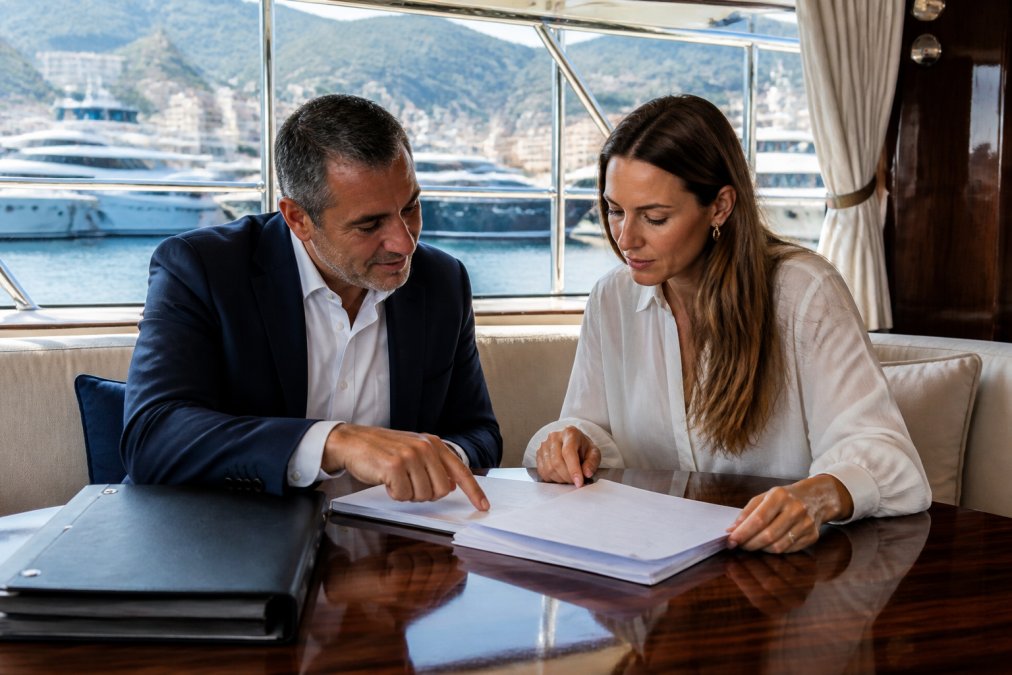
The Comparison Table at a Glance
| Factor | Yacht Brokerage | Direct Seller |
|---|---|---|
| Cost to seller | Sales commission on completion | No commission, but higher hidden costs |
| Valuation accuracy | Professional market valuation | Owner estimate, often optimistic |
| Buyer vetting | Verified, pre-screened leads | Unverified enquiries |
| Legal paperwork | Handled by the brokerage | Seller’s responsibility |
| Escrow and payment | Standard escrow account | Often direct transfer, higher risk |
| Time to close | Typically faster | Variable, often longer |
| Best for | Owners wanting maximum net proceeds | Owners with a vetted buyer already in hand |
What a Yacht Brokerage Actually Does in a Sale
A yacht brokerage acts as the intermediary between you and the buyer, managing valuation, marketing, negotiation, and the closing process from listing agreement to final transfer. The work starts long before your vessel appears in any yacht listing.
A professional brokerage will:
- Produce a market valuation backed by comparable sales data
- Build a yacht marketing plan across broker networks and listing platforms
- Screen enquiries and verify buyer legitimacy before a viewing
- Coordinate the marine survey and sea trial
- Negotiate price and terms on your behalf
- Manage the purchase agreement, bill of sale, and vessel documentation
- Hold funds in an escrow account until conditions are met
Selling Direct: What a Private Yacht Sale Really Involves
A private yacht sale, often called FSBO, means you handle every stage yourself: pricing, photography, advertising, viewings, negotiation, and the legal transfer. You keep the commission, but you absorb the entire workload and the risk that comes with it.
Selling privately without an escrow arrangement means you may release the vessel before funds clear, or a buyer may pay a deposit and then disappear. Either scenario leaves you with a stalled sale and legal costs.
Yacht Sales Commission Structure: What You Pay and What It Covers
A yacht sales commission structure is typically a percentage of the final sale price, charged only when the vessel sells. That structure aligns the brokerage’s incentive with yours: the higher the sale price, the higher the fee.
Private Yacht Sale Legal Requirements You Cannot Skip
Private yacht sale legal requirements cover ownership proof, a written purchase agreement, a bill of sale, and correct vessel registration and title transfer. Skipping any of these creates problems that surface months later, usually when the buyer tries to resell or re-register the vessel.
At minimum, a compliant private sale needs:
- Clear proof of ownership and a clean vessel title, with any registered mortgage or lien discharged or formally assumed
- A signed purchase agreement setting out price, conditions, deposit terms and timelines
- A marine survey and sea trial clause, so the buyer can withdraw if the vessel fails inspection
- A bill of sale transferring ownership formally, in the form the flag registry requires
- Updated vessel registration and documentation, plus deletion from the previous registry where applicable
- A closing statement recording the final figures and the apportionment of any outstanding costs
Handling Funds Without a Broker’s Client Account
This is the part private sellers most often get wrong, and it is where a brokerage earns a large share of its fee. In a broker-led deal, the deposit and completion monies sit in a regulated client account, released only when the conditions in the purchase agreement are met. Selling direct, you have to build that protection yourself.
The workable sequence most practitioners follow:
Get in touch with us to discuss your yachting needs. →
- Deposit into a stakeholder account. The buyer’s deposit is paid to a solicitor, notary or escrow agent acting as stakeholder, not directly to you. The stakeholder holds it and releases it only on signed instructions from both sides, or on the terms written into the purchase agreement.
- Conditions before release. The purchase agreement should state exactly what must happen before the deposit becomes non-refundable: satisfactory survey, satisfactory sea trial, clear title, and a defined deadline for each.
- Completion by simultaneous exchange. On closing day, the balance and the executed bill of sale, title documents and registry deletion should move at the same time. Never release the vessel or the documents before cleared funds are confirmed by the receiving bank, not by a screenshot or a payment confirmation email.
- Written closing statement. Record the sale price, deposit already held, balance received, and any apportioned costs, signed by both parties. This is your evidence if a dispute arises later.
- Registry and flag steps. File the transfer with the relevant registry, obtain the deletion certificate from the outgoing flag where required, and keep copies of everything.
Before any private sale, confirm the vessel’s title is unencumbered. A marine mortgage or outstanding lien discovered at closing can delay the transfer for weeks and, in some cases, void the sale. Ask the registry for a current transcript of title rather than relying on the seller’s own paperwork.
The legal documents are the easy part. The hard part is the money: a stakeholder-held deposit, conditions written into the purchase agreement, and simultaneous exchange of funds and title on completion. Build that structure before you list, not on closing day.
Yacht Valuation Factors That Decide Your Final Price
Yacht valuation factors include the vessel’s age, builder reputation, condition, maintenance records, engine hours, refit history, and current yacht market trends for that size and type. Two identical models can differ substantially in value based on documentation alone.
The factors that move price most:
- Builder and model demand in the current market
- Condition and survey findings, including hull, systems, and interior
- Maintenance records showing consistent professional servicing
- Engine and generator hours relative to vessel age
- Refit and upgrade history, with receipts
- Comparable recent sales of similar vessels
The Hidden Costs and Risks of Selling Without a Brokerage
The headline saving in a private sale is the commission you do not pay. The real comparison is net proceeds after everything else, and that is where the picture changes. Most owners who go direct underestimate three cost buckets: the cash outlay before the sale, the carrying cost while the vessel sits, and the price concession they eventually accept to close.
Beyond cost, the risks are structural rather than incidental:
- Liability exposure. Without a properly drafted purchase agreement containing representations, warranties and a clear as-is position, you can remain exposed long after the vessel has changed hands. Defect claims that surface months later are far harder to defend when there is no documented disclosure trail.
- Insurance gaps. Standard cover is written for private pleasure use, not for a vessel being shown to strangers and run on demonstration sea trials. Confirm in writing with your insurer that viewings and trials are covered, and for how long.
- Buyer fraud. Unverified enquiries, forged proof of funds and deposit scams are a real feature of the private market. Never release the vessel, the documents or the title on the strength of a screenshot.
- Valuation error. Pricing against online asking prices rather than completed transactions is the single most common mistake. Overpricing extends time on market; underpricing costs you directly at closing.
- Tax and VAT treatment. The VAT and tax position on a private sale differs from a broker-led transaction, particularly where the vessel is registered in one jurisdiction and transferred in another. Getting this wrong is expensive to correct and can surface during a later resale or import.
If you sell privately, put the disclosure of known defects in writing before the survey, keep a dated record of every viewing and trial, and confirm your insurer has agreed cover for both in advance. These three steps prevent the majority of post-sale disputes.
Frequently Asked Questions
Is yacht brokerage worth it compared to selling privately?
It depends on your priorities. A yacht brokerage brings vetted buyers, professional marketing, negotiation support and escrow handling, which shortens time on market and reduces legal exposure. Selling privately saves the commission but shifts every task to you: photography, viewings, buyer screening, contract drafting and payment security. For higher-value vessels, the brokerage route usually nets a better final price even after fees.
How much commission do yacht brokers get?
Commission is typically a percentage of the final sale price, agreed in the listing agreement before the yacht goes to market. The percentage varies with vessel value, market conditions and the scope of work included. Ask for a written breakdown of what the commission covers, including marketing spend, sea trials and closing support, so there are no surprises later. Request a current quote directly from the brokerage for your vessel.
What are the private yacht sale legal requirements I should prepare for?
A private sale still needs a written purchase agreement, a clear bill of sale, proof of ownership and a vessel title free of encumbrances. You must also confirm registration and de-registration steps, settle any outstanding marina or finance obligations, and handle transfer paperwork correctly. Skipping any of these exposes you to disputes after the money has changed hands, so have a maritime lawyer review the documents before signing.
Which yacht valuation factors matter most when pricing my vessel?
Age, builder reputation, length, engine hours, refit history and maintenance records carry the most weight. Condition survey results, onboard systems, interior finish and current market demand for that model also shift the number significantly. A professional vessel appraisal based on recent comparable sales gives you a defensible asking price. Overpricing to leave room for negotiation usually lengthens time on market and weakens your position.
How does a direct sale differ from a brokered transaction?
In a brokered transaction, the brokerage handles lead generation, viewings, negotiation, escrow and closing coordination, and is paid through commission. In a direct sale, you manage every stage yourself, from advertising to contract and payment. The direct route can save on fees, but it also means you carry the liability, insurance and legal risk if something goes wrong during the transfer.