
Table of Contents
- Understanding the Luxury Yacht Market
- The Role of a Professional Yacht Broker in Your Sale
- How to Price a Luxury Yacht for Maximum Market Appeal
- Preparing Your Yacht for Sale: Staging and Presentation
- Professional Photography and Videography Strategies
- Yacht Survey Checklist for Sellers: What Buyers Expect
- How Long Does It Take to Sell a Yacht? Timeline Expectations
- Yacht Sale Documentation Requirements and Legal Compliance
Last Updated: June 29, 2026
Understanding the Luxury Yacht Market
Selling a luxury yacht requires far more than listing it online. The superyacht market operates on fundamentally different principles than real estate or automotive sales, timing, presentation, and strategic positioning determine whether you achieve top dollar or watch your vessel depreciate while sitting idle. The ultra-high-net-worth individuals who purchase these vessels conduct exhaustive due diligence, acquiring a lifestyle asset, floating investment, and statement of sophistication. Every detail, from engine room condition to master suite aesthetics, influences their decision.
The yacht market in 2026 shows strong demand for well-maintained vessels between 40 and 150 feet, particularly those equipped with hybrid propulsion systems and modern navigation technology. Understanding where your yacht sits in this landscape, motor or sailing, year of manufacture, last major refit, and how it compares to similar vessels currently listed, forms the foundation of a successful sales strategy.
The Role of a Professional Yacht Broker in Your Sale
Attempting to sell a superyacht without professional representation is like navigating open ocean without charts. A qualified yacht broker brings market intelligence, buyer networks, and negotiation expertise that individual sellers cannot replicate. Professional yacht brokers typically charge 5-10% commission on the sale price, split between selling and buying brokers. While significant, brokers earn this fee by accelerating the sale timeline and often negotiating higher final prices than owners achieve independently.
When selecting a broker, verify their experience with vessels in your yacht’s class and size range, request references from recent sales, and confirm they maintain active buyer lists. The best brokers provide market valuations based on recent comparable sales, not inflated estimates designed to win your business. Palm Lifestyle maintains a global network of qualified buyers and coordinates directly with international brokers to ensure your yacht reaches the right audience.
How to Price a Luxury Yacht for Maximum Market Appeal
Pricing a luxury yacht incorrectly is the single most common reason vessels languish on the market unsold. Overpricing creates the perception that something is wrong; underpricing leaves money on the table. Strategic pricing requires understanding market comparables, vessel condition, depreciation trends, and current demand patterns.
Market Valuation and Comparative Analysis
Identify at least five comparable vessels currently listed or recently sold within the last 12 months, matching your yacht in length, year built, propulsion type, condition level, and geographic market. A 2018 Azimut 80 in excellent condition in the Mediterranean commands different pricing than an identical 2012 model requiring significant refits.
Gather detailed information on each comparable: asking price, days on market, final sale price if available, and special features or recent upgrades. Depreciation in the yacht market follows predictable patterns: approximately 15-20% in the first year, then 8-10% annually for the next five years, with depreciation slowing thereafter. Understanding where your yacht sits on this depreciation curve helps establish realistic pricing that reflects actual market conditions.
Depreciation and Vessel Condition Assessment
The condition of your vessel directly impacts pricing. A mega yacht with original engines from 2008 commands significantly less than an identical model with completely rebuilt propulsion systems, updated navigation electronics, and recent interior refurbishment. Professional marine surveyors assess hull integrity, engine and mechanical systems, electrical systems, plumbing, interior furnishings, and maintenance history.
Document every major service, upgrade, and repair completed on your yacht. A comprehensive service log demonstrating regular engine servicing, haul-outs every two years, and prompt repairs justifies premium pricing. Consider commissioning a pre-sale marine survey before listing; a survey costing $3,000-$5,000 can prevent $50,000+ in price concessions.
Preparing Your Yacht for Sale: Staging and Presentation
The condition of your yacht when buyers first see it determines whether they schedule a sea trial or move on. Professional yacht staging emphasizes functionality, cleanliness, mechanical condition, and the lifestyle experience the vessel offers.
Begin with a deep clean extending far beyond typical maintenance. Professional yacht detailing handles areas owners often overlook: engine compartments polished to showroom condition, bilge areas spotless and odor-free, all stainless steel fittings gleaming, and interior spaces smelling fresh and welcoming. Address deferred maintenance before listing: repair cracked caulking, repaint scuffed areas, replace worn cushions, fix non-functioning systems, and ensure all appliances operate flawlessly.
Organize the vessel logically for showings. Clear clutter from cabins, remove personal items, and stage spaces to highlight functionality. In the galley, demonstrate that systems work. In cabins, ensure bedding is pristine and storage areas are organized. On deck, coil lines neatly and ensure the helm area appears professional and well-maintained.
Professional Photography and Videography Strategies
Professional photography and videography separate successful yacht sales from prolonged listings. Buyers making decisions on vessels worth millions typically don’t schedule sea trials based on mediocre photos.
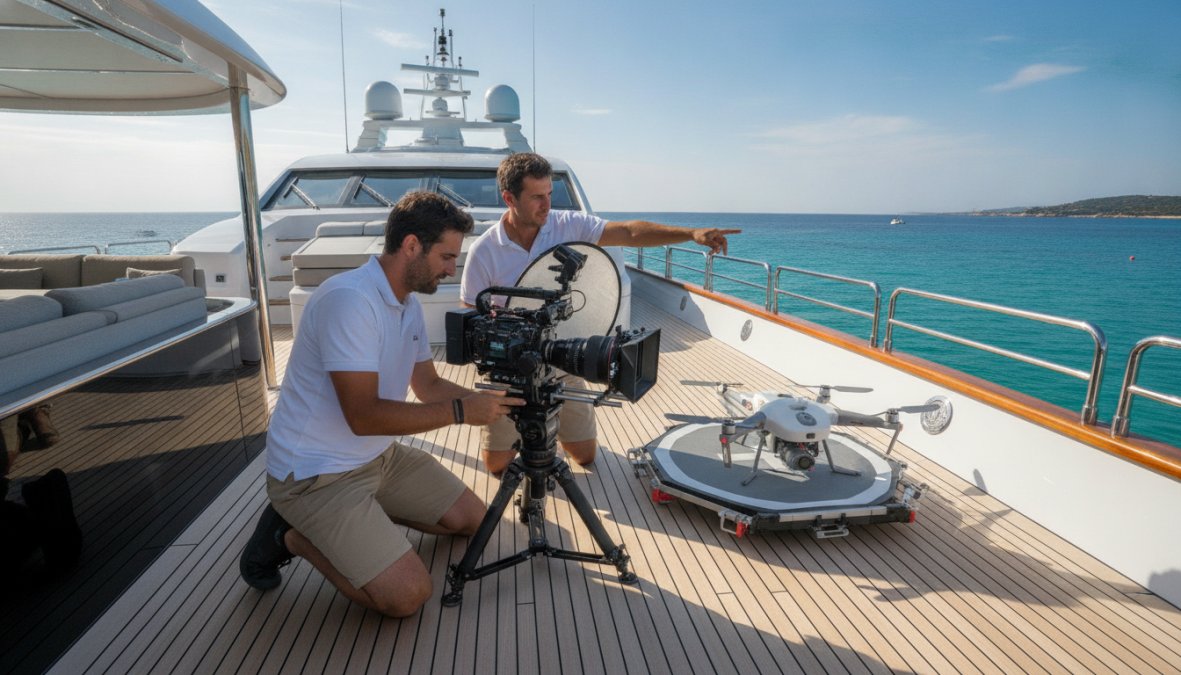
Invest in a professional yacht photographer experienced with marine vessels. They understand optimal lighting conditions, how to position the vessel to showcase its best angles, and how to capture both exterior and interior spaces conveying luxury and functionality. A professional shoot typically produces 200-400 high-quality images suitable for various marketing channels.
Video production has become essential for yacht marketing. A professional video walkthrough lasting 5-8 minutes allows potential buyers to virtually tour the vessel and understand its layout. High-quality drone footage showcasing the yacht underway, anchored, or in port creates emotional connection that static photos cannot achieve.
Yacht Survey Checklist for Sellers: What Buyers Expect
Understanding what professional buyers examine during a marine survey helps you prepare your vessel and address issues proactively. A comprehensive survey covers hull integrity, engine and mechanical systems, electrical systems, plumbing, interior systems, and structural elements.
Prepare for survey by ensuring the vessel is fully fueled, batteries are charged, and all systems are operational. Provide the surveyor with complete service records, original equipment documentation, and any certificates of compliance. Common survey findings that impact pricing include deferred maintenance on major systems, outdated navigation or safety equipment, evidence of improper repairs, missing service documentation, and structural issues. Addressing these issues before survey, or disclosing them proactively with repair plans, prevents surprise negotiations after the survey is complete.
How Long Does It Take to Sell a Yacht? Timeline Expectations
Realistic timeline expectations help you plan financially and emotionally for the sales process. Luxury yacht sales typically require 12-24 months from initial listing to closing, though well-positioned vessels in strong demand may sell in 6-8 months.
The initial 3-6 months represent the critical marketing phase. During this period, your broker conducts targeted outreach to qualified buyers, lists the vessel on major platforms, and generates initial inquiries. Months 6-12 typically involve serious buyer interactions with qualified prospects scheduling sea trials, commissioning surveys, and conducting detailed due diligence. Months 12-18 often involve price negotiation and closing preparation. If the vessel hasn’t sold by month 12, expect market pressure to reduce pricing by 5-10%. Months 18-24 involve final documentation, inspections, and closing logistics. Several factors accelerate or extend this timeline: vessel condition, pricing accuracy, market demand for the yacht’s class, location, and economic conditions.
Yacht Sale Documentation Requirements and Legal Compliance
The legal and documentary requirements for yacht sales extend far beyond residential transactions. Maritime law, international regulations, and vessel registry requirements create a complex framework demanding professional attention.
Bill of Sale and Title Transfer
The bill of sale serves as the primary legal document transferring ownership from seller to buyer. This document must clearly identify both parties, describe the vessel with specific details (hull number, length, year, make, model), state the sale price, and include representations regarding the vessel’s condition and any outstanding liens or mortgages.
Title transfer requirements vary significantly based on the vessel’s registry. A U.S.-registered yacht requires transfer of the Certificate of Documentation through the U.S. Coast Guard. International vessels may be registered with various maritime authorities, the Marshall Islands, Panama, Malta, or Cayman Islands are common registries for superyachts, each with distinct transfer requirements. Verify that the current title is clear of all liens, mortgages, or claims before listing.
Maritime Law and Registry Considerations
Maritime law governs yacht sales and differs substantially from terrestrial legal frameworks. Different jurisdictions have different requirements regarding seller disclosures, buyer protections, and liability limitations. International yacht sales require compliance with export regulations in the seller’s country and import regulations in the buyer’s country.
Liability considerations extend beyond the sale closing. In some jurisdictions, the seller may retain liability for the vessel’s condition or environmental compliance even after transfer of title. Professional maritime attorneys review sales agreements to ensure appropriate liability allocation. Insurance presents another critical consideration; the seller’s insurance typically terminates at closing, while the buyer’s insurance begins at that moment.
Marketing Strategies and Listing Platforms
Effective yacht marketing reaches qualified buyers through channels they actively monitor. Yacht World and Yachtall represent the primary global platforms for yacht listings, attracting serious buyers actively shopping for vessels in their target size and price range. Ensure your listing on these platforms is comprehensive, with high-quality images, detailed specifications, and responsive broker communication.
International yacht brokers maintain private buyer lists of clients actively seeking yachts matching specific criteria. A well-connected broker can contact qualified prospects directly, significantly accelerating the sales process. If your yacht is suitable for charter, maintain active listings during the sales process; charter revenue offsets carrying costs. Track listing views, inquiry response rates, sea trial requests, and survey scheduling rates to indicate whether your pricing and positioning are effective.
Closing Process and Final Steps
The closing process for a yacht sale involves multiple steps requiring coordination among seller, buyer, brokers, lenders, attorneys, and registry authorities. Pre-closing inspections allow the buyer to conduct final verification that the vessel matches the purchase agreement. Escrow arrangements hold the buyer’s funds and the seller’s title documentation until all closing conditions are satisfied.
Registry transfer requires submission of completed forms, proof of ownership, evidence of payment of all taxes and fees, and the bill of sale to the appropriate registry authority. For U.S. vessels, this process involves the Coast Guard and typically requires 2-4 weeks. Insurance transfer occurs at closing, with the seller’s insurance terminating and the buyer’s insurance beginning. Post-closing documentation includes updating the vessel’s registration with new owner information, transferring any warranties or service contracts, providing the buyer with all maintenance records, and ensuring the buyer receives all keys, access codes, and operational manuals.
Selling a luxury yacht successfully requires understanding market dynamics, preparing the vessel professionally, pricing strategically, and navigating complex legal requirements. The process demands patience, professional expertise, and attention to detail at every stage. Palm Lifestyle specializes in guiding yacht sellers through this complex journey, using our global network, market expertise, and comprehensive understanding of maritime law to maximize returns and minimize timeline. Get in touch with us to discuss your yachting needs and begin your yacht sale with confidence.
Frequently Asked Questions
How do I find a reputable luxury yacht broker?
Look for brokers with extensive experience in the superyacht and mega yacht market, verifiable client testimonials, and membership in recognized maritime associations. Verify their track record with similar vessel sales, their understanding of international maritime law, and their access to global buyer networks. A reputable broker should provide transparent communication about their brokerage commission structure and marketing strategy before you sign a listing agreement.
What is the best time of year to sell a luxury yacht?
Spring and early fall typically offer the strongest buyer activity in the yacht market, as many purchasers plan their acquisitions around these seasons. However, the optimal timing depends on your vessel's specific market segment, location, and current yacht market trends. Brokers can advise on seasonal demand patterns for your yacht class. Avoid listing during major maintenance periods or when vessel condition requires significant work, as this negatively impacts buyer perception and sale terms.
How does a yacht survey affect the sale price?
A comprehensive marine survey identifies the vessel's true condition and reveals maintenance needs, directly influencing buyer confidence and negotiating power. A clean survey report supports your asking price, while issues discovered may require price reductions or repair allowances. Professional surveys include detailed assessments of hull integrity, mechanical systems, and safety equipment. Sellers should address major findings proactively before listing to maintain competitiveness and demonstrate proper yacht maintenance history throughout ownership.
What documents are required for yacht sale documentation?
Essential yacht sale documentation includes the bill of sale, proof of yacht registry and title ownership, marine survey reports, insurance records, maintenance logs, and any applicable warranties. International sales require additional maritime law compliance, including customs declarations and flag state documentation. You'll also need to provide yacht specifications, equipment inventory, and proof of any outstanding liens or mortgages. Working with a professional broker ensures all yacht sales contract requirements and legal procedures are properly completed to facilitate a smooth closing process.
