
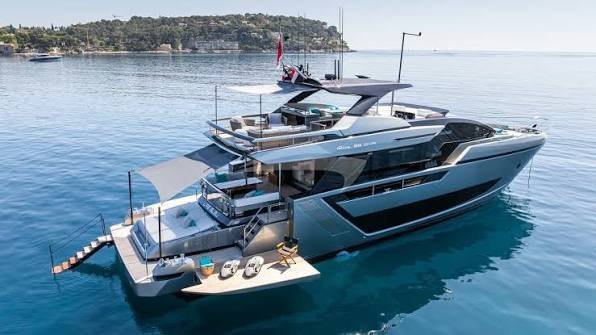
Table of Contents
- Riva Yacht Charter vs Ownership: The Core Decision
- Charter vs Ownership at a Glance
- Riva 20m+ Yacht Models: What You Are Actually Choosing Between
- The Luxury Superyacht Charter Experience: What a Week Actually Delivers
- The Real Cost of Owning a 24m+ Riva
- Depreciation, Resale and Charter Revenue
- Tax, Registration and Compliance for Riva Owners and Charterers
- Which Path Fits Your Usage and Lifestyle
- Frequently Asked Questions
Last Updated: October 2, 2026
Riva Yacht Charter vs Ownership: The Core Decision
When weighing a Riva yacht charter against full ownership, the deciding factor is rarely the purchase price, it is how often you will use the vessel. A Riva yacht charter gives you the brand, crew and itinerary for a fixed period with no residual liability. Ownership delivers total control, but only pays off when the boat leaves the dock regularly.
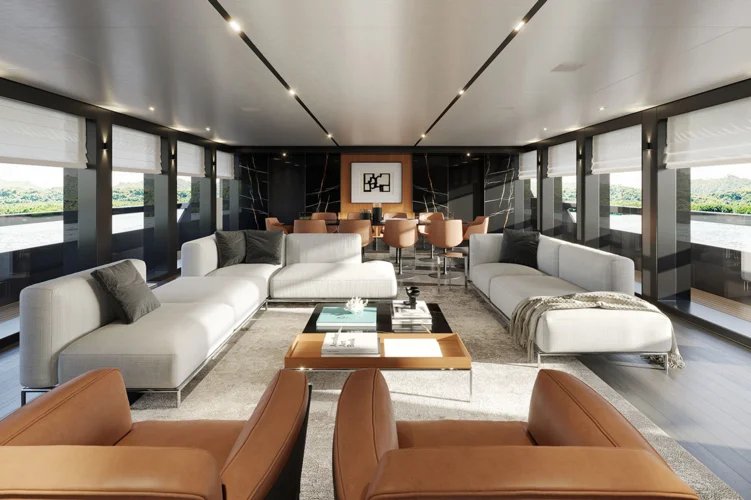
Riva 54 Metri Interior
What Changes at the 20m Mark
Twenty metres is the line where a Riva stops being a large day boat and becomes a crewed vessel. Above it, you need a captain, minimum crew, commercial-grade safety equipment and a berth that can take the beam and draft. Those requirements exist whether you charter or buy, but ownership makes them permanent annual obligations rather than a line item in a weekly rate.
Charter vs Ownership at a Glance
Charter wins on flexibility and capital preservation. Ownership wins on control and long-term cost per day, but only at high usage:
Factor | Full Ownership | |
|---|---|---|
Upfront capital | None beyond the charter fee | Full vessel price |
Annual fixed costs | None | Berthing, crew, insurance, maintenance |
Crew | Included | Your payroll |
Flexibility | Change vessel and region each trip | One vessel, one home berth |
Resale risk | None | Yours to carry |
Best for | Under 6 weeks of use per year | 8+ weeks of use per year |
Riva 20m+ Yacht Models: What You Are Actually Choosing Between
The 20m+ range splits into three tiers. The Riva Corsaro line sits at the entry to crewed ownership, built for day cruising and short overnight stays. The Riva 110′ Dolcevita and Riva 102′ Corsaro Super add a full-beam master suite, separate crew quarters and the range for multi-day Mediterranean passages. At the top, the Riva 130′ Bellissima and the 54 Metri and larger superyacht builds carry a beach club, tender garage and space for ten to twelve guests.
Performance, Layout and Crew Requirements
All three tiers share Riva’s hull geometry and finish quality, so the real difference is layout and crew. A 20m to 24m Riva typically runs with a captain and one steward; past 30m you staff a full interior and deck team, which changes both the annual cost base and charter revenue potential.
The Luxury Superyacht Charter Experience: What a Week Actually Delivers
A week aboard a chartered Riva 20m+ delivers a fully crewed vessel, a bespoke itinerary and zero operational responsibility. You choose the route, the chef plans around your preferences, and the captain handles berthing, fuel and port formalities. The luxury superyacht charter experience is less about the boat than the absence of logistics.
The Real Cost of Owning a 24m+ Riva
Ownership cost is not a single number but a stack of recurring obligations that scale with length, crew headcount, engine hours and cruising region. Two owners of the same Riva 110′ Dolcevita can run annual outgoings that differ widely depending on berth, weeks moved and registration. The purchase price is easy to model; the recurring stack is where budgets break.
Post-Purchase Costs Most Buyers Miss
The line items that surprise new owners are rarely the headline ones, but the quiet recurring costs underneath:
- Crew retention and rotation: salaries, social contributions, visas, medical cover, training renewals and rotation travel continue year-round.
- Berthing by length and beam: a 30m+ berth costs materially more than a 20m one in the same marina, and the gap widens in premium locations.
- Insurance that scales with hull value and cruising area: a wider range or commercial use changes the premium.
- Scheduled maintenance tied to engine hours: heavy-use seasons accelerate service intervals.
- Dry dock and refit cycles: these arrive on a fixed clock regardless of how often the boat moves.
- Flag state and VAT status compliance: registration, tonnage surveys and status maintenance carry recurring cost.
- Tender, toys and shore support: a 20m+ Riva carries a tender and often water toys, each with maintenance and storage overhead.
- Communications and connectivity: satellite and broadband packages are a standing subscription, not a one-off.
Why the Same Riva Can Cost Two Owners Very Differently
Three variables move the annual number most. First, home berth location: an annual contract in a high-demand Mediterranean marina versus a lower-demand one changes the largest fixed line. Second, crew structure: a lean captain-plus-one setup versus a full rotational team is a step change, not a percentage. Third, usage pattern: a boat cruising twenty weeks a year burns engine hours, fuel, provisions and crew overtime an eight-week boat never touches.
The Idle-Cost Trap
The most common budgeting error is assuming that not using the boat saves money. It does not. Berthing, insurance, crew retention, calendar-driven maintenance and compliance continue whether the engines turn or not; only fuel, provisions, transient berthing and engine-hour service fall. That is the structural reason chartering wins at low usage: a charterer pays only for the weeks they use, while an owner pays for all fifty-two.
Depreciation, Resale and Charter Revenue
Depreciation is the largest single cost of Riva ownership, and it behaves differently across the model range. What matters for a buyer choosing between a Corsaro, a Dolcevita and a Bellissima is how each tier holds value, and why.
Get in touch with us to discuss your yachting needs. →
How Riva Residual Value Actually Behaves
Riva sits in a rare position among production yacht brands: the name carries heritage value that survives the first-owner depreciation hit. That does not make depreciation disappear, but it changes its shape.
Model-tier differences. The 20m+ range does not depreciate uniformly:
- Corsaro line (entry to crewed ownership): the largest production volume, so the widest pre-owned supply and the most direct price competition between listings. Residuals are stable but not scarce.
- Dolcevita and Corsaro Super (mid-tier): a smaller build run and a more distinctive layout, which narrows the pre-owned pool and supports residuals relative to the entry tier.
- Bellissima and larger superyacht builds (top tier): the smallest build numbers and the highest specification. Scarcity supports residuals, but the buyer pool at this level is thin, so time-to-sale lengthens. A top-tier Riva may hold value better on paper while taking longer to sell.
Charter Revenue: What It Can and Cannot Offset
Placing a 20m+ Riva on the charter market under commercial registration generates income that offsets part of the annual operating cost base: charter fees cover a share of crew, berthing, insurance and maintenance, and commercial status can change how VAT and registration are treated.
- Wear accelerates. Charter guests put hours on engines, interiors and systems far faster than private use, shortening maintenance intervals and refit cycles.
- Compliance deepens. Commercial registration, charter licensing and crew certification add a second layer of cost and administration private registration does not carry.
- Availability narrows. The weeks that charter best are the weeks you most want the boat; peak-season income and personal use compete for the same calendar.
The Resale Decision
When you sell, the buyer compares your Riva against every other listing of the same model. The vessels that sell fastest and closest to asking have complete service records, recent refit documentation, original specification where possible and realistic engine hours for their age. Building that record from day one is the most effective way to protect residual value, and it costs nothing beyond discipline.
Tax, Registration and Compliance for Riva Owners and Charterers
Chartering keeps compliance simple: the operator carries the commercial registration, insurance and crew certification. Ownership transfers all of it to you. That means choosing a flag state, maintaining the vessel’s VAT status for the cruising area, and meeting the safety and manning rules that apply to a privately registered 20m+ vessel. In this region, Federal Transport Authority maritime regulations and the relevant local maritime authorities set the registration and safety framework owners must satisfy.
Which Path Fits Your Usage and Lifestyle
Charter if you will use the boat fewer than six to eight weeks a year, want to move between regions, and prefer to keep capital liquid. Buy if you will use it heavily, want a specific layout and crew, and are prepared for the full annual cost base. There is no universal winner, only a usage threshold.
Frequently Asked Questions
What is the 10% rule for yachts?
The 10% rule is a rough planning benchmark: annual running costs for a yacht typically land near 10% of the purchase price. On a 20m+ Riva, that covers crew salaries, insurance premiums, berthing fees, scheduled maintenance, and dry dock intervals. It is a starting point for budgeting, not a quote. Fuel, provisioning, and major refit costs sit outside it, so build a contingency on top before you commit to ownership.
Is owning a yacht for charter profitable?
Charter revenue can offset a meaningful share of annual upkeep, but profitability depends on usage frequency, how many weeks you place the vessel on the charter market, and where it is based. Commercial registration and compliance add cost and complexity. Many owners treat charter income as a cost-reduction tool rather than a profit centre. A broker can model realistic charter revenue against your operating expenses before you buy.
What are the main lifestyle differences between chartering and owning a 20m+ Riva?
Chartering gives you access to a luxury superyacht charter experience without crew, berthing, or maintenance obligations, and you can switch destinations and vessels each season. Ownership gives you a personalised interior, a permanent crew, and the freedom to depart on short notice. The trade-off is capital investment and year-round operating expenses versus flexibility and zero long-term liability.
What should prospective owners consider before purchasing a Riva yacht?
Focus on real usage: how many weeks per year will you actually be aboard? Review the maintenance schedule, crew salaries, insurance premiums, and expected depreciation for the specific model. Confirm the VAT status and flag state implications for your cruising plans. A professional valuation and a pre-purchase survey protect your position. Also decide upfront whether you want the vessel commercially registered for charter revenue.
How does the charter market accommodate high-end Riva vessels?
High-end Riva models are in steady demand because of their performance and brand recognition. Charter rates reflect vessel size, crew, season, and itinerary, so pricing depends on dates and destination. Availability tightens in peak Mediterranean months, which is why early planning matters. A brokerage with direct fleet access can secure specific models and build bespoke itineraries around your requirements.
Deciding between chartering and owning a 20m+ Riva comes down to how you will actually use the vessel, and getting that wrong is costly in either direction. Palm Lifestyle arranges bespoke Riva charters across the Mediterranean and advises buyers through acquisition, valuation and resale, with a global network and end-to-end support covering financing and legal procedures. Get in touch with us to discuss your yachting needs.