
Table of Contents
- Why Yacht Insurance Is Non-Negotiable for Owners and Charterers
- Yacht Insurance Coverage: What a Comprehensive Policy Includes
- Yacht Insurance Exclusions: Clauses That Leave Owners Uncovered
- Agreed Value Yacht Insurance vs Actual Cash Value
- How Your Yacht Insurance Cruising Area Changes the Policy
- A Practical Checklist for Comparing Yacht Insurance Quotes
- Conclusion: Matching the Policy to the Vessel and the Voyage
- Frequently Asked Questions
Last Updated: October 8, 2026
Why Yacht Insurance Is Non-Negotiable for Owners and Charterers
Choosing the right yacht insurance policy is the single most important protection decision an owner or charterer will make. A marine insurance policy covers the vessel, the people on board, and the liability that follows a serious incident at sea.
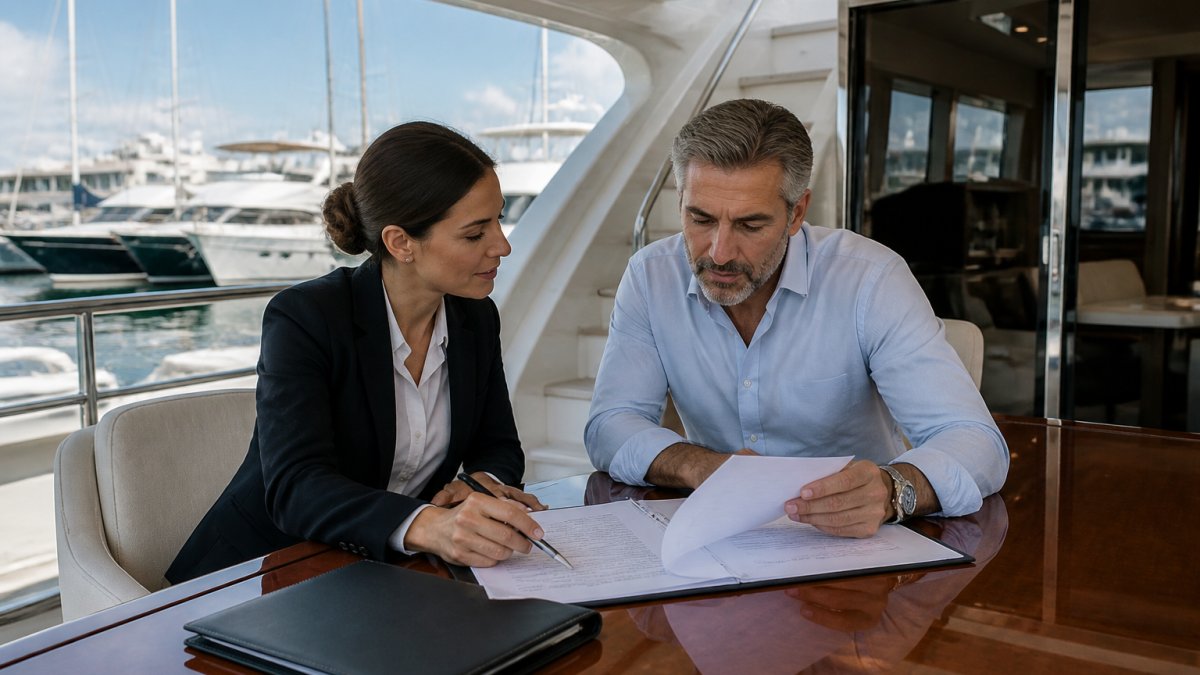
At Palm Lifestyle, we arrange charters and sales for owners and guests, and the same question comes up every time: what does the policy actually pay for? Most disputes after a claim come down to wording, not bad luck.
A yacht is a moving asset in a harsh environment. Salt, sun, and storms wear a vessel down. A grounding or a fire can turn a seven-figure asset into a salvage operation overnight.
Marine insurance exists to move that risk off your balance sheet. It also matters for anyone chartering, because a charter guest can be named in a liability claim.
Insurance is not a formality. It decides who pays when a hull is damaged, a guest is injured, or a wreck has to be removed from a marina berth.
Yacht Insurance Coverage: What a Comprehensive Policy Includes
Yacht insurance coverage splits into two core parts: damage to the vessel itself, and liability to other people. A comprehensive policy combines both, then adds optional sections for crew, passengers, and personal effects.
Here is what a full policy typically includes:
- Hull and machinery cover for the vessel and its engines
- Liability cover for injury and third-party property damage
- Crew and passenger cover for medical costs and injury claims
- Personal belongings cover for items lost or damaged on board
- Salvage and wreck removal if the vessel sinks or must be recovered
Hull and Physical Damage Protection
Hull coverage pays to repair or replace the vessel after physical damage. It responds to collision, grounding, storm damage, fire, and theft.
Most policies also cover salvage costs, which can run high when a vessel has to be towed or lifted. Wreck removal is often bundled in, and it matters: leaving a sunken hull in a marina is not an option.
One detail owners miss is the deductible. A higher deductible lowers the premium but raises your share of every claim (Understanding your insurance deductibles). Match it to what you can absorb without strain.
Liability, Crew, and Passenger Coverage
Liability coverage responds when your vessel injures someone or damages their property. That includes bodily injury, property damage, and the legal costs of defending a claim.
Crew coverage protects hired hands, from the captain to the deck team. Passenger coverage handles guests, including medical payments after an accident on board.
If you charter your yacht, tell your insurer. Standard private policies often exclude commercial use, and a claim made during a paid charter can be refused outright.
Yacht Insurance Exclusions: Clauses That Leave Owners Uncovered
Yacht insurance exclusions are the clauses that void or limit a payout. They are the reason two owners with similar vessels can get very different settlements.
The most common exclusions are:
- Wear and tear from normal ageing and use
- Manufacturer’s defect in the hull, engine, or systems
- Marine life damage, such as hull damage from a whale strike
- Depreciation on parts that have already lost value
- Negligence, such as skipping required maintenance
The biggest mistake we see is an owner who skips a scheduled survey, then files a claim for a hull fault. Insurers treat missed maintenance as negligence, and the claim is refused.
Read the exclusions page before you sign, not after a loss. If a clause is unclear, ask your broker to explain it in writing.
Agreed Value Yacht Insurance vs Actual Cash Value
Agreed value yacht insurance pays a fixed sum written into the policy if the vessel is a total loss. Actual cash value pays market value minus depreciation at the time of the claim. The difference is everything after a total loss.
With agreed value, both sides settle on the vessel’s worth up front, usually supported by a recent valuation, build specification, and inventory of machinery and electronics. You know the payout figure from day one. With actual cash value, the insurer assesses the yacht’s worth when the claim happens, and that number is usually lower than you expect.
| Feature | Agreed Value | Actual Cash Value |
|---|---|---|
| Payout basis | Fixed sum in policy | Market value minus depreciation |
| Valuation timing | At policy start | At time of claim |
| Premium | Higher | Lower |
| Best for | Newer, high-value yachts | Older, lower-value vessels |
How a Total-Loss Payout Is Actually Calculated
A total loss is not only a sinking. Insurers treat a vessel as a constructive total loss when the cost of repairs exceeds a set proportion of the insured value, commonly around 80 per cent, though the exact threshold is written into each policy. That single clause decides whether you get a repair or a cheque.
Under agreed value, the calculation is short: the sum insured, less any deductible, less the value of salvage if you retain it. Under actual cash value, the insurer starts from the vessel’s current market value, then applies depreciation to the hull, machinery, electronics, and soft furnishings at different rates. Navigation and entertainment systems often depreciate faster than the hull itself, so the gap between what you paid and what you recover can be wide.
Get in touch with us to discuss your yachting needs. →
Where Depreciation Bites Hardest
- Engines and generators lose value with running hours, not just age
- Electronics and navigation suites are superseded by newer models within a few seasons
- Interior soft goods such as upholstery, carpets, and mattresses carry short useful lives
- Rigging and sails on sailing yachts are depreciated by age and use cycles
A common pattern is an owner who insured on actual cash value to keep premiums down, then faced a total loss and discovered the settlement would not cover a comparable replacement. The premium saved over several seasons rarely closes that gap.
Choosing Between the Two
For a recently built superyacht, agreed value is usually the better fit because the replacement cost is high and the depreciation curve is steep in the early years. For an older boat with modest resale value, actual cash value can keep premiums sensible, provided you accept that a total loss will settle below replacement cost.
Whichever basis you choose, confirm it in writing before the policy incepts. Ask the insurer how the sum insured was derived, whether a valuation report is required, and how the constructive total loss threshold is expressed. Those three answers tell you more about the policy than the premium does.
How Your Yacht Insurance Cruising Area Changes the Policy
Your yacht insurance cruising area sets where the vessel is covered. Sail outside it without permission, and the policy may not respond at all. Insurers price risk by region, and navigation limits are written into the policy with specific boundaries, not general descriptions.
How Navigation Limits Are Written
A cruising area is usually defined by named waters, coordinates, or a distance from a stated coastline. A policy might permit the Mediterranean west of a given meridian during summer months, then restrict the vessel to a home port or a defined lay-up area during the winter. Some policies name excluded zones outright, such as areas subject to seasonal storm activity or regions with elevated security risk.
Read the wording as a boundary, not a suggestion. If the vessel is found outside the stated limits when a loss occurs, the insurer can decline the claim even if the loss itself had nothing to do with the location.
Lay-Up Periods and Named Storm Clauses
Many policies include a lay-up period, a defined window when the vessel is expected to be out of commission or confined to a safe berth. Sailing during a lay-up period without written consent can void cover. Separately, named storm clauses often require the vessel to be moved to a specified shelter or hauled out once a storm is named, with a deadline for compliance. Missing that deadline is one of the most common reasons a storm claim is reduced or refused.
Extending Cover for a Passage or a New Region
If you plan to move between the Mediterranean and the Gulf, or to cross an ocean, tell your insurer before you leave. A simple endorsement can extend cover for a defined passage window. The insurer will usually ask for the route, the departure and arrival dates, the crew list, and confirmation that the vessel is seaworthy and equipped for the passage. Skipping that step can void a claim made hundreds of miles from your stated limits.
A passage endorsement is time-bound. If the crossing runs longer than the agreed window because of weather or mechanical delay, contact the insurer immediately. Cover does not extend automatically.
What to Confirm in Writing
- The exact geographic boundary of the cruising area
- Any seasonal restrictions or lay-up periods
- Named storm requirements and compliance deadlines
- The process and lead time for extending cover
- Whether the vessel must remain crewed or in a specific berth
A broker who arranges yacht purchases and charters can read a policy the way an insurer does. That is the value of working with someone who knows the vessel, not just the paperwork.
A Practical Checklist for Comparing Yacht Insurance Quotes
Comparing yacht insurance quotes is not about the lowest premium. It is about matching cover to how you actually use the vessel. Work through this checklist before you commit to any policy.
- Confirm the agreed value or actual cash value basis in writing
- Check the cruising area and any navigation limits
- List every exclusion, especially wear and tear and defect
- Confirm salvage and wreck removal limits
- Check crew and passenger cover levels
- Ask whether chartering or racing needs an endorsement
- Compare deductibles across quotes, not just premiums
- Confirm the claims process and who handles it locally
A broker who arranges yacht purchases and charters can read a policy the way an insurer does. That is the value of working with someone who knows the vessel, not just the paperwork.
Conclusion: Matching the Policy to the Vessel and the Voyage
The right policy is the one that matches your vessel, your crew, and where you sail. Get the valuation basis right, understand the exclusions, and confirm your cruising area before you sign.
Frequently Asked Questions
What does yacht insurance typically cover?
A standard policy combines hull coverage for physical damage with liability coverage for bodily injury and property damage caused to third parties. Most also include salvage and wreck removal, medical payments, and cover for crew and personal belongings. Optional extensions add charter use, racing, and named storm protection. Review the policy terms carefully, because what counts as comprehensive coverage varies significantly between insurers.
What is the difference between agreed value and actual cash value yacht insurance?
Agreed value yacht insurance fixes the vessel’s insured sum at the outset, based on a survey or valuation, and pays that amount after a total loss without deducting depreciation. Actual cash value settles at market value at the time of the claim, minus wear and tear. Agreed value costs more but removes valuation disputes, which is why it suits newer or custom-built yachts.
How does cruising area affect yacht insurance coverage?
Insurers price policies around a defined navigation limit, such as coastal waters, the Mediterranean, or worldwide. Sailing beyond that limit without prior approval can void a claim. If you plan to move between regions, request a cruising area extension before departure and confirm any additional premium in writing so the policy keeps pace with your itinerary.
What exclusions should I check in a yacht insurance policy?
Look for wear and tear, manufacturer’s defect, marine life damage, and gradual deterioration, which most policies exclude. Confirm how the insurer treats theft, grounding, and storm damage, and whether unattended storage or charter use requires specific endorsements. Ask for every exclusion in writing before you compare quotes, because two policies with similar premiums can differ sharply on what they actually pay.
A yacht purchase or charter brings its own paperwork, and insurance is only one part. Palm Lifestyle handles the full process, from yacht purchase and charter arrangements to valuation and marketing for sellers. We work with owners and guests across the Mediterranean and the Gulf, and we keep the details discreet.
Get in touch with us to discuss your yachting needs.