
Table of Contents
- Why a South of France Yacht Charter Belongs on Your 2026 Calendar
- French Riviera Yacht Charter Destinations Worth Planning Around
- Building a South of France Yacht Itinerary: Day by Day
- South of France Day Yacht Charter: Making Eight Hours Count
- Choosing Your Vessel: Motor Yacht, Sailboat or Catamaran
- Crewed or Bareboat: Skipper, Crew and What Each Option Means
- What a Charter Really Costs and How Booking Works
- South of France Yacht Charter Packing List
- Frequently Asked Questions
Last Updated: October 17, 2026
Why a South of France Yacht Charter Belongs on Your 2026 Calendar
A South of France yacht charter is the most time-efficient way to see the Riviera: one vessel, one crew, and a new anchorage every morning without a single hotel check-in.
The logic is simple. The coast between Cannes and Saint-Tropez packs an extraordinary concentration of coastline into a short run, so you spend your time swimming and dining rather than travelling.
Below, we break down the routes, vessels, crew options and booking mechanics that decide whether a charter feels effortless or improvised.
The single biggest predictor of a good charter is not the yacht. It is how well the itinerary matches the wind, the crowds and your group’s rhythm. Plan the route first, then choose the boat.
French Riviera Yacht Charter Destinations Worth Planning Around
The French Riviera, or Côte d’Azur, rewards a slow route. Cannes gives you the Lérins Islands, two car-free islands a short tender ride from the Croisette.
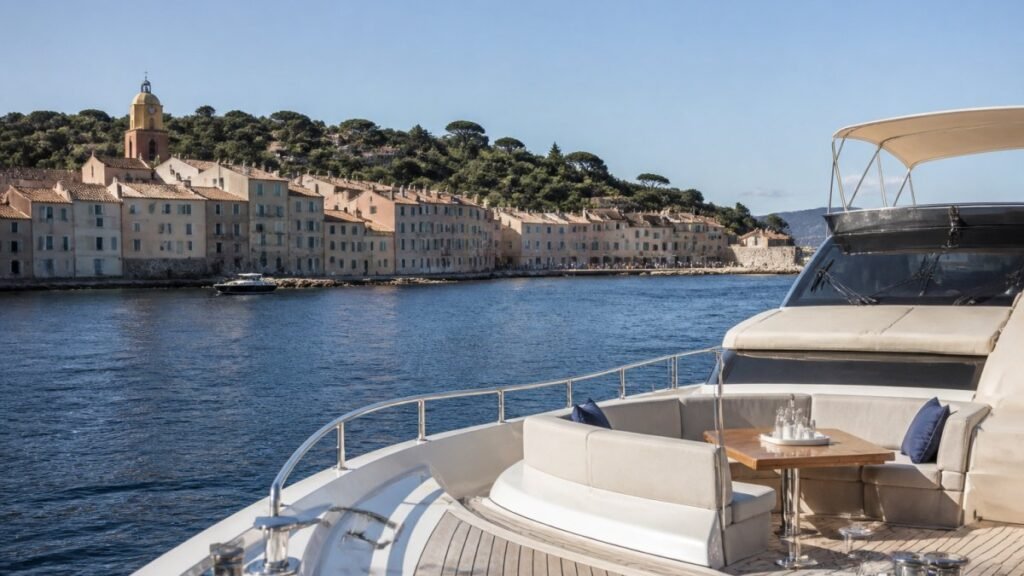
Saint-Tropez sits at the western end and deserves its reputation, though we would anchor out and tender in rather than fight for a berth in peak season.
What most guides miss is distance. Cannes to Saint-Tropez is a comfortable half-day run by motor yacht and a genuine passage under sail.
Building a South of France Yacht Itinerary: Day by Day
A South of France yacht itinerary works best when it alternates active days with anchorages where nothing is scheduled. The seven-day route below is the one we return to most often for first-time Riviera charters, and it is built around realistic cruising times rather than a wish list of stops.
A Seven-Day Route from Cannes to Saint-Tropez
- Day 1: Cannes embarkation. Board late morning, provision, and anchor off the Lérins Islands for a first swim. The run from the Croisette to the islands is short enough to leave the afternoon free.
- Day 2: Lérins to Antibes. A short coastal hop of roughly an hour by motor yacht, with an afternoon in the old town and dinner on board.
- Day 3: Cap Ferrat. A slow morning, then the calmest anchorage on the route. The pine-backed bays here are the reason to build in a day with no fixed schedule.
- Day 4: Monaco. Port Hercule, shore excursions, and a late departure the next morning. Berthing here is the most formal stop on the route, so plan the arrival for daylight.
- Day 5: Monaco to Villefranche. A short run for a swim-focused day, with the option to anchor rather than berth.
- Day 6: The passage west. A longer cruise toward the Gulf of Saint-Tropez. This is the day to start early, because the afternoon breeze builds reliably and a choppy crossing after lunch is the fastest way to lose a guest to seasickness.
- Day 7: Saint-Tropez and disembarkation. Anchor out, tender ashore, and finish the week. Anchoring out rather than fighting for a berth in peak season is the more comfortable choice.
Multi-Day and Week-Long Variations
Short on time? A three-day version compresses the route to Cannes, Antibes and Cap Ferrat, keeping every passage under about ninety minutes. A ten-day charter can push west toward Marseille’s calanques or east into the Italian border run. Both work, provided you resist adding stops that turn the week into a ferry timetable.
Planning Around Weather, Crowds and Season
The route above is a template, not a fixed script. Three variables should shape your final plan:
- Wind and sea state. Mediterranean afternoon breezes build reliably, so schedule the longest passages for the morning. A captain who knows the local patterns will often reorder stops at short notice to keep the ride comfortable.
- Crowds and berthing. Peak July and August weeks tighten availability in Monaco and Saint-Tropez first. Shoulder weeks in late spring and early autumn often deliver similar weather with more room to anchor and easier berthing.
- Alternatives for busy ports. If a harbour is full or the weather turns, a good itinerary has a fallback anchorage nearby. Villefranche and the Cap Ferrat bays are useful substitutes when Monaco is congested; the Lérins Islands work as a fallback when the western route is uncomfortable.
Book your longest passage for the morning. Mediterranean afternoon breezes build reliably, and a choppy crossing after lunch is the fastest way to lose a guest to seasickness.
A realistic itinerary also accounts for embarkation and disembarkation logistics. Cannes and Nice are the most practical start and end points for a first charter because they offer the widest choice of provisioning and transport connections, while Saint-Tropez works best as a finish rather than a start if you want to avoid the busiest berthing window.
South of France Day Yacht Charter: Making Eight Hours Count
A South of France day yacht charter succeeds or fails on one decision: how far you travel. Eight hours sounds generous until you spend four of them underway.
Our rule is a maximum of ninety minutes of cruising each way. From Cannes, that puts the Lérins Islands and the Antibes coast comfortably in range.
The best day charters follow a pattern: a morning swim at anchor, lunch prepared on board, an afternoon at a second anchorage, and a return timed to catch the evening light.
Choosing Your Vessel: Motor Yacht, Sailboat or Catamaran
The vessel decides the experience more than any other choice. A motor yacht buys speed and space, covering Cannes to Saint-Tropez in a morning. A sailboat trades that speed for silence and the pleasure of actually sailing.
| Vessel | Best For | Trade-Off |
|---|---|---|
| Motor yacht | Groups on a tight schedule | Higher fuel use, less sailing feel |
| Sailboat | Couples and experienced sailors | Slower passages, weather-dependent |
| Catamaran | Families and mixed-age groups | Less traditional aesthetic |
For a luxury yacht or superyacht experience, motor yachts dominate the Riviera fleet, and for good reason: they make the whole coast reachable within a week.
Crewed or Bareboat: Skipper, Crew and What Each Option Means
A crewed yacht charter includes a captain and, on larger vessels, a chef and stewards.
Get in touch with us to discuss your yachting needs. →
Bareboat suits qualified sailors who want full control. It requires proof of competence and, in practice, a willingness to handle everything from mooring to provisioning.
For most of our clients, crewed is the default. A skipper who knows the Riviera’s anchorages, restaurant bookings and harbour protocols removes every friction point.
Never book a bareboat charter assuming you can hire a skipper on arrival. Skipper availability in peak season is limited, and a vessel without a confirmed captain cannot legally leave port.
What a Charter Really Costs and How Booking Works
Charter pricing depends on vessel size, crew, dates and itinerary, so we quote each charter individually rather than publishing a rate card. What we can do is explain exactly what a quote contains and how the numbers behave, because the line items are where budgets quietly expand.
Reading a Charter Quote Line by Line
Ask for these as separate lines, not a single figure:
- Base charter fee. The vessel and crew for the contracted period. This is the headline number and typically the largest single line, but it is rarely the total.
- Advance provisioning allowance (APA). A float for food, fuel and berthing, reconciled at the end of the charter. A common pattern is for the APA to be set as a percentage of the base fee, with any unspent balance returned and any overage invoiced.
- Fuel. Often separate from the base fee on larger yachts, and directly tied to how far you cruise. A route that hops between Cannes, Antibes and Cap Ferrat burns far less than a westbound passage to Saint-Tropez.
- Port and marina fees. Variable by harbour and season. Berthing in Monaco and Saint-Tropez in peak weeks sits at the top of the range; anchorages and smaller ports sit at the bottom.
A quote that hides these inside one number is not cheaper. It is just less clear. The practical test is simple: ask for the all-in estimate assuming your planned route, your group size and your preferred dining pattern, then compare that figure across vessels rather than comparing base fees.
How the Numbers Move
Three variables drive most of the variation between quotes. First, season: peak July and August weeks command the highest base fees and the tightest availability, while shoulder weeks in late spring and early autumn often deliver similar weather at lower rates. Second, vessel size and crew ratio: a larger crewed motor yacht carries a higher base fee but also a higher APA, because more guests and more crew mean more provisioning and more fuel.
Booking Timeline and Contract Points to Check
For a summer charter, start the conversation six to nine months ahead. Peak July and August availability tightens first, and the best crewed yachts are committed well before spring. A practical sequence looks like this: shortlist vessels and request itemized quotes; confirm your dates and pay the deposit to hold the booking; review and sign the charter agreement; settle the balance and APA before embarkation; reconcile the APA at the end.
Check these contract points before you sign:
- Cancellation terms. Understand the windows and whether deposits are refundable, transferable or forfeited.
- Payment schedule. Note the deposit percentage, the balance due date and the currency.
- Security deposit. Confirm the amount, how it is held and the conditions for its return.
- Delivery fee clause. Establish whether repositioning is included or billed separately.
For current availability and a tailored quote, our Yacht Charter team handles the whole process end to end.
South of France Yacht Charter Packing List
A South of France yacht charter packing list is shorter than most people expect. Space on board is finite, and laundry is usually available.
- Soft-sided luggage only, no hard cases
- Two swimsuits and a rash vest
- Deck shoes with light soles
- One smart outfit for harbour dinners
- Reef-safe sunscreen and a wide-brimmed hat
Leave the rest. The onboard experience is better with less clutter, and anything you genuinely need can be sourced ashore.
Frequently Asked Questions
What is included in a South of France yacht charter?
A crewed charter typically includes the vessel, skipper and crew, insurance for the hull, and onboard systems such as air conditioning and water toys listed in the contract. Food, drinks, fuel used on passage, port and mooring fees, and gratuity are usually quoted separately. A reputable broker itemises every line before you sign so nothing appears after you commit. Ask for the full inventory of extras in writing, and confirm which marina charges fall to you versus the owner.
When is the best time to charter a yacht along the French Riviera?
Late May to early June and September to early October give warm sea temperatures, reliable weather and far thinner crowds at anchorages such as the Lérins Islands. July and August bring the liveliest atmosphere in Cannes, Monaco and Saint-Tropez but also peak demand and higher charter rates. Book several months ahead for high season. If your group prefers quiet coastal cruising and easier berth availability, the shoulder months are the practical choice.
Do I need a licence to rent a yacht in France?
If you charter with a professional skipper or crew, no personal licence is required, which is why most visitors choose crewed or skippered arrangements. Bareboat charter is different: French rules require the lead charterer to show recognised competence, usually an accepted sailing or powerboat certificate plus a radio qualification, and some operators ask for a sailing CV. Confirm the exact documents with your broker before booking, and allow time to have certificates translated if needed.
How many days should you spend on a yacht charter in the South of France?
A day charter of six to eight hours covers one stretch of coast well, for example Cannes with the Lérins Islands or a run from Antibes to Cap Ferrat. Three to four days lets you link two or three bases without rushing. Seven days is the standard weekly charter and the sweet spot for the full Riviera: Cannes, Nice, Monaco, Antibes and Saint-Tropez with time to swim, dine ashore and rest. Shorter trips suit tight corporate schedules.
Planning a Riviera charter around a fixed window, a mixed group or a corporate event takes local knowledge and a fleet you can actually access. Palm Lifestyle manages the full process, from vessel selection and crewed charter arrangements to bespoke itinerary design, so your only decision is where to swim first. Get in touch with us to discuss your yachting needs.