

Table of Contents
- What Yacht Charter Management Programs Offer
- Financial Benefits and Revenue Generation
- Understanding Yacht Ownership Costs Under Management
- Charter Management Agreement Terms: What You Need to Know
- Yacht Maintenance Schedules and Operational Responsibilities
- The Reality of Owner Usage and Resale Impact
- Is a Charter Management Program Right for Your Yacht?
Last Updated: August 21, 2026
What Yacht Charter Management Programs Offer
A yacht charter management program is an arrangement where a yacht owner partners with a professional management company to operate their vessel commercially when the owner isn’t using it. The management company handles operational logistics, marketing, crew coordination, and guest services, turning a private asset into a revenue-generating business while the owner retains full ownership and personal access during agreed-upon periods.
This model appeals to owners who want their yachts to work financially while maintaining personal use. Rather than watching a multimillion-dollar asset sit idle, owners place their vessel into a managed charter fleet. The management company markets the yacht, handles bookings, manages crew, coordinates maintenance, and oversees guest experiences. In exchange, the company takes a percentage of charter revenue and may charge management fees.
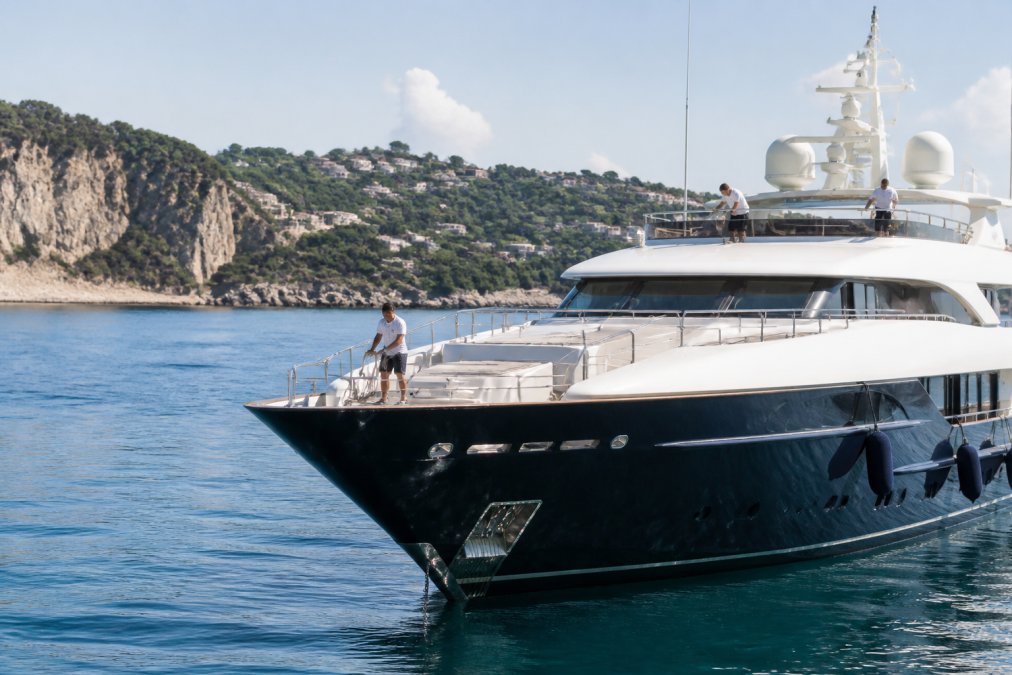
For owners who spend only a few weeks per year aboard, this approach transforms an otherwise dormant asset into a partial income source. Different programs structure revenue splits differently, some offer guaranteed minimum income, others operate on pure revenue-share models where the owner only earns when the yacht is chartered. Management commissions typically range from 20-50% of charter revenue, varying by vessel profile, location, and service level.
What most yacht owners underestimate is the operational complexity. Charter management isn’t passive income. The vessel must meet specific insurance requirements, pass regular inspections, maintain immaculate condition standards, and comply with international maritime regulations. The crew must be trained, vetted, and available on short notice. The yacht becomes a commercial vessel, a different regulatory category than private ownership.
Financial Benefits and Revenue Generation
Charter programs generate income through charter fees paid by guests, typically ranging from several thousand to tens of thousands per week depending on yacht size, age, location, and season. The management company collects this revenue, deducts operating costs and their commission, and remits the owner’s share.
A secondary benefit is tax treatment. In some jurisdictions, demonstrating commercial use of a yacht creates depreciation opportunities and expense deductions unavailable to purely private owners. Consult with a tax advisor familiar with your specific situation before relying on this benefit.
Revenue potential depends heavily on market positioning. A 30-meter yacht in Mediterranean waters during peak season commands significantly higher weekly rates than the same vessel in less competitive markets. Newer vessels with modern amenities typically earn more than older models. Location matters enormously, yachts based in popular charter destinations see higher use rates than those in less-traveled regions.
Use rates are the real determinant of income. A yacht chartered 20 weeks per year at high rates generates meaningfully different returns than one chartered 8 weeks per year at lower rates. Most management companies can provide historical data showing typical use for similar vessels in specific markets. Ask for this directly and verify against comparable vessels.
The revenue-share structure requires careful examination. A program offering 50% of charter revenue sounds appealing until you realize the management company’s costs (crew salaries, fuel, insurance, maintenance, marketing, administrative overhead) substantially reduce that gross revenue. Some owners find their net income represents only 15-25% of the original charter fee. Understand the full fee structure before committing.
Understanding Yacht Ownership Costs Under Management
Yacht ownership carries fixed costs whether the vessel is chartered or idle. These costs don’t disappear when you enter a charter program; they may shift in how they’re paid, but they persist.
Insurance costs increase when a yacht transitions to commercial charter use. Charter insurance is more expensive than private coverage and typically required by reputable management companies. Dockage and mooring fees continue regardless of charter status. Some management programs include these costs in their fee structure; others pass them directly to the owner. Clarify this upfront, it’s a significant line item that compounds annually.
Crew costs represent another substantial expense. A professionally-managed charter yacht requires a permanent or semi-permanent crew. Captains, engineers, chefs, and deckhands all need salaries, benefits, and training. These costs typically run between 30-50% of gross charter revenue for well-managed programs.
Maintenance schedules become more demanding under charter use. A yacht chartered 20 weeks per year experiences more wear than one used privately for 4 weeks. Regular mechanical servicing, through-hull inspections, engine overhauls, and cosmetic maintenance all accelerate. Budget for more frequent dry-docking and substantial repair reserves.
Fuel costs depend on positioning, moving the yacht between charter locations, and operational running. These costs are typically deducted from charter revenue before the owner’s share is calculated.
A practical framework: take the yacht’s annual operating costs (insurance, crew, dockage, fuel, routine maintenance), subtract what the management company covers from charter revenue, and compare the remainder to your projected owner share. If the math doesn’t work at realistic use rates, the program won’t improve your financial position.
Charter Management Agreement Terms: What You Need to Know
The contract governing your relationship with a management company is where vague promises become specific obligations, or where they disappear entirely.
Revenue-sharing formulas must be explicit. Does the company take 30% of gross charter revenue, or 30% of net revenue after expenses? What expenses are deducted before your percentage is calculated? The difference is substantial.
Owner usage terms require careful definition. How many weeks per year can you use your yacht? Are those weeks blackout periods where the yacht cannot be chartered? What happens if you want to extend your usage? These details directly impact your effective ownership experience and the program’s revenue potential.
Termination clauses matter significantly. How much notice must you provide to exit the program? Are there penalties for early termination? Some programs lock owners in for 3-5 years with substantial exit fees. Others allow annual opt-out.
Insurance and liability provisions determine who’s responsible if something goes wrong. Does the management company’s insurance cover the yacht and crew, or are you responsible for additional coverage? Who bears the cost if a guest is injured or the yacht is damaged during a charter?
Maintenance standards should be detailed in writing. What inspections occur, how frequently, and at whose expense? Request the management company’s maintenance schedule for comparable vessels and verify it aligns with your expectations.
Crew management terms define whether the company employs the crew or you do. If the company employs them, you have limited control over hiring and firing. If you employ them, you retain control but bear payroll responsibilities.
Financial reporting and transparency are essential. How often do you receive statements? What detail do they include? Can you audit the books or request verification of charter bookings? Transparent programs provide monthly or quarterly statements showing bookings, revenue, deductions, and your share.
Yacht Maintenance Schedules and Operational Responsibilities
Charter use accelerates wear on a yacht’s systems. A vessel chartered commercially experiences more intensive use than a privately-owned yacht, which means maintenance demands increase accordingly.
Engine and mechanical systems require more frequent servicing. A charter yacht might run its engines 200+ hours per month during peak season, compared to perhaps 40 hours per month for a privately-used vessel (sname.org). This increased runtime means more frequent oil changes, filter replacements, and component inspections. Major overhauls may come sooner than expected.
Hull and through-hull systems need regular attention. Constant water exposure and the stresses of commercial operation mean more frequent haul-outs and inspections. Antifouling paint, shaft seals, and through-hull fittings all require more frequent maintenance.
Interior systems, plumbing, electrical, HVAC, and entertainment experience heavier guest use. Furnishings, upholstery, and finishes require more frequent replacement or refurbishment. What might last 10 years in private use might need refreshing every 3-4 years under charter.
Crew training and certification add ongoing costs. Professional charter crews require regular training, safety certifications, and professional development. These costs are typically deducted from revenue before your share is calculated.
Regulatory compliance demands attention. Charter yachts must maintain current certifications, pass inspections, and comply with maritime regulations. Annual surveys, safety equipment certifications, and documentation updates are mandatory.
Ask the management company: "What’s the typical annual maintenance budget for a yacht like mine in your program?" Compare this to what you’d expect to spend on private use.
The Reality of Owner Usage and Resale Impact
One of the most misunderstood aspects of charter management is the impact on your personal ability to use the yacht and on the vessel’s future resale value.

Your allocated owner usage is fixed. If the program allows you 8 weeks per year, that’s your window. You cannot extend it without negotiating with the management company and potentially sacrificing charter revenue. This constraint surprises owners who expected more flexibility.
Blackout dates matter. Some programs allow you to use your allocated weeks whenever you choose. Others impose blackout periods when the yacht cannot be removed from charter service. You might own the yacht year-round but be unable to use it during peak season if that’s when charter demand is highest.
Charter use leaves marks on a yacht. Constant guest transitions and intensive use create wear patterns that private ownership doesn’t (abyc.org). When you eventually sell, potential buyers will ask about the yacht’s charter history. Some buyers specifically seek charter-history yachts because they’re proven revenue generators. Others avoid them, viewing charter use as indicating accelerated wear.
Resale value is complex. A well-maintained charter yacht with documented revenue history might command a premium from buyers interested in continuing charter operations. Conversely, buyers seeking a private yacht might discount the price. The market for charter-history yachts is narrower than the market for private-use yachts, which can make selling more difficult.
Documentation matters for resale. Maintain complete maintenance records, charter booking history, and financial statements. When you sell, buyers will want proof that the yacht was well-maintained and that the charter program was legitimate and profitable.
The personal experience of ownership changes. You’re no longer the sole user of your yacht. Strangers occupy your cabins and use your equipment. Some owners find this acceptable; others find it intrusive.
Is a Charter Management Program Right for Your Yacht?
The decision to enter a charter program depends on your specific circumstances, financial goals, and tolerance for operational complexity.
Consider your usage pattern first. If you use your yacht 12+ weeks per year, a charter program makes less sense (ycharts.com). Your personal usage would conflict with charter bookings. Charter programs work best for owners using their yachts 4-8 weeks annually.
Evaluate your financial motivation. If your primary goal is offsetting ownership costs, a charter program might help, but only if the yacht is suitable for charter and positioned in a strong market. A 15-year-old 40-meter yacht in a secondary market might generate insufficient revenue to justify the operational complexity. A newer 50-meter yacht in Mediterranean waters could generate substantial income.
Assess your risk tolerance. Charter programs introduce operational variables you don’t control. Bookings fluctuate seasonally. Market demand changes. Economic downturns reduce charter demand. If you need predictable income, a guaranteed-income program offers more certainty than revenue-sharing, though at lower potential upside.
Consider the operational burden. Even with a management company handling day-to-day operations, you remain the yacht’s owner. You’re responsible for strategic decisions, contract oversight, and financial monitoring. This requires engagement and attention.
Examine the management company’s track record. Ask for references and contact current clients about their experience. Request documentation of use rates and revenue for comparable vessels. Ask how long the company has been operating and whether they’ve weathered economic downturns.
Review the contract thoroughly with legal counsel familiar with maritime law. Ensure everything material is documented in writing: revenue splits, maintenance standards, owner usage, termination provisions, and insurance coverage.
Compare alternatives. Keeping the yacht private and accepting the full ownership cost is one option. Selling and chartering when needed is another. Some owners find that hiring a private crew and chartering occasionally provides income without formal program obligations.
The reality: charter management programs work well for specific owner profiles, those with moderate usage needs, suitable yachts, strong market positioning, and tolerance for operational complexity. For others, the operational demands and financial uncertainty outweigh the benefits. Be honest about which category you fall into.
Pros and Cons Summary
| Aspect | Advantage | Disadvantage |
|---|---|---|
| Revenue Generation | Offset ownership costs with charter income | Income depends on use rates and market demand |
| Operational Burden | Professional management handles day-to-day operations | Owner retains strategic responsibility and oversight |
| Owner Usage | Guaranteed personal use periods | Limited to allocated weeks; blackout dates may apply |
| Maintenance | Professional crew and maintenance standards | Accelerated wear from charter use; higher maintenance costs |
| Resale Value | Charter history documents vessel condition and revenue | Charter-history yachts appeal to narrower buyer pool |
| Financial Complexity | Potential tax benefits from commercial operation | Complex fee structures; transparency varies by program |
| Flexibility | Can exit some programs with reasonable notice | Some programs lock owners into long-term contracts |
| Crew Management | Professional crew handles guest services | Limited control over hiring; crew costs are substantial |
The decision to enter a charter management program is ultimately about alignment between your ownership goals and the program’s operational realities. Programs that succeed are those where owners have realistic expectations about income, understand the true costs, accept the operational complexity, and choose management companies with transparent practices and proven track records.
At Palm Lifestyle, we work with owners considering charter programs to ensure they understand both the financial potential and the operational commitments. Our team can help you evaluate whether a charter program aligns with your yacht ownership objectives and connect you with reputable management partners if you decide to proceed. The key is making an informed decision based on complete information rather than optimistic projections.
=== FAQ ANSWERS (audit these too, same rules) ===
[1] Q: How do yacht charter management programs work for owners?
A: Charter management programs place your yacht in a professional fleet available for commercial charter bookings. The management company handles all operations, maintenance, crew, marketing, and guest coordination. Owners receive a share of charter revenue after operational expenses are deducted. Most agreements specify owner usage windows (typically 4-8 weeks annually) when the yacht is unavailable for charter. The program essentially converts your yacht into a revenue-generating asset while a professional team manages day-to-day operations and client relationships.
[2] Q: What are the primary financial benefits of placing a yacht in a charter program?
A: The main benefit is generating consistent charter revenue that offsets or exceeds operational costs. Charter programs also provide predictable budgeting through fixed management fees, eliminate the burden of finding charter clients independently, and offer professional asset management that can enhance resale value. Additionally, structured maintenance under professional oversight often prevents costly emergency repairs that private owners might face.
[3] Q: What are the maintenance responsibilities under a charter management agreement?
A: The charter management company typically handles all routine maintenance, scheduled servicing, crew training, and compliance inspections outlined in the yacht maintenance schedules. However, most agreements require owners to fund major capital expenditures (engine overhauls, hull repainting, significant structural work) separately. Review your specific charter management agreement terms carefully, some programs cover wear-and-tear within their fee structure, while others pass unexpected repair costs directly to owners. Clarify which party bears responsibility for age-related deterioration versus accidental damage.
[4] Q: How does chartering affect the resale value of a luxury yacht?
A: Intensive charter use can accelerate wear and tear, potentially lowering resale value if the vessel shows signs of heavy use or inconsistent maintenance. However, yachts enrolled in professional charter programs with meticulous maintenance records often maintain value better than privately owned vessels with sporadic upkeep. The key factor is documentation, a comprehensive service history and evidence of professional management can offset concerns about charter usage. Exit timing matters too; selling during strong market conditions can minimize any depreciation impact from charter wear.
Frequently Asked Questions
How do yacht charter management programs work for owners?
Charter management programs place your yacht in a professional fleet available for commercial charter bookings. The management company handles all operations, maintenance, crew, marketing, and guest coordination. Owners receive a share of charter revenue after operational expenses are deducted. Most agreements specify owner usage windows (typically 4-8 weeks annually) when the yacht is unavailable for charter. The program essentially converts your yacht into a revenue-generating asset while a professional team manages day-to-day operations and client relationships.
What are the primary financial benefits of placing a yacht in a charter program?
The main benefit is generating consistent charter revenue that offsets or exceeds operational costs. Charter programs also provide predictable budgeting through fixed management fees, eliminate the burden of finding charter clients independently, and offer professional asset management that can enhance resale value. Additionally, structured maintenance under professional oversight often prevents costly emergency repairs that private owners might face.
What are the maintenance responsibilities under a charter management agreement?
The charter management company typically handles all routine maintenance, scheduled servicing, crew training, and compliance inspections outlined in the yacht maintenance schedules. However, most agreements require owners to fund major capital expenditures (engine overhauls, hull repainting, significant structural work) separately. Review your specific charter management agreement terms carefully, some programs cover wear-and-tear within their fee structure, while others pass unexpected repair costs directly to owners. Clarify which party bears responsibility for age-related deterioration versus accidental damage.
How does chartering affect the resale value of a luxury yacht?
Intensive charter use can accelerate wear and tear, potentially lowering resale value if the vessel shows signs of heavy use or inconsistent maintenance. However, yachts enrolled in professional charter programs with meticulous maintenance records often maintain value better than privately owned vessels with sporadic upkeep. The key factor is documentation, a comprehensive service history and evidence of professional management can offset concerns about charter usage. Exit timing matters too; selling during strong market conditions can minimize any depreciation impact from charter wear.
Get in touch with Palm Lifestyle to discuss whether a charter management program fits your yacht ownership strategy. Our team has extensive experience helping owners navigate these decisions and can provide candid guidance on realistic income expectations and operational requirements for your specific vessel.