

Table of Contents
- Assess Your Vessel’s Charter Readiness
- Understand Commercial Yacht Registration Requirements
- Select a Professional Charter Broker
- Set Realistic Charter Rates for Revenue Generation
- Secure Yacht Insurance for Commercial Charter
- Develop Your Yacht Charter Marketing Strategy
- Implement Yacht Charter Management Services
- Prepare for Launch and Ongoing Operations
Last Updated: August 18, 2026
Listing your yacht for charter is fundamentally different from selling it outright. You’re opening a revenue stream while retaining control of your vessel. The process requires careful planning across vessel condition, regulatory compliance, insurance, marketing, and ongoing management. This guide from Palm Lifestyle walks you through the essential steps to list your yacht for charter and position your asset for consistent bookings and revenue generation.
Assess Your Vessel’s Charter Readiness
Before listing your yacht for charter, determine whether your vessel meets the operational and safety standards required for commercial use. Charter guests expect pristine condition, reliable systems, and full compliance with international maritime law. A vessel suitable for private use may need significant upgrades to be charter-ready.

Conduct a Professional Vessel Survey
A professional survey is non-negotiable. Hire a certified marine surveyor to conduct a comprehensive assessment of your yacht’s structural integrity, mechanical systems, electrical installations, and safety equipment. The survey results become your baseline, informing pricing, revealing capital expenditure requirements, and protecting you legally by documenting the vessel’s condition before charter guests board. Many charter brokers won’t represent a yacht without a recent survey report on file.
Verify Safety Certifications and Compliance
Your yacht must hold valid safety certifications appropriate to its size and operational area. International regulations require vessels over 24 metres to carry Safety Management System (SMS) documentation, crew certifications, and equipment compliance certificates. Ensure all safety equipment, life rafts, fire suppression systems, navigation aids, and communication gear are current and certified. Flag state requirements vary, so verify your vessel’s documentation aligns with your intended charter routes.
Understand Commercial Yacht Registration Requirements
Moving your vessel into the charter market typically requires commercial registration with your flag state. This formal transition changes your tax status, insurance classification, and operational obligations. Commercial registration involves submitting vessel details to the maritime authority, providing proof of compliance with safety standards, and establishing a management structure. Many owners work with a professional yacht management company to handle these administrative requirements. The registration process can take several weeks, so plan accordingly before your target launch date.
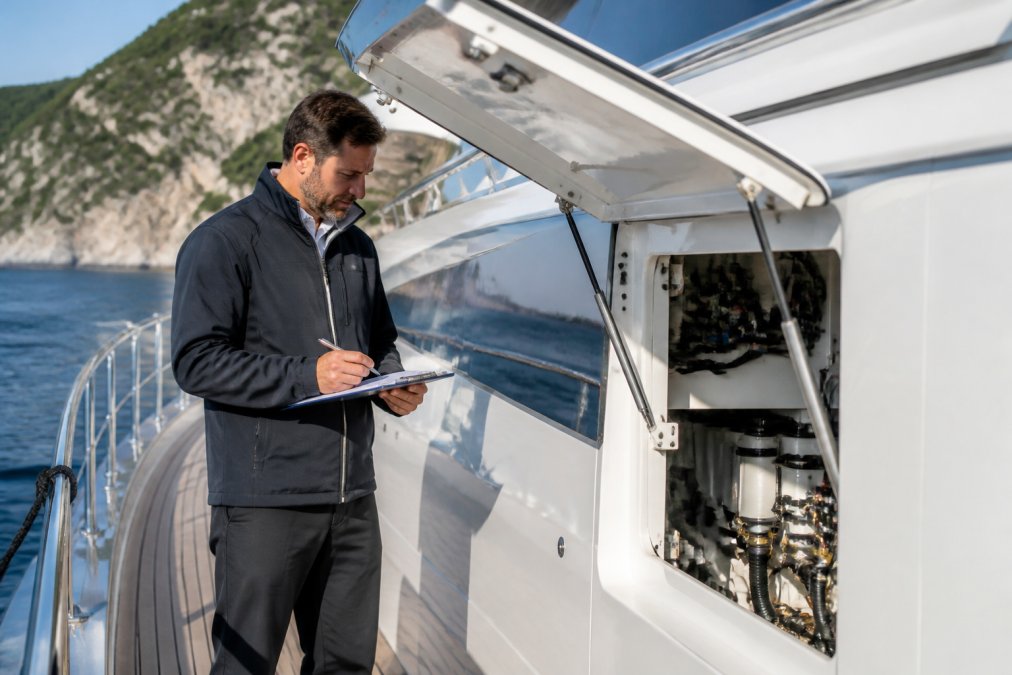
Your flag state will require documentation of crew qualifications, safety drills, and maintenance schedules. Non-compliance can result in port state detentions and loss of charter income.
Select a Professional Charter Broker
Your charter broker is your primary business partner, handling marketing, booking management, guest communication, and revenue collection. Evaluate brokers based on their market presence, fleet size, and client base. A broker with strong relationships in your target charter regions will fill your calendar more effectively than one with minimal local presence.
Understand the broker’s commission structure upfront. Charter brokers typically take 20-30% of charter fees. Clarify what services are included: do they handle crew placement, provisioning, guest communication, or only bookings? Palm Lifestyle specializes in connecting yacht owners with qualified brokers and managing the charter relationship end-to-end, ensuring transparent fee structures and consistent marketing support throughout the season.
Set Realistic Charter Rates for Revenue Generation
Your charter rate determines occupancy and revenue. Realistic rates reflect your vessel’s size, age, condition, location, and amenities, but most importantly, they must exceed your total operational costs to generate actual profit.
Understanding the Full Cost Structure
Many owners set charter rates based on competitor pricing, then discover mid-season that their net income is negative. Break down your costs into three categories:
Direct Charter Costs (per booking):
Crew wages and benefits, fuel consumption, provisioning and catering, water and utilities, laundry and consumables, guest amenities, and port fees.
Fixed Annual Costs:
Commercial yacht insurance, crew training and certifications, scheduled maintenance, equipment inspections, mooring fees, management company fees, and marketing refreshes.
Broker Commission:
Typically 20-30% of gross charter fees.
A realistic example: A 15-metre motor yacht with four crew members might incur direct costs per week of charter, plus fixed monthly costs. If your broker takes 25% commission and your management company takes 15% of revenue, your net margin shrinks significantly. A weekly rate of €25,000 gross becomes €25,000 − €10,000 (broker) − €3,750 (management) − €10,000 (direct costs) = €1,250 net profit for the week.
Researching Comparable Market Rates
Research comparable yachts in your market segment strategically. What are similar vessels charging during peak season versus shoulder season? Charter rates fluctuate seasonally, and smart owners adjust pricing to maximize occupancy year-round. Use multiple data sources: your broker’s internal fleet benchmarks, public charter platforms, and industry reports. Rates vary significantly by region, Mediterranean summer charters command premium rates; winter Caribbean charters peak differently.
Calculate your break-even occupancy rate: the number of weeks per year you must charter at your target rate to cover all costs. Most successful charter yachts operate at 60-75% occupancy during their active season. Use this benchmark to stress-test your financial model before listing.
Secure Yacht Insurance for Commercial Charter
Commercial charter insurance differs fundamentally from private yacht insurance. Your policy must cover guest liability, crew injuries, third-party damage, and loss of income from cancellations. Private insurance does not cover commercial charter operations; attempting to operate under a private policy will void your coverage and expose you to catastrophic personal liability.
Insurance Coverage Requirements
Work with an insurance broker experienced in commercial yacht charter. Your policy should include hull and machinery coverage, protection and indemnity (P&I) liability for third-party claims, guest liability and medical coverage, crew liability and employment practices coverage, loss of income protection, cyber liability, and pollution and environmental liability.
Commercial charter insurance is significantly more expensive than private coverage. A single guest injury claim or damage incident can exceed your yacht’s value. Adequate insurance protects both your asset and your personal wealth.
Tax and VAT Implications by Region
Charter income triggers VAT (Value Added Tax) obligations that vary by flag state and charter region. Understanding these implications before launch is critical to accurate financial planning.
Mediterranean and European Waters:
If your yacht is flagged in an EU member state or operates primarily in EU waters, charter income is typically subject to VAT at the standard rate. Some jurisdictions offer reduced rates for vessel charters, but this varies. VAT is collected on the gross charter fee and remitted to the tax authority. Owners who fail to account for VAT in their rate-setting often discover they’re operating at a loss.
Get in touch with us to discuss your yachting needs. →
Additionally, some jurisdictions impose tonnage tax or alternative tax regimes for commercial shipping. If your yacht is registered for commercial charter, you may qualify for tonnage tax, which can significantly reduce your tax burden.
Crew and Employment Taxes:
Commercial charter requires employed crew, not independent contractors. This triggers payroll taxes, social security contributions, and employment insurance in your flag state. These costs are typically 20-35% on top of crew wages, depending on jurisdiction.
Income Tax on Charter Profit:
Your net charter profit is subject to income tax in your personal tax jurisdiction. Some owners structure their charter operations through a corporate entity to optimize tax efficiency, but this requires professional tax advice.
Before listing your yacht, consult with a tax professional familiar with commercial yacht operations in your jurisdiction. A brief consultation can save you thousands in unexpected tax bills or missed deductions.
Transition from Private to Commercial Insurance
If your yacht currently carries private insurance, notify your insurer immediately that you intend to charter commercially. Do not list your yacht and hope they don’t find out, insurers actively monitor charter platforms. Operating under a private policy while chartering is insurance fraud and will result in claim denial if an incident occurs. Ensure your new commercial policy is in force before your first charter guest boards.
Develop Your Yacht Charter Marketing Strategy
Your marketing strategy determines how many inquiries your broker receives and how quickly your calendar fills. A well-marketed yacht attracts premium guests and commands higher rates.
Professional Photography and Marketing Collateral
Professional photography is your most powerful marketing tool. Hire a yacht photographer experienced in luxury vessel marketing. High-quality photos of deck spaces, cabins, dining areas, and water views are non-negotiable. Video content drives engagement, a 2-3 minute video tour converts browsers into bookers more effectively than static images alone.
Create detailed written descriptions highlighting unique features: water toys, onboard entertainment systems, crew specialties, and signature experiences. A yacht with a spa, helicopter pad, or renowned chef commands premium rates; ensure your marketing emphasizes these differentiators.
Listing Optimization and Booking Calendar Management
Your listing across charter platforms must be comprehensive and consistent. Include detailed specifications: length, beam, guest capacity, cabin configuration, crew size, and year built. Optimize your listing description with keywords that charter guests search for: "Mediterranean superyacht," "family-friendly charter," or "expedition yacht."
Maintain an accurate, updated booking calendar. Gaps between bookings should reflect genuine unavailability or deliberate pricing adjustments, not administrative neglect. A calendar full of random gaps signals poor management and deters bookings.
Implement Yacht Charter Management Services
Once your yacht is listed, ongoing management becomes critical. A professional charter management company handles crew coordination, provisioning, maintenance scheduling, guest communication, and post-charter inspections. This operational layer keeps your yacht running smoothly and guests satisfied.
Charter management companies typically charge a percentage of charter revenue or a flat monthly fee. Without professional management, a single poorly coordinated charter, missing provisions, or maintenance issues can damage your reputation and future bookings. Your management company should provide detailed reporting: occupancy rates, revenue, maintenance costs, guest feedback, and seasonal trends.
Prepare for Launch and Ongoing Operations
Your launch date marks the beginning of active charter operations. Ensure your vessel is fully prepared: crew trained, safety systems tested, provisioning systems established, and guest communication protocols in place.
Monitor guest feedback closely during your first season. Complaints about maintenance or communication require immediate attention. Budget for ongoing costs beyond the obvious: crew training, equipment upgrades, seasonal repositioning, and marketing refreshes. Plan for seasonal variation by adjusting your marketing and pricing to match demand in your target regions.
Listing your yacht for charter requires deliberate planning across vessel condition, regulatory compliance, insurance, marketing, and operational management. Each step builds on the previous one. A vessel that’s survey-ready but under-insured creates liability exposure. A beautifully marketed yacht with poor management disappoints guests and damages future bookings.
Palm Lifestyle guides yacht owners through every phase of the charter listing process. From initial vessel assessment through launch and ongoing operations, our team ensures your yacht meets market standards, complies with maritime regulations, and attracts premium guests. Contact us to discuss your charter strategy and connect with qualified brokers and management partners who understand the operational and financial realities of commercial yacht charter.
Frequently Asked Questions
What is the difference between a private and commercial yacht registration?
Private yacht registration allows personal use only, while commercial registration enables revenue generation through chartering. Commercial registration requires compliance with flag state regulations, safety management systems, crew certifications, and mandatory insurance coverage. The registration type directly affects your ability to list your yacht for charter and determines your operational and tax obligations.
What insurance coverage is necessary before listing a yacht for charter?
Commercial yacht insurance for charter operations must cover liability, hull damage, crew protection, and passenger indemnity. Coverage requirements vary by flag state and charter agreement terms. Your insurance policy must explicitly permit commercial charter activity. Brokers and management companies typically require proof of adequate coverage before listing your vessel. Consult with a marine insurance specialist to ensure your policy meets all regulatory and contractual requirements.
How do I determine the optimal charter rate for my vessel?
Charter rates depend on vessel size, age, location, amenities, seasonal demand, and comparable market rates. Factors include operational costs, crew placement expenses, maintenance, and desired revenue targets. Professional brokers analyze market data to recommend competitive rates that maximize bookings without undervaluing your asset. Consider regional demand patterns and charter management service fees when setting pricing. Your broker can provide benchmarking analysis based on similar vessels in your market segment.
Do I need a professional management company to list my yacht for charter?
While not legally required, professional yacht charter management services handle crew placement, maintenance scheduling, booking calendar management, guest coordination, and regulatory compliance. Management companies streamline operations, reduce liability exposure, and typically increase revenue through better marketing and booking optimization. Many owners find that outsourcing these functions allows them to focus on their business while ensuring their vessel operates safely and profitably.