

Table of Contents
- Understand Water Depth and Draft Requirements for Your Vessel
- Evaluate Private Dock vs. Shared Slip Ownership Options
- Assess Tidal Range and Seasonal Canal Accessibility
- Yacht Mooring Regulations in the Arabian Gulf and Mediterranean
- Review Zoning Laws, Riparian Rights, and Maritime Permitting
- Waterfront Home Inspection Checklist for Dock and Hull Compatibility
- Calculate Maintenance Costs, Insurance, and Long-Term Waterfront Investment Value
- Choosing a Waterfront Home With Yacht Access: Final Considerations
Last Updated: August 8, 2026
Choosing a waterfront home with yacht access requires far more than finding a property with a dock. The technical realities of vessel mooring, tidal fluctuations, regulatory compliance, and infrastructure durability will determine whether your investment becomes a seamless maritime lifestyle or a costly lesson in overlooked details. At Palm Lifestyle, we’ve guided numerous high-net-worth clients through this process, and the difference between successful acquisitions and problematic ones consistently comes down to understanding the specific engineering and legal constraints of your chosen location before committing capital.
This guide walks you through the critical evaluation framework used by experienced maritime property investors and yacht owners across the Mediterranean, Arabian Gulf, and beyond.
Understand Water Depth and Draft Requirements for Your Vessel
The foundation of any waterfront home with yacht access decision is matching your vessel’s draft requirements to the actual water depth available at the property. Draft is the vertical distance from the waterline to the lowest point of your yacht’s hull. If your vessel draws 2.5 metres and the canal averages only 2 metres at low tide, your yacht will run aground.
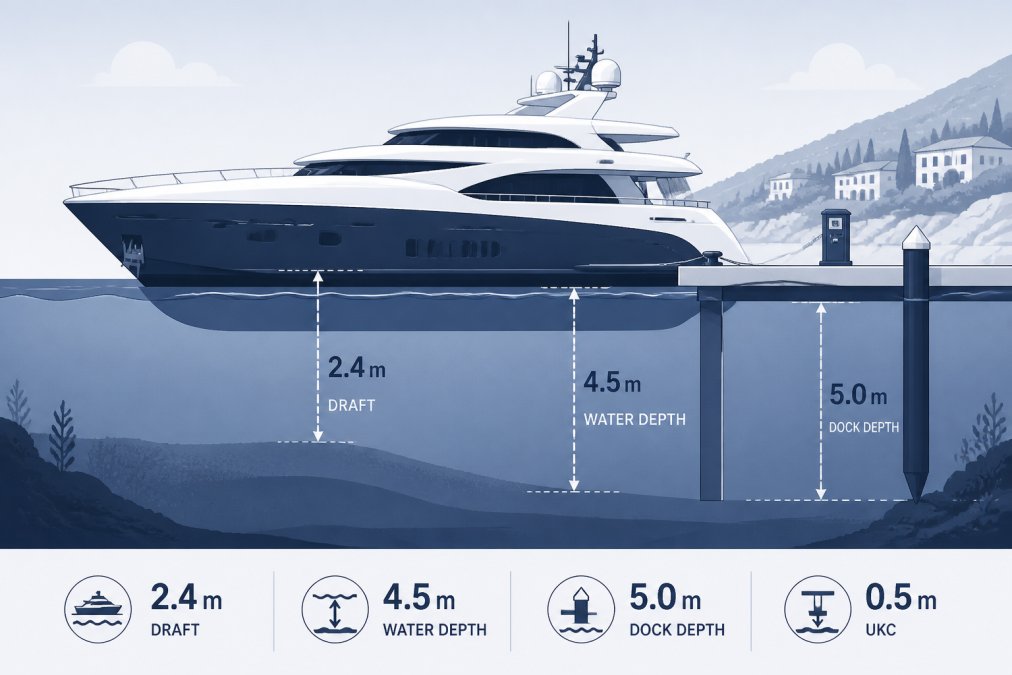
Most waterfront properties provide a depth chart or hydrographic survey mapping the seabed profile and minimum depths at various tidal stages. Request these documents explicitly. Don’t rely on assurances that "boats use this marina all the time." You need actual measurements from a professional marine survey conducted within the last two years.
The critical distinction is between mean low water depth and extreme low water depth. Your vessel must float comfortably at extreme low water, the absolute lowest point during spring tides. A 50-metre superyacht with a 2.2-metre draft needs confirmation that the channel maintains at least 2.5 metres even during the lowest tidal conditions of the year.
Consider also the approach channel, the waterway leading from open water to your private slip or mooring field. A property might have excellent depth at the dock but require navigating a shallow approach channel that restricts vessel size. The limiting factor is always the shallowest section of the entire route.
If you’re planning to upgrade your vessel in future years, account for that in your depth assessment now. Purchasing a property suitable only for your current 40-metre yacht when you plan to upgrade to 55 metres within five years is poor planning.
Evaluate Private Dock vs. Shared Slip Ownership Options
The ownership structure of your mooring infrastructure fundamentally shapes your experience and financial exposure. You have three primary options: private dock ownership, shared slip in a managed marina, or a combination approach.
Private dock ownership means you own the dock infrastructure outright as part of the waterfront property. This offers complete control over vessel size limits, maintenance scheduling, and access. You’re responsible for all structural maintenance, permitting renewals, and maritime zoning compliance.
Shared slip ownership places your vessel in a managed marina where you own or lease a specific slip. The marina operator handles infrastructure maintenance, security, and administrative overhead. Your costs are predictable, but you have less control and are subject to marina rules regarding vessel type, length, and operational hours.
A third option gaining traction is hybrid ownership: you own the waterfront property and a private dock for personal use, while the property includes a small number of commercial slips that generate charter revenue. This approach requires careful structuring with local authorities, as it blurs the line between residential and commercial maritime use.
The financial calculus shifts based on your intended use. If you plan to charter your vessel or operate it commercially, shared marina facilities often provide better infrastructure for guest management and provisioning. If your yacht is primarily personal use, a private dock eliminates the friction of marina scheduling and shared amenity rules.
Consider also the resale implications. Properties with private docks in desirable locations command premiums, but they’re more difficult to sell because the buyer pool is smaller. Shared slip properties are easier to resell because the marina infrastructure is standardized.
Assess Tidal Range and Seasonal Canal Accessibility
Tidal range, the vertical difference between high and low tide, varies dramatically across maritime regions. The Mediterranean experiences minimal tidal range, typically 0.3 to 0.6 metres. The Arabian Gulf sees moderate range, averaging 1.5 to 2 metres. Atlantic coasts can exceed 10 metres in extreme cases. This directly affects your vessel’s accessibility throughout the year.
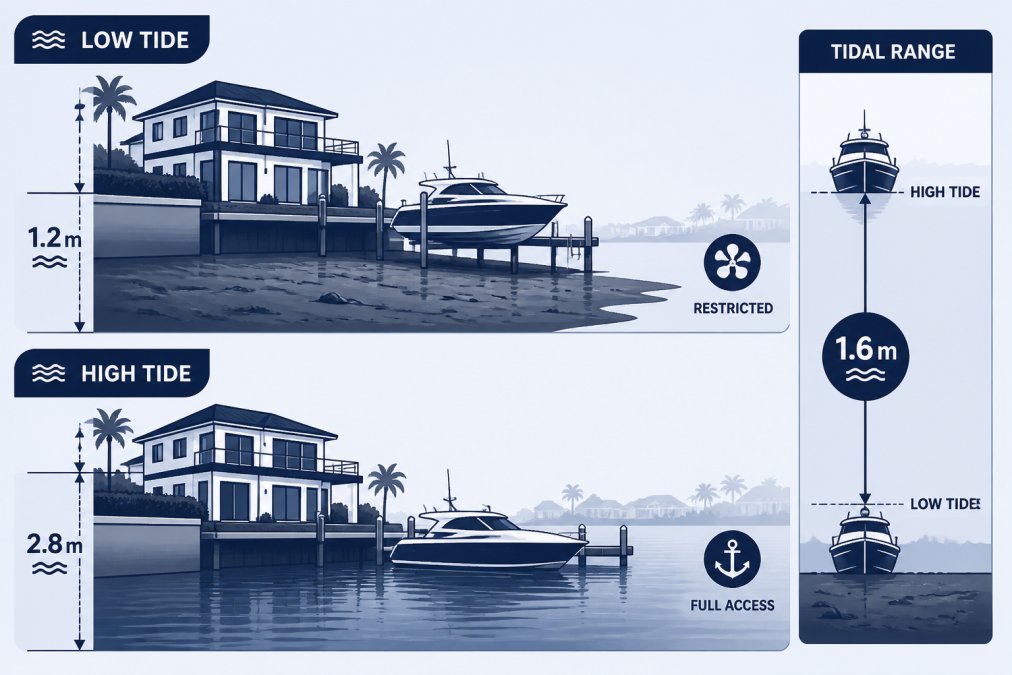
In regions with significant tidal range, your vessel may be accessible only during specific hours of the day. A canal that provides 2.5 metres of depth at high tide might offer only 1.8 metres at low tide. If your yacht draws 2.2 metres, you have a window of perhaps 4-6 hours per tidal cycle when departure is safe. This constraint shapes every operational decision: you can’t leave for a weekend cruise on a whim, and emergency departures during adverse weather might coincide with low-tide periods when the canal is impassable.
Seasonal variations compound this problem. Winter storm surge can temporarily raise water levels, while summer drought conditions in some regions can lower baseline water depths. Request historical tide tables and consult with local harbour masters about seasonal navigation patterns. Ask specifically about "closing periods", times when the canal or approach channel becomes impassable due to low water or seasonal conditions.
Yacht Mooring Regulations in the Arabian Gulf and Mediterranean
Yacht mooring regulations differ significantly between the Arabian Gulf and Mediterranean, reflecting different environmental conditions, maritime traditions, and regulatory frameworks.
In the Arabian Gulf, yacht mooring is governed by maritime authorities and local authorities. Vessels must be registered with the maritime registry, and mooring locations require explicit authorization. Private residential docks are permitted but subject to environmental assessments and coastal protection regulations. Storm surge protection is mandatory in many locations, and dock infrastructure must meet specific engineering standards. Environmental regulations are strict regarding seabed disturbance; dredging or pile-driving requires environmental impact assessments and can take 6-12 months to permit.
Mediterranean jurisdictions vary by country, but general principles apply across Spain, France, Italy, Greece, and Croatia. Most Mediterranean nations require mooring permits from port authorities or environmental agencies. Some restrict private dock development in protected coastal zones. France’s Loi Littoral (Coastal Law) limits waterfront construction and can restrict private dock expansion. Italy’s environmental regulations are similarly stringent in protected areas.
A critical distinction: some jurisdictions classify waterfront properties as "maritime" land, which carries different regulatory treatment than residential real estate. You might own the land but not have full rights to install dock infrastructure or moor large vessels. Before purchasing any waterfront property, engage a maritime lawyer licensed in that jurisdiction to review the specific regulatory constraints.
Review Zoning Laws, Riparian Rights, and Maritime Permitting
Riparian rights are your legal entitlement to use water adjacent to your property. These rights vary dramatically by jurisdiction. In some regions, riparian rights are absolute and you can develop the waterfront as you wish, subject only to environmental regulations. In others, riparian rights are limited or conditional, and the state retains ownership of the seabed or foreshore.
The Arabian Gulf follows a mixed approach. The state owns the seabed and foreshore, but property owners with waterfront land have specific riparian rights to moor vessels and maintain access infrastructure. These rights are not automatic; they must be explicitly granted through the property title or obtained through separate permitting.
Mediterranean jurisdictions typically recognize riparian rights but restrict their exercise through zoning and environmental laws. France’s Loi Littoral limits development within 100 metres of the high-tide line in many coastal areas. Spain’s Coastal Law restricts building heights and infrastructure density near the shoreline. These restrictions can prevent dock expansion or modification even if you technically have riparian rights.
Zoning classifications determine what maritime activities are permitted. Residential zones might allow private mooring but prohibit commercial charter operations. Commercial zones might permit yacht charter but restrict residential use. Obtain a comprehensive zoning review before purchasing, including current zoning classification, permitted uses, any pending zoning changes, restrictions on dock size and configuration, environmental overlay zones, and permitting timelines for dock modifications.
Maritime permitting is separate from zoning and typically involves harbour authorities, environmental agencies, and sometimes naval authorities. A permit to construct a private dock might require environmental impact assessment, hydrographic survey, structural engineering review, and community notification. Total permitting time for a straightforward private dock can easily exceed six months.
Waterfront Home Inspection Checklist for Dock and Hull Compatibility
A standard property inspection is insufficient for waterfront homes with yacht access. You need a specialized marine survey conducted by a qualified surveyor who understands both dock infrastructure and vessel compatibility.
Get in touch with us to discuss your yachting needs. →
Dock structural assessment:
- Age and condition of pilings (wood, concrete, steel)
- Evidence of rot, corrosion, or structural damage
- Adequacy of mooring cleats and bollards for your vessel’s size
- Electrical systems for shore power (voltage, amperage, grounding)
- Water systems (potable water, wastewater treatment)
- Fuel systems (if applicable)
- Weather protection and storm surge resilience
- Compliance with current maritime building codes
Approach and access evaluation:
- Navigational hazards (submerged rocks, debris, shallow spots)
- Bridge clearance (vertical and horizontal)
- Width restrictions for your vessel
- Current patterns and wind exposure
- Visibility and lighting for safe navigation
- Seasonal accessibility constraints
Environmental factors:
- Seabed composition (mud, sand, rock, affects anchoring and dredging)
- Water quality and pollution indicators
- Marine life and ecosystem sensitivity
- Flood zone classification and storm surge risk
- Erosion patterns and shoreline stability
Regulatory compliance:
- Current permits and their expiration dates
- Any violations or outstanding compliance issues
- Environmental easements or restrictions
- Utility rights-of-way affecting dock access
- Insurance requirements and exclusions
A comprehensive marine survey frequently uncovers issues that reduce the property’s value or reveal hidden costs. Properties with aging dock infrastructure, environmental restrictions, or permitting issues should command significant discounts reflecting the remediation costs.
Calculate Maintenance Costs, Insurance, and Long-Term Waterfront Investment Value
Waterfront property ownership carries costs far exceeding traditional residential real estate. Most buyers underestimate these expenses by 40-60%, leading to financial stress and poor long-term investment decisions.
Annual dock maintenance typically includes:
- Structural inspection and repairs
- Pilings and mooring system maintenance
- Electrical and water system servicing
- Fuel system maintenance (if applicable)
- Environmental compliance and permits
- Insurance for dock infrastructure
Vessel-specific costs at a residential mooring include:
- Mooring field maintenance (if shared)
- Insurance (hull and liability)
- Crew or caretaker costs (if applicable)
- Provisioning and operational costs
- Annual haul-out and bottom maintenance
These costs scale dramatically with vessel size. A 40-metre yacht requires roughly double the annual maintenance of a 25-metre vessel.
Insurance for waterfront properties is complex. Standard homeowners’ policies exclude dock infrastructure and maritime activities. You’ll need specialized marine property insurance covering dock structure and improvements, mooring equipment and systems, liability for injuries on the property, environmental liability, and loss of use.
The long-term investment value of waterfront property with yacht access depends on location, infrastructure quality, and regulatory environment. Properties in prime Mediterranean locations with excellent dock infrastructure and minimal regulatory constraints appreciate steadily. Properties in less desirable locations or with significant regulatory restrictions may appreciate only modestly.
Calculate the total cost of ownership before purchasing to ensure the property aligns with your financial capacity.
Choosing a Waterfront Home With Yacht Access: Final Considerations
The decision to purchase a waterfront home with yacht access extends beyond financial analysis. You’re committing to a specific operational model, the way you’ll actually use your vessel, the frequency of departures, the scale of entertaining, and your tolerance for seasonal accessibility constraints.
Consider your actual usage patterns. Buyers often envision extended Mediterranean cruises, only to discover that work commitments and family obligations limit actual usage to 4-6 weeks annually. For occasional users, the financial burden of dock maintenance and vessel upkeep often exceeds the lifestyle value delivered.
Evaluate the property’s suitability for your current vessel and realistic future upgrades. A property perfectly suited to your existing 35-metre yacht might become a constraint if you upgrade to 50 metres in five years.
The regulatory and permitting environment deserves serious weight in your decision. Properties in stable jurisdictions with clear maritime regulations and efficient permitting processes are inherently lower-risk than properties in jurisdictions with uncertain or restrictive regulations.
Environmental factors matter more than most buyers acknowledge. Properties subject to seasonal flooding, erosion, or environmental restrictions often become problematic within 10-15 years. Climate resilience, the property’s ability to withstand storm surge, flooding, and environmental changes, should influence your valuation and decision-making.
Finally, engage experienced advisors early. A maritime lawyer, marine surveyor, and yacht operations specialist can identify constraints and opportunities that real estate agents and general property inspectors will miss.
Selecting the right waterfront home with yacht access requires technical expertise, regulatory knowledge, and honest assessment of your actual usage patterns and financial capacity. The properties that deliver the greatest satisfaction are those where the dock infrastructure, water depth, regulatory environment, and operational costs align seamlessly with the owner’s intended use and financial tolerance.
At Palm Lifestyle, we’ve guided clients through this evaluation process across the Mediterranean and Arabian Gulf, helping them identify properties that deliver both lifestyle value and sound investment returns. Whether you’re acquiring your first waterfront property or upgrading to accommodate a larger vessel, our team brings the maritime expertise and market knowledge that transforms this complex decision into a confident, informed choice.
Get in touch with us to discuss your waterfront property needs and how our expertise in yacht purchase and charter operations can guide your decision.
Frequently Asked Questions
What water depth do I need for a yacht at a waterfront home?
The required depth depends on your vessel's draft, the distance from waterline to keel. Most yachts need 2-4 metres of water depth at low tide for safe mooring. Check navigational charts for your location and consult a marine surveyor to measure actual depth at your property. In the Arabian Gulf, tidal range can shift depth by 1.5-2 metres, so verify depth across all tidal conditions before committing to a waterfront home with yacht access.
What are the yacht mooring regulations in the Arabian Gulf?
Yacht mooring regulations in the Arabian Gulf vary by emirate. In Dubai and Abu Dhabi, private moorage requires permits from the relevant maritime authority and compliance with port regulations. You must register your vessel, maintain insurance, and follow environmental standards. Shared slip arrangements in marinas have different rules. Consult local authorities or a maritime legal advisor to confirm specific yacht mooring regulations for your chosen location before purchasing a waterfront home.
Should I buy a waterfront home with a private dock or a shared marina slip?
Private dock ownership gives you exclusive access, flexibility, and control over mooring infrastructure, ideal if you use your yacht frequently. Shared slip ownership in a gated waterfront community offers lower maintenance costs, professional dock management, and access to amenities. Private docks require more upkeep and capital investment; marina slips limit customization but reduce responsibility. Consider your usage frequency, budget, and preference for privacy when evaluating both options.
What should I check in a waterfront home inspection for yacht compatibility?
Your waterfront home inspection checklist should include: water depth at low tide, bulkhead condition, dock structural integrity, navigational clearance (bridges, power lines), slip length and width for your hull style, tidal range impacts, flood zone designation, riparian rights documentation, and environmental restrictions. Hire a marine surveyor alongside a standard home inspector. Verify dock permitting is current and that any moorage fees or HOA maritime restrictions won't limit your boating plans.