

Table of Contents
- Understanding Yacht Depreciation and Residual Value
- Key Factors Affecting Yacht Resale Value
- The Role of Marine Surveys in Yacht Valuation
- Maintenance Records and Service History Impact
- Yacht Brokerage vs. Direct Seller: Valuation Differences
- Valuation Methods: Digital Tools and Professional Appraisals
- Tax and Legal Considerations in Yacht Valuation
- Conclusion
Last Updated: August 19, 2026
Understanding Yacht Depreciation and Residual Value
Valuing a pre-owned yacht requires understanding how these assets lose value over time. Unlike automobiles with predictable depreciation schedules, yachts follow complex curves influenced by design, maintenance history, and market conditions.
Residual value, what your yacht will be worth at a future date, depends on multiple interconnected factors. A five-year-old motor yacht might retain 60-70% of its original cost, while a sailing yacht of the same age could hold 50-65%. These ranges shift based on market demand, economic conditions, and maintenance quality.
The depreciation curve isn’t linear. Most yachts experience steeper value loss in their first three to five years, then stabilize into gradual decline. Older vessels sometimes appreciate if they’re rare, well-maintained, or represent desirable classic designs.
Understanding this pattern is critical before valuing a pre-owned yacht. It shapes decisions about timing a sale, setting realistic asking prices, and recognizing genuine value versus overpriced assets.
Key Factors Affecting Yacht Resale Value
Several interconnected variables determine what a pre-owned yacht will sell for. A newer vessel with poor maintenance records may be worth less than an older one meticulously cared for.
Vessel Age and Depreciation Curves
Age alone doesn’t determine value, but it’s the starting point for any valuation. A twenty-year-old yacht isn’t automatically worthless; a well-designed, properly maintained vessel can still command strong prices if it meets current market preferences.
The real question is how age intersects with design trends, technology, and structural integrity. Yachts built in the 1990s with classic styling sometimes appeal to collectors. The same vintage with dated electronics and tired interiors will struggle to attract buyers.
Depreciation accelerates around fifteen to twenty years old, when systems begin requiring major overhauls simultaneously. A yacht approaching this threshold may see sharper value drops unless the owner has already completed significant refits.
Engine Hours and Mechanical Condition
Engine hours function like mileage on a car, but with important differences. A yacht engine running 500 hours annually in saltwater experiences more wear than one with identical hours in protected freshwater. Operating history matters as much as raw numbers.
Buyers scrutinize engine hours carefully. A ten-year-old yacht with 2,000 total hours suggests occasional use, while 5,000 hours indicates regular operation and potentially more mechanical stress. Major engine overhauls or replacements can add 15-20% to a vessel’s worth if executed with quality components and documentation.
Mechanical condition extends beyond engines to generators, air conditioning, hydraulics, and propulsion equipment. A pre-owned yacht with all systems recently serviced and documented commands premium pricing.
Market Demand and Economic Trends
Yacht values fluctuate with economic conditions and shifting buyer preferences. Strong economic growth increases demand for luxury vessels and supports higher prices. Economic uncertainty typically reduces buyer activity and compresses valuations.
Modern buyers increasingly favor vessels with open deck spaces, efficient fuel consumption, and advanced navigation systems. Older yachts with cramped interiors or outdated technology face headwinds, even if mechanically sound.
Regional demand varies significantly. Mediterranean markets have different dynamics than Caribbean or other regions. A yacht suited for Mediterranean chartering may appeal less to buyers elsewhere, affecting residual value depending on where you are selling.
The Role of Marine Surveys in Yacht Valuation
A professional marine survey is essential for accurate valuation. This detailed inspection examines hull integrity, structural condition, systems functionality, and overall seaworthiness. The surveyor’s report directly influences what knowledgeable buyers will pay.
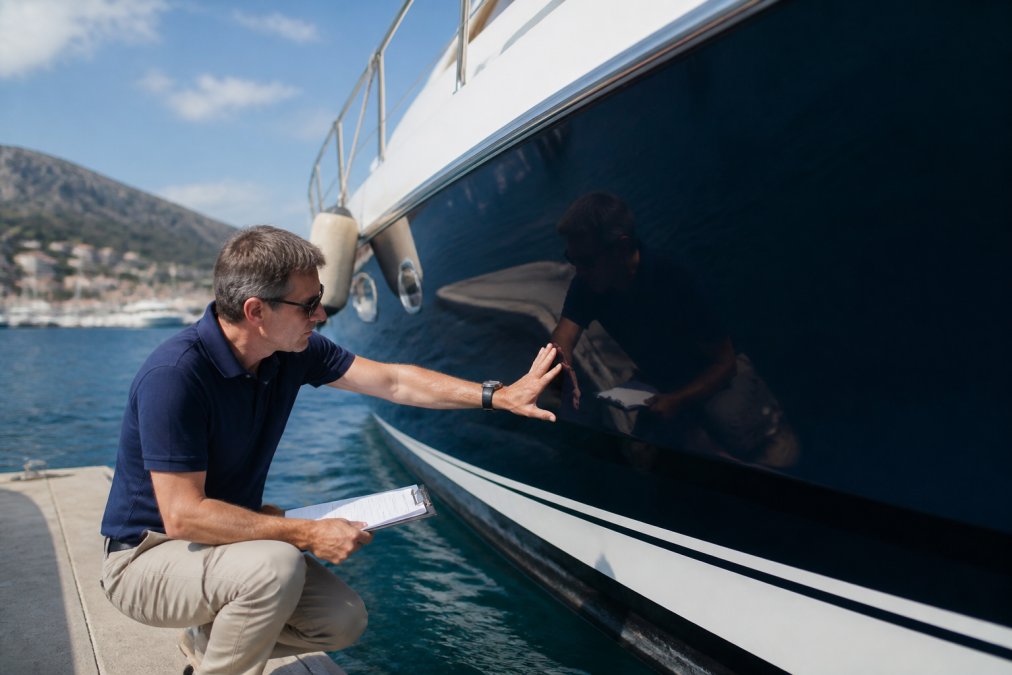
Surveys typically cost 1-2% of the yacht’s estimated value, but they protect both buyers and sellers. A survey reveals hidden defects, osmotic blistering, corroded through-hulls, failing electrical systems, that dramatically affect pricing. Vessels with clean survey reports command significantly higher prices than those with deferred maintenance issues.
The surveyor’s credentials matter. A qualified marine surveyor with experience in your vessel’s type and size provides credible documentation that buyers trust. This professional validation is particularly valuable when working with brokers or selling internationally.
Survey findings often lead to price negotiations. If the report identifies issues requiring repair, buyers expect the purchase price to reflect those costs. A pristine survey report supports asking prices closer to optimistic valuations.
Maintenance Records and Service History Impact
Documentation of regular maintenance directly translates to higher resale value. Buyers want evidence that previous owners invested in upkeep rather than deferring costs until problems became critical.
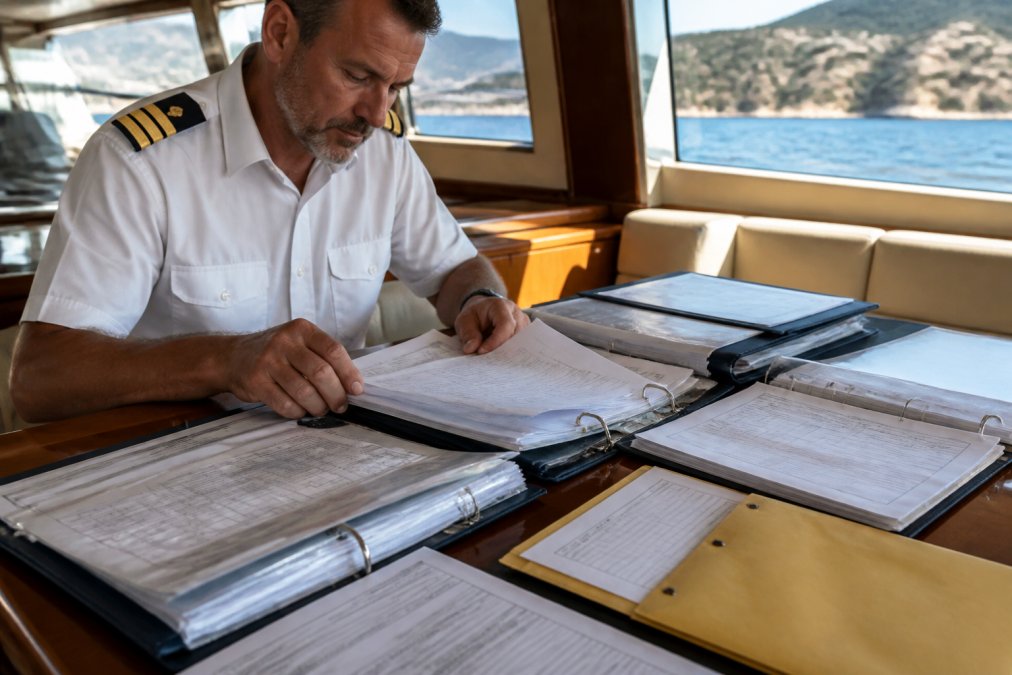
Complete service records demonstrate responsible ownership. A pre-owned yacht with documented engine servicing, haul-outs, system inspections, and component replacements will sell faster and at higher prices than one with sporadic maintenance history. These records provide concrete evidence of vessel condition rather than relying solely on surveyor assessments.
Specific documentation strengthens valuations considerably. Records showing when through-hull fittings were replaced, when cabin soles were refinished, or when major systems were overhauled reassure buyers that the vessel has been properly maintained. Yachts with complete documentation from professional service centers command premium pricing.
Missing or incomplete records create uncertainty. If you cannot document when critical systems were last serviced, buyers assume they’re due for expensive work. This uncertainty typically results in lower offers.
Yacht Brokerage vs. Direct Seller: Valuation Differences
How you sell a pre-owned yacht affects both the final price and the valuation process itself. Working with a broker versus selling directly creates different market dynamics and pricing outcomes.
Brokers bring professional marketing reach, access to qualified buyers, and established pricing frameworks. Their expertise in positioning vessels and negotiating prices often results in higher final sales prices that offset commission costs. A broker’s valuation carries weight because it’s based on comparable sales data and current market conditions.
Direct sales eliminate broker commissions but require you to handle marketing, buyer qualification, and negotiations personally. Without professional valuation guidance, sellers often either overprice their vessel or underprice it. Direct sales work best when you have strong market knowledge and buyer connections.
Get in touch with us to discuss your yachting needs. →
At Palm Lifestyle, our Yacht for Sale service brings professional market expertise and a global network of qualified buyers. We handle the valuation process using comparable sales data and current demand patterns, positioning your vessel competitively while maximizing your returns.
The choice between brokerage and direct sale depends on your timeline, market knowledge, and comfort with the sales process. Brokers accelerate sales and typically achieve higher prices, while direct sales preserve commission costs but require more personal effort.
Valuation Methods: Digital Tools and Professional Appraisals
Multiple approaches exist for valuing a pre-owned yacht, each with distinct advantages and limitations that affect your final price.
Digital Valuation Tools: Speed vs. Accuracy Trade-offs
Online platforms and automated valuation models aggregate comparable sales data to generate estimates based on vessel specifications, age, length, and reported condition. These tools offer speed and accessibility, you can receive a figure within minutes. However, they suffer from structural weaknesses that make them unreliable for serious transactions.
Digital tools rely on incomplete market data. Not all yacht sales are publicly reported, particularly private transactions that never enter public databases. This creates systematic overvaluation, as the data overrepresents brokered sales and underrepresents direct transactions, which often occur at different price points.
Regional variations are poorly captured. A yacht of approximately 14 meters in length valued at €850,000 in the Mediterranean may be worth €720,000 in Northern European waters due to different seasonal demand and buyer preferences. Most digital tools apply broad geographic categories that miss these nuances.
Condition assessment is superficial. Digital tools ask whether a yacht is in "excellent," "good," or "fair" condition, but cannot evaluate the difference between cosmetic wear and structural problems. A vessel with a recently repowered engine but tired interior may be valued identically to one with original engines but pristine finishes, despite dramatically different repair costs.
Specialized equipment and custom modifications are invisible to algorithms. A yacht with newly installed advanced stabilization systems or upgraded navigation may be valued no differently than a standard version because the tool cannot capture these enhancements.
Professional Appraisals: Expertise with Market Context
Experienced yacht brokers and independent marine valuers conduct detailed assessments that examine comparable sales within your specific market segment, account for regional demand variations, and factor in condition details beyond automated systems.
Professional appraisers build valuations on recent comparable sales, vessels of similar size, age, type, and condition that sold within the past 6-12 months in your target market. This approach is more accurate than broad database averaging because it reflects actual buyer behavior in your specific geography. A broker familiar with Mediterranean markets knows which design features command premiums and which are considered dated.
Appraisers also conduct or review marine surveys, interpreting technical findings in financial terms. When a surveyor identifies that through-hull fittings require replacement within two years, a professional appraiser quantifies the cost impact and adjusts valuation accordingly.
However, professional appraisals have limitations. They are subjective, two experienced appraisers may arrive at different valuations, particularly in niche segments where comparable sales are sparse. Appraisers also rely on historical data and cannot predict sudden market shifts.
Hybrid Approach: Combining Both Methods
The most reliable valuation strategy uses digital tools as a baseline screening tool, then engages professional appraisers to refine the estimate with market expertise and condition assessment. Start with a digital tool to establish a rough range at no cost. If the result seems reasonable, proceed to a professional appraisal. If the digital estimate seems wildly off, that discrepancy itself is valuable information.
When valuing a pre-owned yacht for purchase, professional appraisals protect your investment by revealing whether the asking price aligns with actual condition and market value. For sellers, the appraisal provides documented justification for your asking price during negotiations.
Tax and Legal Considerations in Yacht Valuation
Yacht valuations carry tax and legal implications that extend beyond simple price determination. Accurate valuations affect insurance premiums, financing terms, and potential tax obligations depending on your jurisdiction and vessel registration.
Insurance companies base premiums on agreed valuations. Undervaluing your yacht reduces insurance costs but leaves you underprotected if damaged or lost. Overvaluing increases premiums unnecessarily. Working with brokers experienced in your market ensures valuations align with actual replacement costs.
Financing institutions require independent valuations before approving yacht mortgages. Lenders typically require professional appraisals to ensure the vessel’s value supports the loan amount. A conservative valuation may limit financing options, while an inflated one raises red flags.
Flag state registration and documentation requirements vary by jurisdiction. Some regions require specific valuation methods or documentation standards. Understanding these requirements before valuation ensures your documentation meets legal standards and facilitates future sales or financing.
Conclusion
Valuing a pre-owned yacht requires examining vessel age, mechanical condition, maintenance history, marine survey findings, and current market demand. Each factor influences what the vessel will realistically sell for in your specific market.
The process demands professional expertise, whether through brokers, independent appraisers, or experienced advisors who understand regional market variations. Digital tools provide starting points, but professional valuations deliver the accuracy needed for confident buying and selling decisions.
At Palm Lifestyle, our team specializes in comprehensive yacht valuations and strategic marketing for sellers across global markets. We use our extensive network and market expertise to position your vessel competitively while ensuring you receive fair market value. Whether you’re purchasing a pre-owned yacht or preparing to sell, our professionals guide you through valuation, documentation, and negotiation to achieve your maritime goals. Get in touch with us to discuss your yachting needs and discover how our expertise can enhance your yacht transaction.
Frequently Asked Questions
Do yachts go down in value over time?
Yes, most yachts depreciate annually, typically losing 8-12% of their value in the first year and 5-7% annually thereafter. However, depreciation rates vary significantly based on vessel condition, market demand, maintenance quality, and economic cycles. Well-maintained vessels with strong service histories and desirable specifications may hold value better than poorly maintained alternatives. The post-pandemic market has also introduced volatility, with some segments experiencing unexpected corrections while others have stabilized.
What factors most significantly impact the resale value of a pre-owned yacht?
The primary factors affecting yacht resale value include vessel age, engine hours, overall mechanical condition, maintenance records, hull integrity, electronic systems functionality, market demand for that size and type, and current economic trends. Refits and equipment upgrades can positively influence value, while deferred maintenance significantly reduces it. A professional marine survey documenting the vessel's condition is essential for establishing realistic market value and identifying cost factors that buyers will negotiate.
How important is a marine survey when valuing a pre-owned yacht?
A marine survey is critical for accurate valuation. Professional surveyors assess hull integrity, engine condition, electronic systems, interior finish, and overall seaworthiness. Their detailed report provides objective evidence of the vessel's true condition, which directly impacts resale price. Buyers expect survey results before committing to purchase, and sellers who obtain surveys upfront demonstrate transparency and confidence in their vessel's value. Without a survey, valuation estimates remain speculative and subject to buyer negotiation.
Should I sell my yacht through a brokerage or directly to a buyer?
Yacht brokerage offers professional marketing, access to qualified buyers, market expertise, and negotiation support, though this comes with commission costs. Direct sales eliminate brokerage fees but require significant personal effort in marketing, vetting buyers, handling legal documentation, and managing the transaction. Brokers bring established networks and valuation credibility that typically result in faster sales and better prices, offsetting commission costs. For complex vessels or international transactions, professional brokerage expertise often delivers superior outcomes and risk mitigation.