

Table of Contents
- What Is a Yacht Broker and Why They Matter
- Yacht Brokerage vs Direct Seller: Key Differences
- Access to Exclusive Listings and Off-Market Inventory
- Expert Valuation and Market Intelligence
- Legal Protection Through Purchase Agreements and Documentation
- Negotiation Expertise and Closing Process Management
- Pros and Cons of Working With a Yacht Broker
- Conclusion
Last Updated: August 17, 2026
What Is a Yacht Broker and Why They Matter
A yacht broker is a licensed professional who facilitates the purchase, sale, or charter of vessels on behalf of clients, handling everything from market research and vessel inspection to contract negotiation and closing logistics. Unlike private sales where buyers and sellers negotiate directly, brokers act as intermediaries with access to market intelligence, legal expertise, and industry connections that simplify the entire transaction.
Brokers provide valuation services, coordinate marine surveys, manage documentation requirements, and navigate the complex maritime regulations that govern vessel ownership and transfer. For buyers, this means access to exclusive inventory and expert guidance on fair market pricing. For sellers, it means professional marketing, qualified buyer vetting, and maximized sale proceeds.
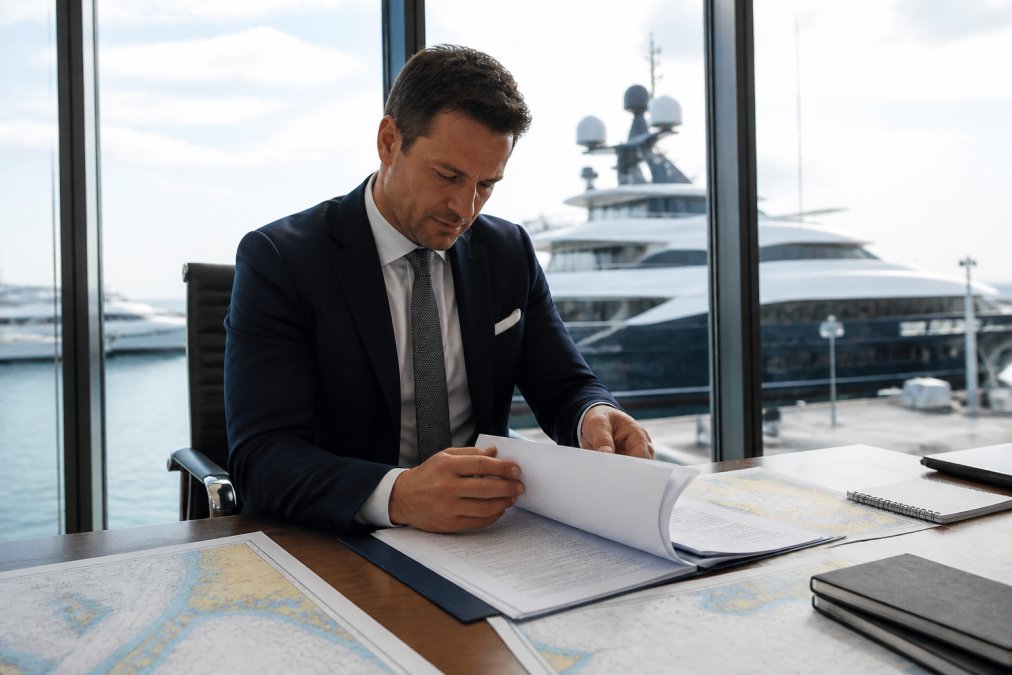
Palm Lifestyle operates as a premier yacht brokerage serving discerning clients. The team combines deep industry expertise with a global network of vessel listings, offering clients the confidence that comes from working with seasoned professionals who understand both the technical and commercial aspects of yacht ownership.
The yacht market has become increasingly sophisticated. Vessels represent substantial capital investments, often involving financing, insurance, and tax implications that require expert navigation. A qualified broker transforms what could be a months-long, error-prone process into a structured transaction with clear timelines, legal protections, and transparent terms.
Yacht Brokerage vs Direct Seller: Key Differences
When a yacht owner decides to sell, they face a fundamental choice: list directly and handle negotiations themselves, or engage a broker. This distinction shapes the entire transaction experience.
Direct sales place the burden entirely on the seller. You must photograph the vessel, create marketing materials, field inquiries, coordinate viewings, conduct negotiations, and manage all documentation. Yacht sales documentation alone, bills of sale, title transfers, flag registration changes, and maritime lien searches, requires precise execution. A single error can delay closing by weeks or invalidate the entire transaction.
Brokers eliminate this administrative weight and bring market intelligence that private sellers lack. They know current comparable sales, seasonal demand patterns, and buyer preferences in specific regions. This insight directly influences pricing strategy and negotiation positioning. Professional marketing, expanded buyer pools, and negotiation expertise typically result in higher sale prices that offset the commission.
For buyers, brokers provide access to off-market inventory, vessels not publicly listed because the owner prefers discretion or the broker has exclusive relationships with sellers. Brokers also conduct preliminary due diligence, verifying vessel condition, maintenance records, and title clarity before presenting options. This vetting process saves considerable time and reduces the risk of discovering major issues mid-transaction.
Access to Exclusive Listings and Off-Market Inventory
The most valuable vessels rarely appear on public listing sites. Owners of premium yachts often prefer confidentiality, working only with brokers they trust rather than exposing their sale to the broader market. This creates an information asymmetry where brokers with established relationships access inventory that independent buyers cannot find.
Off-market listings represent genuine opportunities. Because fewer people know about them, competition among buyers is lower, and negotiation leverage shifts toward serious buyers. A broker with access to these listings can present options that match your specifications before they ever reach the open market.
Brokers build these exclusive relationships through years of consistent performance, maintaining detailed records of client preferences and developing reputations for discretion and professionalism. When a high-net-worth individual decides to sell their yacht, they contact the broker they know rather than listing publicly. This dynamic creates a two-tier market: the public listings everyone sees, and the private inventory only brokers access.
For charter clients, this access translates directly into customization options. Rather than choosing from standard packages, brokers can negotiate custom itineraries, crew arrangements, and vessel configurations tailored to specific requirements.
Expert Valuation and Market Intelligence
Yacht valuation is not straightforward. Unlike real estate with comparable sales data and standardized assessments, vessels vary dramatically in condition, age, equipment, and market demand. A professional valuation requires understanding depreciation curves, regional market preferences, seasonal pricing fluctuations, and the impact of specific equipment or recent refits on value.
Brokers maintain databases of historical sales, current asking prices, and market trends across vessel classes and regions. They track which types of yachts are selling quickly and which are lingering on the market, monitoring regional demand. This granular market intelligence informs realistic pricing strategies.
A broker’s valuation grounds the sale price in actual market conditions by examining comparable vessels sold in the past 12 months, assessing your yacht’s condition relative to those comparables, and factoring in current market sentiment. The result is a price range that balances competitive positioning with realistic market expectations. For buyers, this expertise protects against overpaying and helps identify whether a particular vessel represents a genuine opportunity or a problematic purchase disguised as a bargain.
Legal Protection Through Purchase Agreements and Documentation
Maritime law governing yacht transactions is fragmented across multiple jurisdictions, flag registries, and international conventions. A vessel registered under one flag, purchased by a buyer in another country, and financed by a third-party lender creates overlapping legal obligations that most private sellers do not understand. Brokers provide irreplaceable protection through this complexity.
Flag Registry and Title Verification
When you purchase a yacht, you’re acquiring a legal right to operate it under a specific flag registry. The flag determines which maritime authority has jurisdiction over the vessel, which insurance and safety standards apply, and which courts would hear disputes. Brokers coordinate flag registry searches and title verification across multiple databases, identifying maritime liens (claims against the vessel for unpaid debts or salvage operations) that could prevent you from taking ownership.
Purchase Agreement Structure and Contingencies
A professional purchase agreement addresses vessel condition at delivery and defines the sea trial period, typically 5-10 days during which the buyer can operate the vessel and verify systems function as represented. The agreement allocates closing costs upfront, preventing surprises at closing.
Contingencies protect both parties. A financing contingency allows the buyer to withdraw if they cannot secure maritime financing at agreed terms. A survey contingency allows withdrawal if the marine survey reveals structural damage or mechanical failures exceeding a specified threshold. These contingencies are standard in brokered transactions but rarely appear in private sales.
Marine Survey Coordination and Technical Due Diligence
A comprehensive marine survey is the single most important due diligence step in any yacht purchase. The surveyor, a certified professional with expertise in vessel construction, mechanical systems, and maritime safety, inspects the hull, engine room, electrical systems, plumbing, safety equipment, and structural integrity.
Get in touch with us to discuss your yachting needs. →
Brokers coordinate these surveys and interpret results for clients, understanding which findings are cosmetic concerns versus structural red flags. They negotiate survey contingencies that allow buyers to withdraw or renegotiate if the survey reveals issues. Private buyers often skip surveys to save cost, a false economy that frequently results in discovering major mechanical failures after closing.
International Documentation and Regulatory Compliance
For vessels operating internationally, compliance with International Maritime Organization (IMO) standards adds another layer of complexity. Vessels must carry valid International Safety Management (ISM) certificates, International Ship and Port Facility Security (ISPS) codes, and pollution prevention documentation. Brokers verify that vessels comply with these international standards before closing and coordinate with maritime authorities to ensure proper documentation transfer.
Escrow and Closing Coordination
The closing process involves transferring substantial funds from buyer to seller. Brokers coordinate escrow arrangements where funds are held by a neutral third party until all conditions are satisfied. The escrow agent releases funds only when the seller has transferred clear title, the vessel has been properly documented in the buyer’s name, and all contingencies have been satisfied.
The closing checklist includes final title search confirming no new liens have been filed, proof of insurance coverage in the buyer’s name, flag registry transfer documentation, bill of sale execution, and coordination with the buyer’s lender. Brokers manage this coordination, ensuring all parties have what they need on the closing timeline.
Negotiation Expertise and Closing Process Management
Yacht transactions involve multiple negotiation points: initial offer price, survey contingencies, closing timeline, and allocation of closing costs. Each represents an opportunity to strengthen or weaken your position.
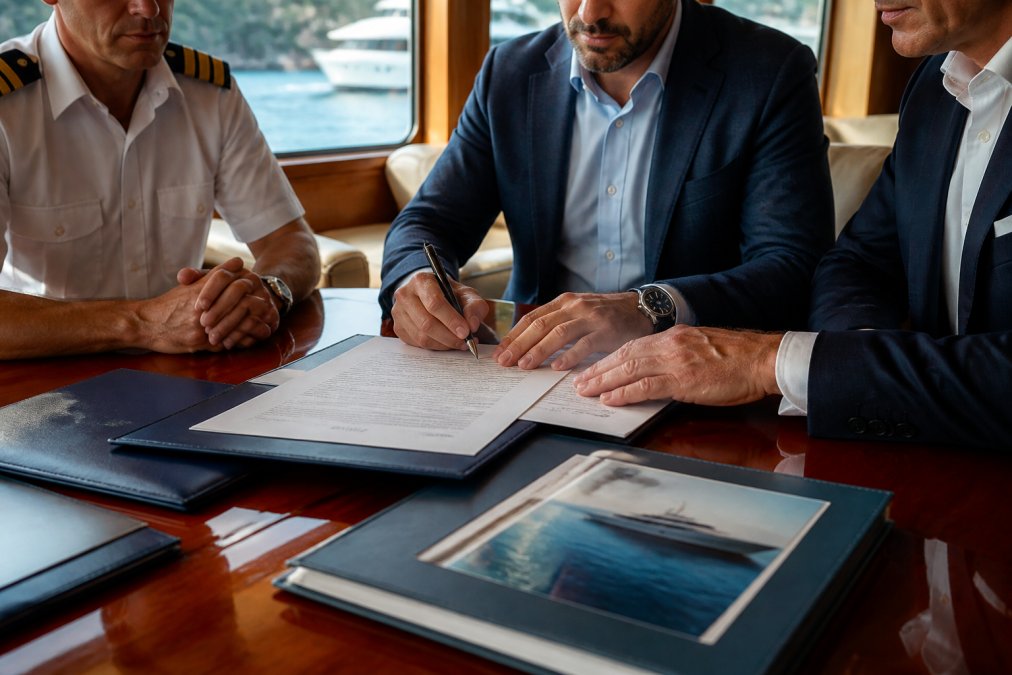
Experienced brokers understand negotiation dynamics. They know when to push and when to concede, how to structure counteroffers that move negotiations forward, and how to identify when a deal is genuinely dead versus temporarily stalled. They prevent emotional negotiations that damage relationships or kill otherwise viable transactions.
The closing process involves coordinating multiple parties: the buyer’s lender, marine insurance providers, flag registries, escrow agents, and maritime authorities. A broker manages this coordination, reducing the risk of closing delays caused by missing paperwork or miscommunication. Typical transactions take 60-90 days from offer acceptance to final closing, though complex or international sales may extend this timeline.
Pros and Cons of Working With a Yacht Broker
Advantages of professional brokerage representation:
- Market access: Brokers connect you to off-market inventory and exclusive listings unavailable through public channels
- Valuation expertise: Professional pricing based on comparable sales data and market trends protects against overpaying
- Legal protection: Purchase agreements drafted to reflect maritime law and industry standards, protecting your interests through contingencies and title verification
- Time efficiency: Brokers handle administration, documentation, and coordination, freeing your schedule
- Negotiation skill: Professional negotiators who understand market dynamics and structure deals that work for both parties
- Due diligence: Brokers coordinate marine surveys, title searches, and vessel inspections before you commit, identifying red flags
- Financing coordination: Experienced brokers work with maritime lenders and facilitate financing arrangements
- Discretion: For high-profile buyers or sellers, brokers provide confidentiality and professional handling
The Cost-Benefit Framework: When Commission Is Justified
Broker commission typically ranges from 5-10% of the sale price, depending on vessel size, market conditions, and transaction complexity. For sellers, professional marketing and buyer qualification typically result in higher sale prices that exceed the commission cost. A broker’s access to qualified buyers, combined with professional photography and targeted marketing, attracts more serious offers than private listing.
For buyers, the cost-benefit is more nuanced. While the buyer does not directly pay the broker commission, they benefit indirectly through the broker’s due diligence and negotiation expertise. A buyer who avoids a significant mistake, such as purchasing a vessel with hidden structural damage, has justified the broker’s value many times over.
Limitations and honest considerations:
- Commission cost: Brokers charge a percentage of the sale price, representing direct expense
- Potential conflicts of interest: Some brokers represent both buyer and seller in the same transaction, creating incentives to close quickly rather than optimize terms for either party
- Limited inventory: Even well-connected brokers cannot access every available vessel in a given market
- Responsiveness variability: Broker quality varies significantly
- Fee transparency: Reputable firms disclose all fees upfront in writing
- Market timing: Brokers cannot control market conditions; in slow markets, sales timelines may extend
- Broker conflicts with your interests: A broker earning commission has incentive to close any deal, not necessarily the best deal for you
Decision Framework: When to Use a Broker vs. Private Sale
For sellers, professional brokerage is justified for vessels over approximately €2 million. Even smaller vessel sales benefit from professional legal documentation and due diligence coordination.
For buyers, working with a broker is justified when purchasing vessels over €3 million, buying internationally or in an unfamiliar market, lacking maritime experience or legal expertise, valuing time efficiency, or seeking access to off-market inventory.
Private sales may be viable when the vessel is small and mechanically simple, both parties are experienced with maritime law, the transaction is straightforward with no financing complications, or time is not a constraint.
The key insight is that broker value is not uniform across all transactions. For high-value, complex, or international transactions, the benefits, legal protection, market intelligence, time savings, and risk mitigation, far exceed the cost. For simple, local, low-value transactions, a private sale may be viable if both parties have the expertise and time to manage it properly.
Frequently Asked Questions
What are the main benefits of using a yacht broker?
A yacht broker provides access to exclusive listings, professional valuation expertise, legal document management, and skilled negotiation on your behalf. Brokers handle market research, vessel inspections, purchase agreements, and the entire closing process. They also offer confidentiality and industry connections that private sellers lack. Whether buying or selling, brokers save you time and help you navigate complex maritime law and contractual obligations.
How does the yacht valuation process work with a broker?
Brokers conduct thorough vessel appraisals by examining the yacht's condition, maintenance records, age, specifications, comparable sales, and market demand. They perform marine surveys, review vessel history and flag registration details, and analyse current market intelligence. This data-driven yacht valuation process ensures realistic pricing for sellers and fair offers for buyers. Brokers use their industry expertise to account for seasonal trends and regional demand.
What yacht sale documentation requirements must be completed?
Essential yacht sale documentation includes the bill of sale, purchase agreement, title search results, vessel documentation, flag registration transfer, marine survey reports, and escrow account setup. Brokers ensure all contractual obligations are met, coordinate with maritime authorities, and manage the legal transfer of ownership. They verify vessel history, confirm no liens exist, and handle tax implications. This comprehensive approach protects both buyer and seller throughout the transaction.
How do brokers differ from private yacht sales?
Brokers provide professional representation, market access, and legal expertise that private sales cannot match. When selling directly, you handle marketing, screening buyers, managing negotiations, and legal paperwork yourself. Brokers leverage their network for qualified buyers, negotiate on your behalf, and manage all documentation. For buyers, brokers offer due diligence, vessel inspection coordination, and contractual protection. The brokerage approach typically results in faster sales, better pricing, and reduced risk.